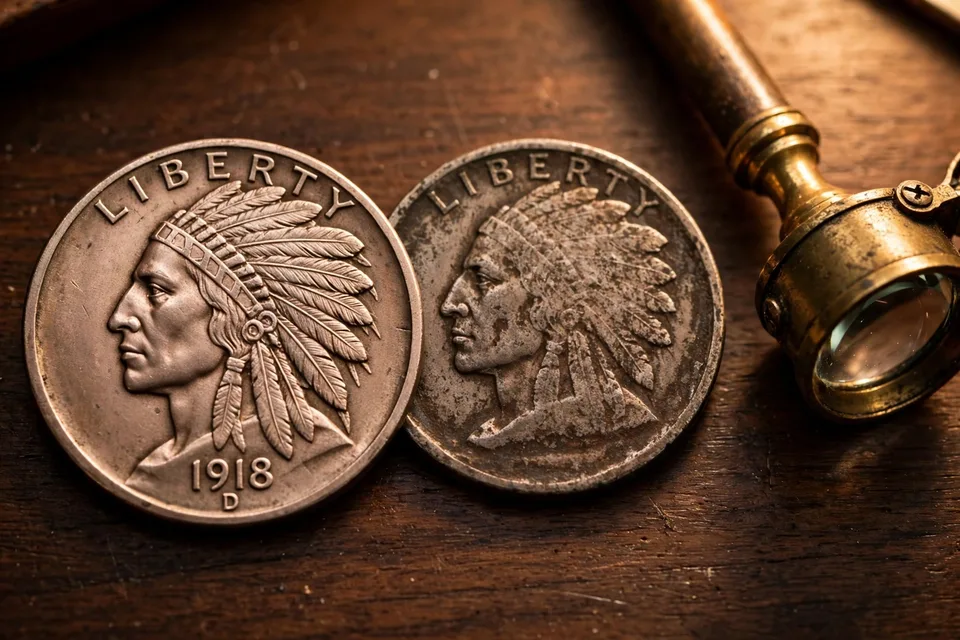
1926-S Buffalo Nickel: 970,000 Minted, $322,000 Record
Coin Encyclopedia · 8 min read · Published November 7, 2026
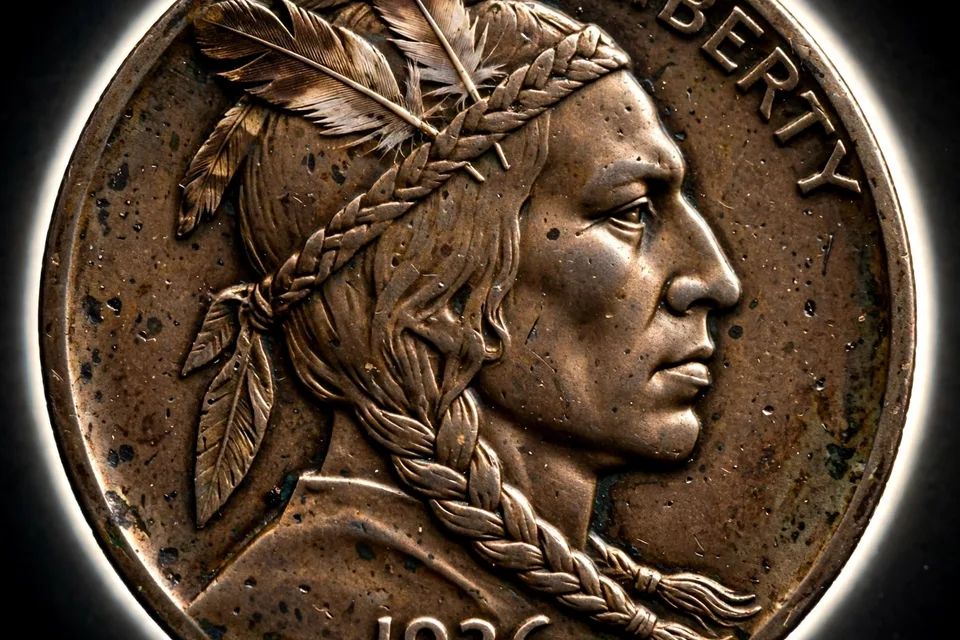
The 1926-S Buffalo nickel is the toughest regular date in the whole series, and the reason fits in one number: 970,000. That is the lowest mintage of any Buffalo nickel struck between 1913 and 1938, and it is the number that makes this date different from every other San Francisco date around it. A worn 1926-S is worth $650+ in our guide, the highest worn floor of any regular date in the series. An MS66 example reached $322,000 in 2008, the second-highest figure in the whole series, behind only the 1918/7-D overdate. Between those two figures sits a date that is rare in every grade, not just in high grade.
That last point matters. Most key dates are common worn and rare unworn. The 1926-S is rare worn too, because the run was so small and so few coins survived at all. If you find one with a clear date and a readable S, you are already holding a scarce coin. If you find one with a sharp strike and original lustre, you are holding one of the most sought-after regular-issue Buffalo nickels ever struck.
970,000 — the lowest mintage of the series
The Buffalo nickel ran for twenty-five years, and most dates were struck in the tens of millions. The 1926-S sits alone at the bottom of that range. San Francisco struck 970,000 nickels in 1926, fewer than any other date in the series, and the figure has stood unchanged in the records ever since. It was not a special striking and it was not a commemorative. It was an ordinary year of production that happened to be small, and nobody at the time had any reason to save the coins.
It helps to put that number beside its neighbours. The 1924-S, two years earlier, was struck in 1,437,000. The 1921-S was struck in 1,557,000. The 1926-S is smaller than both, by a clear margin, and it is the only regular Buffalo date under a million. That is why our guide calls it the toughest regular date in the set, and why the worn floor is $650+ while other San Francisco dates of the decade start at $75+ or $100+.
The record: $322,000 for an MS66 in 2008
One verified result anchors the top of this date’s market in our guide: an MS66 example reached $322,000 in 2008. That is the record for the date, and it is the second-highest figure in the whole Buffalo nickel series. Nothing else in the regular series has come close, and the gap between that coin and an ordinary worn 1926-S is enormous, because the record belongs to a single coin in a superlative grade.
| Coin | Grade | Source | Realized |
|---|---|---|---|
| 1926-S Buffalo nickel | MS66 | 2008 | $322,000 |
Keep that record in proportion. Most surviving 1926-S nickels are worn, and a worn example is a valuable coin but not a $322,000 coin. The record tells you the ceiling of the date, not the worth of the coin in your hand. It also tells you why authentication matters so much here: a coin with a six-figure ceiling attracts fakes and added mint marks, and a professional opinion is the only thing that settles the question.
Reading the date and the S
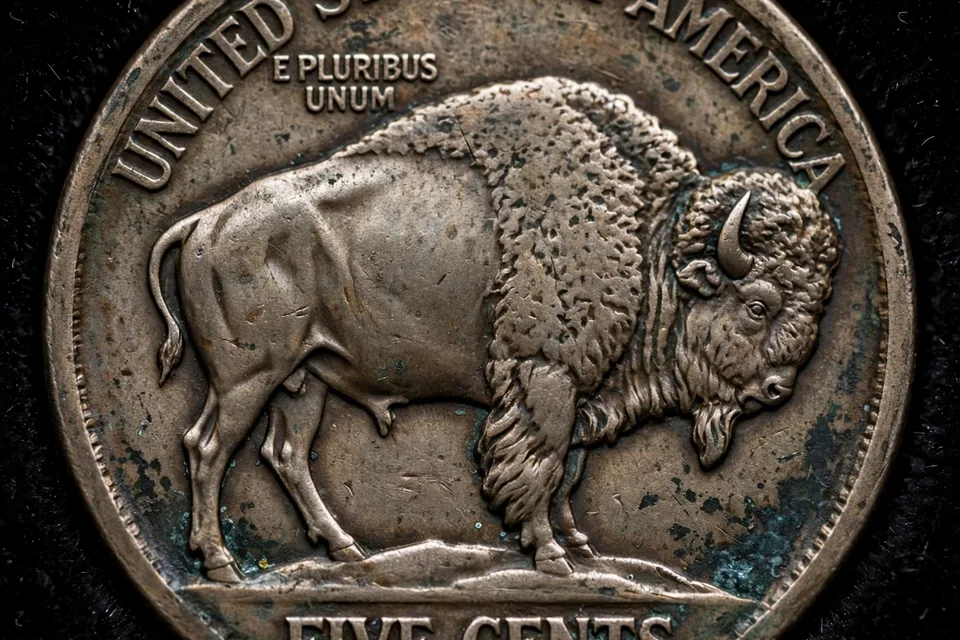
The date is the first test, and on this coin it is a hard one. The date sits high on the portrait’s shoulder, unprotected by the rim, and a 1926-S that spent decades in circulation can lose the last digit entirely. If your coin still shows 1926 clearly, read it soon and photograph it, because every extra year of handling takes a little more. Then the mint mark, on the reverse below FIVE CENTS near the bottom rim, small and quick to wear. Tilt the coin so the light rakes across the surface from the side and the S will usually show itself.
Then the strike. San Francisco’s 1920s Buffalo nickels were often softly struck, and the 1926-S is no exception. Check the bison’s horn first: a clean, pointed horn means a sharp strike, and a sharp strike on this date is worth real money on top of the grade. Check the braid next, then the tail. If all three are crisp, you are looking at one of the better-struck survivors of the lowest-mintage year in the series.
What our value guide records for this date
Our value guide has not yet researched the 1926-S grade by grade, so the table below is all dashes. The only dollar figures on this page are the $650+ worn floor and the $322,000 record, both from our own guide, and that is as it should be: a floor and a record are facts, and a grade estimate we have not researched would be a guess. The table will be completed as our own catalog research lands.
| Grade | Estimated value |
|---|---|
| Good (G-4) | — |
| Fine (F-12) | — |
| Extremely Fine (XF-40) | — |
| About Uncirculated (AU-50) | — |
| Mint State 60 (MS-60) | — |
| Mint State 65 (MS-65) | — |
While you wait for that research, the mintage is the number to hold onto: 970,000, the lowest of the series. That single figure explains the $650+ worn floor, the $322,000 record, and the date’s standing as the toughest regular Buffalo nickel. A date under a million in a series of tens of millions does not need a grade table to prove its standing.
Specs and the metal question
There is no precious metal in this coin. The Buffalo nickel is 75% copper and 25% nickel, weighs 5.0 grams, measures 21.2 millimetres across, and has a plain edge. No silver, no gold — the worth lives entirely in rarity and condition. The metal floor for this coin is —, because there is no metal floor to show: a worn common-date Buffalo nickel is a five-cent coin, and a worn 1926-S is the scarcest regular date in the series, and the difference is the mintage and the mint mark, not the metal.
Fakes, added mint marks, and the authentication rule
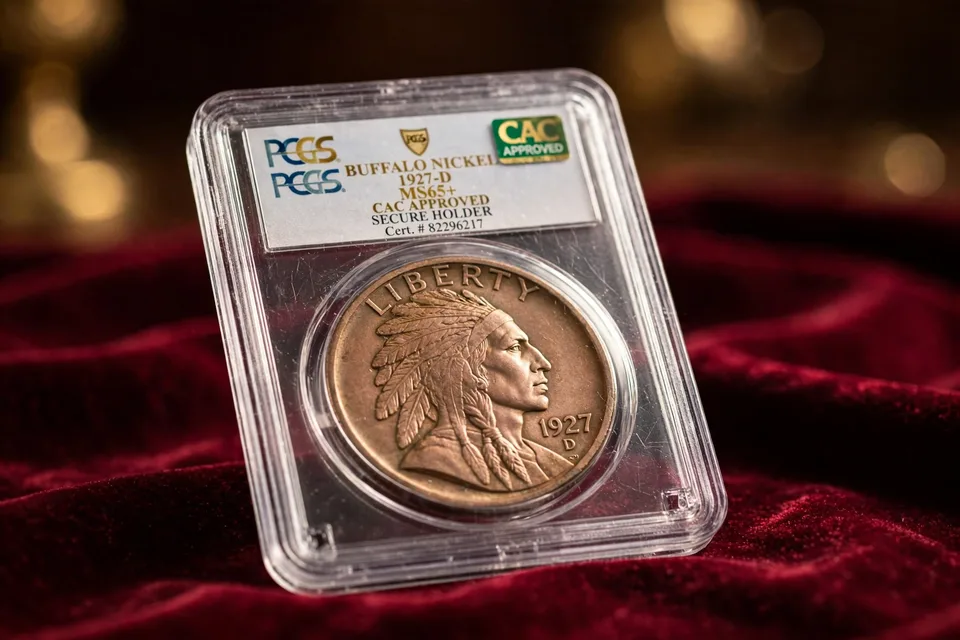
A coin with a $322,000 record attracts alteration. The common fake is a common-date 1926 Philadelphia nickel with an S added to the reverse, or a 1926-S with its surfaces reworked to look uncirculated. Under a loupe, an added S shows tool marks and a wrong shape, and the metal around it often looks disturbed. A genuine S sits in the correct position, low on the reverse below FIVE CENTS, with the right shape and depth. Weigh the coin too: a genuine Buffalo nickel weighs 5 grams and measures 21.2 millimetres, and a cast copy will usually fail one of those tests.
The rule is simple and absolute: never treat an unattributed 1926-S as genuine until a professional has confirmed it. Send it to PCGS or NGC, get the attribution in writing, and only then think about what it is worth. The fee is small beside the figures at stake, and the certificate is what turns a curious coin into a confirmed key date.
Latest reported results for this coin
Checking for newly reported results…
Your 1926-S questions, answered
How much is a 1926-S Buffalo nickel worth worn?
Our guide records $650+ for a worn 1926-S. That is the highest worn floor of any regular Buffalo nickel date in our guide, and it follows directly from the mintage: only 970,000 were struck.
What is the record for a 1926-S Buffalo nickel?
An MS66 example reached $322,000 in 2008. That is the record for the date and the second-highest figure in the whole Buffalo nickel series, behind only the 1918/7-D overdate.
Why is the 1926-S the toughest regular Buffalo nickel date?
Because it has the lowest mintage of the series at 970,000, and because few were saved. Our guide calls it the toughest regular date in the set: rare in every grade, and the record coin shows how far the top reaches.
How many 1926-S Buffalo nickels were struck?
San Francisco struck 970,000 in 1926. That is the lowest mintage of the entire Buffalo nickel series, which ran from 1913 to 1938.
Does our value guide list estimates for the 1926-S yet?
Not yet. All six grades currently show “—” in our catalog, reviewed November 5, 2026. The only figures on this page are the $650+ worn floor and the $322,000 record from our guide, and the grade table will be completed as our own research is done.
Check your 1926-S
Run the date and mint mark through the free Coin Value Checker for an instant estimate, or get a Grade-or-Not verdict on whether your coin is worth certifying. The full series guide is here: Buffalo Nickels to Look For: 50¢ to $511,875+.
This guide is for learning and collecting, not financial advice. The $322,000 figure is a verified auction result for one coin in one grade; the worth of any other example depends on its own condition and attribution.
This guide is for education — learn the coin first, and get a professional opinion before buying or selling.