1921-S Buffalo Nickel: Badly Struck, $51,750 Record
Coin Encyclopedia · 8 min read · Published November 7, 2026
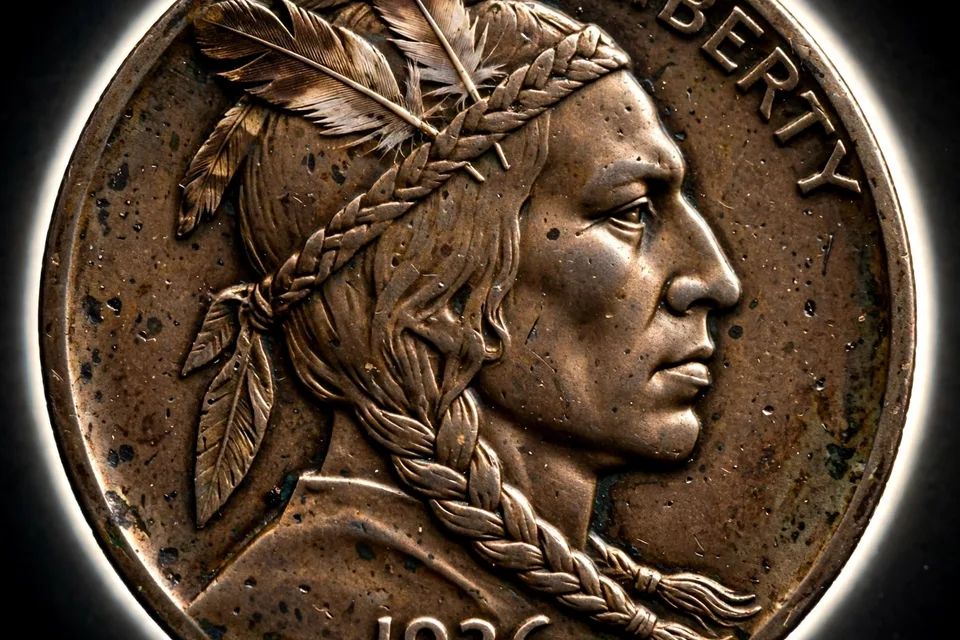
The 1921-S Buffalo nickel is a coin that punishes the careless and rewards the patient. San Francisco struck 1,557,000 of them in 1921, a small run for the decade, and struck most of them badly. The bison’s horn comes out soft, the braid on the portrait blurs, and the whole coin can look tired straight from the press. That weakness is the story of this date: a worn 1921-S is worth $100+, our guide records a $51,750 record, and the difference between an ordinary example and a great one is almost entirely strike. If you find one, the first question is not what grade it is. It is whether it was ever struck properly in the first place.
That sounds like a small distinction, and on most dates it would be. On the 1921-S it is everything. Two coins can sit side by side in the same grade, one with a clean horn and crisp hair, the other a mushy shadow of the design, and they are not the same coin in the market. Collectors pay for strike on this date because strike is so rare. The mintage is small, the survivors are fewer than the mintage suggests, and the well-struck survivors are fewer still.
The horn test — strike before grade
Start with the bison’s horn. On a sharply struck Buffalo nickel the horn is a clean, pointed shape with a clear outline against the field. On a weakly struck 1921-S it is a soft bump, sometimes barely more than a smudge, and the hair above it melts into the background. Then look at the tail and the top of the bison’s back, which go soft next, and then the braid on the portrait, which loses its separate strands. If all three are crisp, you are holding one of the better-struck survivors of the year. If the horn is a smudge, the coin was born that way, and no grade will fix it.
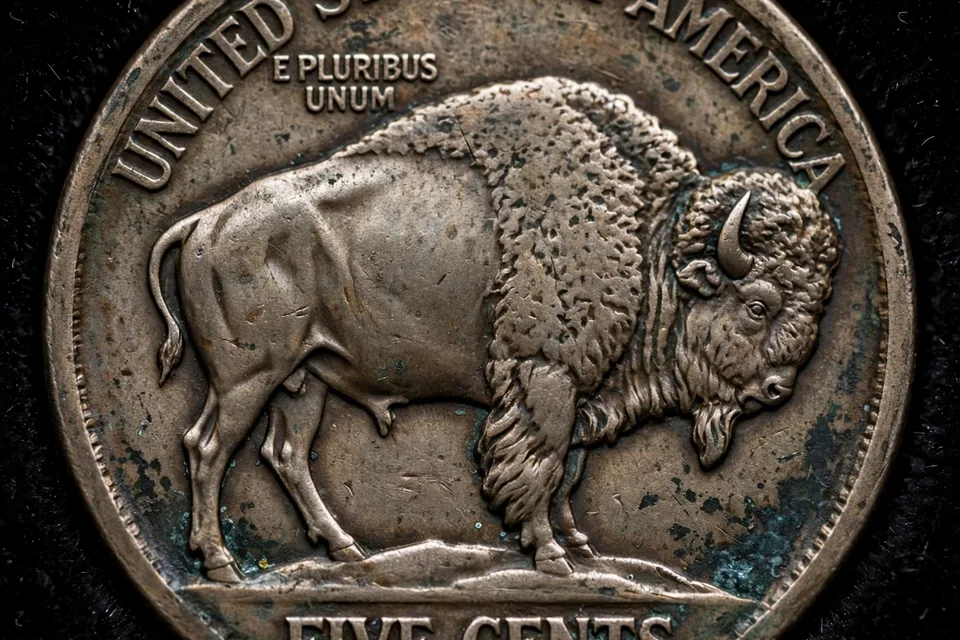
Do not confuse weak strike with wear. Wear flattens the highest points evenly across the whole coin: the horn, the shoulder, the cheek, the date, all going down together. A weak strike leaves the design unfinished from the day it was made, and it is uneven: the horn can be a smudge while the date is sharp, or the braid flat while the rim is full. Learning to tell the two apart is the single most useful skill on this date, and it is worth practising on common-date Buffalo nickels first, where a mistake costs nothing.
Finding the S on a soft coin
The mint mark is the whole attribution, and it lives in the worst place for survival: on the reverse, below FIVE CENTS, near the bottom rim. On a 1921-S the S is small, and on a weakly struck example it can be fainter than on any other San Francisco date of the decade. Hold the coin under a single light and tilt it slowly so the light rakes across the surface. A genuine S will show its shape, a straight back and a curved belly, in the right position and the right size. Compare it against a known San Francisco Buffalo nickel if you can, because a scratch or a contact mark near the rim can fool the eye at a glance.
Once the S is confirmed, read the date. The date sits high on the portrait’s shoulder and wears first, and a 1921-S that spent decades in circulation can lose the last digit. If all four digits are clear and the S is readable, the coin has already survived the two hardest tests in the series. Photograph both sides before you handle it further, and keep the photos with the coin’s story.
What our value guide records for this date
Our value guide has researched exactly one grade of the 1921-S so far: Fine, at $144–$193, reviewed November 5, 2026. Every other grade currently shows “—”, which is the honest position — the catalog records the mintage and one researched grade, and we will not fill the rest with figures borrowed from elsewhere. The table will be completed as the grade-by-grade research lands.
| Grade | Estimated value |
|---|---|
| Good (G-4) | — |
| Fine (F-12) | $144–$193 |
| Extremely Fine (XF-40) | — |
| About Uncirculated (AU-50) | — |
| Mint State 60 (MS-60) | — |
| Mint State 65 (MS-65) | — |
What the catalog does record is the mintage, and it does most of the talking on this date. San Francisco struck 1,557,000 Buffalo nickels in 1921. That is a small run beside the tens of millions Philadelphia struck in the same era, and it is small beside the other San Francisco dates around it. The record our guide carries for the date is $51,750, and the worn floor is $100+. Between those two figures sits the whole market for this coin: a scarce, badly struck date where condition and strike decide everything.
1,557,000 coins and a San Francisco gap
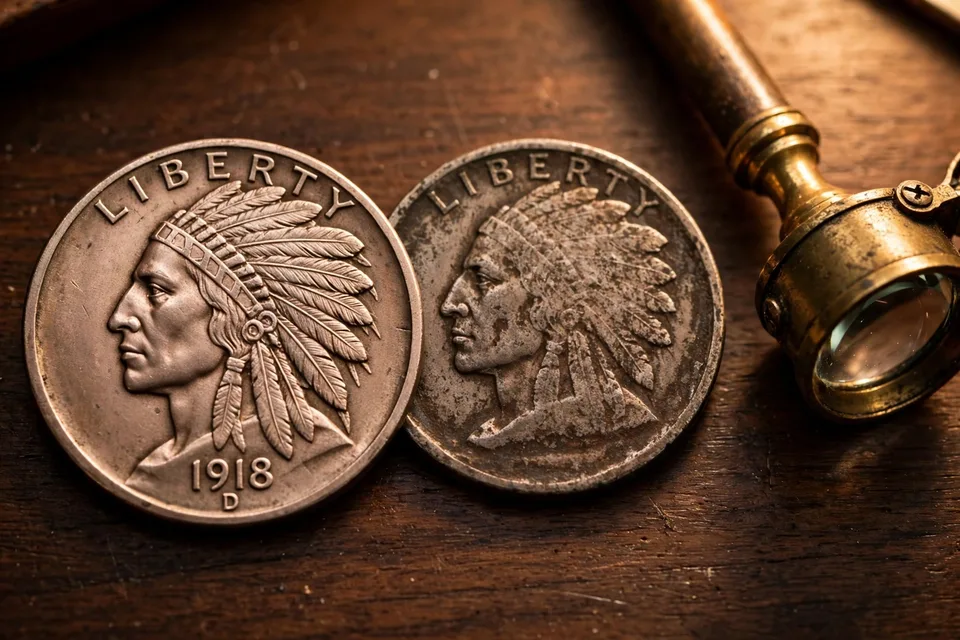
The early 1920s were thin years for San Francisco nickel production. The mint’s output swung with demand, and 1921 was a low year across the board, not just for nickels. The 1,557,000 figure has stood unchanged in the records ever since, and it is the number that makes this date a key date rather than a curiosity. A date under two million in this series is unusual; a date under two million that was also struck badly is rarer still, because the coins that survive in collectible condition are a fraction of a fraction.
It helps to set the number beside the series around it. The Buffalo nickel ran from 1913 to 1938, and most dates were struck in the tens of millions. The 1921-S sits at the low end of that range, and it sits there in a decade when collectors were not yet saving rolls. In 1921 nobody set aside mint bags of nickels. The coins went to work in California and the West, and they stayed in circulation until there was almost nothing left of the design. A 1921-S with a full date and a clear S is already a survivor. One with a sharp horn as well is a coin to keep.
Specs and the metal question
There is no precious metal in this coin, and that is worth saying plainly. The Buffalo nickel is 75% copper and 25% nickel, weighs 5.0 grams, measures 21.2 millimetres across, and has a plain edge. No silver, no gold — the worth lives entirely in rarity and condition, and in strike on this date above all. The metal floor for this coin is —, because there is no metal floor to show: a worn common-date Buffalo nickel is a five-cent coin, and a worn 1921-S is a scarce date, and the difference is the mintage and the mint mark, not the metal.
Handling, storage, and getting a second opinion
Hold the coin by its edge, never across the faces, and never clean it. Cleaning strips the original surface and leaves hairlines that a grader will spot at once, and on a weakly struck date those hairlines can be mistaken for even more strike weakness. Keep the coin in an acid-free flip or a proper holder, away from humidity, and do not store it loose with other coins where the date can rub away further. If the coin looks uncirculated, or if the strike is unusually sharp, a professional opinion from PCGS or NGC is worth the fee: certification settles the grade and the strike in one step, and on a scarce, badly struck date that certainty matters.
Latest reported results for this coin
Checking for newly reported results…
Your 1921-S questions, answered
How much is a 1921-S Buffalo nickel worth worn?
Our guide records $100+ for a worn 1921-S, and the one researched grade in our catalog, Fine, runs $144–$193. The record for the date is $51,750. Most examples are weakly struck, so a sharp, well-defined coin is worth more than a mushy one in the same grade.
Why are 1921-S Buffalo nickels so weakly struck?
San Francisco struggled with the Buffalo design all through the 1920s: the high-relief portrait and the bison put unusual pressure on the dies, and the mint often struck with dies that were worn or under pressure. On the 1921-S the weakness shows first in the bison’s horn and the braid.
Where is the mint mark on a 1921-S Buffalo nickel?
The S sits on the reverse, below the words FIVE CENTS near the bottom rim. On a weakly struck or worn example it can be faint, so check it under a loupe with the light raking across the surface from the side.
Does our value guide list estimates for the 1921-S yet?
Only one grade so far. Fine is researched at $144–$193 in our catalog, reviewed November 5, 2026. Every other grade currently shows “—”, which means it has not been researched grade by grade yet. The table will be completed as that research lands.
Is the 1921-S the scarcest regular Buffalo nickel of the 1920s?
It is one of the toughest. San Francisco struck 1,557,000 in 1921, a small run for the decade, and the weak strikes mean few survivors look good. Our guide calls it scarce and badly struck, with a $51,750 record.
Check your 1921-S
Run the date and mint mark through the free Coin Value Checker for an instant estimate, or get a Grade-or-Not verdict on whether your coin is worth certifying. The full series guide is here: Buffalo Nickels to Look For: 50¢ to $511,875+.
This guide is for learning and collecting, not financial advice. Every estimate here comes from our own researched catalog, and the real worth of any single coin depends on its condition, its strike, and the market on the day you hold it.
This guide is for education — learn the coin first, and get a professional opinion before buying or selling.