1918/7-D Buffalo Nickel: The Overdate Worth $511,875
Coin Encyclopedia · 9 min read · Published November 7, 2026
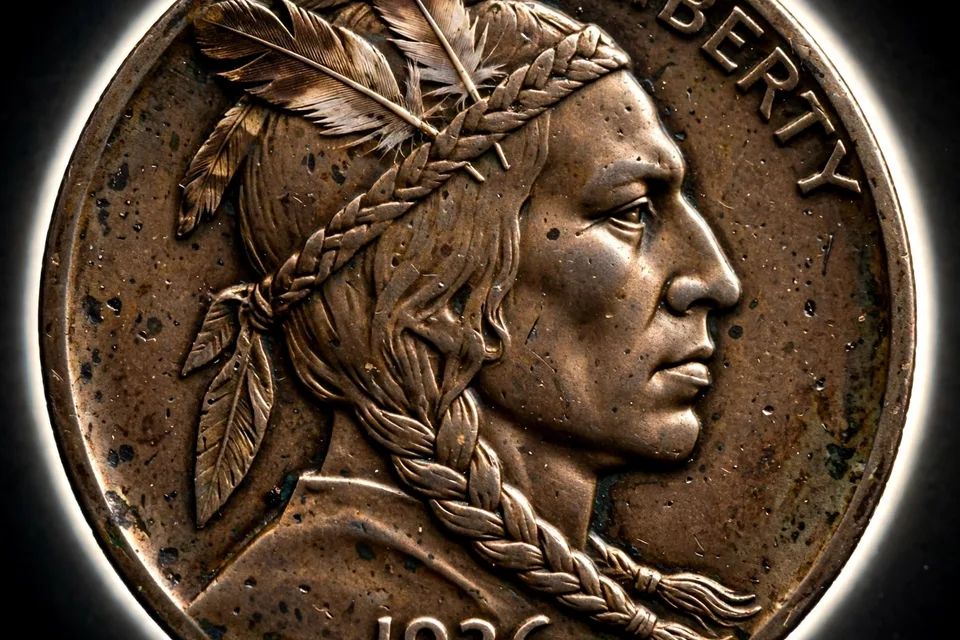
There is a 7 hiding inside the 8 on this coin, and it is worth half a million dollars. The 1918/7-D Buffalo nickel is the king of the Buffalo series: a Denver overdate in which a die first dated 1917 was punched again with 1918, leaving the old 7 showing through the lower left of the new 8 like a ghost. Only one die produced the overdate. The finest of them, graded MS65+, reached $511,875 at GreatCollections on February 11, 2024, the highest figure ever paid for a five-cent piece. Every other coin in the series is measured against it.
The story is a detective story, and it starts with a loupe. A normal 1918-D Buffalo nickel is a common date, struck by the millions. The overdate looks identical at a glance: same portrait, same bison, same D mint mark, same 1918 date. The difference is a curved line inside one digit, visible only under magnification, and it is the difference between a coin worth a few dollars and a coin worth a house. That is why this page begins with the test, not the history. If you own a 1918-D, the first thing to do is look at the 8.
The record: $511,875 at GreatCollections, 2024
One result anchors the top of this variety’s market, and it is verified in our own published guides: a 1918/7-D graded MS65+ reached $511,875 at GreatCollections on February 11, 2024. That is not a dealer’s asking figure and it is not a rumour. It is the recorded result for the finest known example of the variety, and it stands as the Buffalo nickel series record. Nothing else in the series has come close, and the gap between that coin and an ordinary circulated 1918/7-D is enormous, because the record belongs to a single coin in a superlative grade with the overdate bold and unmistakable.
| Coin | Grade | Source | Realized |
|---|---|---|---|
| 1918/7-D Buffalo nickel | MS65+ | GreatCollections, February 11, 2024 | $511,875 |
Keep that record in proportion. Most surviving 1918/7-D nickels are worn, and a worn example is a valuable coin but not a half-million-dollar coin. The record tells you the ceiling of the variety, not the worth of the coin in your hand. It also tells you why authentication matters so much here: a coin with a six-figure ceiling attracts fakes, altered dates, and optimistic attributions, and a professional opinion is the only thing that settles the question.
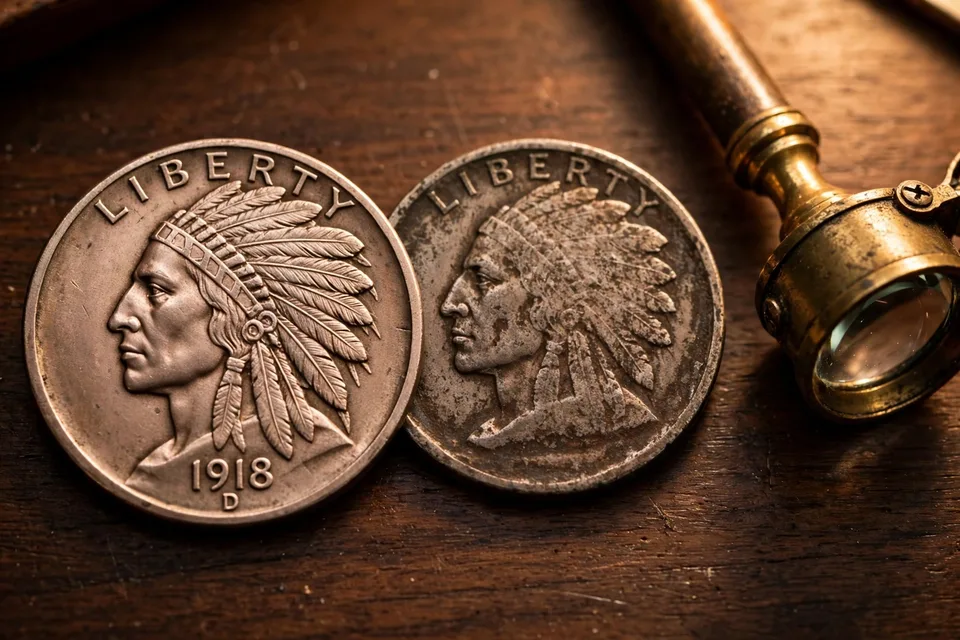
How the 7 got under the 8
In 1917 the Denver Mint had a working obverse die dated 1917. Dies were expensive, hand-finished tools, and the Mint did not throw them away lightly. When 1918 arrived, rather than sinking a brand-new die, the Mint repunched the old one with the new date: the 8 was driven over the 7. The punch did not fully erase the old digit. The top of the 7 was covered, but the lower curve of the 7 survived inside the lower loop of the 8, and every coin that die struck carried the evidence. That is an overdate, and it is one of the most satisfying things in numismatics: a mistake in the mint that became a treasure for collectors.
The same habit produced other famous overdates of the era, and the 1918/7-D is the most celebrated of them in the Buffalo series. It is worth noting that the total 1918-D mintage of 8,362,000 covers both the normal coins and the overdates. The overdate was only a fraction of that run, struck from a small number of repunched dies, and most of those coins went straight into circulation in the Mountain West, where they wore down like every other nickel of the year.
The test: finding the hidden 7
Hold the coin under a 10x loupe and find the date on the obverse, on the portrait’s shoulder. Look at the 8, the last digit. On a normal 1918-D the 8 is a clean figure-eight, empty inside both loops. On the overdate, the lower left of the 8 carries a curved remnant, a small hook or tail that belongs to the 7 underneath. It is clearest on unworn coins and faintest on heavily worn ones, because the date is the first thing to wear on a Buffalo nickel. Use a single light source and tilt the coin so the light rakes across the date from the side. The shadow inside the 8 will show itself.
Do not guess. A scratch across the 8 is not an overdate, and wishful thinking has cost collectors real money. If the mark is there, compare it against a confirmed example, in a reference book or a certified holder, and look for the same curve in the same place. If the mark is not there, you hold a normal 1918-D, which is a fine coin in its own right but not the variety on this page. If you are unsure, a professional opinion from PCGS or NGC is the right next step, before any decision about the coin is made.
Only one die made the overdate
Our nickel guide records that only one die produced the 1918/7-D overdate. That single die is the whole story of the variety’s rarity: the total 1918-D mintage of 8,362,000 covers both the normal coins and the overdates, but the overdate came from one repunched die, and most of the coins it struck went straight into circulation in the Mountain West, where they wore down like every other nickel of the year. The coins that remain unidentified are the ones sitting in jars and inherited albums, unexamined, and they are the reason this page exists. Somewhere, in a drawer or a desk, there is a 1918-D that nobody has ever looked at closely.
The single-die origin also explains the shape of the market. Because the variety came from one die, and because the finest survivors are so rare, the variety’s worth climbs steeply with grade. A worn example with a clear overdate is a serious coin. A sharply struck, lightly worn example is a much more serious one. And the MS65+ record coin sits alone at the top, a coin that will probably never be equalled, because the die that made it is long gone and the surviving population is fixed.
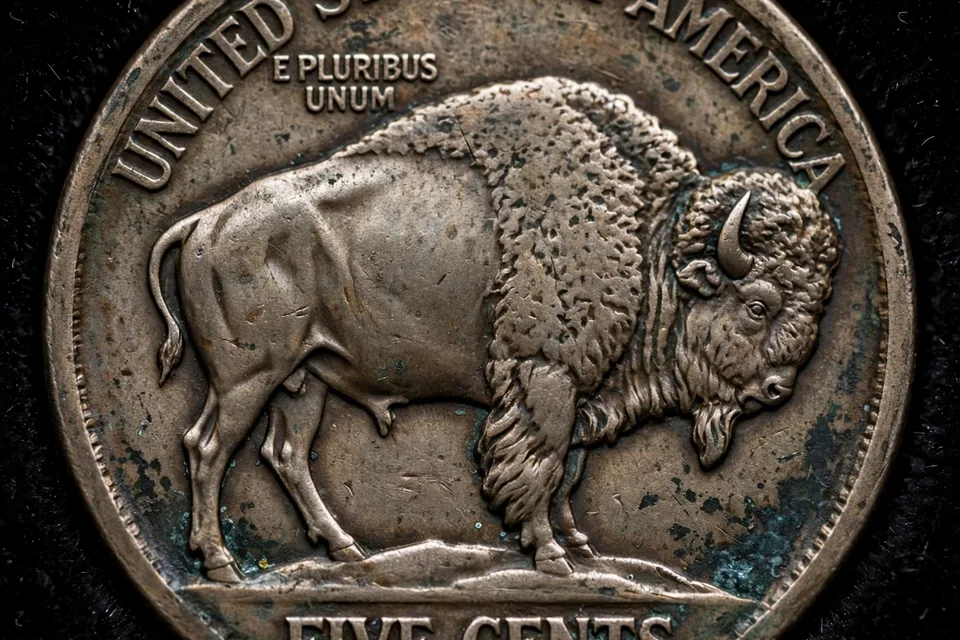
What our value guide records for this date
Our value guide has not yet researched the 1918/7-D grade by grade, so the table below is all dashes. The only dollar figure on this page is the verified $511,875 record, and that is as it should be: a record is a fact, and a grade estimate we have not researched would be a guess. The table will be completed as our own catalog research lands.
| Grade | Estimated value |
|---|---|
| Good (G-4) | — |
| Fine (F-12) | — |
| Extremely Fine (XF-40) | — |
| About Uncirculated (AU-50) | — |
| Mint State 60 (MS-60) | — |
| Mint State 65 (MS-65) | — |
While you wait for that research, the mintage is the number to hold onto: 8,362,000 for all 1918-D Buffalo nickels, normal and overdate together. The overdate is a small slice of that total, and the surviving slice is smaller still. That is the arithmetic behind the record, and it is also the reason a careful look at the date is worth ten seconds of anyone’s time.
Fakes, altered dates, and the authentication rule
A coin with a half-million-dollar ceiling attracts alteration. The common fake is a normal 1918-D with the 8 engraved to suggest a 7 underneath, or a 1917-D with the 7 reworked into an 8. Both can fool the naked eye. Under a loupe, an engraved mark shows tool lines and a wrong shape, and the metal around it often looks disturbed. A genuine overdate shows the 7 as part of the die itself: smooth, consistent, and in exactly the right place, with the same surface texture as the rest of the date. Weigh the coin too. A genuine Buffalo nickel weighs 5 grams and measures 21.2 millimetres, and a cast copy will usually fail one of those tests.
The rule is simple and absolute: never treat an unattributed 1918/7-D as genuine until a professional has confirmed it. Send it to PCGS or NGC, get the attribution in writing, and only then think about what it is worth. The fee is small beside the figure at stake, and the certificate is what turns a curious coin into a confirmed variety.
Latest reported results for this coin
Checking for newly reported results…
Your 1918/7-D questions, answered
How can I tell a 1918/7-D overdate from a normal 1918-D?
Look at the 8 in the date under a loupe. On the overdate a curved remnant of the 7 shows through the lower left of the 8, like a shadow inside the digit. A normal 1918-D has a clean 8 with nothing inside it. The mark is small, so use magnification and side light.
How rare is the 1918/7-D overdate?
It is rare because only one die produced it. The total 1918-D mintage was 8,362,000, but the overdate came from a single repunched die, so it was only a small part of that run, and most of those coins were spent and worn away.
What is the record for a 1918/7-D Buffalo nickel?
A 1918/7-D graded MS65+ reached $511,875 at GreatCollections on February 11, 2024. That is the finest recorded result for the variety and the highest figure ever paid for a five-cent piece.
Why does an overdate like this exist?
Because dies were expensive and the Mint reused them. A die dated 1917 was repunched with 1918 instead of being discarded, and the old 7 was never fully removed. The same habit produced several famous overdates in early twentieth-century coinage.
Does our value guide list grade-by-grade estimates for the 1918/7-D?
Not yet. The six grades currently show “—” in our catalog, reviewed November 5, 2026. The only figure on this page is the verified $511,875 record, and the grade table will be completed as our own research is done.
Check your 1918-D
Run the date and mint mark through the free Coin Value Checker for an instant estimate, or get a Grade-or-Not verdict on whether your coin is worth certifying. The full series guide is here: Buffalo Nickels to Look For: 50¢ to $511,875+.
This guide is for learning and collecting, not financial advice. The $511,875 figure is a verified auction result for one coin in one grade; the worth of any other example depends on its own condition and attribution.
This guide is for education — learn the coin first, and get a professional opinion before buying or selling.