1916-D Mercury Dime: $1,000+ Key Date Guide
Coin Encyclopedia · 8 min read · Published November 7, 2026
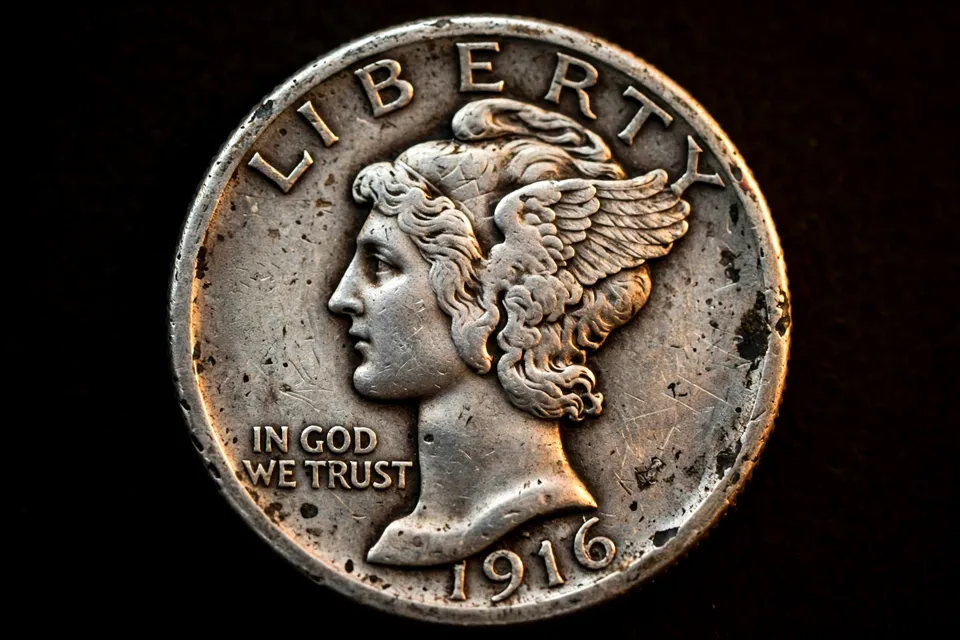
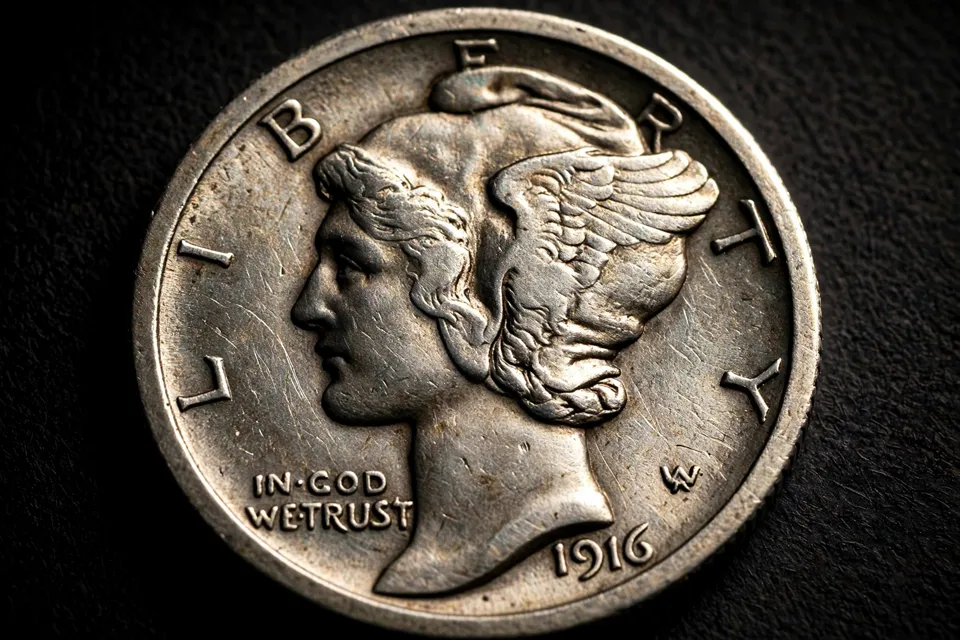
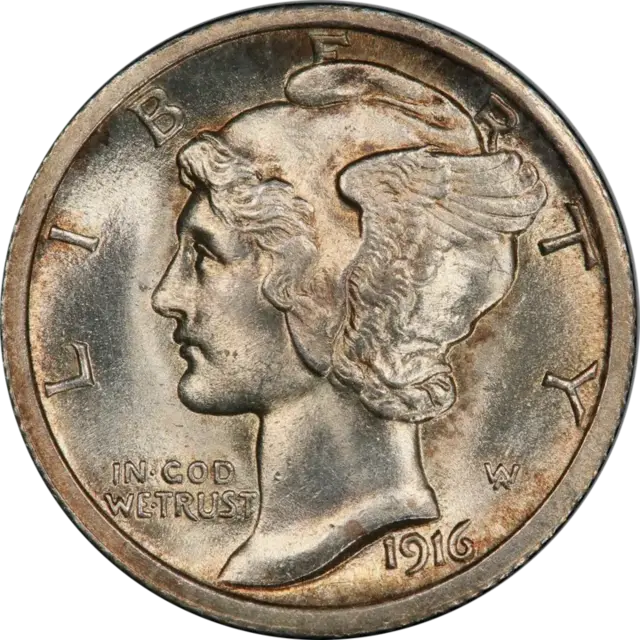
Pick up a Mercury dime and flip it over. If the date reads 1916 and there is a small D low on the left of the reverse, beside the fasces near the rim, stop — you are holding the key date of the entire series. A worn 1916-D is worth $1,000+ even in Good condition, and the finest known example, graded MS67 Full Bands, reached $207,000. The difference between that coin and the common 1916 Philadelphia dime sitting next to it in the same jar is one letter and the sharpness of three small bands.
That is why this page starts with the check, not the history. Everything about the 1916-D comes down to three questions you can answer with a loupe in under a minute: is the date 1916, is the mint mark D, and are the bands full?
The Full Bands test — look at the fasces first
Turn the coin over and find the fasces, the bundle of rods on the reverse. Three horizontal bands wrap the bundle. On most Mercury dimes those bands are softly struck and blend together. On a sharply struck example, the middle band splits cleanly into two distinct lines with a visible gap between them. That is Full Bands, and the grading services mark it FB.
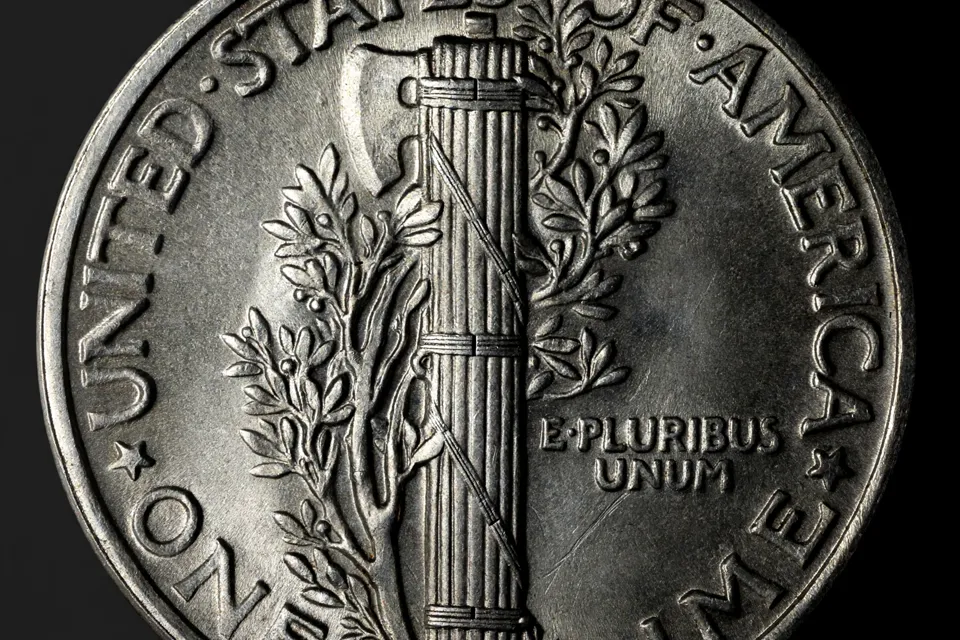
Full Bands only applies to Mint State coins, and it transforms their value. A common-date 1944 dime in MS65 is a $60+ coin without the designation and $150+ with it. On the 1916-D the gap is enormous: a Mint State example with Full Bands reaches $52,500+, while the same coin without the designation is worth far less. If your 1916-D looks uncirculated, the bands are the first thing to check — before the date, before the mint mark, before anything else.
What a 1916-D Mercury dime is worth by grade
Grade decides almost everything on this coin. A worn example is a four-figure coin; a Mint State one with Full Bands is a five-figure coin. The figures below are our researched collector estimates from the live guide, reviewed November 5, 2026. Grades our guide has not researched yet are shown as “—”, not guessed.
| Grade | Estimated value |
|---|---|
| Good (G-4) | $1,000+ |
| Fine (F-12) | $3,800–$5,000 |
| Extremely Fine (XF-40) | — |
| About Uncirculated (AU-50) | — |
| Mint State 60 (MS-60) | — |
| Mint State 65, Full Bands (MS-65 FB) | $52,500+ |
Two things to notice in that table. First, even the lowest grade clears $1,000 — there is no cheap 1916-D, and anyone offering one for a few dollars is offering a fake or a different coin. Second, the jump from Fine to Mint State Full Bands is more than tenfold, which is why authentication and grading matter so much on this date: the premium is paid on certified Full Bands, not on a raw coin that merely looks sharp.
Why Denver struck only 264,000
The 1916-D was a first-year accident of timing. The Winged Liberty Head design, by Adolph A. Weinman, reached the mints late in 1916, and Denver got its dies last. By the time Denver started striking dimes, the year was nearly over: 264,000 coins, and then the presses moved on to 1917. Most of those 264,000 went straight into circulation in the Mountain West, where they wore down fast. Very few were ever set aside, and almost none survived in Mint State — which is why a coin struck in the hundreds of thousands now behaves like a coin struck in the hundreds.
For scale, the Philadelphia Mint struck the same design in the tens of millions that year, and a common 1916 Philadelphia dime is worth little more than its silver. The 1916-D is the same coin, the same design, the same silver — only the mint mark and the mintage differ, and that difference is worth a thousand dollars even worn.
The added-D trap — spotting a fake 1916-D
The 1916-D is also the most faked key date in the series, because the fake is so easy to make: take a common 1916 Philadelphia dime, engrave or glue a D onto the reverse, and a coin worth little more than its silver becomes a $1,000+ coin. Here is how to catch it.
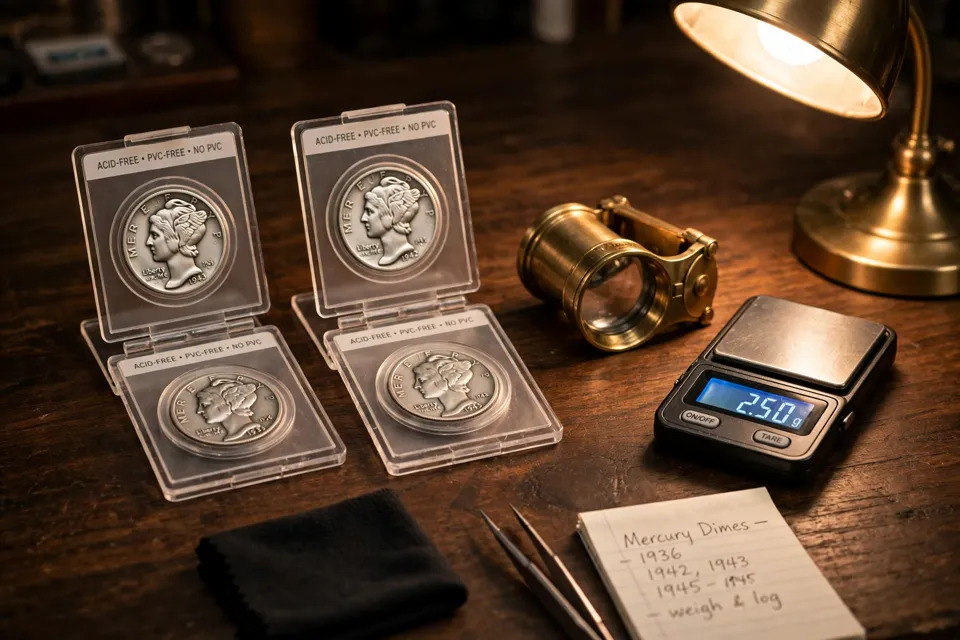
First, weigh it. A genuine Mercury dime weighs exactly 2.5 grams and measures 17.9 millimetres across — a cast copy feels light and often shows tiny bubbles or seams under magnification. Second, look at the D itself under a loupe against a known genuine example: a real D sits in the correct position, low on the left beside the fasces, with the right shape and depth. An added D sits too high, too shallow, or at the wrong angle, and the metal around it often shows tool marks. Third, check the edge for sharp, even reeding. If anything feels wrong, do not deal in the coin raw — send it to PCGS or NGC for authentication first. A certified 1916-D is worth the fee; an uncertified one that turns out to be altered is worth its silver.
Specs and the silver floor
Every Mercury dime from 1916 to 1945 is 90% silver, which puts a floor under even the most worn 1916-D. The coin weighs 2.5 grams and carries 0.07234 troy ounces of pure silver. At the November 2026 silver price near $52.71 an ounce, that metal is worth about $3.80 — more than thirty-eight times face value. Silver moves every day, so the floor moves with it; check the live market on the day you sell, and treat anything below the melt figure as a bad offer.
Metal floor updates live from our Worker — last updated November 7, 2026.
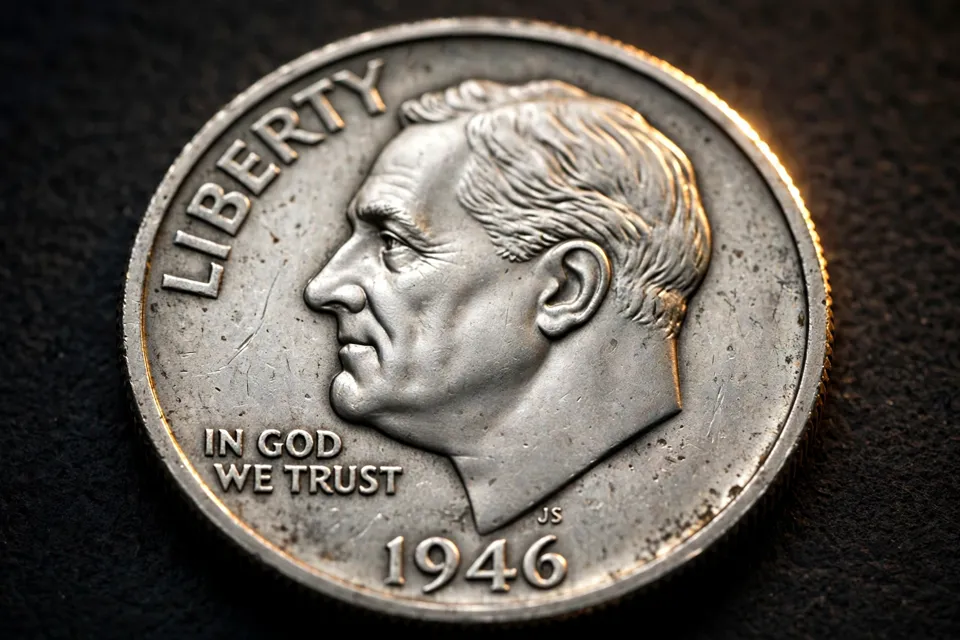
The coin is officially the Winged Liberty Head dime, designed by Adolph A. Weinman. Collectors call it a Mercury dime because Liberty’s winged cap recalls the helmet of the Roman god Mercury, but the portrait is Liberty. The Mint struck it for thirty years before the Roosevelt dime replaced it in 1946. Diameter 17.9 millimetres, reeded edge, no mint mark for Philadelphia, D for Denver, S for San Francisco.
Verified auction records
One verified record anchors the top of this coin’s market in our auction data. The finest 1916-D is a world apart from the worn examples that trade every week — it is the coin every other 1916-D is measured against.
| Coin | Grade | Sale | Price |
|---|---|---|---|
| 1916-D Mercury dime | MS67 Full Bands | Heritage Auctions, August 2010 | $207,000 |
That record has stood since 2010. Nothing else in the series has come close, and no worn or mid-grade 1916-D will ever approach it — the record belongs to a single coin in the finest known grade with the Full Bands designation. For the rest of us, the realistic range is the grade table above.
Latest reported results for this coin
Checking for newly reported results…
Your 1916-D Mercury dime questions, answered
How much is a 1916-D Mercury dime worth today?
A worn 1916-D is worth $1,000+ in Good condition and $3,800–$5,000 in Fine, while a Mint State example with Full Bands reaches $52,500+. The series record is a 1916-D graded MS67 Full Bands that reached $207,000 at Heritage in August 2010.
What does Full Bands mean on a Mercury dime?
Full Bands means the middle horizontal band of the fasces on the reverse is fully split into two clean lines across its whole width. The designation applies only to Mint State coins: a common-date MS65 rises from $60+ to $150+, and on the 1916-D the gap runs into tens of thousands.
How do I tell if my Mercury dime is silver?
Every Mercury dime dated 1916 to 1945 is 90% silver, so the date alone proves it. The silver content is 0.07234 troy ounces — the live metal floor for this coin is in the specs section above and moves with the live silver market.
Where is the mint mark on a Mercury dime?
The mint mark is on the reverse, low on the left beside the fasces near the rim: D for Denver, S for San Francisco, and no mint mark for Philadelphia. It separates a common 1916 dime, worth little more than its silver, from the $1,000+ 1916-D key date.
Should I get my 1916-D authenticated?
Yes — always, before buying or selling. The 1916-D is the most faked key date in the series, with D mint marks added to common 1916 Philadelphia dimes. A professional opinion from PCGS or NGC settles the question permanently, and certification is where the Full Bands premium is paid.
Check your 1916-D
Run the date and mint mark through the free Coin Value Checker for an instant estimate, or get a Grade-or-Not verdict on whether your coin is worth certifying. The full series guide is here: Mercury Dime Values: 1916-D, Full Bands & $207,000+ Records.
This guide is for education — learn the coin first, and get a professional opinion before buying or selling.