1916 Standing Liberty Quarter: The $3,250+ First Year
Coin Encyclopedia · 8 min read · Published November 7, 2026
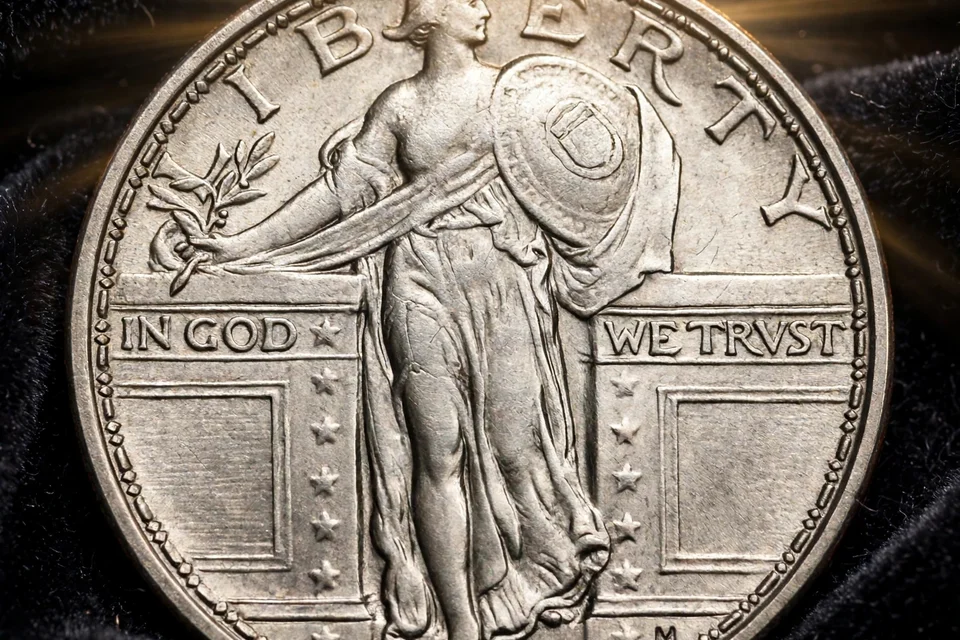
Fifty-two thousand. That is the entire mintage of the 1916 Standing Liberty quarter, the first year of Hermon MacNeil’s design and one of the scarcest regular-issue quarters of the twentieth century. The coins were struck late in 1916, released into a country that had no idea the design would change within months, and most of them went straight into circulation. A worn example with a readable date is a four-figure coin, and the finest known, graded MS67 Full Head, reached $207,400 at Heritage in May 2026.
This page walks through the coin the way a collector would: the mintage first, then the Type 1 design, then the Full Head test that decides the top end, then the metal underneath. Every figure here comes from our own value guide or from the verified auction record, and where our guide has not researched a figure, the page says so rather than guessing.
A late start and a small mintage
The Standing Liberty quarter arrived late. MacNeil’s design — Liberty striding forward through a gateway, an olive branch in one hand and a shield in the other — was approved in 1916, but the dies reached the mints near the end of the year. Philadelphia struck 52,000 quarters before the year ran out, and that was all. There was no San Francisco or Denver issue in 1916: the first-year coin is a Philadelphia coin, with no mint mark at all.
Fifty-two thousand is small by any measure, and it looks smaller still once circulation is taken into account. The coins went into tills and pockets in the winter of 1916–17, and they wore the way high-relief coins wear: the date and Liberty’s head took the first knocks. By the time collectors began looking for the 1916 in earnest, most survivors were already worn, and the uncirculated ones were few. The mintage is the floor of the story; the survival rate is the rest of it.
Type 1: the bare breast
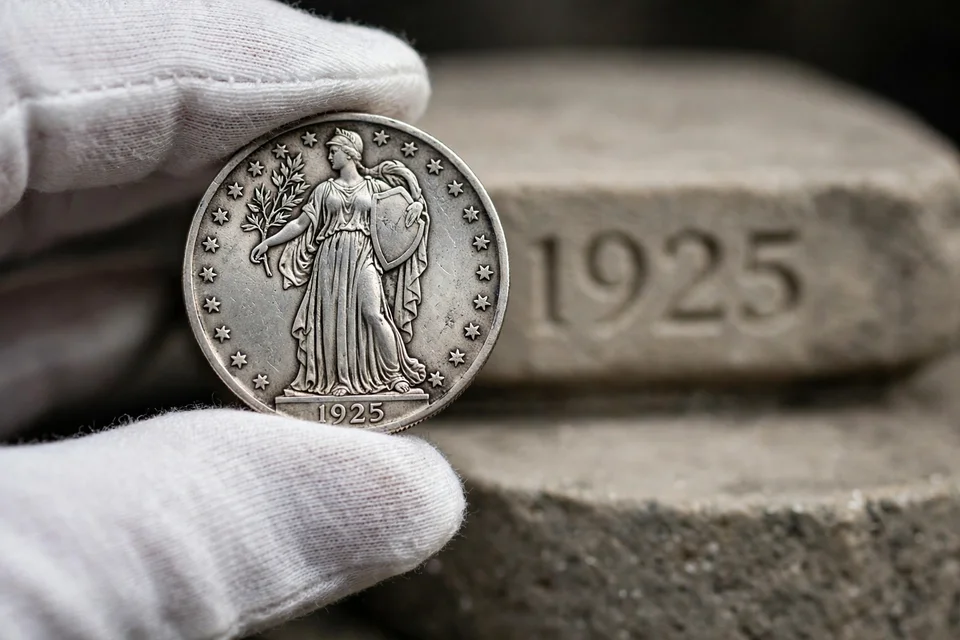
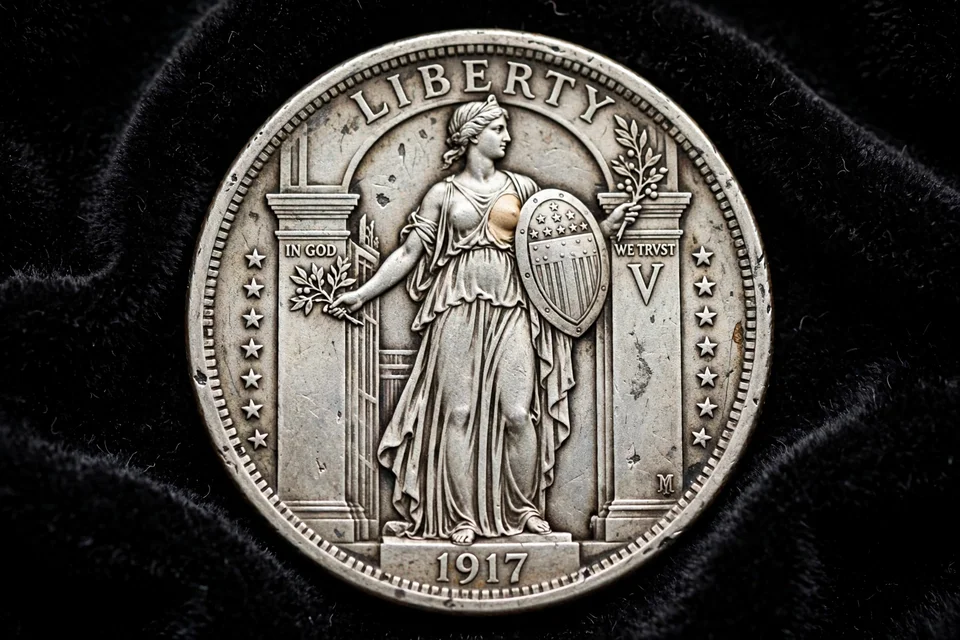
Look at Liberty’s chest. On the 1916 and on the first 1917 issues, Liberty’s breast is bare — the design as MacNeil sculpted it, classical and unclothed above the drapery. Within months the design was changed: a chain-mail vest was added, covering the breast, and the type collectors call Type 2 was born. The change came after public criticism of the original design, and it happened in the middle of 1917, so the year 1917 exists in both types at all three mints.
The 1916 is a Type 1 coin by definition — every 1916 Standing Liberty quarter shows the original design, because the change had not happened yet. That makes the date easy to identify and hard to mistake: a 1916 quarter is a first-year Type 1, struck in Philadelphia, with no mint mark. The Type 1 design is also the reason the 1916 looks different from most Standing Liberty quarters a collector handles; the later coins all wear the chain mail.
What the 1916 is worth by grade
Grade decides almost everything on this coin, and the spread is wide: our value guide’s Good figure starts at $3,250+, while Mint State 65 reaches $39,040–$41,480. The figures below are our researched collector estimates, and the live module on this page updates them from our Worker as newly reported results come in.
| Grade | Estimated value |
|---|---|
| Good (G-4) | $3,250–$4,680 |
| Fine (F-12) | $7,600–$10,000 |
| Extremely Fine (XF-40) | $9,000–$11,000 |
| About Uncirculated (AU-50) | $11,000–$14,640 |
| Mint State 60 (MS-60) | $17,000–$20,000 |
| Mint State 65 (MS-65) | $39,040–$41,480 |
Guide values reviewed November 5, 2026 — figures update live from our Worker.
Two things stand out. First, there is no cheap 1916: even a heavily worn example with a readable date is a four-figure coin. Second, the jump from Mint State 60 to Mint State 65 is more than double, and the step from Mint State 65 to a Full Head gem is larger still — the record at the bottom of this page is a different world from the grade table, because it is a MS67 Full Head, not a typical Mint State coin. The table is the realistic range for the coins collectors actually encounter.
The Full Head test
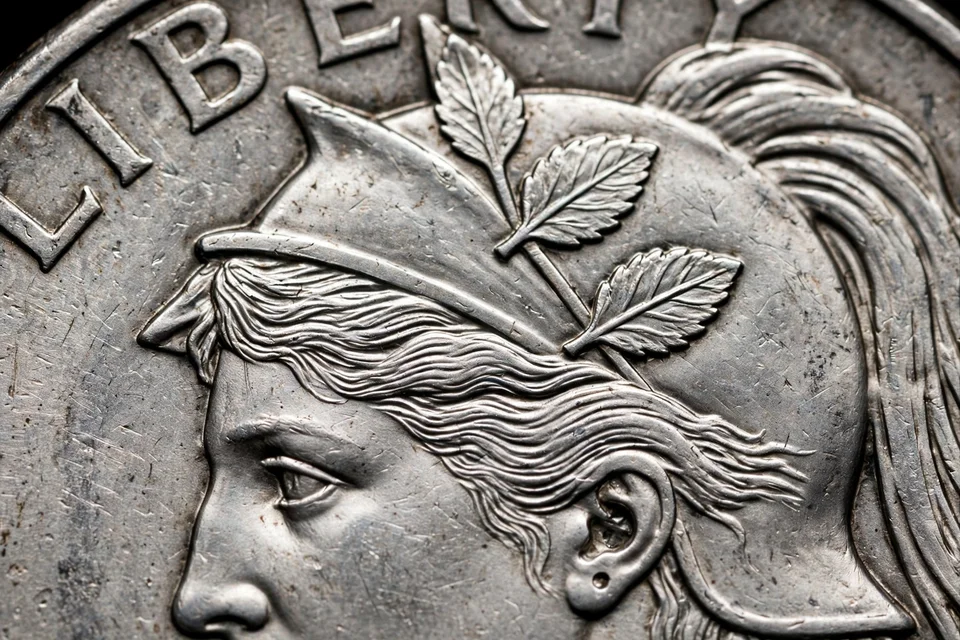
On a Standing Liberty quarter, the head decides the top end. A fully struck head — Full Head, or FH — shows Liberty’s hair in complete detail: the curls above the forehead are distinct, the ear is clearly visible, and the strands do not blur together. Most 1916 quarters were not struck sharply enough to earn the designation, and circulation wore the detail away on the rest. A Mint State 1916 with a Full Head is a rare coin in a way that a merely uncirculated 1916 is not.
Check the head under a loupe before anything else on an uncirculated example. If the hair is soft or the ear is missing, the coin is not Full Head, whatever else it has going for it. The designation is decided by the strike, not by the grade alone, and it is the grading services that award it. A raw coin that looks Full Head deserves a professional opinion, because the designation is where the largest premiums live.
Specs and the silver floor
The 1916 is 90% silver, struck on a 6.25-gram planchet, 24.3 millimetres across, with a reeded edge and about 0.18 troy ounces of pure silver. That metal gives every genuine example a floor: $9.42. Silver moves daily, so the floor moves with it, but the floor is real — no genuine 1916 is worth less than its metal.
Metal floor updates live from our Worker — last updated November 7, 2026.
The coin carries no mint mark, because it was struck at Philadelphia. The date sits at the bottom of the obverse, below Liberty’s feet, and on worn examples it is the first detail to fade — a 1916 with a fully readable date is already a better coin than one with a faint one. Weigh a suspect example: a genuine coin reads 6.25 grams, and a coin far from that figure deserves a professional look.
Verified auction records
One verified record anchors the top of this coin’s market in our auction data. The finest 1916 is a world apart from the worn examples that trade most often — it is the coin every other 1916 is measured against.
| Coin | Grade | Sale | Price |
|---|---|---|---|
| 1916 Standing Liberty quarter | MS67 Full Head | Heritage Auctions, May 2026 | $207,400 |
That record was set in May 2026, and it belongs to a single coin: a 1916 graded MS67 Full Head, the highest verified result for the issue. Nothing else in the issue has approached it, and no worn or mid-grade 1916 will ever come close — the record is the ceiling, and the grade table above is the realistic range. The gap between the two is the Full Head designation and seven points of grade.
Latest reported results for this coin
Checking for newly reported results…
Your questions, answered
How many 1916 Standing Liberty quarters were struck?
Philadelphia struck 52,000 Standing Liberty quarters in 1916, the first year of the design. No branch mint struck the issue in 1916, so every 1916 is a Philadelphia coin with no mint mark.
What is a Type 1 Standing Liberty quarter?
Type 1 is the original 1916 and early-1917 design, showing Liberty with a bare breast. Mid-1917 the design was changed to add a chain-mail vest, creating Type 2. Every 1916 is a Type 1 by definition.
What does Full Head mean on a Standing Liberty quarter?
Full Head means Liberty's head is fully struck: the hair curls are distinct, the ear is clearly visible, and the detail does not blur. The designation applies mainly to Mint State coins, and it carries the largest premiums on this issue — the record 1916 is a MS67 Full Head.
How much is a 1916 Standing Liberty quarter worth?
Our value guide's researched estimates run from $3,250+ in Good to $39,040–$41,480 in Mint State 65, with the finest known example reaching $207,400 at Heritage in May 2026. Figures update live on this page from our Worker.
Is the 1916 Standing Liberty quarter silver?
Yes. It is 90% silver, 6.25 grams, with about 0.18 troy ounces of pure silver. The live metal floor for this coin is in the specs section above, and it moves with the silver market.
Check your 1916
Run the date through the free Coin Value Checker for an instant estimate, or get a Grade-or-Not verdict on whether certification is worthwhile. The full series guide is here: Standing Liberty Quarter Value and Key Dates. The next scarce Type 1 is the 1917-S Standing Liberty Quarter, and the 1921 Standing Liberty Quarter is the scarce date of the later series.
Fifty-two thousand struck, one design change, and a head that decides the top end — the 1916 teaches collectors that the first year of a design is often the one worth learning first, and that a loupe and a scale beat a guess every time.
This guide is for education — learn the coin first, and get a professional opinion before buying or selling.