1921 Standing Liberty Quarter: A Low-Mintage Standout
Coin Encyclopedia · 8 min read · Published November 7, 2026
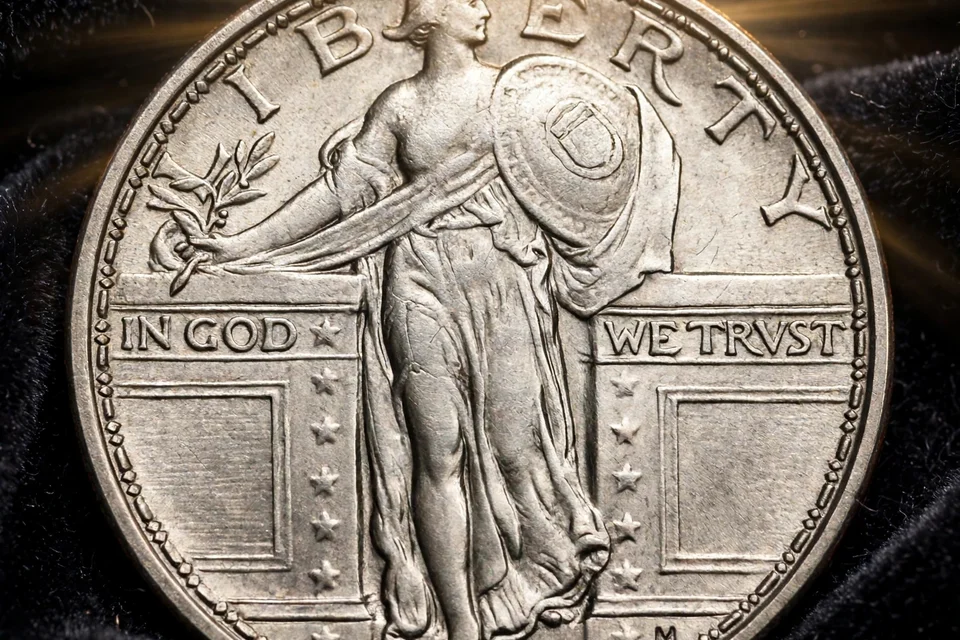
In 1921, only Philadelphia struck quarters, and it struck fewer than two million of them. That makes the 1921 Standing Liberty quarter the scarce date of the later series: a low-mintage year in a decade when the mints usually struck quarters by the tens of millions, and a coin that spent its life in circulation because nobody in 1921 was saving quarters for the future.
The 1921 has a second problem, and it is the one collectors notice first. Its date is raised, not recessed, so the date wears away faster than on the later issues. A 1921 with a fully readable date is already a better coin than most of its brothers, and this page explains why the number is small, why the date fades, and what to look for in hand.
A quiet year at the Mint
The year 1921 was a quiet one for American coinage. The economy was contracting after the war, demand for new coins was low, and the mints cut back sharply. Philadelphia struck 1,916,000 quarters that year, and San Francisco and Denver struck none at all. For a series that usually ran into the tens of millions, 1,916,000 is a small number, and it is the whole reason the 1921 is scarce.
There was nothing special about the coins themselves. They were ordinary Type 2 quarters, Liberty in chain mail, struck on the standard planchet and sent out to circulate. Nobody set them aside, because nobody in 1921 had any reason to think a 1921 quarter would matter. The scarcity was discovered later, as collectors worked through the series and found the 1921 missing from album after album.
Why the date fades first
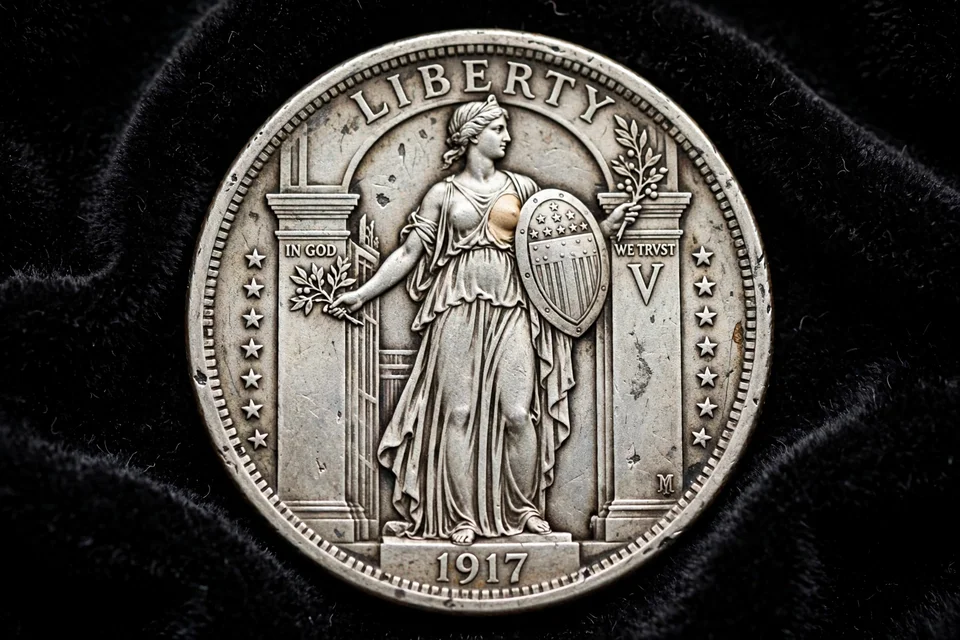
Look at the date on a 1921 quarter. It sits at the bottom of the obverse, below Liberty’s feet, raised above the field rather than sunk into it. On the later Standing Liberty quarters, from 1925 onward, the date was recessed into the design to protect it from wear. The 1921 never got that protection, and the date is the first detail to go: the numerals soften, then blur, then vanish entirely on the most worn examples.
That wear pattern is the collector’s first test. A 1921 with a sharp, fully readable date has survived better than most, and the date is what separates a collectible 1921 from a worn slug with a guess attached. Check the date under a loupe and in good light: all four digits should read clearly, with no digit fainter than the rest. A coin with a weak or partial date is a different coin, however honest its wear.
The Philadelphia mark that is not there
The 1921 carries no mint mark, because it was struck at Philadelphia. That is worth saying plainly, because the absence of a letter is itself the identification: a 1921 quarter with an S or a D does not exist, and any coin that appears to carry one has been altered. The date is the coin, and the empty field to the left of the date is exactly as it should be.
It also means the 1921 is easy to mistake for a common date at a glance. The coin looks like any other Standing Liberty quarter until the date is read, and the date is the only thing that matters. Every 1921 quarter deserves a look at the date before it goes back into a jar, because the year is the rarity.
What our guide shows for the 1921
Our value guide has not yet researched grade-by-grade figures for this date, so the table below shows “—” for every grade. That blank is honest: the mintage of 1,916,000 is documented, the Philadelphia-only status is documented, and a guessed figure would help nobody. Grade figures will be added here when they are researched.
| Grade | Estimated value |
|---|---|
| Good (G-4) | — |
| Fine (F-12) | — |
| Extremely Fine (XF-40) | — |
| About Uncirculated (AU-50) | — |
| Mint State 60 (MS-60) | — |
| Mint State 65 (MS-65) | — |
Guide values reviewed November 5, 2026 — figures update live from our Worker.
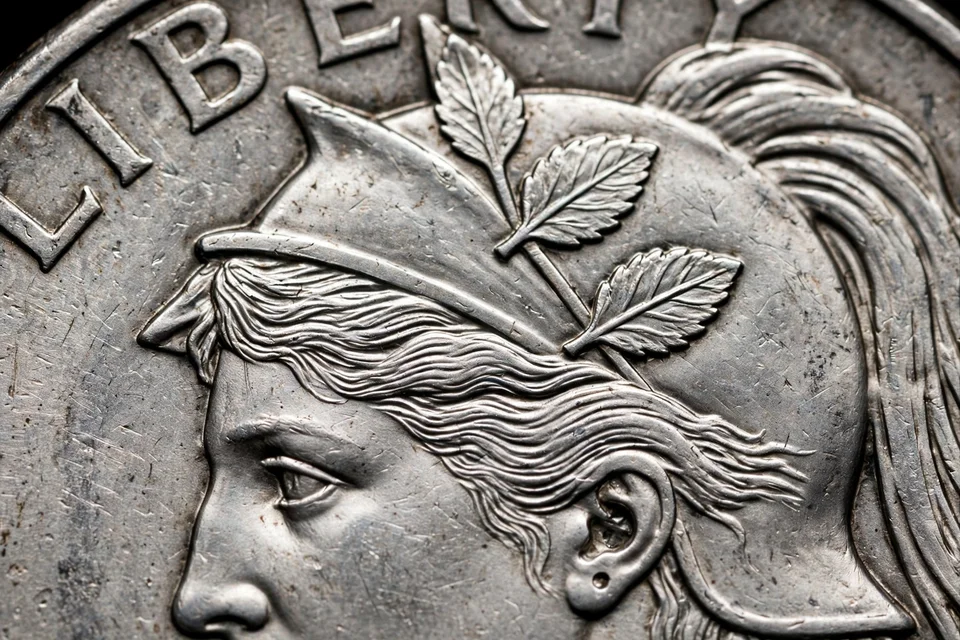
What can be said with confidence is the shape of the market. The 1921 is the scarce date of the later series, and the premium sits on the date itself: a fully dated example is worth far more than a dateless one, and a Full Head example — Liberty’s hair fully struck, the ear clearly visible — is the rarest form of all. Worn examples with a clear date are the ones collectors encounter most often.
The silver underneath
Every Standing Liberty quarter is 90% silver, struck on a 6.25-gram planchet, 24.3 millimetres across, with a reeded edge and about 0.18 troy ounces of pure silver. That metal gives every genuine example a floor: $9.42. Silver moves daily, so the floor moves with it, but the floor is real — no genuine 1921 is worth less than its metal.
Metal floor updates live from our Worker — last updated November 7, 2026.
Use the weight as a quick test. A genuine coin weighs 6.25 grams on a pocket scale. A light coin, a coin with a soft or uneven edge, or a coin whose surfaces look cast rather than struck should be checked by a professional before any decision is made about it.
Handling a scarce date
Do not clean it. A coin that has survived since 1921 has earned its surfaces, and cleaning strips them away permanently. Handle it by the edges, store it in an acid-free holder, and keep it away from humidity and household chemicals. If the coin is raw, photograph both sides and note where it came from.
Then get the date confirmed. A professional opinion on grade is worth having on a 1921, because the date is the coin’s identity and the premium sits on the date being fully readable. Certification is the standard for a scarce date like this one.
Latest reported results for this coin
Checking for newly reported results…
Your questions, answered
How many 1921 Standing Liberty quarters were struck?
Philadelphia struck 1,916,000 Standing Liberty quarters in 1921, and no branch mint struck quarters that year. It is the scarce date of the later series.
Why does the date wear off 1921 quarters?
The 1921 date is raised above the field, not recessed into the design. The recessed date that protects later Standing Liberty quarters did not arrive until 1925, so the 1921 date is the first detail to fade.
Does the 1921 Standing Liberty quarter have a mint mark?
No. It was struck at Philadelphia, so the field to the left of the date is empty. A 1921 quarter with an S or a D does not exist, and any coin showing one has been altered.
Is the 1921 Standing Liberty quarter silver?
Yes. Every Standing Liberty quarter is 90% silver, 6.25 grams, with about 0.18 troy ounces of pure silver. The live metal floor for this coin is in the specs section above, and it moves with the silver market.
Should a 1921 Standing Liberty quarter be certified?
Yes, especially if the date is fully readable. Certification settles the grade, and the premium on this date sits on the date being clear — a professional opinion protects that.
Check your 1921
Run the date through the free Coin Value Checker for an instant estimate, or get a Grade-or-Not verdict on whether certification is worthwhile. The full series guide is here: Standing Liberty Quarter Value and Key Dates. The first-year coin is the 1916 Standing Liberty Quarter, and the 1923-S Standing Liberty Quarter is the scarce San Francisco date of the 1920s.
Fewer than two million struck, no branch-mint issues, and a date that fades first — the 1921 teaches collectors to read the date before anything else, because on this coin the date is the rarity.
This guide is for education — learn the coin first, and get a professional opinion before buying or selling.