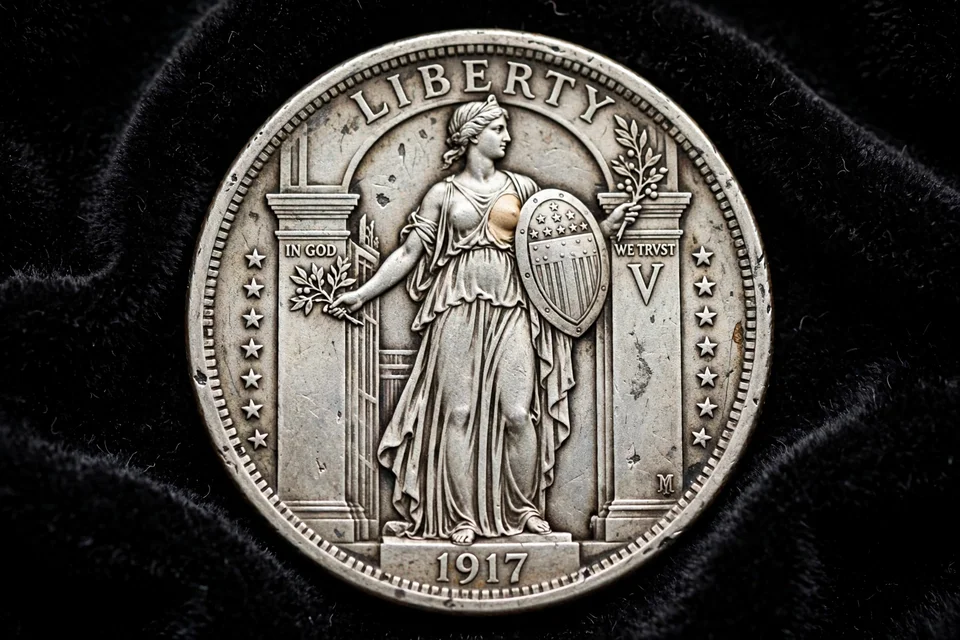
1923-S Standing Liberty Quarter: Scarce San Francisco Date
Coin Encyclopedia · 8 min read · Published November 7, 2026
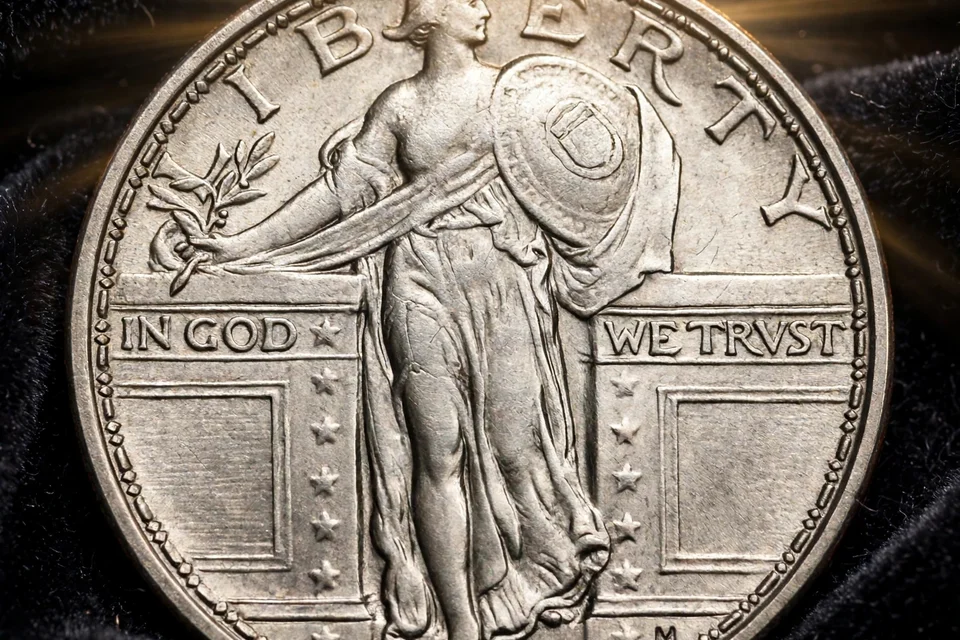
The 1923-S Standing Liberty quarter is a scarce coin with a soft strike. San Francisco struck 1,360,000 of them in 1923, a modest number for the decade, and the dies were not up to the design: most 1923-S quarters left the mint with Liberty’s head weakly struck, the hair detail blurred before the coin ever entered circulation. That weak strike is the coin’s signature, and it is why a sharply struck 1923-S is so hard to find.
Collectors chase this date for two reasons at once: the mintage is low, and the strike is poor. A worn 1923-S with a readable date is scarce enough on its own; a Full Head 1923-S is one of the great rarities of the series. This page explains the strike problem, how to judge the head, and where the S sits.
A modest mintage in a big decade
The 1920s were a high-output decade for quarters, and most dates from the middle of the decade are common. The 1923-S is the exception. San Francisco struck 1,360,000 quarters in 1923, a fraction of what Philadelphia struck the same year, and the coins went into circulation on the West Coast, where they wore hard. Few were ever set aside, and the survivors are thin on the ground in every grade.
The mintage alone would make the 1923-S a better date. What makes it a key date is the strike. San Francisco’s dies that year were worn and poorly prepared, and the result is a coin that looks tired from the moment it leaves the mint. Liberty’s head is the weakest point, and on most survivors the hair detail is soft even before circulation adds its own wear.
The weak strike problem
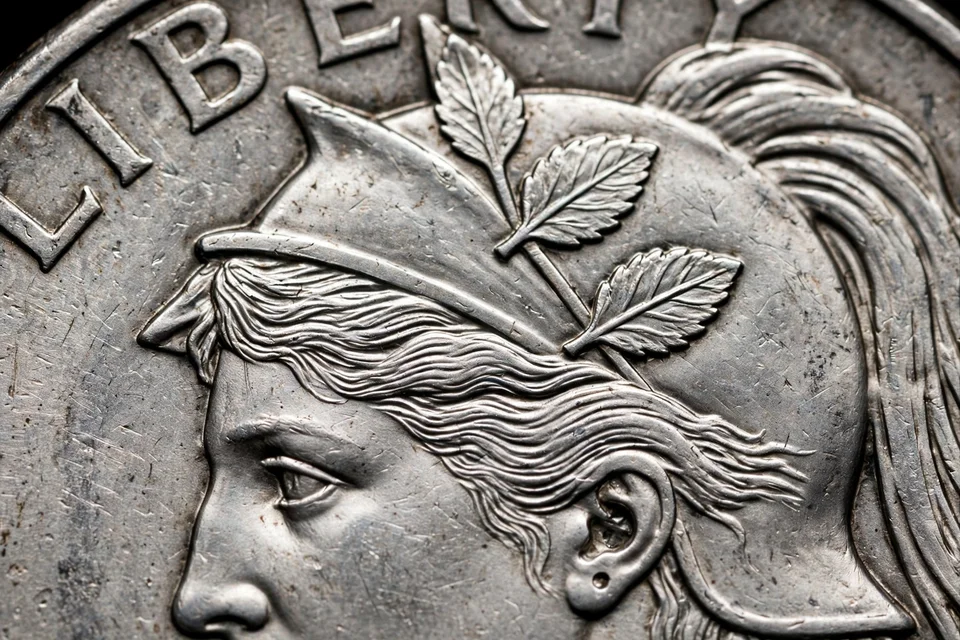
Hold a 1923-S under a loupe and look at Liberty’s head first. On a typical example, the hair above the forehead is mushy, the ear is faint or missing, and the strands blend into a flat mass. That is the strike, not the wear: the die never carried the detail in the first place. Telling strike weakness from circulation wear is the central skill of collecting this date, and it takes practice.
The test is the rest of the coin. If the shield, the drapery, and the eagle on the reverse are also soft, the coin was weakly struck. If the rest of the coin is sharp and only the head is soft, the head has worn in circulation. A weakly struck coin is not a damaged coin, and it is not a lower-grade coin by itself — but it will never be a Full Head coin, and the Full Head premium is where the top of this date lives.
Where the S sits
The mint mark on a Standing Liberty quarter is on the obverse, to the left of the date just above the rim. On the 1923-S it is a small S, and on a worn coin it can be hard to find. Check it under a loupe, and check the date beside it: the date on the 1923-S is raised, not recessed, because the recessed date did not arrive until 1925, so the date fades early on worn examples.
A clear date and a clear S are the starting point for this coin. Without them, the coin is a guess, and the 1923-S is not a date to guess on: the gap between a common 1923 Philadelphia quarter and the San Francisco issue is large, and altered mint marks are a known trap on this series.
What our guide shows for the 1923-S
Our value guide has not yet researched grade-by-grade figures for this date, so the table below shows “—” for every grade. That blank is honest: the mintage of 1,360,000 is documented, the weak strike is documented, and a guessed figure would help nobody. Grade figures will be added here when they are researched.
| Grade | Estimated value |
|---|---|
| Good (G-4) | — |
| Fine (F-12) | — |
| Extremely Fine (XF-40) | — |
| About Uncirculated (AU-50) | — |
| Mint State 60 (MS-60) | — |
| Mint State 65 (MS-65) | — |
Guide values reviewed November 5, 2026 — figures update live from our Worker.
What can be said with confidence is where the premium sits. On the 1923-S, it sits on the head: a Full Head example is one of the rarest coins in the series, and the gap between a Full Head and a merely uncirculated example is enormous. Worn examples with a clear date and a clear S are the ones collectors encounter most often, and they are the ones that reward a careful look at the strike.
The silver underneath
Every Standing Liberty quarter is 90% silver, struck on a 6.25-gram planchet, 24.3 millimetres across, with a reeded edge and about 0.18 troy ounces of pure silver. That metal gives every genuine example a floor: $9.42. Silver moves daily, so the floor moves with it, but the floor is real — no genuine 1923-S is worth less than its metal.
Metal floor updates live from our Worker — last updated November 7, 2026.
Use the weight as a quick test. A genuine coin weighs 6.25 grams on a pocket scale. A light coin, a coin with a soft or uneven edge, or a coin whose surfaces look cast rather than struck should be checked by a professional before any decision is made about it.
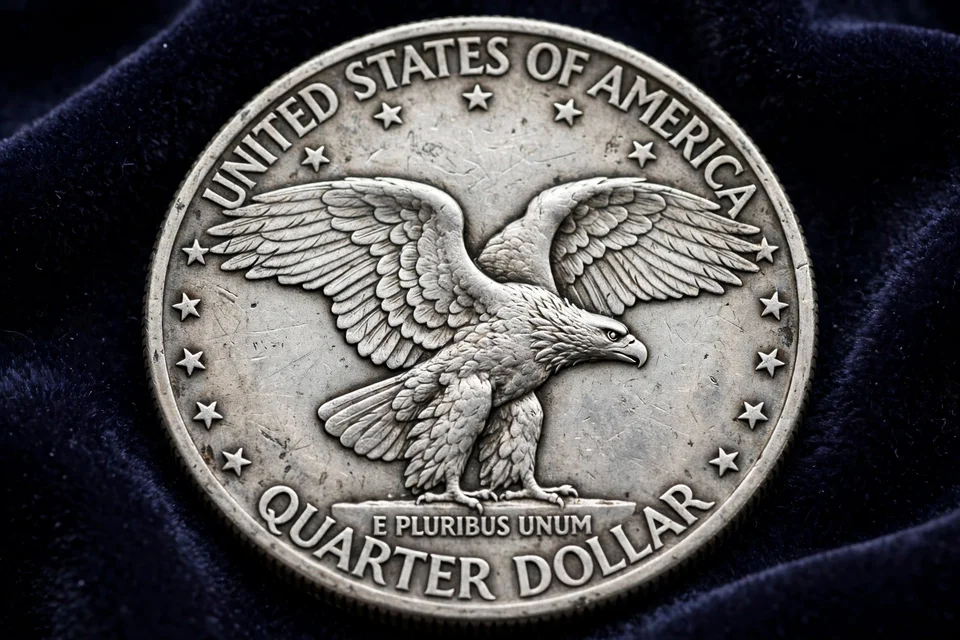
Handling a weak-strike key
Do not clean it. Original surfaces are everything on a coin like this, and cleaning removes them permanently. Handle it by the edges, store it in an acid-free holder, and keep it dry. If the coin is raw, photograph both sides in good light and keep a note of where it came from.
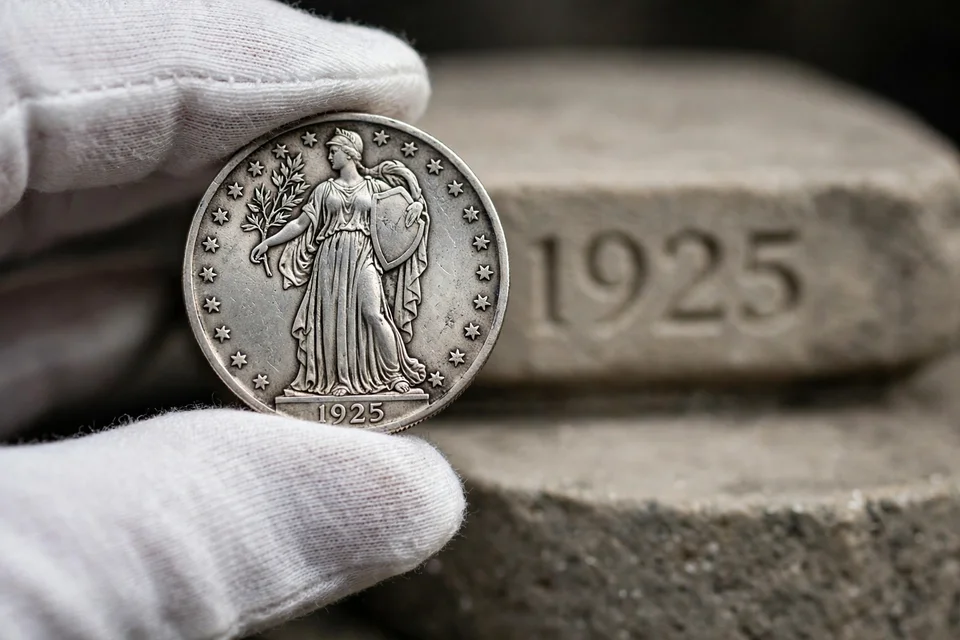
Then get it certified, especially if the head looks sharp. A professional opinion on authenticity, grade, and Full Head status is the standard for the 1923-S, and it protects the coin and everyone who handles it afterwards. A weakly struck coin and a worn coin can look alike to an untrained eye, and the distinction matters.
Latest reported results for this coin
Checking for newly reported results…
Your questions, answered
How many 1923-S Standing Liberty quarters were struck?
San Francisco struck 1,360,000 Standing Liberty quarters in 1923, a modest mintage for the decade and the reason this date is scarce in every grade.
Why are 1923-S quarters so weakly struck?
San Francisco's dies that year were worn and poorly prepared, so most 1923-S quarters left the mint with Liberty's head soft — the hair detail blurred before the coin ever entered circulation.
How do I tell weak strike from wear on a 1923-S?
Check the rest of the coin: if the shield, drapery, and reverse eagle are also soft, the coin was weakly struck. If the rest is sharp and only the head is soft, the head wore in circulation.
Where is the mint mark on a 1923-S Standing Liberty quarter?
The S is on the obverse, to the left of the date just above the rim. Check it under a loupe — on worn coins it can be hard to find.
Is the 1923-S Standing Liberty quarter silver?
Yes. Every Standing Liberty quarter is 90% silver, 6.25 grams, with about 0.18 troy ounces of pure silver. The live metal floor for this coin is in the specs section above, and it moves with the silver market.
Check your 1923-S
Run the date and mint mark through the free Coin Value Checker for an instant estimate, or get a Grade-or-Not verdict on whether certification is worthwhile. The full series guide is here: Standing Liberty Quarter Value and Key Dates. The scarce Philadelphia date is the 1921 Standing Liberty Quarter, and the 1927-S Standing Liberty Quarter is the late-series key.
Low mintage, soft strike, and a head that decides everything — the 1923-S teaches collectors to judge the strike before the wear, because on this date the die did half the wearing before the coin ever left the mint.
This guide is for education — learn the coin first, and get a professional opinion before buying or selling.