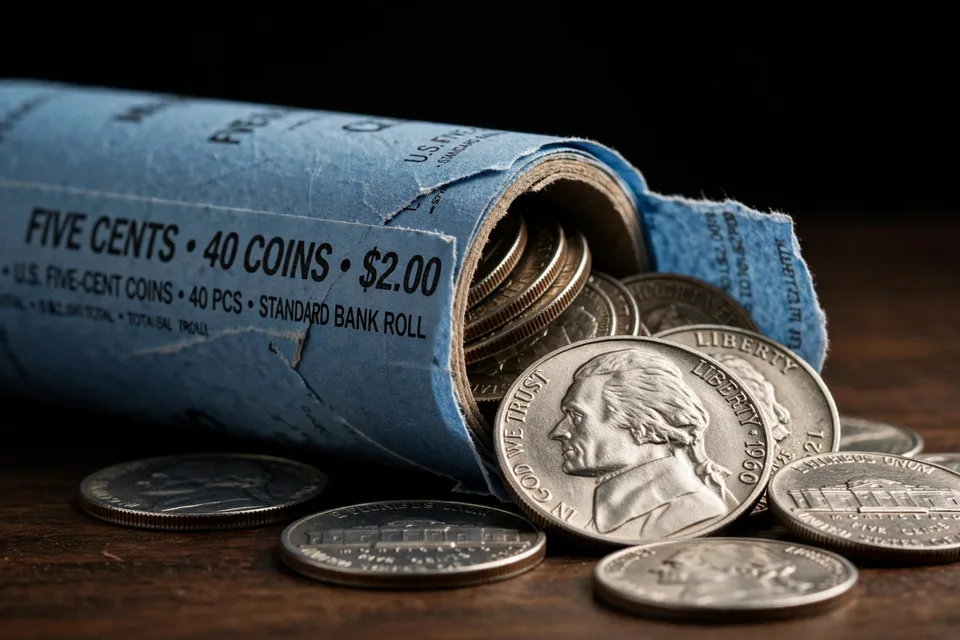
1943 Jefferson Nickel: The Silver War Nickel Test
Coin Encyclopedia · 8 min read · Published November 7, 2026
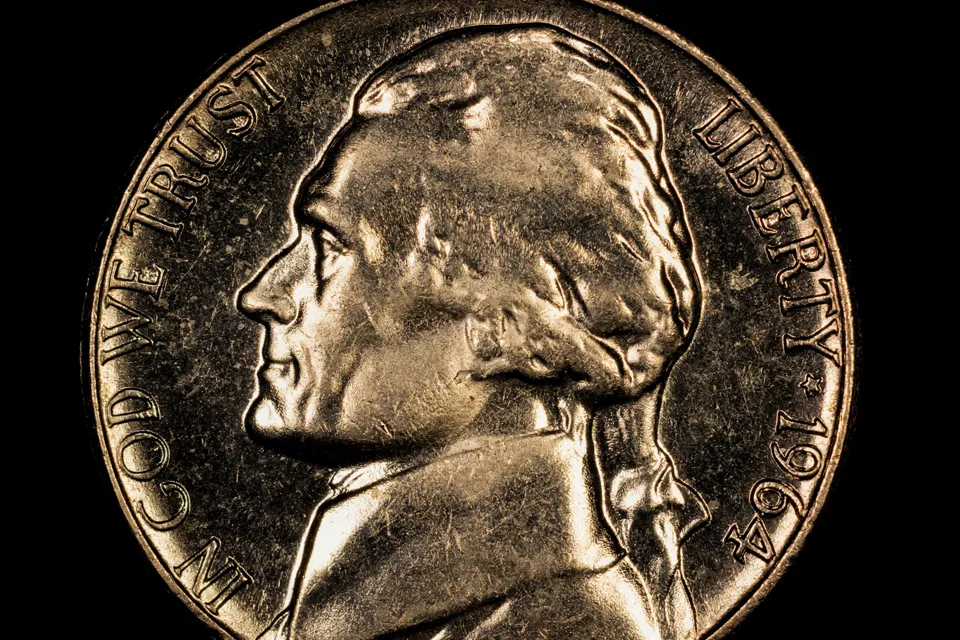
Flip the coin over. If a large P, D, or S sits above the Monticello dome, you are holding silver. That is the whole test for the 1943 Jefferson nickel, and it takes two seconds: the oversized wartime mint mark is unmistakable, and it appears on every 1942–1945 nickel struck in 35% silver. The regular Jefferson nickel carries a small mint mark to the right of Monticello, or no mark at all. The war nickel carries a big letter above the dome, and that letter is the difference between a five-cent coin and a silver coin.
The 1943 nickel is the middle year of the war-nickel run, and it is the year most collectors meet first. The coins were struck in huge numbers, they circulated hard, and they still turn up in rolls and jars today, because the big mint mark makes them easy to spot and easy to save. This page is about that test, and about what the silver does and does not mean: a war nickel is worth more than face value, but it is not a rarity, and the difference between a common war nickel and a valuable one is the variety and the condition, not the silver alone.
The two-second silver test
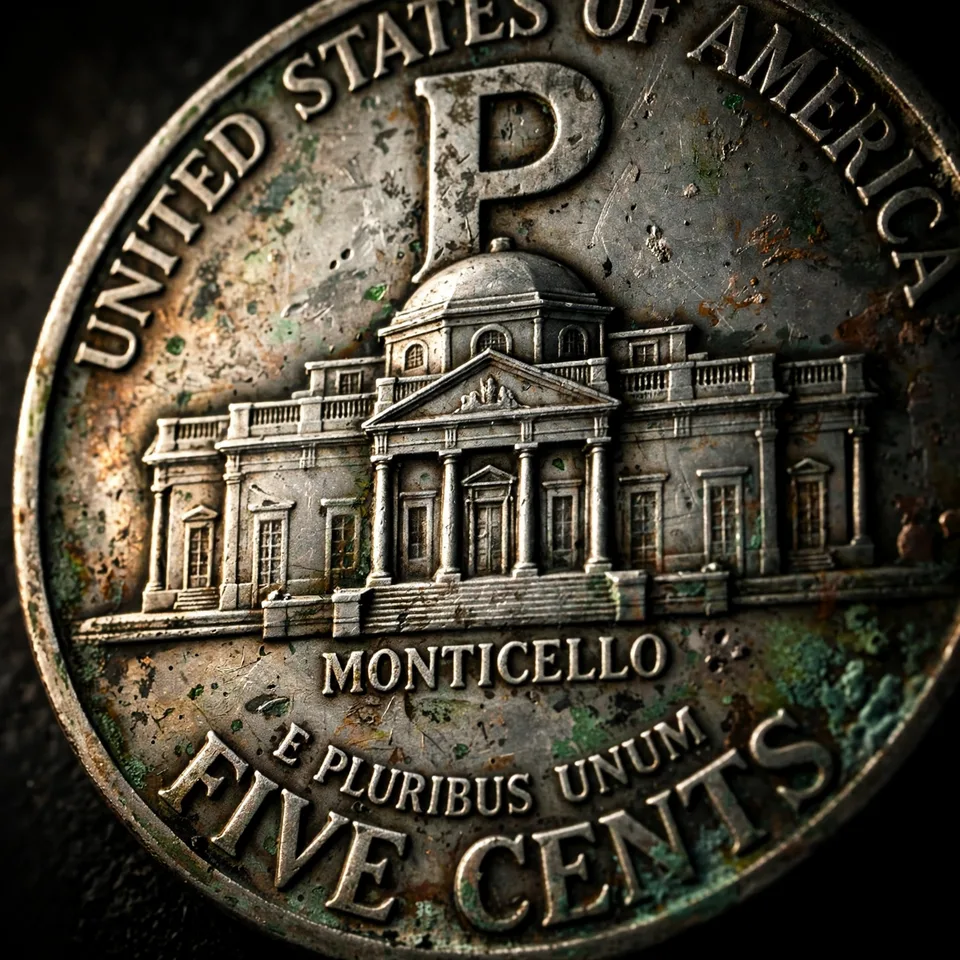
Turn the coin over and look above the dome of Monticello. On a regular Jefferson nickel there is nothing there. On a war nickel there is a large letter, P for Philadelphia, D for Denver, or S for San Francisco, sitting high above the building where no mint mark normally goes. The letter is oversized on purpose: the Mint wanted these coins to be easy to identify, so they could be pulled from circulation after the war, and the big mark does that job at a glance.
That is the test, and it is the only test you need for the silver question. Do not judge by colour: a worn war nickel can look like an ordinary nickel, and an ordinary nickel can look silvery in the wrong light. Do not judge by the date alone either: 1942 nickels exist in both compositions, because the change came mid-year, and only the big mint mark tells them apart. The mark is the answer, and it is visible without a loupe.
Why the Mint changed the metal
Nickel metal was needed for the war effort. From 1942 to 1945 the Mint struck five-cent pieces in 35% silver instead of nickel, because the nickel was going into armour plate and other war material, and the five-cent piece had to be made of something else. The silver alloy was 35% silver, with copper and manganese making up the rest, and each coin holds about 1.75 grams of pure silver in a coin that weighs 5 grams. That silver content is what gives the coin a metal floor above face value, and it is the reason war nickels are still pulled from circulation today.
The change was temporary, and it ended with the war. In 1946 the Mint went back to the ordinary copper-nickel composition, and the war nickels stayed in circulation for decades afterwards, mixed in with the regular coins. The big mint mark is the reason they are still findable: a roll searcher can spot one in seconds, and a jar of old nickels can hide several. They are not rare, but they are silver, and silver is the reason they are worth more than five cents.
The 1943/2-P overdate — a different coin
Not every 1943 nickel is the same coin. The 1943/2-P overdate is a separate variety, struck from a die in which a 1943 date was punched over a 1942 date, so the 3 shows a ghost of the 2 beneath it. Our guide records $50+ circulated and $200–$1,000+ uncirculated for the overdate. A regular 1943-P has a clean 3 with nothing beneath it, and it is the coin on this page.
Check the date under a loupe before you decide which coin you hold. On the overdate the ghost of the 2 shows through the lower part of the 3, like a shadow inside the digit. On a regular 1943 the 3 is clean. The mark is small, so use magnification and side light, and compare against a confirmed example if you can. If the mark is there, you hold the variety, and the variety is worth considerably more than the regular coin. If it is not there, you hold a regular war nickel, which is a fine coin in its own right but not the overdate.
What our value guide records for this date
Our value guide has not yet researched the 1943 wartime nickel grade by grade, so the table below is all dashes for now. The mintage is not recorded in our catalog either, and it shows “—” for the same reason: the catalog reviewed November 5, 2026, records the variety and nothing else for this date, and we will not fill the gaps with figures borrowed from elsewhere. The table will be completed as the grade-by-grade research lands.
| Grade | Estimated value |
|---|---|
| Good (G-4) | — |
| Fine (F-12) | — |
| Extremely Fine (XF-40) | — |
| About Uncirculated (AU-50) | — |
| Mint State 60 (MS-60) | — |
| Mint State 65 (MS-65) | — |
What the catalog does record is the variety, and on this date the variety does most of the talking. The 1943 wartime nickel is a silver coin, marked by a large mint mark above the dome, and that is the fact that carries this page. The silver content is about 1.75 grams of pure silver per coin, and the live metal floor for this coin is in the specs section below.
Specs and the silver floor
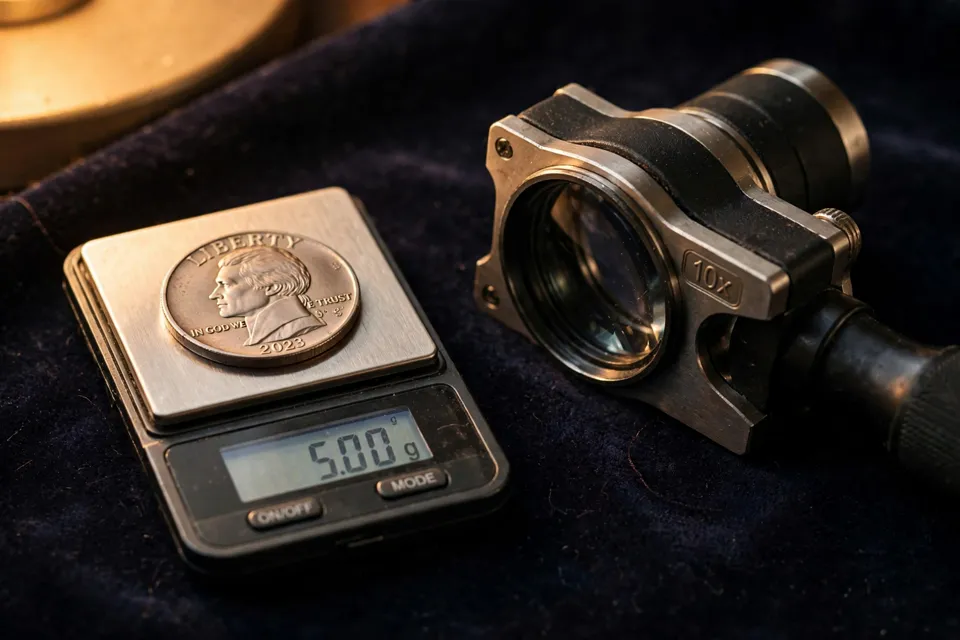
The wartime Jefferson nickel weighs 5.0 grams, measures 21.2 millimetres across, and has a plain edge. It is struck in 35% silver, with copper and manganese making up the rest, and each coin holds about 1.75 grams of pure silver. That silver content puts a floor under the coin, above its five-cent face value. The metal floor for this coin is —, because this series is not yet covered by our live metal-floor specs: no live floor figure shows here yet, and the specs section will carry it when the coverage lands. Until then, the silver content above is the fact to hold onto, and the big mint mark above the dome is the test that proves it.
Handling, storage, and getting a second opinion
Hold the coin by its edge, never across the faces, and never clean it. Cleaning strips the original surface and leaves hairlines that a grader will spot at once, and on a war nickel it can also strip the natural toning that silver develops over decades. Keep the coin in an acid-free flip or a proper holder, away from humidity, and do not store it loose with other coins. If the coin looks uncirculated, or if you believe it is the 1943/2-P overdate, a professional opinion from PCGS or NGC is worth the fee: certification settles the variety and the grade in one step, and on an overdate that certainty matters.
Latest reported results for this coin
Checking for newly reported results…
Your 1943 war nickel questions, answered
How can I tell if my 1943 Jefferson nickel is silver?
Flip the coin over. If a large P, D, or S sits above the Monticello dome, it is silver: the oversized wartime mint mark is unmistakable, and it appears on every 1942–1945 nickel struck in 35% silver. A small mint mark to the right of Monticello means an ordinary copper-nickel coin.
Why are 1943 nickels made of silver?
Because nickel metal was needed for the war effort. From 1942 to 1945 the Mint struck five-cent pieces in 35% silver instead of nickel, and marked them with the large mint mark above the dome so they could be pulled from circulation after the war.
How much silver is in a 1943 war nickel?
Each holds about 1.75 grams of pure silver, in a coin that weighs 5 grams. That silver content is what gives the coin a metal floor above face value, and the live floor for this coin is in the specs section below.
What is the 1943/2-P overdate?
It is a separate variety, not the regular 1943 nickel: a 1943 die punched over a 1942 die, so the 3 shows a ghost of the 2 beneath it. Our guide records $50+ circulated and $200–$1,000+ uncirculated for the overdate. A regular 1943-P has a clean 3 with nothing beneath it.
Does our value guide list estimates for the 1943 wartime nickel yet?
Not yet. All six grades currently show “—” in our catalog, reviewed November 5, 2026, and the mintage is not recorded in our catalog either. We show the gaps rather than guessing, and the table will be completed as the grade-by-grade research is done.
Check your 1943
Run the date and mint mark through the free Coin Value Checker for an instant estimate, or get a Grade-or-Not verdict on whether your coin is worth certifying. The full series guide is here: Nickel Values: 5¢ Coins Worth Up to $4.56 Million.
This guide is for learning and collecting, not financial advice. The silver content above is a specification, not a promise: the real worth of any single coin depends on its condition, its variety, and the market on the day you hold it.
This guide is for education — learn the coin first, and get a professional opinion before buying or selling.