1950-D Jefferson Nickel: Lowest Mintage, $17,250 Record
Coin Encyclopedia · 8 min read · Published November 7, 2026
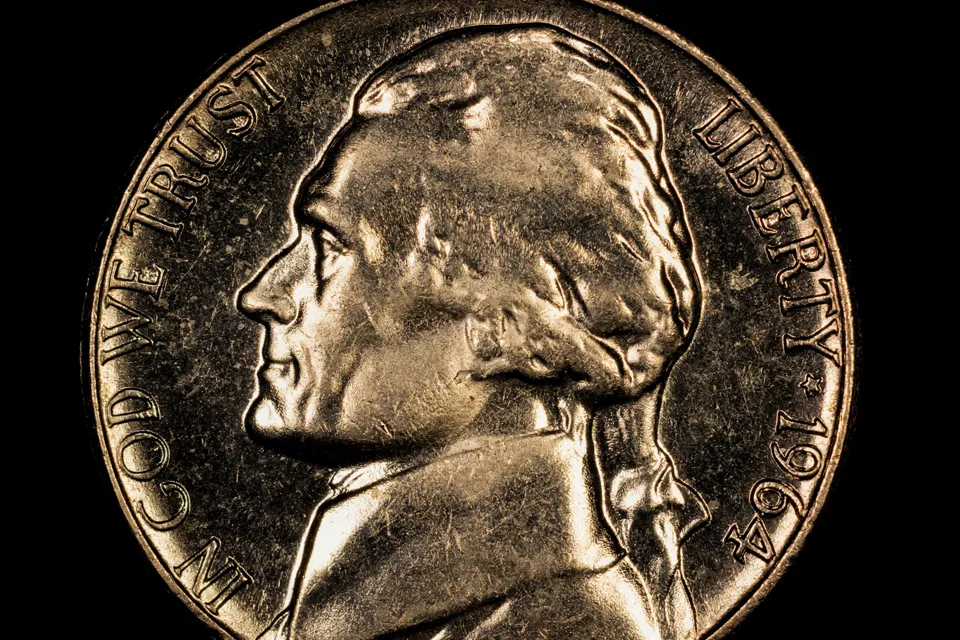
The 1950-D Jefferson nickel is the key date of the whole Jefferson series, and the reason fits in one number: 2,630,030. That is the lowest regular-issue mintage in the series, which has run since 1938, and it is the number that makes this date different from every other Jefferson nickel. Our guide records $5–$15 for circulated examples and $30–$40 for MS65 examples, and the record is $17,250, for an MS67 Full Steps example at Heritage in 2006. Between those figures sits a date that is scarce in every grade, and the date every Jefferson collection is measured against.
That standing is worth understanding. Most Jefferson nickels are common: the series ran for decades, most dates were struck in the tens or hundreds of millions, and a worn example is a five-cent coin. The 1950-D is the exception, because the run was small and the coins went to work. Denver’s 1950 nickels went into circulation in the Mountain West, where five-cent pieces worked hard, and they stayed there. A 1950-D with a full date and a clear D is already a scarce coin. One with Full Steps as well is a coin to keep.
2,630,030 — the lowest regular-issue mintage
The Jefferson nickel has run since 1938, and most dates were struck in the tens or hundreds of millions. The 1950-D sits alone at the bottom of that range for regular issues. Denver struck 2,630,030 nickels in 1950, fewer than any other regular-issue Jefferson date, and the figure has stood unchanged in the records ever since. It was not a special striking and it was not a commemorative. It was an ordinary year of production that happened to be small, and nobody at the time had any reason to save the coins.
It helps to put that number beside its neighbours. The 1939-D, the other famous Jefferson key date, was struck in 3,514,000. The 1950-D is smaller than that by nearly a million, and it is the only regular-issue Jefferson date under three million. That is why our guide calls it the lowest regular-issue mintage in the series, and why the circulated floor is $5–$15 while common dates of the same era are five-cent coins.
The record: $17,250 for an MS67 Full Steps in 2006
One verified result anchors the top of this date’s market in our guide: the record is $17,250, for an MS67 Full Steps example at Heritage in 2006.
| Coin | Grade | Source | Realized |
|---|---|---|---|
| 1950-D Jefferson nickel | MS67 Full Steps | Heritage, 2006 | $17,250 |
That record belongs to a single coin in a superlative grade with the Full Steps designation, and it is the ceiling of the date, not the worth of the coin in your hand. Most surviving 1950-D nickels are worn, and a worn example lives in the $5–$15 range, not in this table. The record tells you how far the top reaches when a key date meets Full Steps, and it is the reason certification matters so much on this date: the premium is paid on certified Full Steps, not on a raw coin that merely looks sharp.
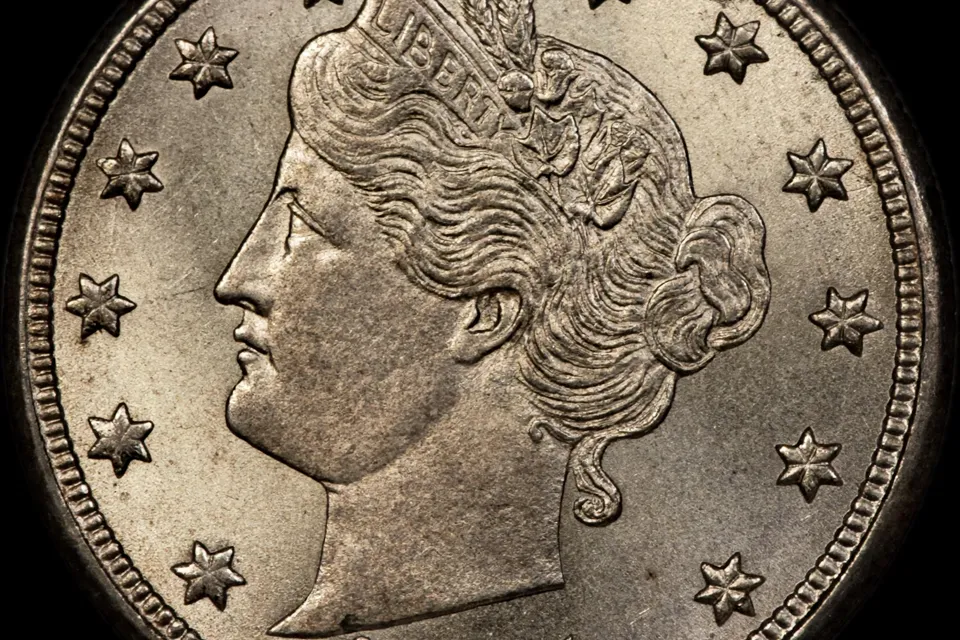
Full Steps — the premium on top of the grade
At the base of Monticello there are steps, and on a sharply struck Jefferson nickel they are fully separated, with clean lines between them. Collectors call that Full Steps, and it earns a big premium, because most Jefferson nickels were struck with the steps partly merged. The steps are the grading story of the whole series: a coin can be uncirculated and still lack Full Steps, and a coin with Full Steps is worth more than the same grade without them.
On the 1950-D, Full Steps matters more than on most dates, because the date is already a key date and the premium stacks. The record coin is an MS67 Full Steps example, and that designation is half the record: a 1950-D in MS67 without Full Steps would be a fine coin, but it would not be a $17,250 coin. When you examine a candidate, hold it under a loupe, find the steps at the base of Monticello, and count the lines. If they run clean and unbroken across the whole width, you are holding a Full Steps coin. If they merge or fade in the middle, you are not.
What our value guide records for this date
Our value guide has not yet researched the 1950-D grade by grade, so the table below is all dashes. The only dollar figures on this page are the $5–$15 circulated range, the $30–$40 MS65 range, and the $17,250 record, all from our own guide, and that is as it should be: ranges and a record are facts, and a grade estimate we have not researched would be a guess. The table will be completed as our own catalog research lands.
| Grade | Estimated value |
|---|---|
| Good (G-4) | — |
| Fine (F-12) | — |
| Extremely Fine (XF-40) | — |
| About Uncirculated (AU-50) | — |
| Mint State 60 (MS-60) | — |
| Mint State 65 (MS-65) | — |
While you wait for that research, the mintage is the number to hold onto: 2,630,030, the lowest regular-issue mintage in the series. That single figure explains the $5–$15 circulated floor, the $30–$40 MS65 range, and the $17,250 record. A date under three million in a series of hundreds of millions does not need a grade table to prove its standing.
The coin at a glance
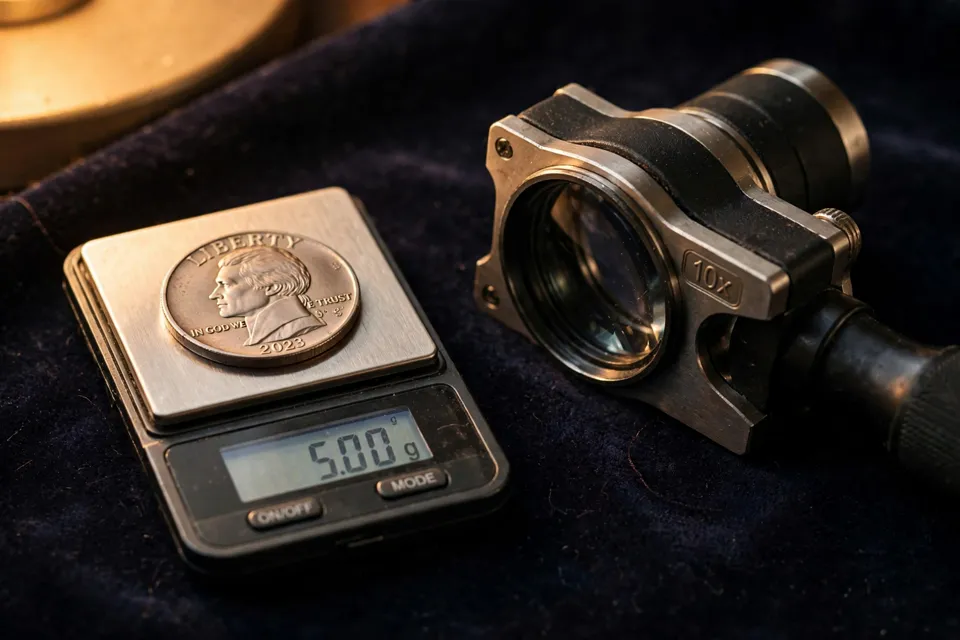
The Jefferson nickel is 75% copper and 25% nickel, weighs 5.0 grams, measures 21.2 millimetres across, and has a plain edge. There is no precious metal in this coin, and the metal floor is —, because there is no metal floor to show: a worn common-date Jefferson nickel is a five-cent coin, and a worn 1950-D is the key date of the series, and the difference is the mintage and the mint mark, not the metal. The design is Thomas Jefferson on the obverse and Monticello, his home, on the reverse, and it has been the five-cent piece since 1938.
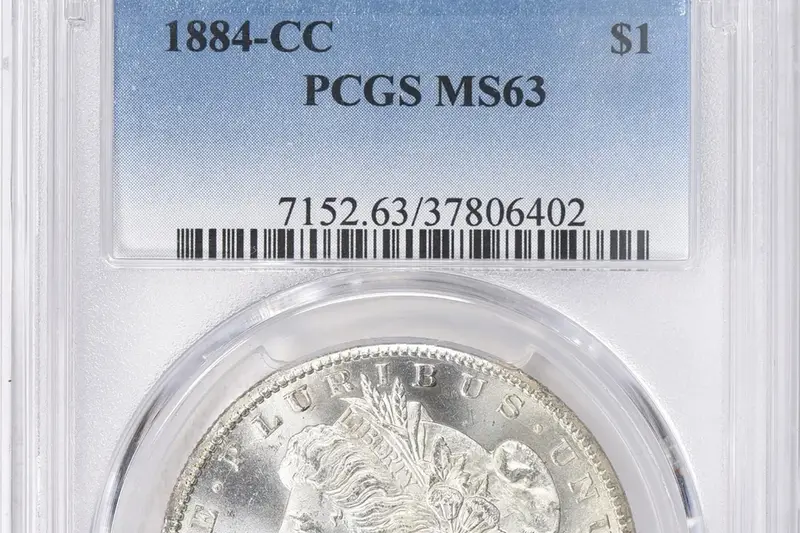
Reading the D on a worn coin
The mint mark is the whole attribution, and it lives in a small, specific place: on the reverse, to the right of Monticello. A D means Denver, an S means San Francisco, and no mark means Philadelphia. It is a small letter and it wears early, so check it under a loupe with the light raking across the surface from the side. Once the D is confirmed, read the date. The date sits on the obverse, and on a 1950-D that spent decades in circulation it can wear soft. If all four digits are clear and the D is readable, the coin has already survived the two hardest tests in the series. Photograph both sides before you handle it further, and keep the photos with the coin’s story.
Handling, storage, and getting a second opinion
Hold the coin by its edge, never across the faces, and never clean it. Cleaning strips the original surface and leaves hairlines that a grader will spot at once, and on a Jefferson nickel those hairlines can be mistaken for wear on the steps. Keep the coin in an acid-free flip or a proper holder, away from humidity, and do not store it loose with other coins where the date can rub away further. If the coin looks uncirculated, or if the steps are fully separated, a professional opinion from PCGS or NGC is worth the fee: certification settles the grade and the Full Steps designation in one step, and on the key date of the series that certainty matters.
Latest reported results for this coin
Checking for newly reported results…
Your 1950-D questions, answered
How much is a 1950-D Jefferson nickel worth?
Our guide records $5–$15 for circulated examples, and $30–$40 for MS65 examples. The record for the date is $17,250, for an MS67 Full Steps example at Heritage in 2006.
Why is the 1950-D the key Jefferson nickel?
Because it has the lowest regular-issue mintage in the series at 2,630,030. Our guide calls it the lowest regular-issue mintage in the series, and it is the date every Jefferson collection is measured against.
How many 1950-D Jefferson nickels were struck?
Denver struck 2,630,030 in 1950. That is the lowest regular-issue mintage in the whole Jefferson series, which has run since 1938.
What is the record for a 1950-D Jefferson nickel?
The record is $17,250, for an MS67 Full Steps example at Heritage in 2006. That is the finest recorded result for the date, and it shows how far the top reaches when a key date meets Full Steps.
What are Full Steps on a Jefferson nickel?
Full Steps means the steps at the base of Monticello are fully separated, with clean lines between them. Jefferson nickels with fully separated steps earn big premiums, and the 1950-D record coin is an MS67 Full Steps example.
Does our value guide list estimates for the 1950-D yet?
Not yet. All six grades currently show “—” in our catalog, reviewed November 5, 2026. The only figures on this page are the $5–$15 circulated range, the $30–$40 MS65 range, and the $17,250 record from our guide.
Check your 1950-D
Run the date and mint mark through the free Coin Value Checker for an instant estimate, or get a Grade-or-Not verdict on whether your coin is worth certifying. The full series guide is here: Nickel Values: 5¢ Coins Worth Up to $4.56 Million.
This guide is for learning and collecting, not financial advice. The $17,250 figure is a verified auction result for one coin in one grade; the worth of any other example depends on its own condition and attribution.
This guide is for education — learn the coin first, and get a professional opinion before buying or selling.