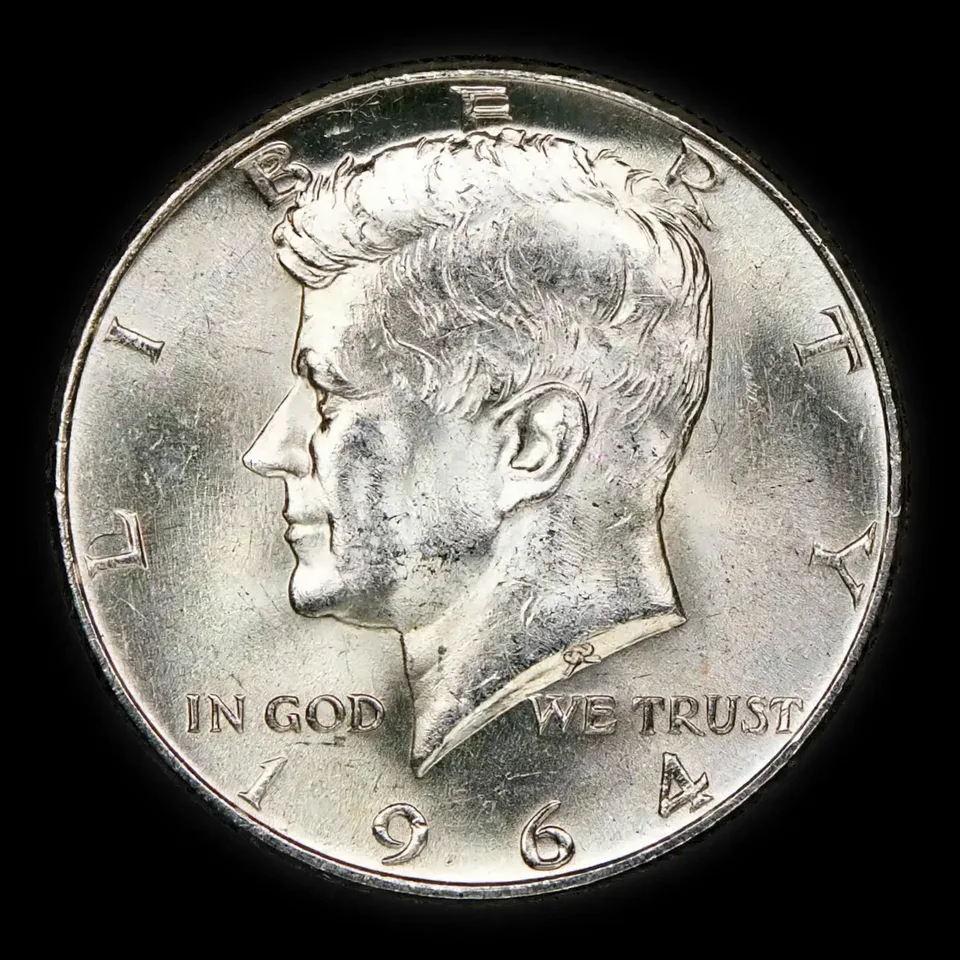
1949-S Franklin Half: The Series Key Date to Know
Coin Encyclopedia · 8 min read · Published November 7, 2026
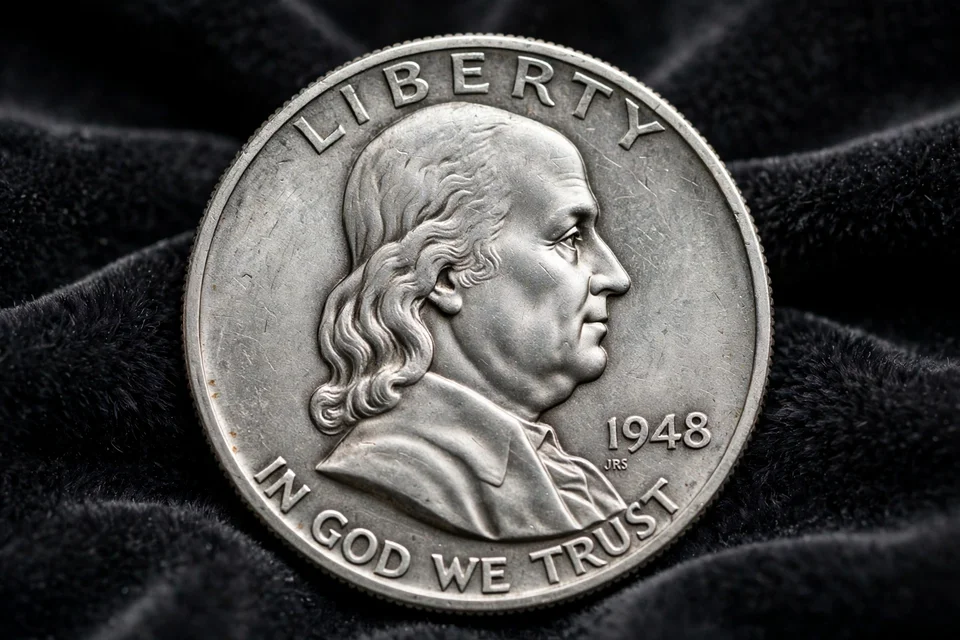
Ask a Franklin half collector which date matters most and the answer comes back fast: the 1949-S. It is the key date of the series by mintage and by demand, the coin that slows down every Franklin set and the one that rewards condition more than any other. San Francisco struck 3,744,000 of them in 1949 — a figure that looks generous until you try to find one with sharp bell lines and original luster.
The 1949-S earns its status honestly. Franklin halves were struck in huge numbers through the 1950s, and most dates are common in every grade. The 1949-S is the exception, and this guide explains why: the mintage, the strike, the Full Bell Lines standard, and the grade table as it stands. Our catalog has not yet researched grade-by-grade estimates for this date, so the table shows dashes — but the key-date story is clear without them.
Why the 1949-S is the key date
The Franklin half ran from 1948 to 1963, and its mintages were mostly enormous — tens of millions a year at the height of the series. The 1949-S, at 3,744,000, is the lowest business-strike mintage of the early series, and it arrived in the second year, before collectors were paying attention to Franklin halves at all. The coins went into circulation in the West and stayed there, and by the time the series became collectible, the supply of nice 1949-S halves was already thin.
Demand makes the key date, not mintage alone. The Franklin series is short — sixteen years — so collectors expect to finish it, and the 1949-S is the date that tests that expectation. A worn example is affordable; a gem with Full Bell Lines is a different coin entirely, and the gap between the two is the widest in the series. That gap is what key-date status looks like in practice.
Full Bell Lines — the strike standard that decides value
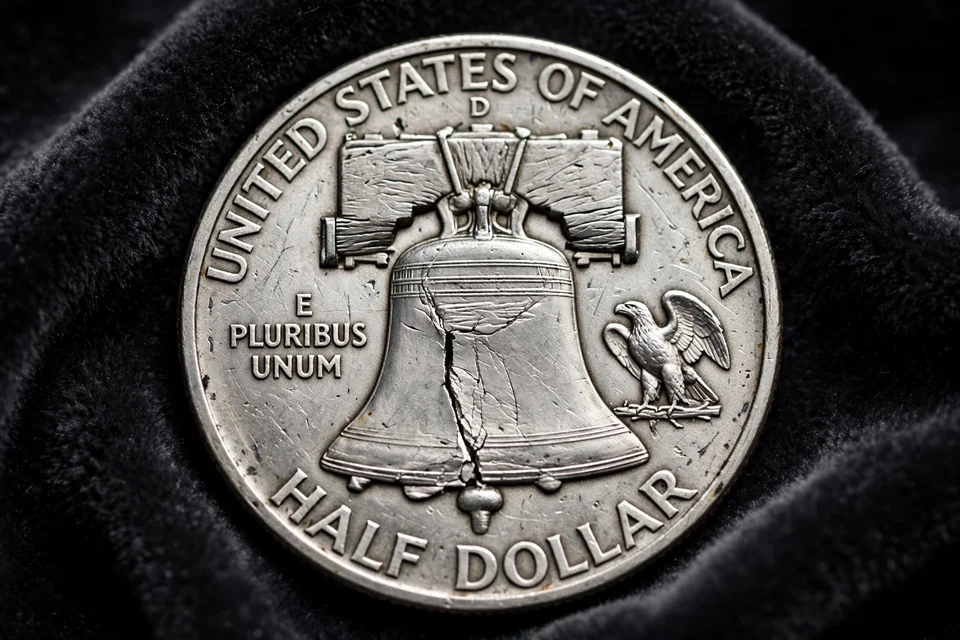
Turn a Franklin half over and look at the Liberty Bell. Two sets of horizontal lines cross the bell's lower half, and on a sharply struck coin those lines are complete, unbroken, and crisp from edge to edge. That is Full Bell Lines, marked FBL by the grading services, and it is the single most important strike detail on the series. Most Franklin halves were weakly struck, so the lines are soft or broken — and a coin with full lines is worth multiples of one without them.
On the 1949-S the standard matters more than anywhere else. A 1949-S in gem condition without full lines is a scarce coin; a 1949-S in gem with full lines is a trophy. Check the lines under a loupe in good light, and look at both sets — the upper lines near the bell's waist and the lower lines near its base. If either set is incomplete, the coin is not FBL, however bright its luster. Strike and grade are separate judgments, and the market pays for both.
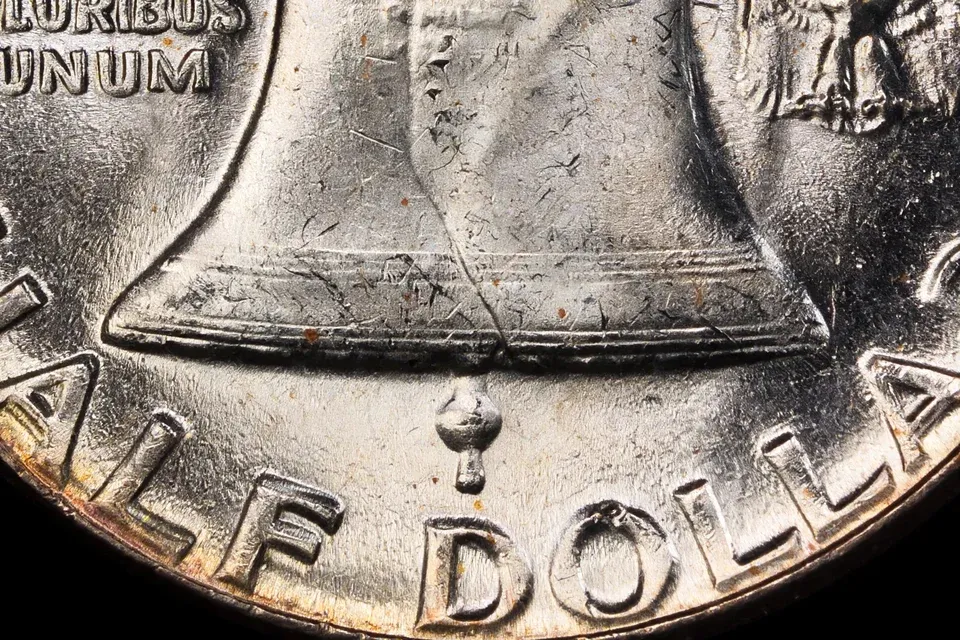
Why the 1949-S is the key date of the Franklin series
The Franklin half series ran from 1948 to 1963, and almost every date is common. The 1949-S is the exception, and the reason is simple: San Francisco struck 3,744,000 of them, the lowest mintage of the early Franklins, and then the coins went to work. In 1949 a half dollar was real money — a day's lunch, a bus fare and change — and the 1949-S halves circulated hard on the West Coast for years before anyone thought of them as collectible.
The strike is the second half of the story. San Francisco's Franklin halves are often softly struck, and the 1949-S is among the worst: the bell lines on the reverse, the detail collectors study for the Full Bell Lines designation, are frequently weak or missing. A 1949-S with full, sharp bell lines is a different coin from a typical one, and the market pays for the difference. That combination — low mintage, heavy circulation, weak strike — is what makes the 1949-S the key date.
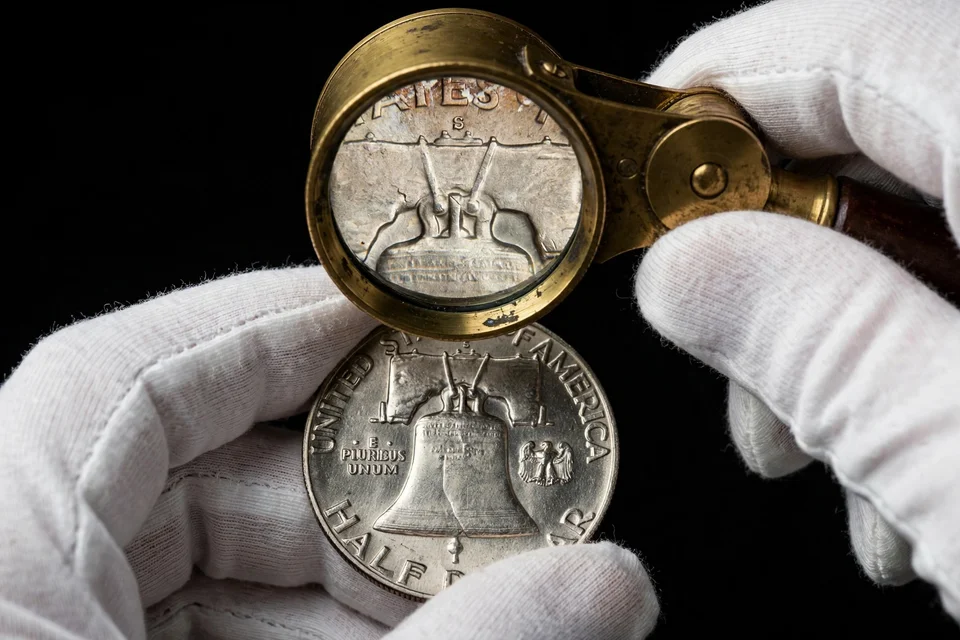
Full Bell Lines on the 1949-S — the premium that matters most
Full Bell Lines means the two sets of horizontal lines on the Liberty Bell are complete and unbroken from end to end. On most Franklin halves the lines are there, or nearly there; on the 1949-S they usually are not. The dies were often worn, the strikes were often soft, and the bell came out mushy. Finding a 1949-S with clean lines takes patience, and the premium for one is the largest in the Franklin series.
The check is easy to do and worth doing slowly. Hold the coin under a good light and look at the bell on the reverse: two groups of three lines run across its lower half. If every line is sharp and complete, you have Full Bell Lines. If any line fades or breaks, you do not — and on the 1949-S, that single detail is the difference between a scarce date and a genuinely rare one.
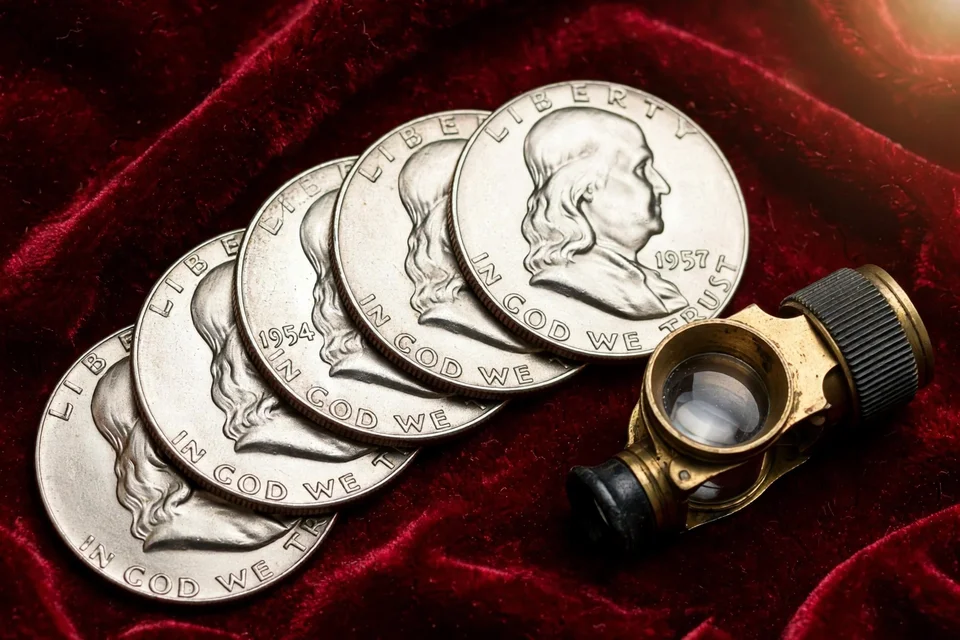
What a 1949-S Franklin Half San Francisco is worth by grade
Our guide has not yet researched grade-by-grade estimates for this date, so every cell below shows “—” rather than a guessed figure. The live system fills these cells the moment research or a newly reported result lands. Figures on this page are reviewed November 5, 2026.
| Grade | Estimated value |
|---|---|
| Good (G-4) | — |
| Fine (F-12) | — |
| Extremely Fine (XF-40) | — |
| About Uncirculated (AU-50) | — |
| Mint State 60 (MS-60) | — |
| Mint State 65 (MS-65) | — |
No researched grade figures exist for the 1949-S yet, which understates how important this date is: it is the key date of the Franklin series, and the premium for Full Bell Lines on this date is the largest in the series. Grade and strike decide nearly everything here.
Silver, specs, and the floor under a Franklin half
Every Franklin half from 1948 through 1963 is 90% silver. The coin weighs 12.5 grams and carries 0.36169 troy ounces of pure silver. The live metal floor for this coin is $18.83 — it moves with the live silver market, so the figure updates on every load rather than standing still.
Metal floor updates live from our Worker — last updated November 7, 2026.
John R. Sinnock's portrait of Benjamin Franklin fills the obverse, with the Liberty Bell and a small eagle on the reverse. Diameter 30.6 millimetres, reeded edge, and the mint mark on the reverse, just above the bell's yoke. The bell's horizontal lines are the detail collectors study for the Full Bell Lines designation.
Verified auction records
Our auction data holds no verified historic record for this date yet — no figure here is guessed. The box below checks for newly reported results on every load, so the first verified result for this coin will appear there.
Latest reported results for this coin
Checking for newly reported results…
Your 1949-S Franklin Half San Francisco questions, answered
How much is a 1949-S Franklin half dollar worth?
Our guide has not yet researched grade-by-grade estimates for the 1949-S, so the table shows dashes. The series pattern puts worn Franklins near their silver floor, with the 1949-S reaching far higher in gem — and Full Bell Lines examples worth more still.
Why is the 1949-S the Franklin half key date?
San Francisco struck 3,744,000 in 1949, the lowest early-series mintage, and few were set aside before they circulated hard. It is the date that tests every Franklin set, and the premium grows sharply with grade and bell-line strike.
What does Full Bell Lines mean on a Franklin half?
Full Bell Lines means the horizontal lines across the Liberty Bell on the reverse are complete and crisp from edge to edge. The designation is marked FBL, applies to Mint State coins, and multiplies value — most on the 1949-S.
How many 1949-S Franklin halves were struck?
The San Francisco Mint struck 3,744,000 Franklin halves in 1949. That is a modest mintage beside the tens of millions of later years, and sharp, lustrous survivors are genuinely scarce.
Is the 1949-S Franklin half silver?
Yes. Every Franklin half from 1948 through 1963 is 90% silver, weighing 12.5 grams with 0.36169 troy ounces of pure silver — worth the live metal floor shown in the specs section below, which moves with the live silver market.
Check your 1949-S
Run the date and mint mark through the free Coin Value Checker for an instant estimate, or get a Grade-or-Not verdict on whether your coin is worth certifying. The full series guide is here: Franklin Half Dollar Values and Key Dates.
Written for the collector working through a Franklin set — the 1949-S is the hard date, and the bell lines are the test. This guide is for education — learn the coin first, and get a professional opinion before buying or selling.