1949-S Roosevelt Dime: San Francisco’s $80+ Gem Sleeper
Coin Encyclopedia · 7 min read · Published November 7, 2026
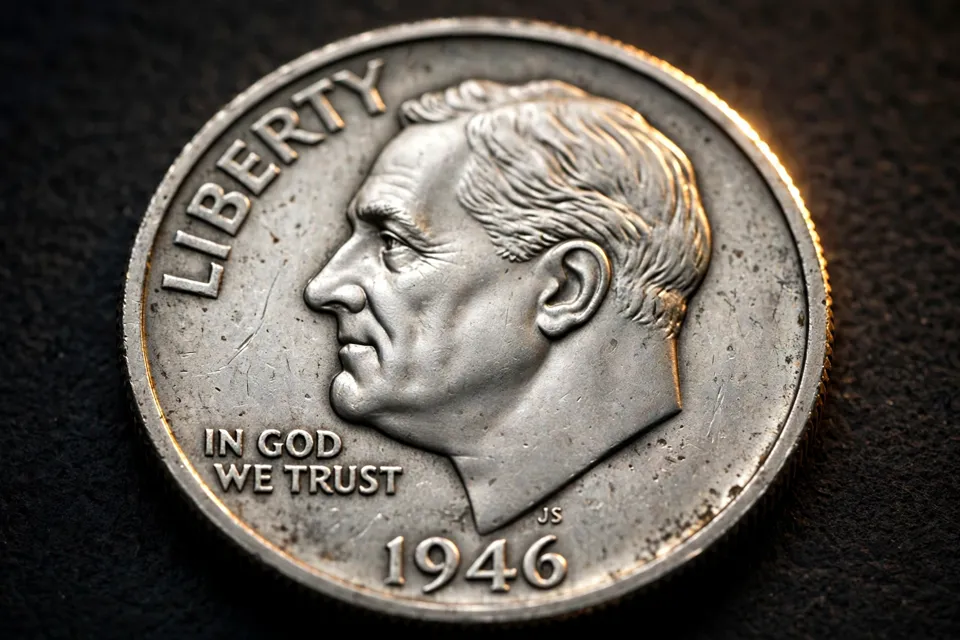
San Francisco struck about 13.5 million Roosevelt dimes in 1949, and that number makes the 1949-S the second-lowest regular-issue mintage of the whole silver series — behind only the 1955 Philadelphia coin, at about 12.8 million. Most of the 13.5 million circulated, wore out, and were melted, which is why the 1949-S is valuable in gem condition precisely because most of its mintage is gone. A Mint State 67 example trades near $80, an MS68 has reached $2,150, and an MS67 with Full Torch commands $850+ in our Roosevelt dime guide.
The 1949-S is the sleeper of the early Roosevelt series: cheap worn, dear in gem, and almost invisible in between. This page works through the mintage, the grade table, the torch bands, and the reason a coin struck in the millions can still be scarce where it counts.
San Francisco’s low mintage
The San Francisco Mint in 1949 was a smaller operation than Philadelphia or Denver, and its dime output reflected that. About 13.5 million 1949-S dimes left the mint, against Philadelphia’s tens of millions — and almost all of them went straight into circulation on the West Coast, where small silver worked hard and stayed in use for years. There were no mint sets in 1949, no rolls put aside by collectors, and no reason for anyone to save a new San Francisco dime.
That is the first half of the scarcity. The second half is the melting. When silver rose in later decades, worn silver dimes were pulled from circulation and melted in vast numbers, and the common dates went first. The 1949-S survived that cull worse than most, because so few had been saved in the first place. What remains is a date that is easy to find worn and genuinely hard to find in gem condition — and the market values that gap accordingly.
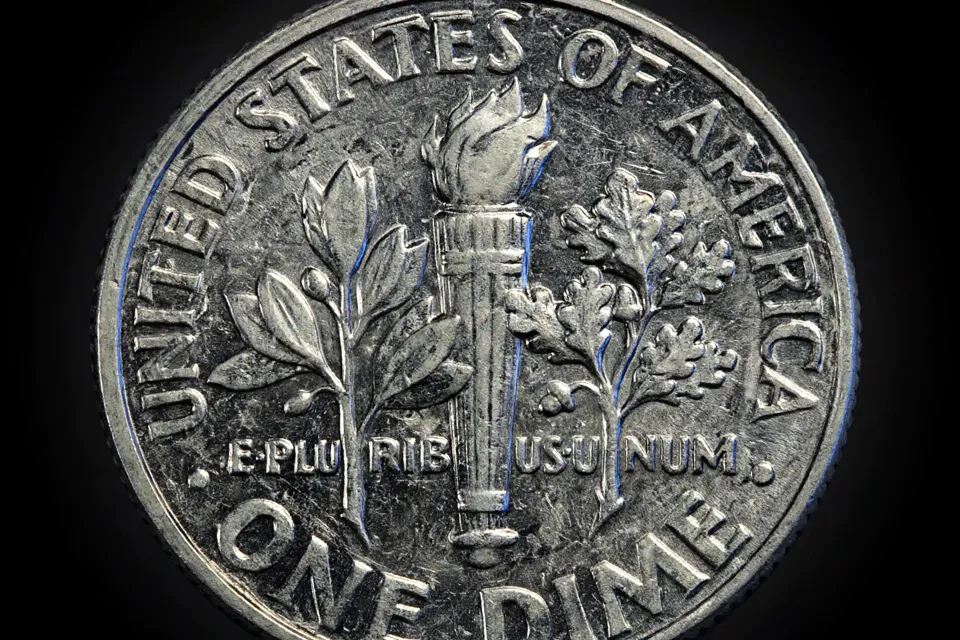
What a 1949-S Roosevelt dime is worth by grade
The figures below come from our Roosevelt dime guide. The standard grades our guide has not researched yet are shown as “—”, not guessed; the gem figures are designation rows, kept fully baked as the sample pages do.
| Grade | Estimated value |
|---|---|
| Good (G-4) | — |
| Fine (F-12) | — |
| Extremely Fine (XF-40) | — |
| About Uncirculated (AU-50) | — |
| Mint State 60 (MS-60) | — |
| Mint State 65 (MS-65) | — |
| Mint State 67 (MS-67) | $80+ |
| Mint State 67, Full Torch (MS-67 FT) | $850+ |
| Mint State 68 (MS-68) | $2,150 |
Guide values reviewed November 5, 2026 — figures update live from our Worker.
The jump from $80 in MS67 to $850 with Full Torch is the whole story of this date: the grade is common enough, but the strike is not. A 1949-S in MS67 without full torch bands is a $80+ coin; the same coin with them is a $850+ coin.
Read the table as a warning as much as a guide. A $80 coin and a $850 coin can look similar in a photograph, and the difference lives in the torch bands and the lustre — two things only a loupe, or a grading holder, can settle. The live figures above update from our Worker as new results are reported.
Why gems are so scarce
Three forces worked against the 1949-S surviving in gem condition. First, the mintage: about 13.5 million is small for a Roosevelt dime, and small to begin with. Second, the circulation: West Coast dimes worked for a living, and few were ever set aside by collectors in 1949 — Roosevelt dimes were new, unremarkable pocket change, not keepsakes. Third, the melting: when silver rose, the worn survivors were the first to go, and the 1949-S had fewer uncirculated survivors to spare than any other date except the 1955.
The result is a survival curve that falls off a cliff. Worn examples trade regularly. Extremely Fine examples are scarce. Mint State examples are events, and gem examples with Full Torch are the coins that make the news when they appear. When a coin like that appears, it does not trade on a chart; it trades on the day, in the room.
The Full Torch test
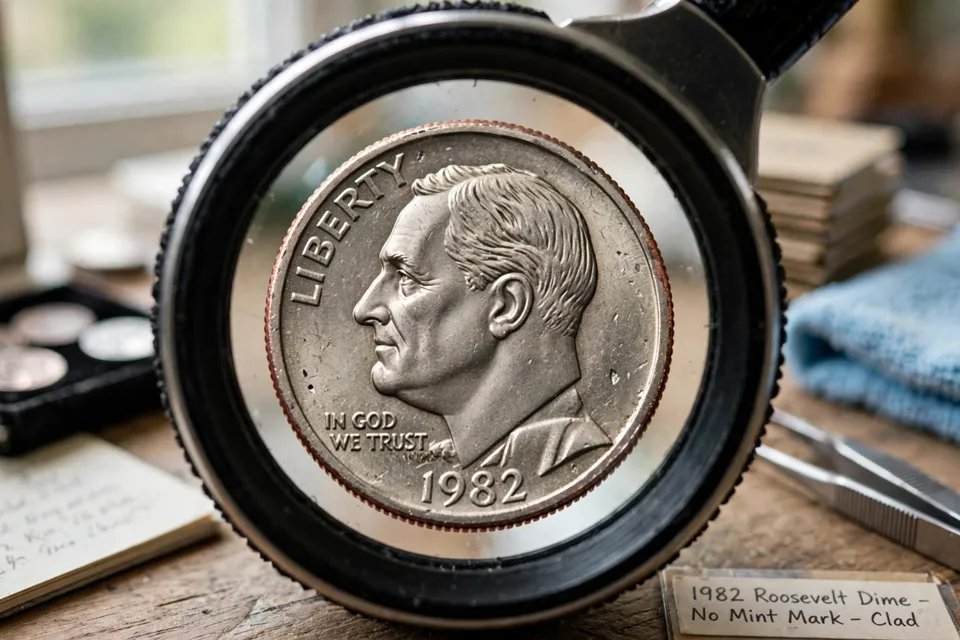
Turn the coin over and find the torch. Horizontal bands wrap it, and Full Torch means those bands are fully separated into clean, distinct lines, with the flame crisp above them. The designation applies only to Mint State coins, and on the 1949-S it is worth ten times the grade alone: $80 in MS67 without it, $850+ in MS67 with it.
Judge the bands under a single light, tilting the coin slowly. Full cartwheel lustre should roll across the surface without a break, and the bands should be raised and distinct from edge to edge. Do not confuse a soft strike with wear: wear flattens the high points and dulls the lustre, while a soft strike leaves the lustre intact and the detail simply shallow. A 1949-S with full lustre and split bands is the rare one, and it is the one the $850+ figure describes.
Specs and the silver floor
Under the rarity, the 1949-S is a standard silver Roosevelt dime: 90% silver and 10% copper, 2.5 grams, 17.9 millimetres across, with 0.07234 troy ounces of pure silver — about $3.77 at the November 2026 silver level near $52.07 an ounce. The silver issues ran from 1946 to 1964, when clad coinage replaced them.
Metal floor updates live from our Worker — last updated November 7, 2026.
That silver floor is the least interesting thing about this coin, but it is the reason even a heavily worn example never falls to face value. The rest of its worth is the mintage, the mint mark, the strike, and the grade — in that order.
Verified auction records
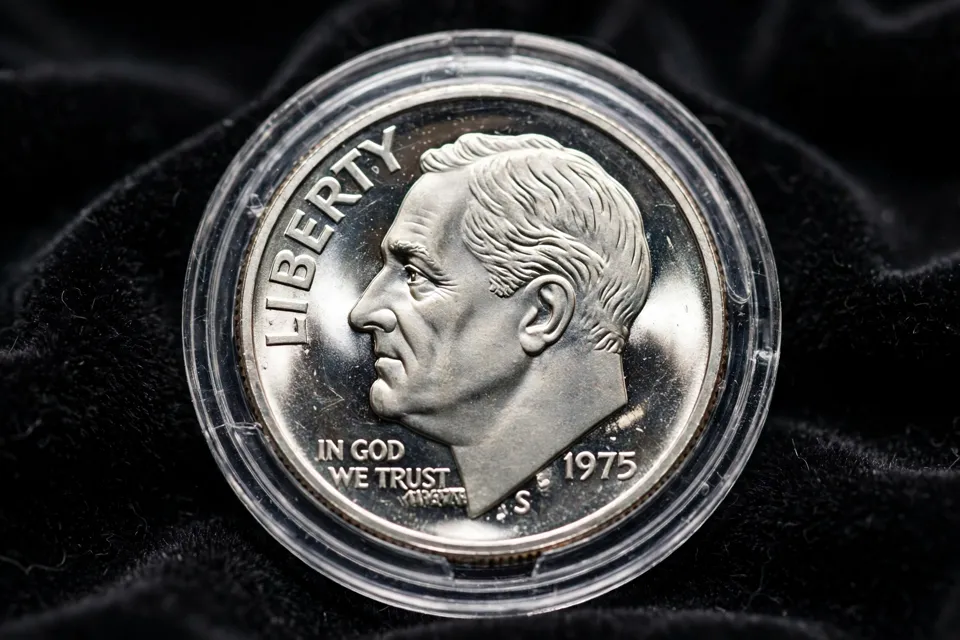
No standalone record for the 1949-S sits in our verified records file. The series record belongs to a different coin entirely: the 1975 No-S proof, of which only two are known, at $506,250. That figure describes a proof error in a league of its own, not this date — the grade table above, and the live results panel below it, are the honest measures for the 1949-S.
For scale, the 1949-S’s market is defined by its gem figures rather than by a single headline: worn examples trade as silver, Mint State examples trade on lustre, and the finest Full Torch examples are the ones that make the news.
Latest reported results for this coin
Checking for newly reported results…
Your 1949-S Roosevelt dime questions, answered
How much is a 1949-S Roosevelt dime worth?
A 1949-S in Mint State 67 trades near $80, an MS68 has reached $2,150, and an MS67 with Full Torch commands $850+ in our Roosevelt dime guide. Worn examples trade near the silver floor, and the standard grades are not yet researched in our guide.
Why is the 1949-S the second-lowest mintage of the silver series?
San Francisco struck about 13.5 million in 1949 — behind only the 1955 Philadelphia coin at about 12.8 million. Heavy circulation and later melting left few gem survivors.
Where is the mint mark on a 1949-S Roosevelt dime?
On the reverse, to the left of the torch. S means San Francisco, D means Denver, and no letter means Philadelphia. From 1980 the mint mark moved to the obverse, above the date.
What does Full Torch mean on a 1949-S?
Full Torch means the horizontal bands on the torch are fully separated into clean, distinct lines. It applies only to Mint State coins, and on the 1949-S it lifts the value from $80 in MS67 to $850+.
Is the 1949-S Roosevelt dime silver?
Yes. Every Roosevelt dime dated 1946 to 1964 is 90% silver, with 0.07234 troy ounces of pure silver. The live metal floor for this coin is in the specs section above.
Check your 1949-S
Run the date and mint mark through the free Coin Value Checker for an instant estimate, or get a Grade-or-Not verdict on whether your coin is worth certifying. The full series guide is here: Roosevelt Dime Values by Date and Grade.
Written for the hunt: the 1949-S rewards the collector who checks the torch bands instead of the date, and this guide exists so the next gem gets recognised before it is spent.
This guide is for education — learn the coin first, and get a professional opinion before buying or selling.