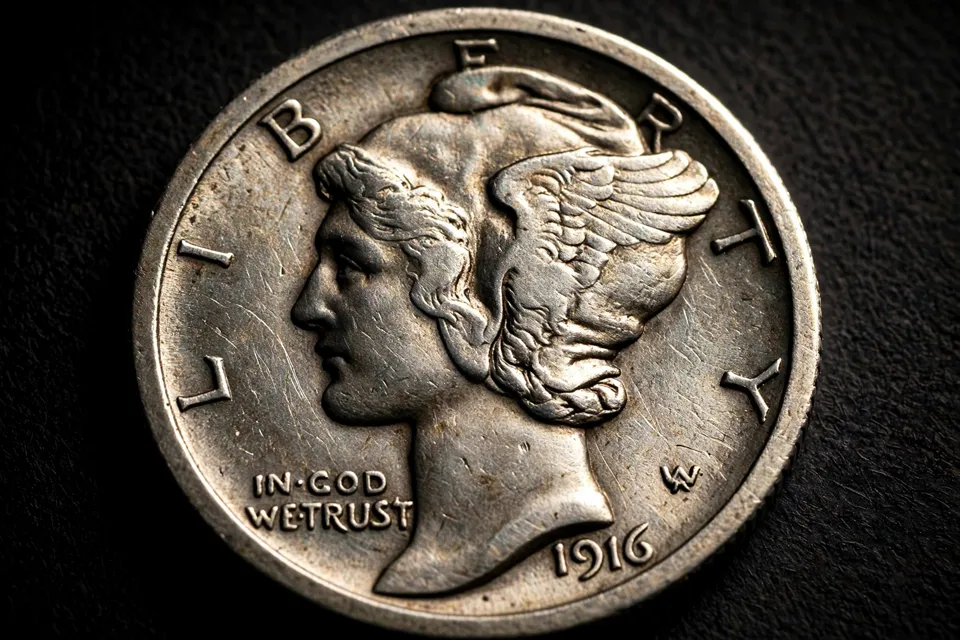
1949 Roosevelt Dime: Post-War Silver in Every Pocket
Coin Encyclopedia · 8 min read · Published November 7, 2026
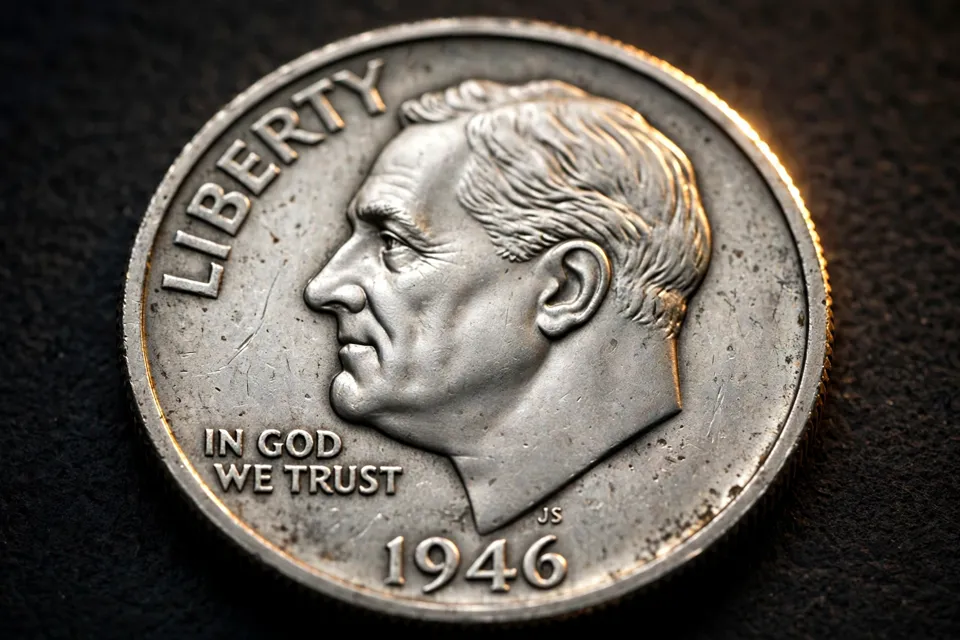
The 1949 Roosevelt dime is the series in its early prime: four years old, still 90% silver, and so common in circulation that nobody thought to save one. Philadelphia struck them by the tens of millions, and they went straight into pockets, pay envelopes, and shop tills across a country that was finally spending again after the war. Today a worn 1949 is a silver coin first and a collectable second — and that is exactly what makes it the right place to learn the series.
There is an honest gap on this page, and it belongs up front: our guide has not researched grade values for the 1949 Philadelphia dime yet, so the grade table below shows “—” rather than invented figures. The live results panel near the bottom checks for newly reported results every time it loads, and the specs section carries the live metal floor. What follows is everything that can be said without guessing: the design, the torch bands, the mint mark, and the silver.
The Roosevelt dime settles in
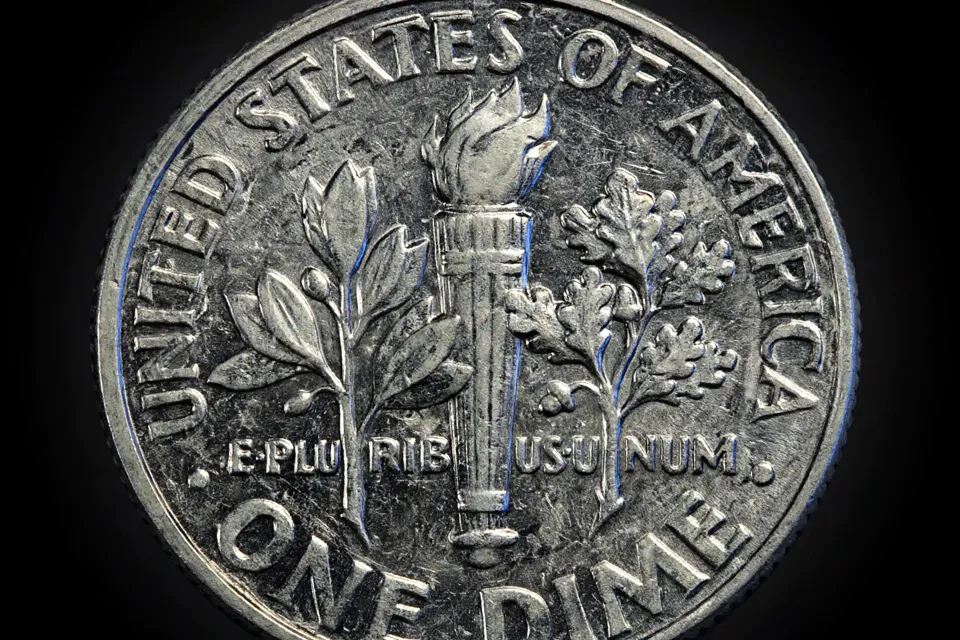
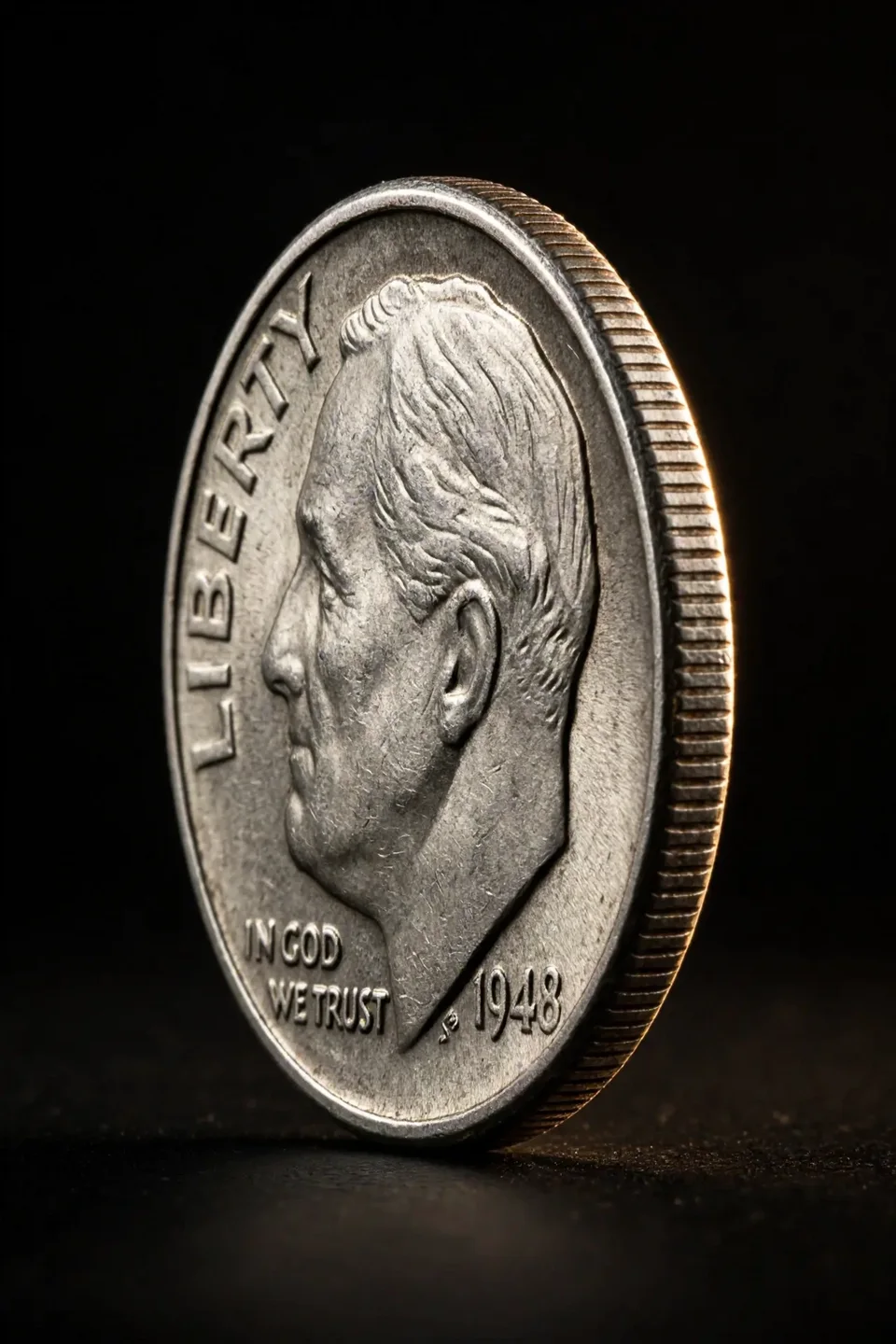
The Roosevelt dime entered circulation in 1946, less than a year after President Franklin D. Roosevelt died in April 1945 while serving his fourth term. Chief Engraver John R. Sinnock designed it: Roosevelt’s left-facing portrait on the obverse, and a torch flanked by an olive branch and an oak branch on the reverse. The torch stands for liberty, the olive branch for peace, and the oak branch for strength and victory — a quiet summary of the war the country had just won.
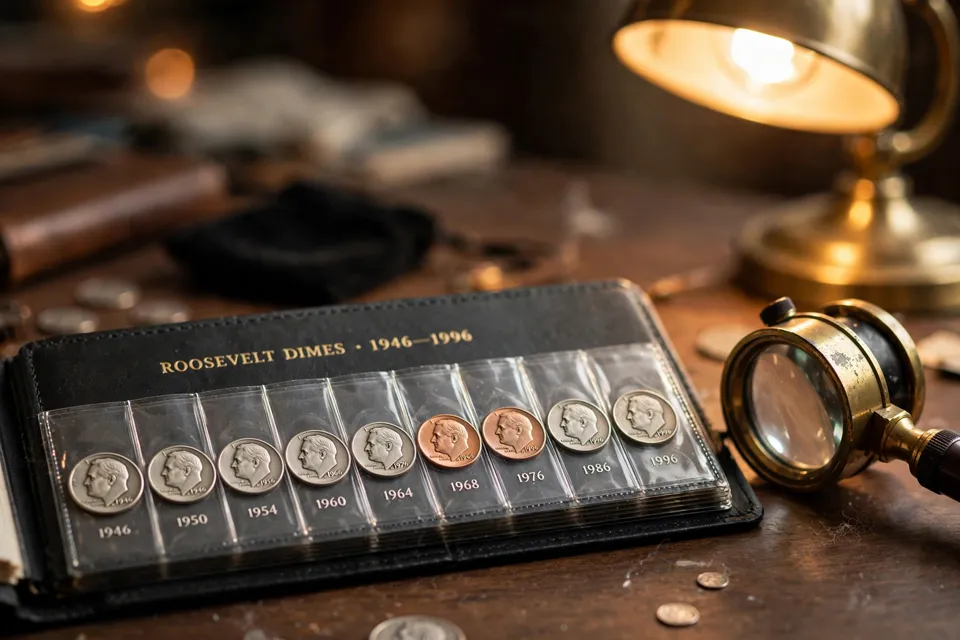
By 1949 the design was no longer new. It was the dime everyone carried: the coin of the post-war boom, of lunch counters and bus fares and jukeboxes, struck in silver because silver was still the standard for small change. Nobody in 1949 collected Roosevelt dimes. They spent them, and the coins wore down honestly, year after year, until the silver series ended in 1964. A 1949 that survived in high grade did so by accident — dropped behind a drawer, forgotten in a jar — and that accident is what collectors now hunt.
Reading the torch bands
Roosevelt dimes grade by the torch. The torch on the reverse is wrapped in horizontal bands, and on a sharply struck Mint State coin those bands are fully separated into clean, distinct lines — the Full Torch designation, marked FT by the grading services. It is the Roosevelt equivalent of the Mercury dime’s Full Bands, and it works the same way: a Mint State coin with full torch bands is worth more than the same coin without them, sometimes several times more.
Check the bands under a single light, tilting the coin slowly. On a worn coin the bands are flat and the flame is soft; on a Mint State coin the bands are raised and the flame is crisp. The other wear points are Roosevelt’s cheek and hair on the obverse, and the leaves of the olive branch on the reverse. Original surfaces matter as much as strike: a 1949 with full cartwheel lustre and soft grey toning is an original coin, and an original coin is always worth more than a cleaned one at the same grade. Never dip, polish, or scrub a silver dime — cleaning strips the surface and destroys collector value instantly.
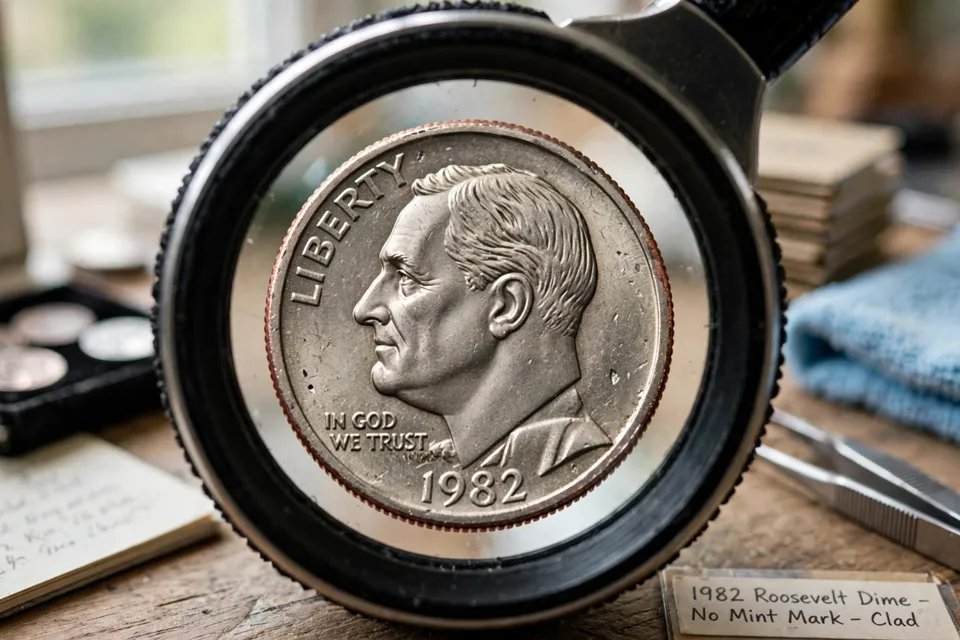
What a 1949 Roosevelt dime is worth by grade
Our guide has not researched grade values for the 1949 Philadelphia dime yet, and the table below says so plainly. A dash is not a zero and it is not a guess — it is a gap, and this page would rather show the gap than invent a figure for it.
| Grade | Estimated value |
|---|---|
| Good (G-4) | — |
| Fine (F-12) | — |
| Extremely Fine (XF-40) | — |
| About Uncirculated (AU-50) | — |
| Mint State 60 (MS-60) | — |
| Mint State 65 (MS-65) | — |
Guide values reviewed November 5, 2026 — figures update live from our Worker.
The live module on this page checks our Worker for reported results for this exact date and grade on every load. When a verified result exists for a grade, it appears in the table above; until then, the dash stands.
What can be said without a number is the shape of the market. A common-date silver Roosevelt dime trades on its silver and its condition: worn examples sit near the metal floor, uncirculated examples carry a small premium, and only a sharply struck Full Torch example in high grade breaks away from the pack. The 1949 is the date to learn that shape on, because it is common enough to find and early enough to matter.
Where the mint mark sits
On a silver Roosevelt dime the mint mark sits on the reverse, to the left of the torch. No letter means Philadelphia, D means Denver, and S means San Francisco. The 1949 Philadelphia issue carries no letter, and it is the coin of this page; the 1949-D and 1949-S are separate issues with their own mintages and markets, and the 1949-S — San Francisco’s low-mintage issue — is covered on its own page here.
Read the date first, then the mint mark. The date sits on the obverse at the lower right, and on a worn 1949 it can be soft. A 10x loupe settles it: the 1, the 9, the 4, and the final 9 should each be readable. Then flip the coin and find the space to the left of the torch. If it is empty, the coin is Philadelphia; if it carries a letter, the coin is a different date with a different story.
Specs and the silver floor
Under the history, the 1949 is a standard silver Roosevelt dime: 90% silver and 10% copper, 2.5 grams, 17.9 millimetres across, with 0.07234 troy ounces of pure silver — about $3.77 at the November 2026 silver level near $52.07 an ounce. The series ran from 1946, and the silver issues ran until 1964, when clad coinage replaced them.
Metal floor updates live from our Worker — last updated November 7, 2026.
That silver floor is the safety net under every 1949. Even a heavily worn example never falls to face value, and a genuine example in any grade is worth more than the ten cents stamped on it. Check the edge as well: a silver dime shows a solid silver-grey edge with no copper stripe, while a clad dime reveals a distinct copper-brown stripe running through the middle.
Verified auction records
No standalone record for the 1949 Philadelphia dime sits in our verified records file. The series record belongs to a different coin entirely: the 1975 No-S proof, of which only two are known, at $506,250. That figure describes a proof error in a league of its own, not this date — the grade table above, and the live results panel below it, are the honest measures for the 1949.
For scale, the 1949’s market is the common-date silver market: worn examples trade as silver, uncirculated examples trade on lustre and torch bands, and the finest Full Torch examples are the ones that make the news. The date’s fame is historical, not financial, and that is exactly why collectors keep it.
Latest reported results for this coin
Checking for newly reported results…
Your 1949 Roosevelt dime questions, answered
How much is a 1949 Roosevelt dime worth?
Our guide has not researched grade values for the 1949 Philadelphia dime yet, so the grade table above shows — rather than invented figures. The live module on this page checks for newly reported results on every load, and the metal floor in the specs section is the minimum any genuine example carries.
Is the 1949 Roosevelt dime silver?
Yes. Every Roosevelt dime dated 1946 to 1964 is 90% silver, with 0.07234 troy ounces of pure silver. The live metal floor for this coin is in the specs section above. Check the edge: silver shows solid grey, clad shows a copper stripe.
Where is the mint mark on a 1949 Roosevelt dime?
On the reverse, to the left of the torch. No letter means Philadelphia, D means Denver, and S means San Francisco. From 1980 the mint mark moved to the obverse, above the date.
What does Full Torch mean on a Roosevelt dime?
Full Torch means the horizontal bands on the torch are fully separated into clean, distinct lines. It applies only to Mint State coins, and it is the Roosevelt equivalent of the Mercury dime’s Full Bands.
What do the torch, olive branch, and oak branch mean?
The torch stands for liberty, the olive branch for peace, and the oak branch for strength and victory. Chief Engraver John R. Sinnock designed the reverse as a quiet summary of the war the country had just won.
Check your 1949
Run the date and mint mark through the free Coin Value Checker for an instant estimate, or get a Grade-or-Not verdict on whether your coin is worth certifying. The full series guide is here: Roosevelt Dime Values by Date and Grade.
Written for learning: the 1949 is the Roosevelt dime to practise on, and this guide exists so the next one found gets its torch bands checked before it is spent.
This guide is for education — learn the coin first, and get a professional opinion before buying or selling.