1945 Mercury Dime: The Final Year of Winged Liberty
Coin Encyclopedia · 7 min read · Published November 7, 2026
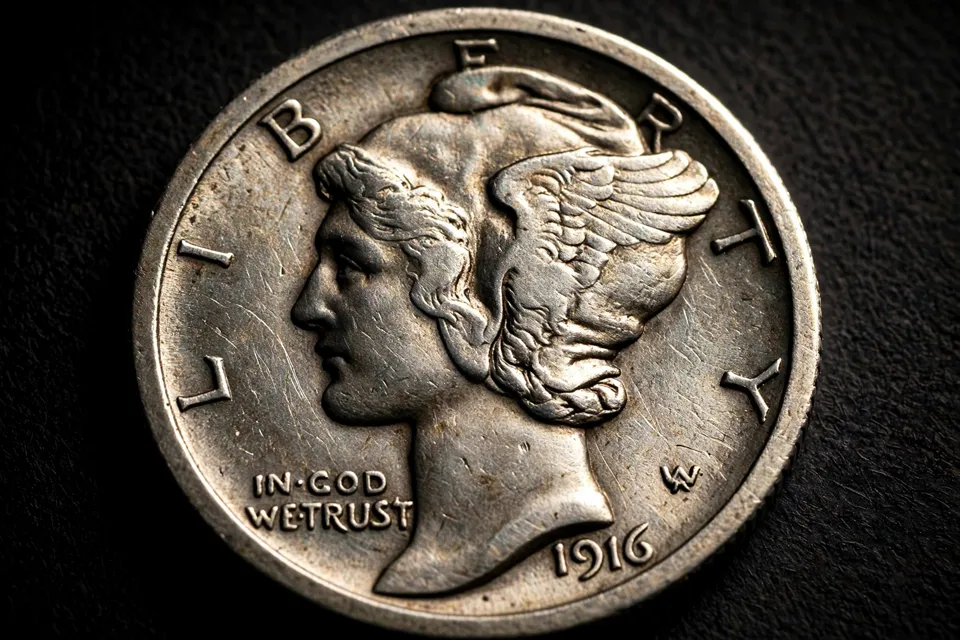
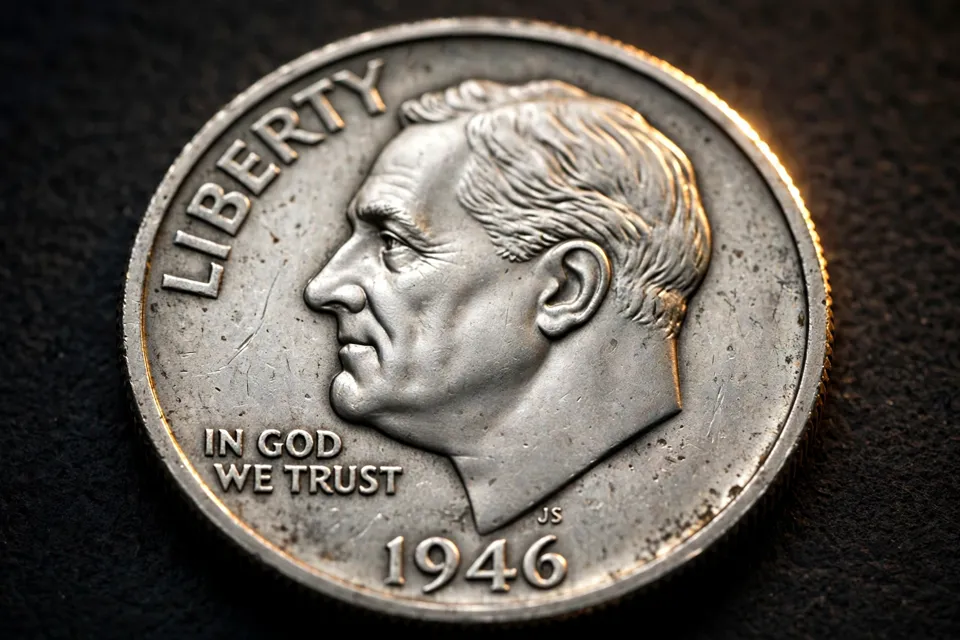
The 1945 Mercury dime is the last of its kind. It was struck in the year the Second World War ended, the year President Franklin D. Roosevelt died in April while serving his fourth term, and the year the Mint decided his portrait would replace Winged Liberty on the dime. The Roosevelt dime arrived in 1946, and Adolph A. Weinman’s design — thirty years of American pocket change — was retired. Every 1945 Mercury dime is a closing chapter, and collectors keep them for exactly that reason.
As a value, the 1945 is a common date: worn examples sit near their silver, and only the Full Bands designation lifts it — $150+ with Full Bands in our Mercury dime guide. It is not a key date, and it was never meant to be one. Its worth is the history it closes, the silver it carries, and the grade it kept — and this page covers all three.
The last year of Winged Liberty
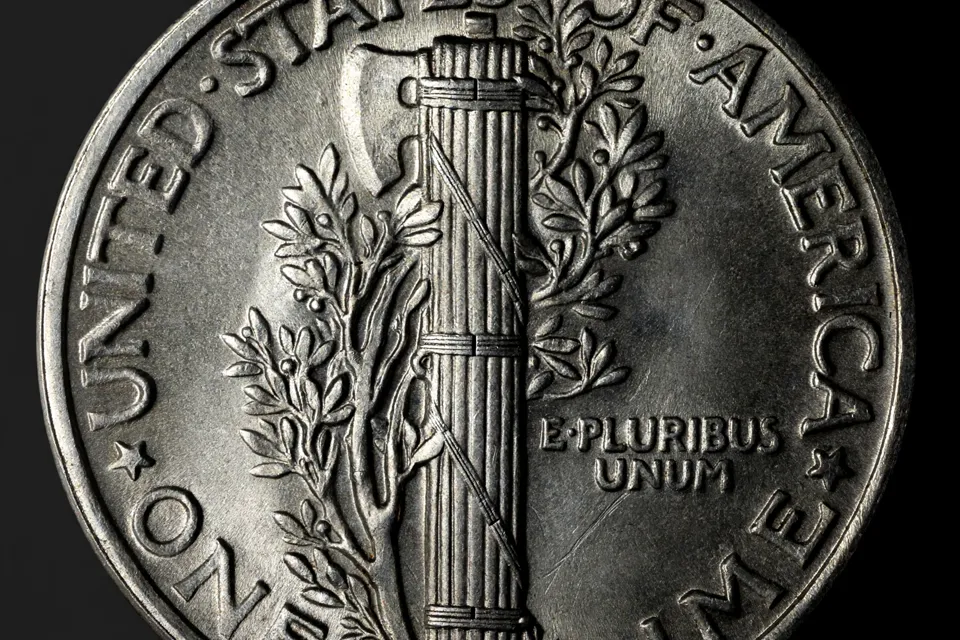
The Winged Liberty Head dime had been in pockets since 1916, through a world war, a depression, and a second world war. By 1945 it was one of the most familiar designs in American life — the winged cap that collectors call Mercury, though the portrait is Liberty, and the fasces and olive branch on the reverse that promised strength and peace. The design had survived three decades without a change, and in any other year it might have survived a fourth.
What changed was April 1945. Roosevelt’s death, twelve days before the war in Europe ended, made a memorial inevitable, and the dime was the natural place for it: Roosevelt had founded the March of Dimes, and the ten-cent coin was already associated with his name in the public mind. Chief Engraver John R. Sinnock’s Roosevelt portrait was ready within months, and the Mercury dime’s last year was 1945. The 1945 coins were struck alongside the decision, not because of it — but every one of them now carries the weight of being the end of the line.
What a 1945 Mercury dime is worth by grade
The table below comes from our Mercury dime guide. No standard grade of the 1945 is researched yet, so those rows show “—”, not guessed — the researched figures on this page are the Full Bands designations below the table.
| Grade | Estimated value |
|---|---|
| Good (G-4) | — |
| Fine (F-12) | — |
| Extremely Fine (XF-40) | — |
| About Uncirculated (AU-50) | — |
| Mint State 60 (MS-60) | — |
| Mint State 63 (MS-63) | $20+ |
| Mint State 65 (MS-65) | — |
| Mint State 65, Full Bands (MS-65 FB) | $150+ |
Guide values reviewed November 5, 2026 — figures update live from our Worker.
The shape of the table is the shape of a common date: worn examples are worth little more than their silver, and the premium only opens up with the Full Bands designation, at $150+.
That Full Bands jump is the practical lesson of this page. A 1945 in Mint State without full bands holds no researched figure in our guide; the same coin with the middle band cleanly split is a $150+ coin, and the difference is visible under a loupe in ten seconds. Check the bands before you put any Mercury dime away, because the designation is where the money is on a common date.
The Micro S variety
The 1945 Philadelphia dime has no mint mark, but its San Francisco sibling carries a variety worth knowing. In 1945 the San Francisco Mint used two sizes of mint mark, and the small one — the Micro S — is a recognised variety that collectors hunt separately from the ordinary 1945-S. The difference is the size of the S on the reverse, low on the left beside the fasces, and it takes a loupe and a known example to judge with confidence.
The Micro S is not this page’s coin — this page is the Philadelphia issue — but it is the reason to check every 1945 dime you handle, whichever mint struck it. Varieties hide in ordinary years, and the final year of a thirty-year series is exactly where the Mint’s small inconsistencies turn into collectable differences. If your 1945 has an S, compare it carefully against a normal 1945-S before you file it away as common.
The Full Bands test
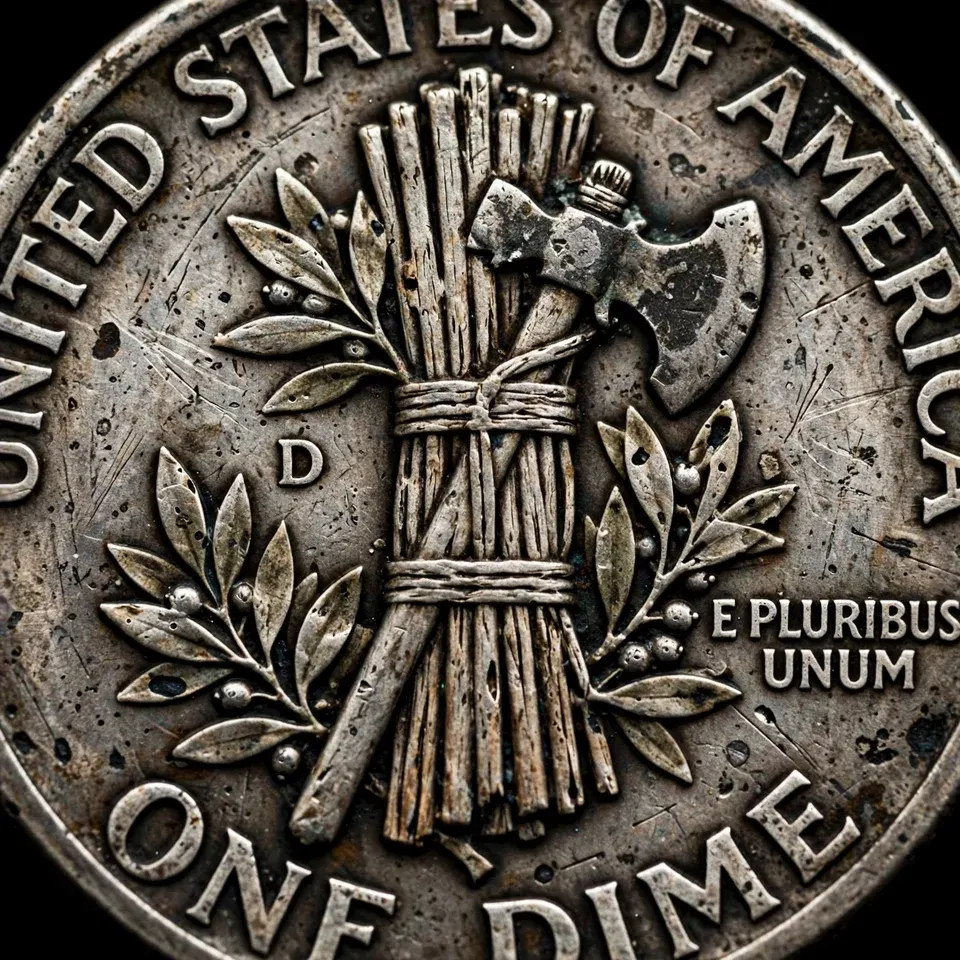
Turn the coin over and find the fasces, the bundle of rods on the reverse. Three horizontal bands wrap the bundle, and Full Bands means the middle band is split cleanly into two distinct lines with a visible gap between them, across its whole width. The designation applies only to Mint State coins, and on a common date like the 1945 it is the single biggest lever on value: no researched figure without it, $150+ with it.
Do not confuse a soft strike with wear. Wear flattens the high points and dulls the lustre; a soft strike leaves the lustre intact and the detail simply shallow. A 1945 with full cartwheel lustre under a single light is uncirculated even if its bands are blended — and a 1945 with split bands and full lustre is the $150+ coin. Tilt the coin slowly and watch the lustre roll: that roll is the test for Mint State, and the split band is the test for Full Bands.
Specs and the silver floor
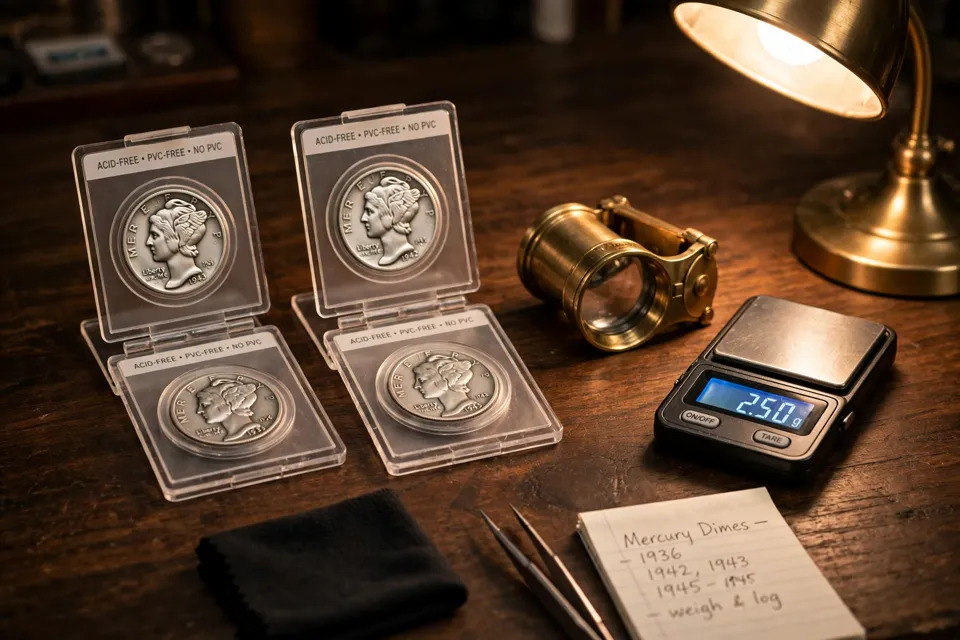
Under the history, the 1945 is a standard Mercury dime: 90% silver and 10% copper, 2.5 grams, 17.9 millimetres across, with 0.07234 troy ounces of pure silver — about $3.77 at the November 2026 silver level near $52.07 an ounce. The series ran from 1916 to 1945 to the design of Adolph A. Weinman, and this is the year it ended.
Metal floor updates live from our Worker — last updated November 7, 2026.
That silver floor is the safety net under every 1945. Even a heavily worn example never falls to face value, and a genuine example in any grade is worth more than the ten cents stamped on it. The rest of its worth is the grade and the bands — and the fact that it is the last one.
Verified auction records
No standalone record for the 1945 Philadelphia dime sits in our verified records file. The series record belongs to the 1916-D: a Mint State 67 Full Bands example that reached $207,000 at Heritage in August 2010. That figure describes a single coin in the finest known grade, not this date — the grade table above, and the live results panel below it, are the honest measures for the 1945.
For scale, the 1945’s market is the common-date market: worn examples trade as silver, Mint State examples trade on lustre and bands, and the finest Full Bands examples are the ones that make the news. The date’s fame is historical, not financial, and that is exactly why collectors keep it.
Latest reported results for this coin
Checking for newly reported results…
Your 1945 Mercury dime questions, answered
How much is a 1945 Mercury dime worth?
Our Mercury dime guide holds no researched figure for the standard grades of the 1945 yet, so the table shows dashes — but the Full Bands designation is researched: $150+ in Mint State with Full Bands.
Why is the 1945 Mercury dime the last one?
President Franklin D. Roosevelt died in April 1945, and the Mint replaced the Mercury design with his portrait on the dime in 1946. The 1945 is the final year of Adolph A. Weinman’s thirty-year design.
What is the 1945 Micro S variety?
The 1945-S San Francisco issue comes with two sizes of mint mark, and the small one — the Micro S — is a recognised variety. Check the size of the S on the reverse, low on the left beside the fasces, under a loupe.
Is the 1945 Mercury dime silver?
Yes. Every Mercury dime dated 1916 to 1945 is 90% silver, with 0.07234 troy ounces of pure silver. The live metal floor for this coin is in the specs section above.
What does Full Bands mean on a 1945 Mercury dime?
Full Bands means the middle horizontal band of the fasces is fully split into two clean lines across its whole width. It applies only to Mint State coins, and on the 1945 it is the difference between no researched figure and $150+.
Check your 1945
Run the date and mint mark through the free Coin Value Checker for an instant estimate, or get a Grade-or-Not verdict on whether your coin is worth certifying. The full series guide is here: Mercury Dime Values: 1916-D, Full Bands & $207,000+ Records.
Written for the history: the 1945 is the last Mercury dime, and this guide exists so the next one found gets recognised as the end of a thirty-year design before it is spent.
This guide is for education — learn the coin first, and get a professional opinion before buying or selling.