1950-S Roosevelt Dime: West Coast Silver, Few Gems Left
Coin Encyclopedia · 7 min read · Published November 7, 2026
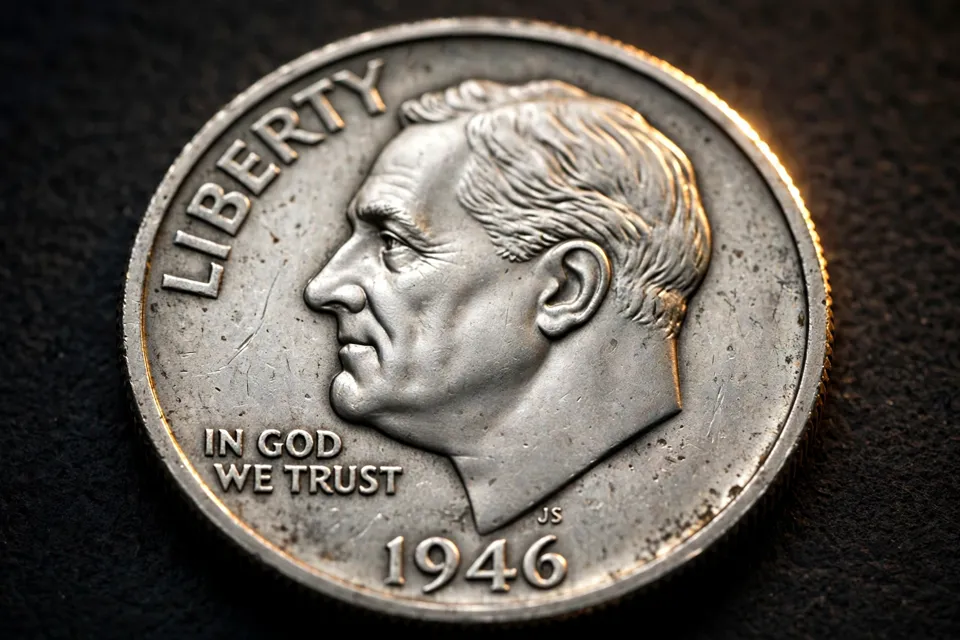
The 1950-S Roosevelt dime comes from a year when America was suddenly at war again. The Korean War began in June 1950, the Mint’s output rose to meet a mobilising economy, and San Francisco struck dimes for a West Coast that was building ships, planes, and bases at full speed. The coins went straight into circulation, and like most early Roosevelt dimes they wore down honestly for decades — which is why a crisp 1950-S is far scarcer than its mintage suggests.
There is an honest gap on this page, and it belongs up front: our guide has not researched grade values for the 1950-S yet, so the grade table below shows “—” rather than invented figures. The live results panel near the bottom checks for newly reported results every time it loads, and the specs section carries the live metal floor. What follows is everything that can be said without guessing: the design, the torch bands, the mint mark, and the silver.
1950 on the West Coast
The San Francisco Mint in 1950 served a coast that was changing fast. The Korean War had begun in June, the Bay Area’s shipyards and air bases were hiring again, and small silver moved through pay envelopes and shop tills at a pace the peacetime years had not seen. San Francisco’s dimes were working coins, not keepsakes, and they circulated in a region where a dime bought a phone call, a newspaper, and a cup of coffee with change to spare.
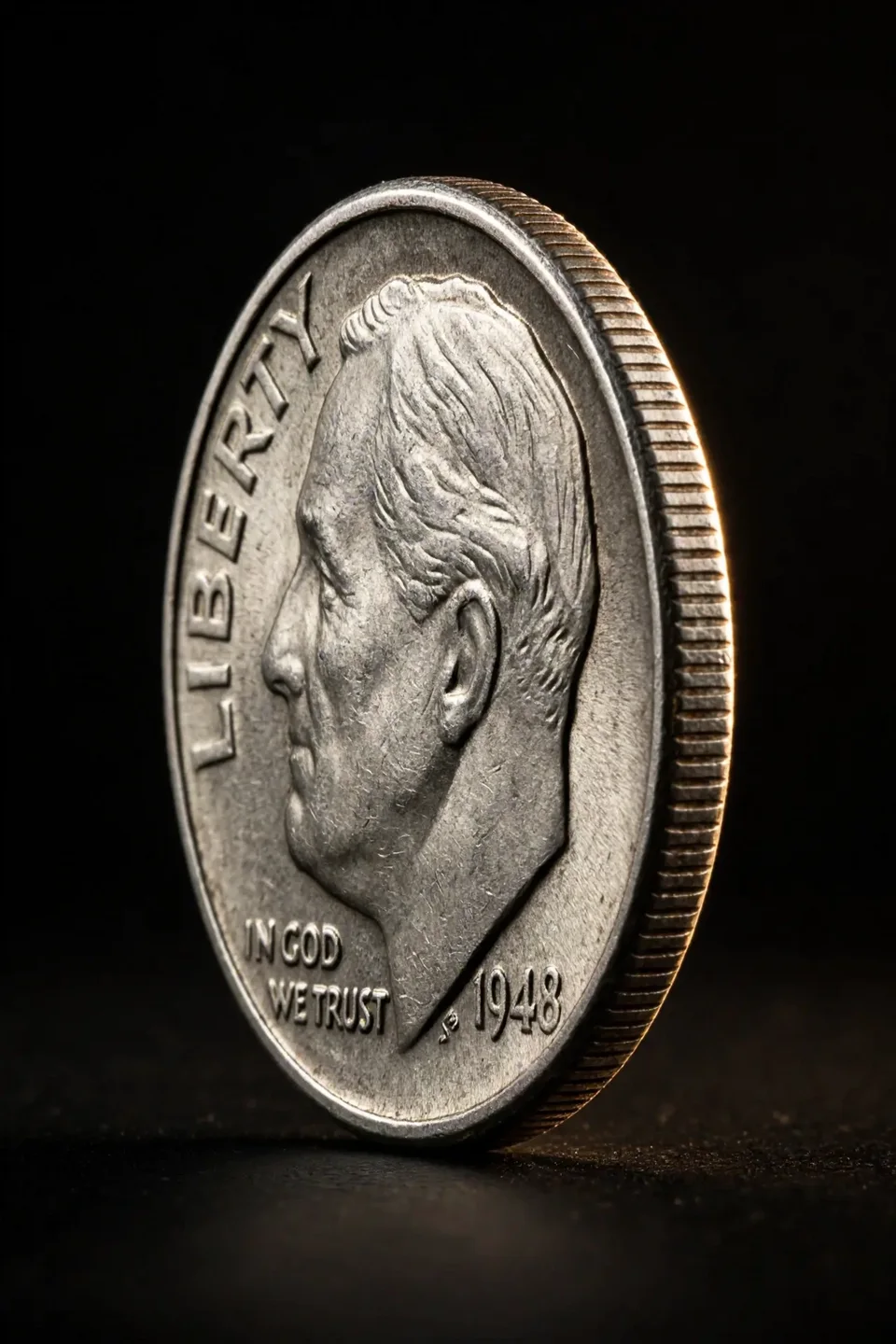
That working life is written on the survivors. A 1950-S is usually found with honest wear — softened high points on Roosevelt’s cheek and hair, a torch whose bands have lost their sharp edges, and the kind of even grey toning that comes from decades in pockets and tills. A coin that escaped that fate, with full lustre and a sharp strike, is the exception that proves how hard these coins worked. When you hold one, the wear is the history.
What a 1950-S Roosevelt dime is worth by grade
Our guide has not researched grade values for the 1950-S yet, and the table below says so plainly. A dash is not a zero and it is not a guess — it is a gap, and this page would rather show the gap than invent a figure for it.
| Grade | Estimated value |
|---|---|
| Good (G-4) | — |
| Fine (F-12) | — |
| Extremely Fine (XF-40) | — |
| About Uncirculated (AU-50) | — |
| Mint State 60 (MS-60) | — |
| Mint State 65 (MS-65) | — |
Guide values reviewed November 5, 2026 — figures update live from our Worker.
The live module on this page checks our Worker for reported results for this exact date and grade on every load. When a verified result exists for a grade, it appears in the table above; until then, the dash stands.
What can be said without a number is the shape of the market. A silver Roosevelt dime from a branch mint trades on its silver, its mint mark, and its condition: worn examples sit near the metal floor, uncirculated examples carry a premium, and only a sharply struck Full Torch example in high grade breaks away from the pack. The 1950-S is the date to learn that shape on, because it is early enough to matter and common enough to find.
Grading by the torch
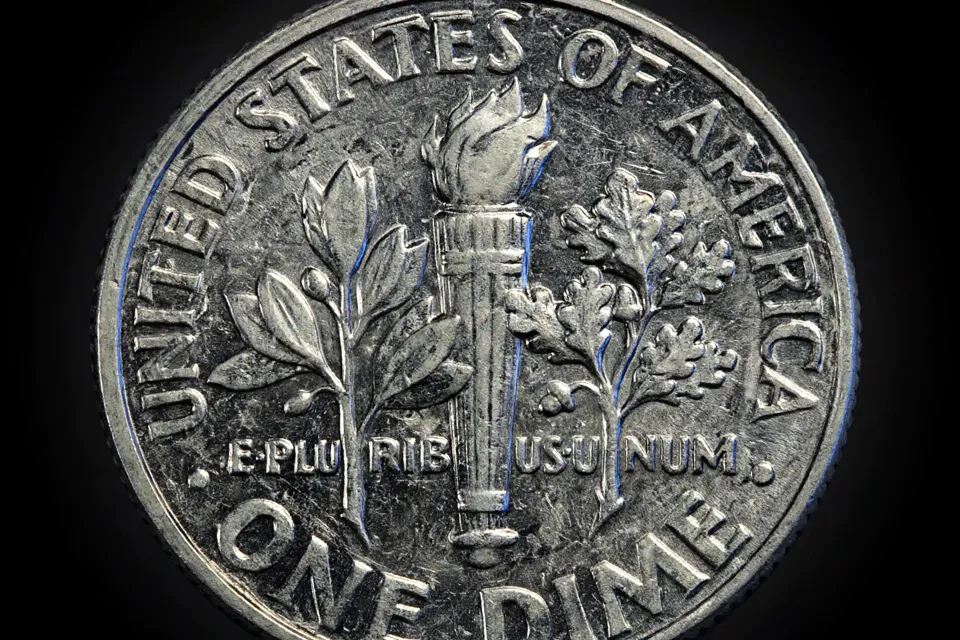
Roosevelt dimes grade by the torch. The torch on the reverse is wrapped in horizontal bands, and on a sharply struck Mint State coin those bands are fully separated into clean, distinct lines — the Full Torch designation, marked FT by the grading services. It is the Roosevelt equivalent of the Mercury dime’s Full Bands, and it works the same way: a Mint State coin with full torch bands is worth more than the same coin without them, sometimes several times more.
The other wear points are Roosevelt’s cheek and hair on the obverse, and the leaves of the olive branch on the reverse. Mint State coins add full cartwheel lustre under a single light, with no flat or dull spots on the cheek or on the flame. Original surfaces and natural toning carry the premium — never clean a silver dime, because cleaning strips the surface and destroys collector value instantly. A dirty, original 1950-S is worth more than a shiny, cleaned one at the same grade.
The S check
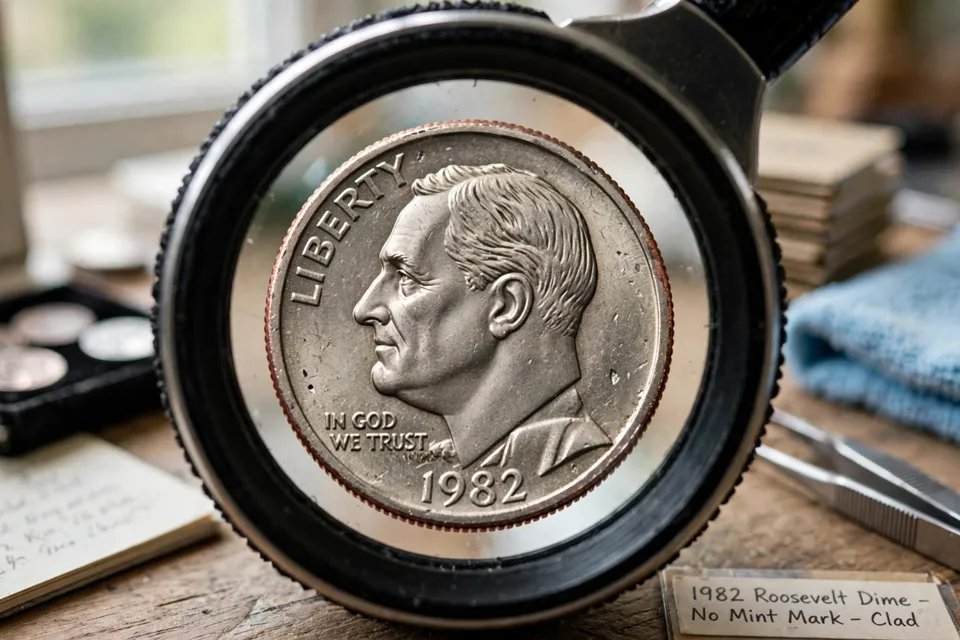
On a silver Roosevelt dime the mint mark sits on the reverse, to the left of the torch. S means San Francisco, D means Denver, and no letter means Philadelphia. A 1950 Philadelphia dime is a common silver coin; a 1950-S is the West Coast issue of this page. The letter is small, and on a worn reverse it can be hard to read, so use a 5x to 10x loupe and good light.
Check the mark’s position and depth against a known genuine example before trusting it. An added S is an old trick, and it is usually betrayed by tool marks in the metal around the letter or by a letter that sits too high, too shallow, or at the wrong angle. A genuine S is crisp, correctly placed, and struck at the same depth as the rest of the design. Any 1950-S whose value clears the grading fee belongs in a PCGS or NGC holder — certification is where the premium is paid.
Specs and the silver floor
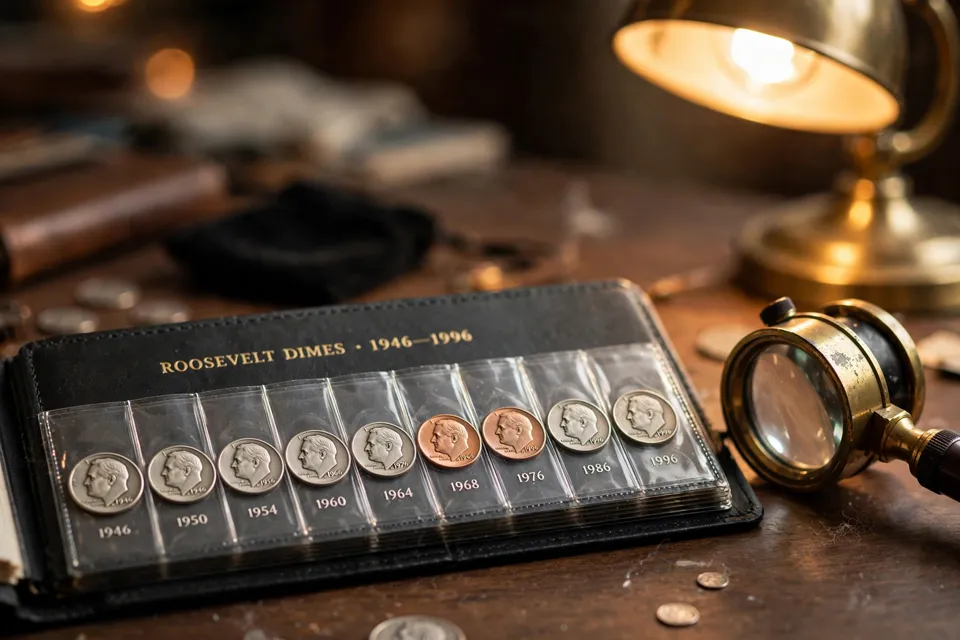
Under the history, the 1950-S is a standard silver Roosevelt dime: 90% silver and 10% copper, 2.5 grams, 17.9 millimetres across, with 0.07234 troy ounces of pure silver — about $3.77 at the November 2026 silver level near $52.07 an ounce. The silver issues ran from 1946 to 1964, when clad coinage replaced them.
Metal floor updates live from our Worker — last updated November 7, 2026.
That silver floor is the safety net under every 1950-S. Even a heavily worn example never falls to face value, and a genuine example in any grade is worth more than the ten cents stamped on it. Check the edge as well: a silver dime shows a solid silver-grey edge with no copper stripe, while a clad dime reveals a distinct copper-brown stripe running through the middle.
Verified auction records
No standalone record for the 1950-S sits in our verified records file. The series record belongs to a different coin entirely: the 1975 No-S proof, of which only two are known, at $506,250. That figure describes a proof error in a league of its own, not this date — the grade table above, and the live results panel below it, are the honest measures for the 1950-S.
For scale, the 1950-S’s market is the common-date silver market: worn examples trade as silver, uncirculated examples trade on lustre and torch bands, and the finest Full Torch examples are the ones that make the news.
Latest reported results for this coin
Checking for newly reported results…
Your 1950-S Roosevelt dime questions, answered
How much is a 1950-S Roosevelt dime worth?
Our guide has not researched grade values for the 1950-S yet, so the grade table above shows — rather than invented figures. The live module on this page checks for newly reported results on every load, and the metal floor in the specs section is the minimum any genuine example carries.
Is the 1950-S Roosevelt dime silver?
Yes. Every Roosevelt dime dated 1946 to 1964 is 90% silver, with 0.07234 troy ounces of pure silver. The live metal floor for this coin is in the specs section above.
Where is the mint mark on a 1950-S Roosevelt dime?
On the reverse, to the left of the torch. S means San Francisco, D means Denver, and no letter means Philadelphia. From 1980 the mint mark moved to the obverse, above the date.
What does Full Torch mean on a Roosevelt dime?
Full Torch means the horizontal bands on the torch are fully separated into clean, distinct lines. It applies only to Mint State coins, and it is the Roosevelt equivalent of the Mercury dime’s Full Bands.
Why is the 1950-S scarce in high grade?
San Francisco’s 1950 dimes went straight into circulation in a wartime economy and wore down hard for decades. Few were ever set aside, so crisp, lustrous survivors are far scarcer than the mintage suggests.
Check your 1950-S
Run the date and mint mark through the free Coin Value Checker for an instant estimate, or get a Grade-or-Not verdict on whether your coin is worth certifying. The full series guide is here: Roosevelt Dime Values by Date and Grade.
Written for the hunt: the 1950-S is the West Coast silver dime most likely to be sitting unrecognised in an inherited collection, and this guide exists so the next one found gets its mint mark checked before it is spent.
This guide is for education — learn the coin first, and get a professional opinion before buying or selling.