1964-D Kennedy Half: Denver's Biggest First-Year Run
Coin Encyclopedia · 8 min read · Published November 7, 2026
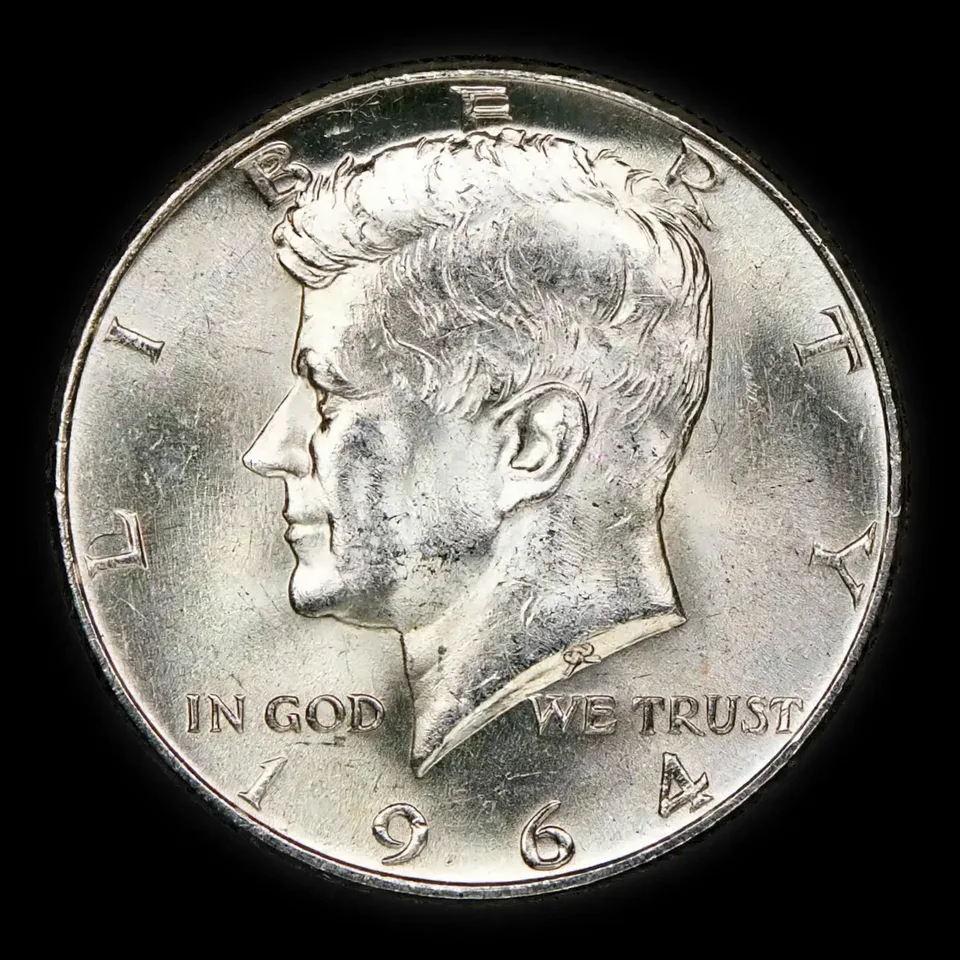
The 1964-D Kennedy half is the Denver twin of the famous first-year issue — same portrait, same 90% silver, same rush to hoard — struck in even larger numbers than Philadelphia's. Denver made 334,932,000 of them in 1964, the biggest mintage of any Kennedy half ever struck, and almost all of them disappeared into drawers and jars within months. A 1964-D is the Kennedy half most collectors meet first, because there are more of them than any other date.
That abundance is the whole story of the 1964-D. It is not a rare coin, and it never will be: the mintage is enormous, and millions survived because people kept them as keepsakes. What makes one 1964-D worth more than another is condition — a sharply struck, lustrous, original example stands apart from the millions that were tossed in a drawer and forgotten. This guide explains the D check, the silver floor, and what to look for before you pay a premium.
The D check — Denver's mark below the talon
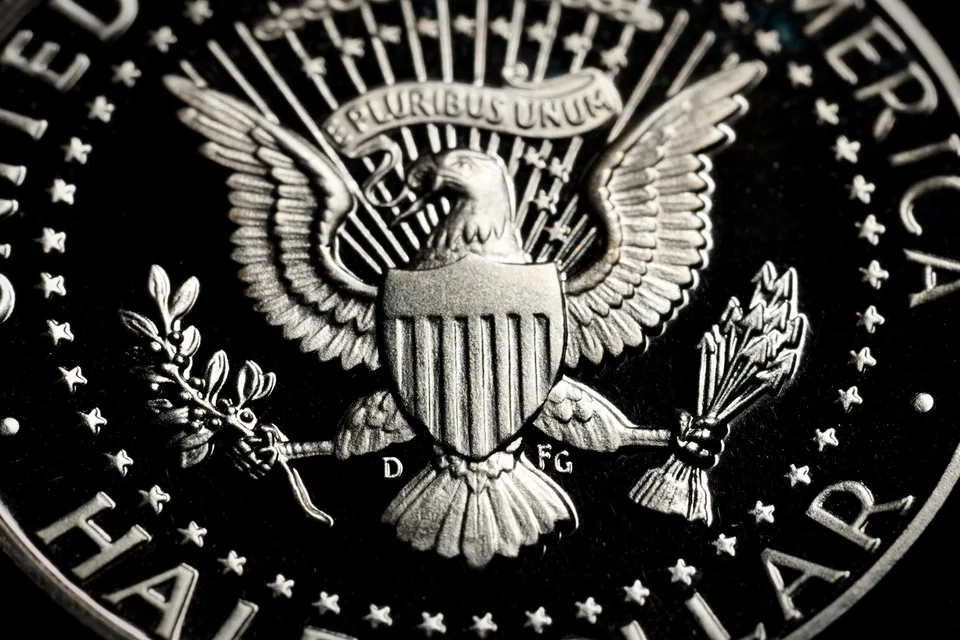
The mint mark on a Kennedy half sits on the reverse, below the eagle's left talon, just above the tail feathers. On the 1964-D it is a clear, well-formed D — and it is the only thing that separates a Denver half from a Philadelphia one. Both are 90% silver, both weigh 12.5 grams, and both carry the same portrait. The D is the difference, and it is easy to read with the naked eye.
Because the 1964-D is common, it is rarely faked — there is no money in faking a coin worth little more than its silver. What does happen is confusion: a 1964-D is sometimes mistaken for a scarcer date, or a later clad half is mistaken for a 1964. The date settles that: only 1964 halves are 90% silver, and only the 1964-D carries the Denver mark on a first-year coin.
Why Denver struck more than Philadelphia
Denver struck 334,932,000 Kennedy halves in 1964 against Philadelphia's 273,304,004 — the only year of the series in which Denver out-produced Philadelphia by that margin. The reason was demand: the whole country wanted Kennedy halves at once, and both mints ran their presses around the clock to meet it. Denver, with newer equipment and a full workforce, simply struck more.
The irony is that all that production made the coin common. The Mint struck hundreds of millions of halves in 1964 and still could not keep them in circulation, because the public hoarded nearly every one. The 1964-D is the proof of that hoarding: a coin struck in the hundreds of millions, saved in the millions, and still worth little more than its silver in worn condition.
Silver first, collectible second
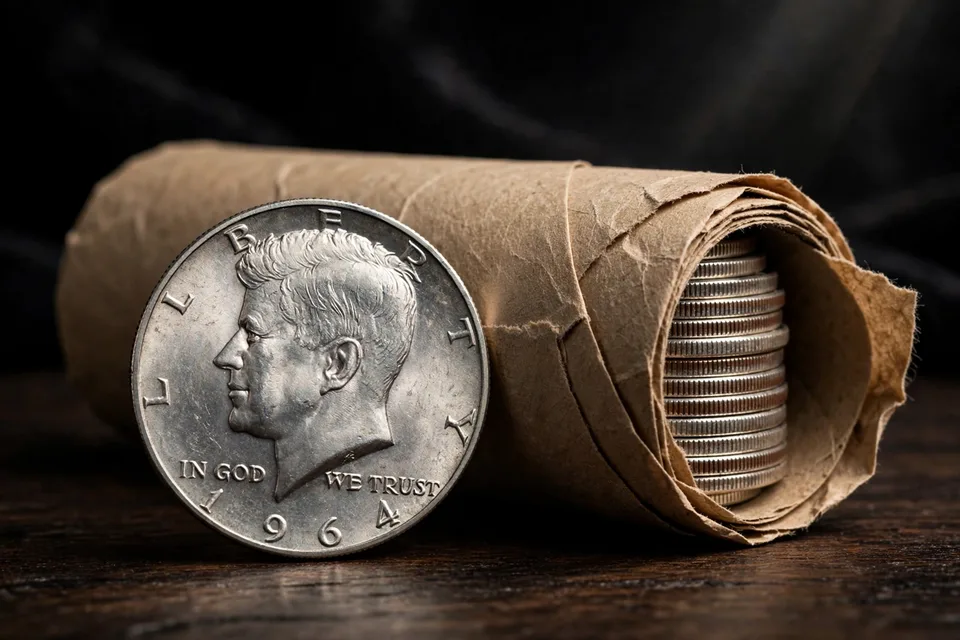
A worn 1964-D is a silver coin first and a collectible second. It weighs 12.5 grams, it is 90% silver, and it carries 0.36169 troy ounces of pure silver — the same as every other 1964 half. The live metal floor in the specs section below is the baseline for any 1964-D, and no worn example should change hands for less than that floor.
The premium, when there is one, lives in uncirculated condition. A 1964-D with full mint lustre, a sharp strike, and clean, original surfaces is worth more than a worn one — but the gap is modest, because uncirculated 1964-D halves are not scarce. The coins to avoid paying a premium for are cleaned or dull examples: cleaning strips the lustre a collector pays for, and a cleaned 1964-D is a silver coin, nothing more.
The 1964-D in a Kennedy set — the easy date that teaches grading
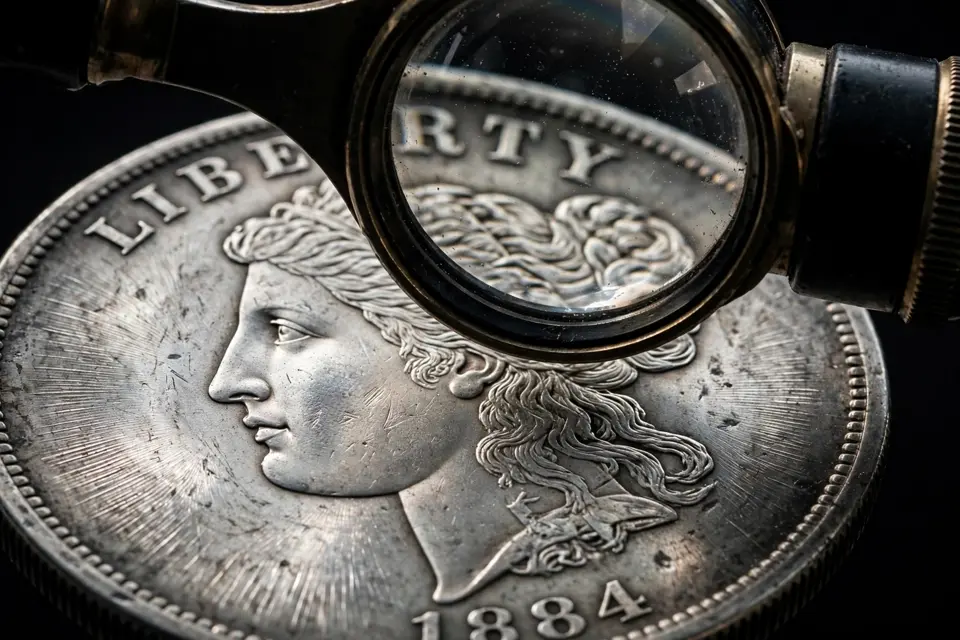
Every Kennedy half set needs a 1964-D, and it is the easiest date to find — which makes it the best date to learn grading on. Because the coin is common and affordable in every grade, a collector can hold a worn 1964-D, a Mint State one, and a gem side by side and learn what wear, lustre, and strike actually look like. That lesson, learned on a coin worth little more than silver, is worth more than the coin itself.
It is also the date that teaches patience. A 1964-D in a roll of halves is unremarkable; a 1964-D with full lustre, a sharp strike, and no marks is a coin worth keeping. The difference is visible with a loupe and a good light, and it is the difference between collecting and accumulating.
What a 1964-D Kennedy Half 90% silver is worth by grade
Our guide has not yet researched grade-by-grade estimates for this date, so every cell below shows “—” rather than a guessed figure. The live system fills these cells the moment research or a newly reported result lands. Figures on this page are reviewed November 5, 2026.
| Grade | Estimated value |
|---|---|
| Good (G-4) | — |
| Fine (F-12) | — |
| Extremely Fine (XF-40) | — |
| About Uncirculated (AU-50) | — |
| Mint State 60 (MS-60) | — |
| Mint State 65 (MS-65) | — |
No researched grade figures exist for the 1964-D yet. The Denver mintage of 334,932,000 is the larger of the two 1964 issues, so a worn 1964-D trades close to its silver floor, and the premium lives in uncirculated condition.
Specs and the silver floor
The 1964 Kennedy half is 90% silver — the only Kennedy half struck for circulation in 90% silver. The coin weighs 12.5 grams and carries 0.36169 troy ounces of pure silver. The live metal floor for this coin is $18.83 — it moves with the live silver market, so the figure updates on every load rather than standing still.
Metal floor updates live from our Worker — last updated November 7, 2026.
Gilroy Roberts' portrait of John F. Kennedy fills the obverse, adapted from the medal he made for the 1961 inauguration, while Frank Gasparro's reverse is based on the presidential seal. Diameter 30.6 millimetres, reeded edge, and the mint mark on the reverse below the eagle's left talon.
Verified auction records
Our auction data holds no verified historic record for this date yet — no figure here is guessed. The box below checks for newly reported results on every load, so the first verified result for this coin will appear there.
Latest reported results for this coin
Checking for newly reported results…
Your 1964-D Kennedy Half 90% silver questions, answered
How much is a 1964-D Kennedy half dollar worth?
A worn 1964-D trades near its silver floor — it is the most common Kennedy half ever struck, with a mintage of 334,932,000. Our guide has not yet researched grade-by-grade estimates for this date, so the table shows dashes. Uncirculated examples with full lustre move above the floor.
Is the 1964-D Kennedy half silver?
Yes — it is 90% silver, weighing 12.5 grams with 0.36169 troy ounces of pure silver. The live metal floor for this coin is in the specs section below and moves with the live silver market.
How many 1964-D Kennedy halves were struck?
Denver struck 334,932,000 Kennedy halves in 1964 — more than Philadelphia's 273,304,004, and the largest mintage of any Kennedy half. Millions were hoarded as keepsakes, which is why the coin is common in every grade.
Where is the mint mark on a 1964-D Kennedy half?
The mint mark is on the reverse, below the eagle's left talon: D for Denver, and no mint mark for Philadelphia. The D is clear and easy to read, and it is the only difference between the Denver and Philadelphia first-year halves.
Should I keep a 1964-D Kennedy half I found in change?
Yes, if it is a 1964 — every 1964 half is 90% silver and worth keeping over its silver floor. Check the surfaces for original lustre and the strike for sharpness; a clean, lustrous example is worth more than a worn or cleaned one.
Check your 1964-D
Run the date and mint mark through the free Coin Value Checker for an instant estimate, or get a Grade-or-Not verdict on whether your coin is worth certifying. The full series guide is here: 1964 Kennedy Half Dollar Silver Value Today.
Written for collectors starting a Kennedy set — the 1964-D is the easy date, and the one that teaches grading. This guide is for education — learn the coin first, and get a professional opinion before buying or selling.