1964 Kennedy Half: First-Year 90% Silver Guide
Coin Encyclopedia · 8 min read · Published November 7, 2026
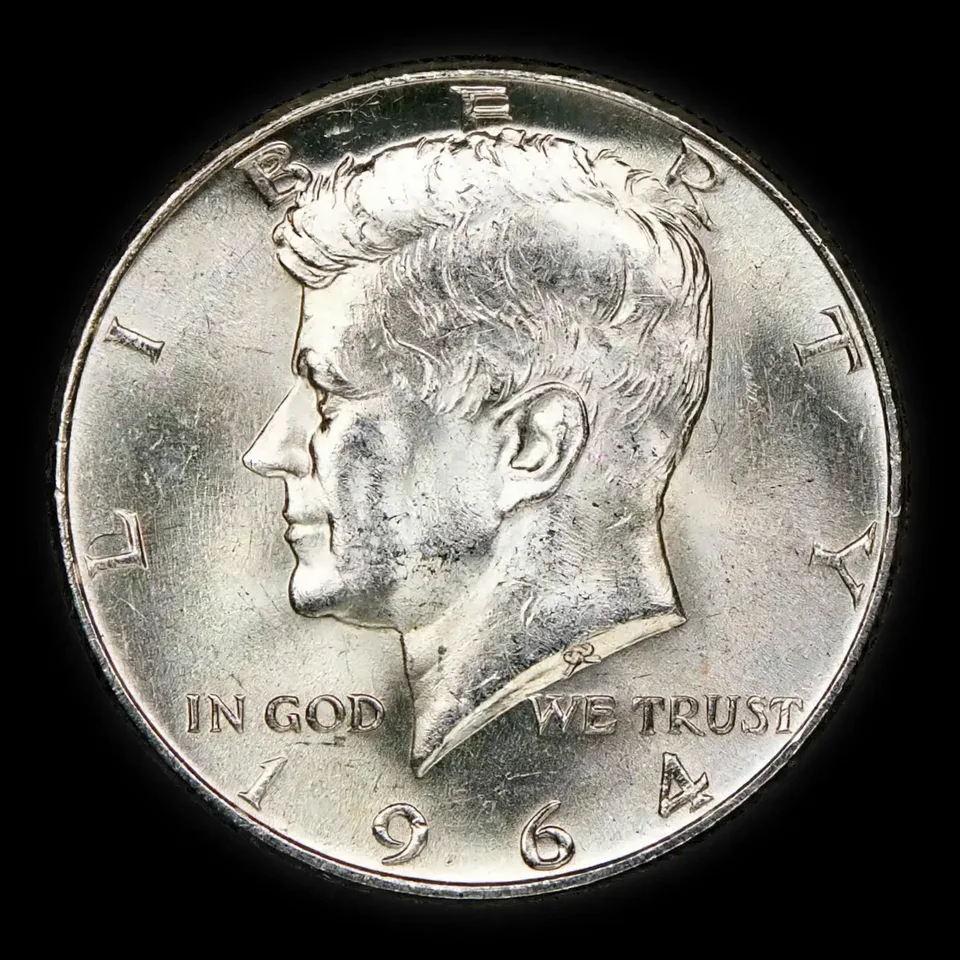
The 1964 Kennedy half dollar is the coin most Americans of a certain age remember first. It was struck in the months after President John F. Kennedy was assassinated in November 1963, and Congress moved fast: the Franklin half was retired, Gilroy Roberts' portrait of Kennedy was put on the obverse, and the first coins reached the public in March 1964. They did not stay in circulation long — people kept them as keepsakes, and within a year the Mint had switched the coin to 40% silver because so much silver was being hoarded.
That makes the 1964 the only Kennedy half struck for circulation in 90% silver, and the date every collector checks first. Philadelphia struck 273,304,004 of them, a huge mintage, so a worn 1964 is a silver coin first and a collectible second. What lifts a 1964 above its silver is condition — and one small variety, the Accented Hair, that turns an ordinary first-year half into a coin worth a second look.
The Accented Hair variety — the detail above the ear
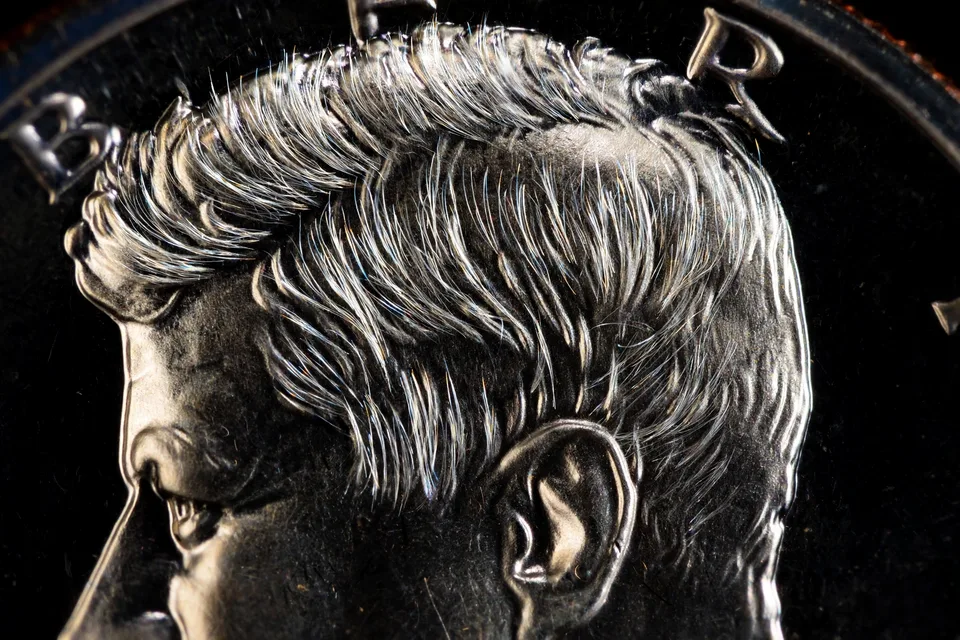
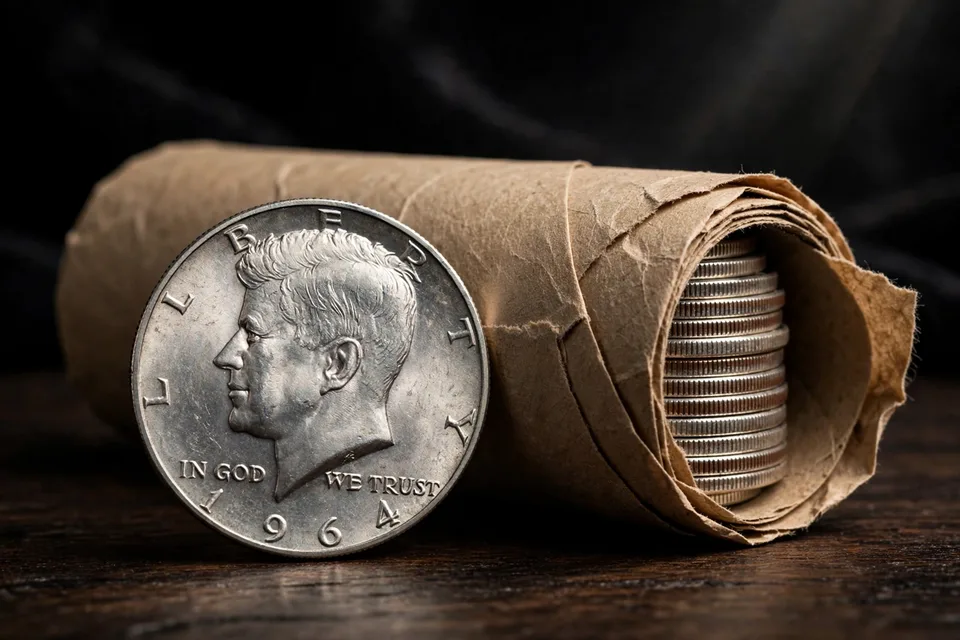
Look at the hair above Kennedy's ear on the obverse. On most 1964 halves the hair is smooth, with a few incised lines. On early strikes — the Accented Hair variety — there is an extra, deeply carved lock of hair above the ear, with more lines and a sharper edge. It is a small detail, but it is the variety collectors chase, because it appears only on coins struck from the earliest dies.
The variety is best known on proof 1964 halves, where it is clear and well documented, but it also appears on early business strikes. The check is the same either way: a loupe, a good light, and the hair above the ear. If the extra lock is there, you have the variety; if the hair is smooth, you have an ordinary 1964. Either way, do not clean the coin to see it better — cleaning destroys the surfaces a collector pays for.
Why so many 1964 halves never circulated
The 1964 half dollar was hoarded from the day it appeared. People kept them as memorials to a murdered president, and the Mint could not strike them fast enough — it ran the presses around the clock, struck over 273 million at Philadelphia alone, and still could not meet demand. By the end of 1964, the half dollar had effectively vanished from circulation, and it never really came back.
That hoarding is why worn 1964 halves are common and uncirculated ones are not rare: millions were set aside in drawers, jars, and rolls, and many of those are still out there. What is genuinely scarce is a 1964 that is both uncirculated and sharply struck with clean, original surfaces — the coins that were kept carefully, not the ones that were tossed in a drawer with the keys.
How to tell a real 1964 from a later Kennedy half
The date is the first check: 1964 is the only year a circulation Kennedy half was struck in 90% silver. The 1965 to 1970 halves are 40% silver and lighter — 11.5 grams against the 1964's 12.5 — and the 1971 and later halves are copper-nickel clad at 11.34 grams, with no silver at all. A scale settles it in seconds: 12.5 grams and a 1964 date means 90% silver.
The edge is the second check. A 1964 half shows a solid silver edge with no copper stripe. A clad half shows a copper-coloured band running around the edge, and a 40% silver half shows a fainter version of the same. If your 1964-dated coin shows copper on the edge, something is wrong — either the date is not 1964, or the coin is not what it seems.
What to look for in a 1964 worth keeping
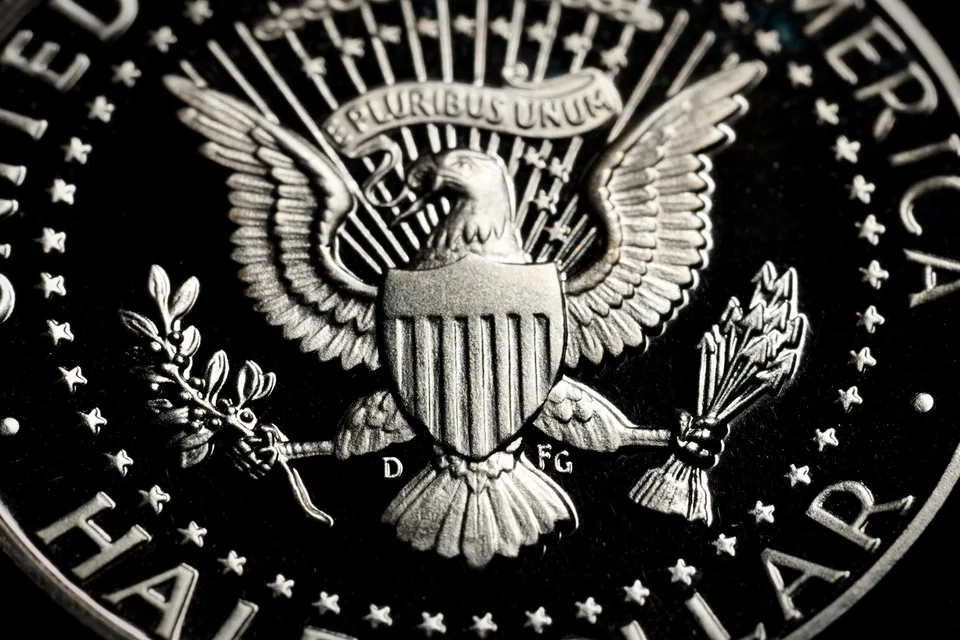
Start with the surfaces. A 1964 that was kept as a keepsake should still have its original mint lustre — a soft, frosty shine that moves across the coin as you tilt it. Dull, flat, or oddly bright surfaces suggest cleaning, and a cleaned 1964 loses most of its premium over silver. Then look at the high points: Kennedy's cheek and hair on the obverse, the eagle's breast and wing tips on the reverse. Wear there means the coin circulated, and circulated 1964 halves trade near their silver floor.
Then check the hair above the ear for the Accented Hair variety, and the overall strike — early 1964 halves can be softly struck on the hair and the eagle. A sharply struck, lustrous, original 1964 is the coin to keep; a dull or cleaned one is a silver coin, and should be judged as one.
What a 1964 Kennedy Half 90% silver is worth by grade
The figures below are our researched collector estimates from the live guide, reviewed November 5, 2026. Grades our guide has not researched yet are shown as “—”, not guessed.
| Grade | Estimated value |
|---|---|
| Good (G-4) | $25–$30 |
| Fine (F-12) | — |
| Extremely Fine (XF-40) | — |
| About Uncirculated (AU-50) | — |
| Mint State 60 (MS-60) | — |
| Mint State 65 (MS-65) | — |
Only the Good grade carries a researched figure so far — $25–$30 — and the rest of the table waits for research rather than guessing. A worn 1964 still holds its silver, and uncirculated examples with sharp strike and clean surfaces move well above the floor.
Specs and the silver floor
The 1964 Kennedy half is 90% silver — the only Kennedy half struck for circulation in 90% silver. The coin weighs 12.5 grams and carries 0.36169 troy ounces of pure silver. The live metal floor for this coin is $18.83 — it moves with the live silver market, so the figure updates on every load rather than standing still.
Metal floor updates live from our Worker — last updated November 7, 2026.
Gilroy Roberts' portrait of John F. Kennedy fills the obverse, adapted from the medal he made for the 1961 inauguration, while Frank Gasparro's reverse is based on the presidential seal. Diameter 30.6 millimetres, reeded edge, and the mint mark on the reverse below the eagle's left talon.
Verified auction records
Our auction data holds no verified historic record for this date yet — no figure here is guessed. The box below checks for newly reported results on every load, so the first verified result for this coin will appear there.
Latest reported results for this coin
Checking for newly reported results…
Your 1964 Kennedy Half 90% silver questions, answered
How much is a 1964 Kennedy half dollar worth?
A worn 1964 Kennedy half is worth $25–$30 in Good condition, carried by its 90% silver content, while uncirculated examples move well above that. Our guide has researched the Good grade so far; the other grades are shown as dashes until research lands.
Is the 1964 Kennedy half silver?
Yes — it is 90% silver, weighing 12.5 grams with 0.36169 troy ounces of pure silver. It is the only Kennedy half struck for circulation in 90% silver. The live metal floor for this coin is in the specs section below and moves with the live silver market.
What is the Accented Hair variety on the 1964 Kennedy half?
The Accented Hair variety shows an extra, deeply carved lock of hair above Kennedy's ear on the obverse, from the earliest dies. It is best known on proof strikes but also appears on early business strikes, and it carries a premium over an ordinary 1964.
How many 1964 Kennedy halves were struck?
Philadelphia struck 273,304,004 Kennedy halves in 1964, and Denver struck 334,932,000 more. Millions were hoarded as keepsakes from the day they appeared, which is why worn examples are common and the half dollar vanished from circulation.
Where is the mint mark on a Kennedy half dollar?
The mint mark is on the reverse, below the eagle's left talon: D for Denver, S for San Francisco, and no mint mark for Philadelphia. A 1964 with no mint mark is the Philadelphia issue, struck in the largest numbers of the first year.
Check your 1964
Run the date and mint mark through the free Coin Value Checker for an instant estimate, or get a Grade-or-Not verdict on whether your coin is worth certifying. The full series guide is here: 1964 Kennedy Half Dollar Silver Value Today.
Written for collectors who remember where they were in November 1963 — and for those learning the coin for the first time. This guide is for education — learn the coin first, and get a professional opinion before buying or selling.