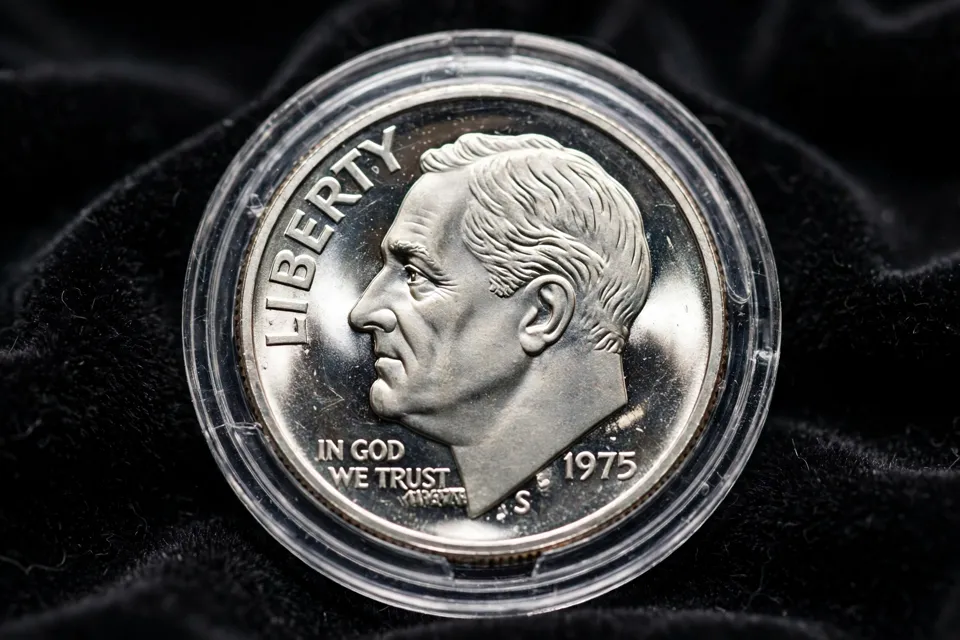
1982 No-P Roosevelt Dime: The Missing Mint Mark Error
Coin Encyclopedia · 7 min read · Published November 7, 2026
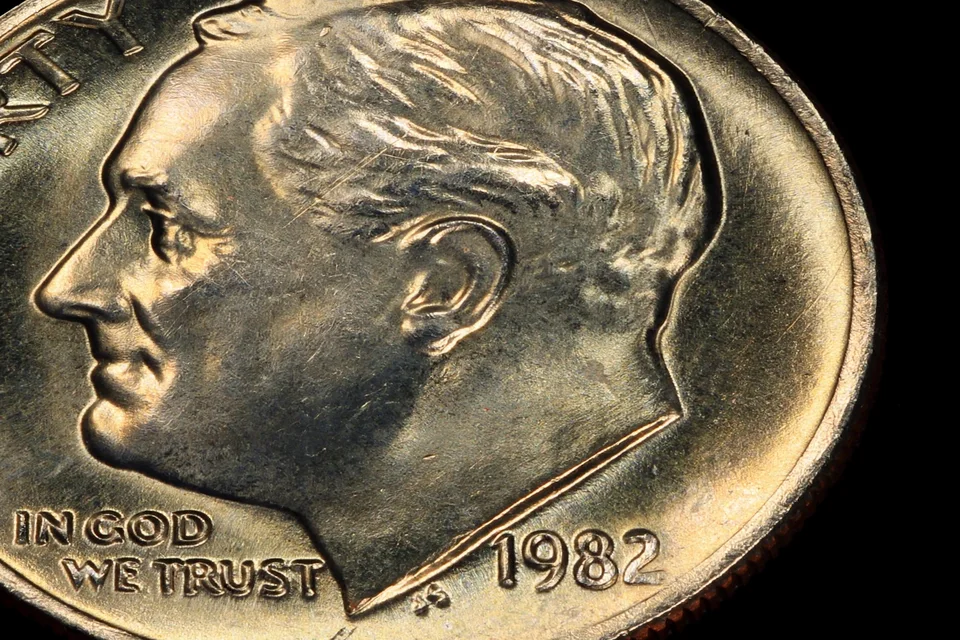
Look above the date on a 1982 Roosevelt dime. On almost all of them a small P sits there, the Philadelphia mint mark the Mint began adding to dimes in 1980. On a rare few, the space is empty. In 1982 one obverse die missed its mint-mark punch entirely, and it struck an estimated 75,000 dimes with no P at all — the 1982 No-P, the most famous modern Roosevelt error, and a coin that hides in ordinary pocket change.
Our dime guide puts examples at $55+ to $2,185, with the strongest strikes at the top of the range. This page shows how the error happened, how to tell a genuine No-P from a coin with its P removed, and why the strike — strong or weak — decides where in that range your coin sits.
The die that missed its punch
In 1980 the Philadelphia Mint began placing a P mint mark on dimes for the first time. Before that, Philadelphia coins carried no mint mark at all, and the change was meant to end that ambiguity. Two years later, one obverse die missed the punch — the small steel tool that stamps the mint mark into the die — and went into service without it. Every dime that die struck carried a blank space above the date where the P should have been.
The Mint caught the error, but not before an estimated 75,000 coins had been struck and released into circulation. That number is small by modern standards — a single day’s output for a busy mint — but it is large enough that 1982 No-P dimes still turn up in rolls, jars, and inherited collections. The error is a die variety, not a striking accident: every coin from that die carries the same missing mint mark, in the same place, with the same blank space. That consistency is what makes it identifiable, and what makes it collectable.
Strong Strike vs Weak Strike
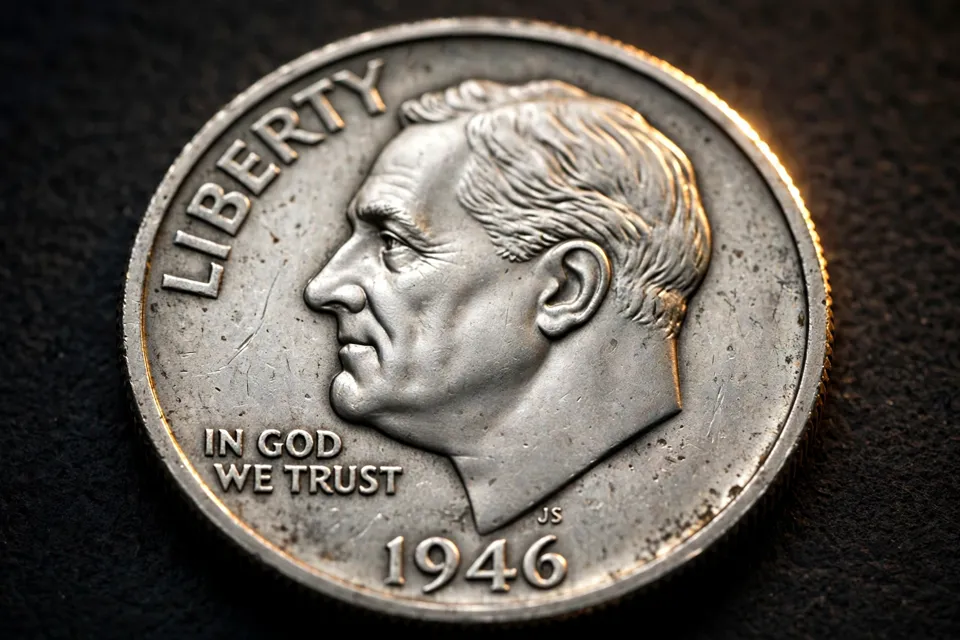
Not all 1982 No-P dimes are equal, and the difference is the strike. The missing-mark die struck coins in two qualities: Strong Strike examples, with crisp date detail and sharp hair and lettering, and Weak Strike examples, with softer detail throughout. Strong Strike coins command a consistent premium over the softer Weak Strike variety, and the top of our guide’s $55+ to $2,185 range belongs to the strong ones in high grade.
Judge the strike by the date and the hair. On a Strong Strike the digits of 1982 are crisp and fully formed, with sharp edges and deep fields around them; on a Weak Strike the digits are soft and shallow, and the hair above Roosevelt’s ear loses its strands. The mint mark — or its absence — is the same on both. What changes is everything else, and on a modern error that everything else is the value.
What a 1982 No-P Roosevelt dime is worth by grade
Our guide has not researched grade-by-grade values for the 1982 No-P yet, and the table below says so plainly. What it has researched is the range: $55+ to $2,185 across the issue, from our dime guide, with the strongest strikes at the top. A dash is not a zero and it is not a guess — it is a gap, and this page would rather show the gap than invent a figure for it.
| Grade | Estimated value |
|---|---|
| Good (G-4) | — |
| Fine (F-12) | — |
| Extremely Fine (XF-40) | — |
| About Uncirculated (AU-50) | — |
| Mint State 60 (MS-60) | — |
| Mint State 65 (MS-65) | — |
Guide values reviewed November 5, 2026 — figures update live from our Worker.
Our dime guide puts 1982 No-P examples at $55+ to $2,185, with Strong Strike coins at the top of the range. The live module on this page checks our Worker for reported results for this exact variety and grade on every load.
Read the range as a shape, not a promise. A circulated No-P with a weak strike sits at the bottom of it; an uncirculated Strong Strike sits at the top. The live figures above update from our Worker as new results are reported, so the numbers you see here are the latest our system holds.
How to check your 1982 dime
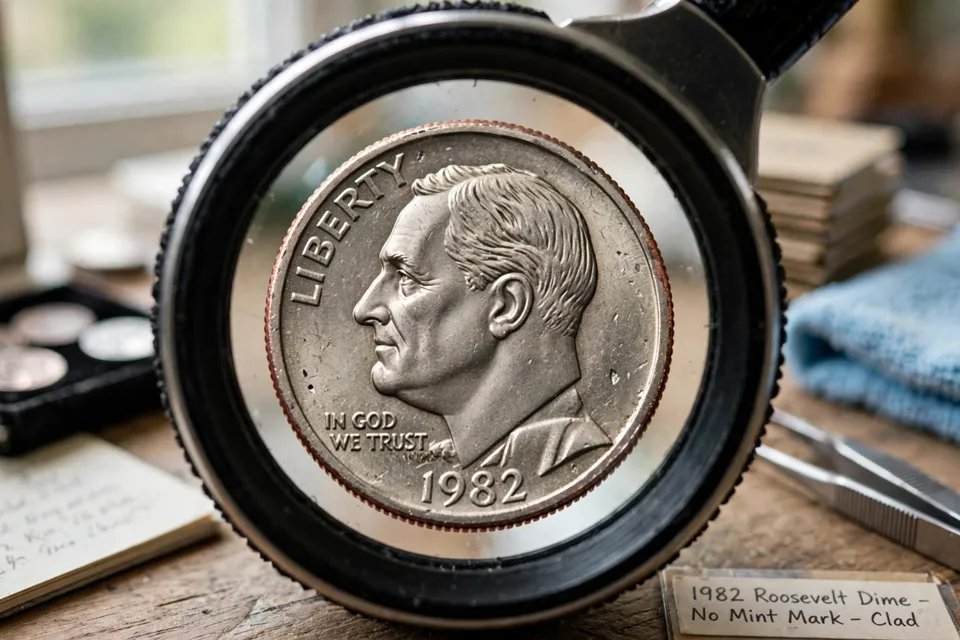
Start with the obverse, above the date. On a normal 1982 Philadelphia dime a small P sits there; on a genuine No-P the space is empty, smooth, and undisturbed. That last word is the test: a genuine missing mint mark leaves the field clean, because the mark was never punched into the die. A removed mint mark leaves evidence — tool marks, a disturbed patch of metal, a faint outline where the letter used to be, or a soft spot that does not match the rest of the field.
Then check the rest of the coin. Weigh it: a genuine Roosevelt dime is 2.27 grams, and a cast copy feels light and often shows tiny bubbles or seams under magnification. Check the edge: the 1982 is a clad coin, copper-nickel over a copper core, and the edge shows a distinct copper-brown stripe through the middle. Check the date for crispness to judge Strong Strike against Weak Strike. And if the coin’s value clears the grading fee, send it for certification — the premium is paid on certified No-P examples, and certification is the only defence against a removed P.
Clad specs — no silver here
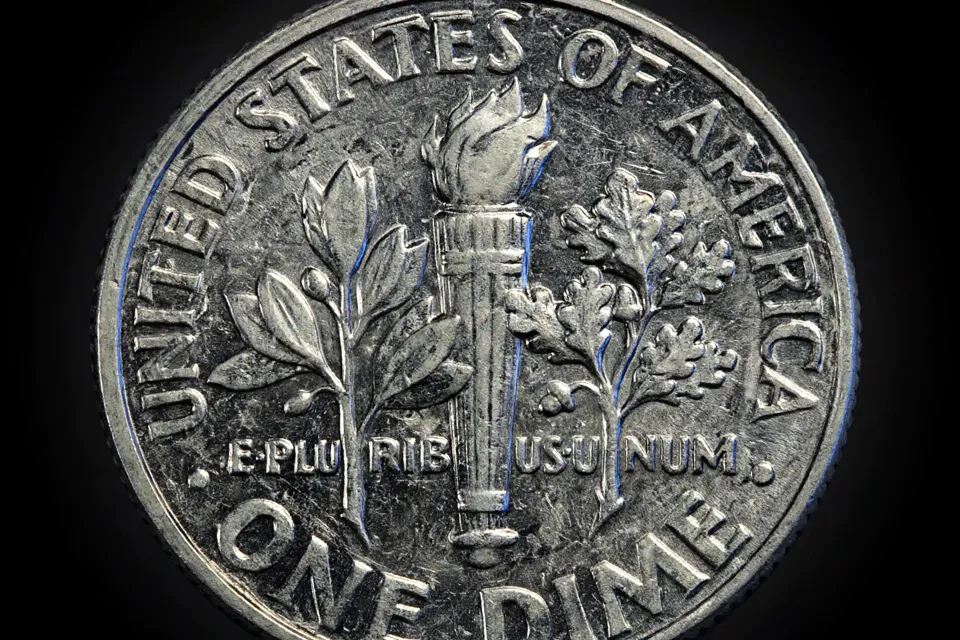
The 1982 No-P is a modern clad coin, not a silver one. It is copper-nickel clad over a pure copper core, weighs 2.27 grams, and measures 17.9 millimetres across — the same size as every Roosevelt dime, but a different metal entirely. The copper core shows as a brown stripe on the edge, and the coin has no silver content at all.
That is why the metal floor for this issue is shown as — on this page: there is no silver to floor it, and the batch’s melt table does not cover clad coinage. The 1982 No-P is worth what it is worth because of the missing mint mark, not because of its metal — and a genuine example in any grade is worth more than the ten cents stamped on it for that reason alone.
Verified auction records
No standalone record for the 1982 No-P sits in our verified records file. The series record belongs to a different coin entirely: the 1975 No-S proof, of which only two are known, at $506,250. That figure describes a proof error in a league of its own, not this variety — the grade table above, and the live results panel below it, are the honest measures for the 1982 No-P.
For scale, the 1982 No-P’s market is defined by its range rather than by a single headline: circulated examples trade in the tens, uncirculated Strong Strikes trade in the hundreds and beyond, and the finest examples are the ones that make the news when they appear.
Latest reported results for this coin
Checking for newly reported results…
Your 1982 No-P Roosevelt dime questions, answered
How much is a 1982 No-P Roosevelt dime worth?
Our dime guide puts 1982 No-P examples at $55+ to $2,185, with Strong Strike coins at the top of the range. The grade-by-grade figures are not yet researched in our guide, so the table above shows — until live results fill it in.
How do I tell a genuine 1982 No-P from a removed P?
Look at the space above the date. A genuine No-P leaves the field clean and undisturbed, because the mark was never punched into the die. A removed P leaves tool marks, a disturbed patch of metal, or a faint outline where the letter used to be.
What is the difference between Strong Strike and Weak Strike?
Strong Strike examples have crisp date detail and sharp hair and lettering; Weak Strike examples are softer throughout. Strong Strike coins command a consistent premium over the softer variety.
Is the 1982 No-P Roosevelt dime silver?
No. The 1982 is a clad coin — copper-nickel over a pure copper core, weighing 2.27 grams. The edge shows a distinct copper-brown stripe, and the metal floor for this issue is shown as — on this page.
How many 1982 No-P dimes were struck?
An estimated 75,000, all from a single obverse die that missed its mint-mark punch. They were released into ordinary circulation, which is why examples still turn up in rolls and jars.
Check your 1982
Run the date and mint mark through the free Coin Value Checker for an instant estimate, or get a Grade-or-Not verdict on whether your coin is worth certifying. The full series guide is here: Roosevelt Dime Values by Date and Grade.
Written for the hunt: the 1982 No-P hides in ordinary pocket change, and this guide exists so the next one found gets its date checked before it is spent.
This guide is for education — learn the coin first, and get a professional opinion before buying or selling.