1987 Kennedy Half: The Mint-Set-Only Clad Issue
Coin Encyclopedia · 8 min read · Published November 7, 2026
The 1987 Kennedy half is a coin that was never meant to be spent. By 1987 the half dollar had been out of everyday circulation for years — banks did not order them, shops did not use them, and the Mint had stopped striking them for commerce. The only 1987 halves ever made were struck for collectors' mint sets, and every one of them began life in a sealed envelope issued directly by the Mint.
That makes the 1987 a quiet oddity: a coin with no circulation history, no worn examples, and no way to find one in change. It is not rare — the Mint struck millions for sets — but it is a coin that has to be bought deliberately, and its market is entirely a collector's market. This guide explains what mint-set-only means, how to spot a genuine 1987, and why it belongs in a Kennedy set.
Why the Mint stopped striking halves for circulation
The half dollar died as a circulating coin in the 1960s, when silver hoarding took every half out of the tills. The Mint kept striking halves for a while — the clad issues of the 1970s — but demand never recovered: banks ordered few, and the coins that were struck sat in vaults. By the 1980s the Mint had accepted the reality, and in 1987 it struck halves only for mint sets, the same way it had for the 1970-D.
The 1987 is one of a small group of modern dates — 1970-D, 1987, and a handful of others — that exist only because collectors bought sets. That is the whole story of the coin: it is a product of the collector market, not of commerce, and it should be judged as one. A 1987 that looks circulated has either been mishandled or is not a 1987 at all.
Mint-set-only — how the coin reaches collectors
A 1987 mint set contains one of every coin the Mint struck for collectors that year, sealed in cellophane inside an envelope. The halves inside were struck on the same presses as any other half, but they were never counted out to a bank, never rolled, never spent. They went from the press to the packaging line to the envelope, and from there to a collector's drawer.
That journey leaves its own marks. Mint set coins rub against the cellophane and against each other, and over nearly forty years they tone — sometimes attractively, sometimes not. A 1987 with clean surfaces, full lustre, and light, even toning is the coin to keep; one with heavy packaging marks or dull, stripped surfaces is common. The packaging is part of the coin's history, and the best examples are the ones that survived it well.
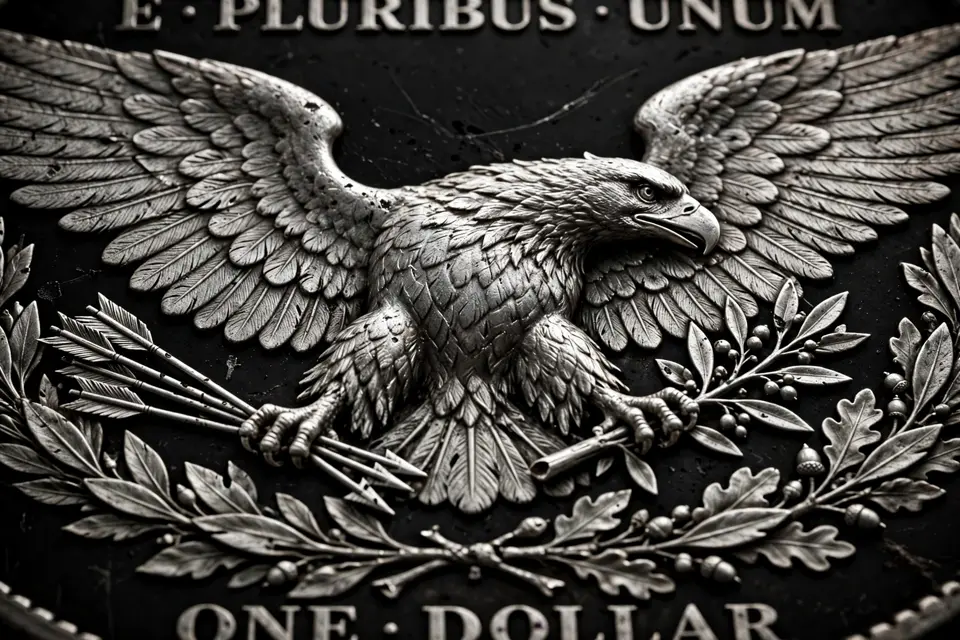
How to spot a genuine 1987
Start with the date: 1987, with no mint mark for Philadelphia or a D for Denver, on the reverse below the eagle's left talon. Then weigh it — a genuine 1987 is copper-nickel clad at 11.34 grams, and its edge shows the copper stripe of a clad coin. A 1987 that weighs 12.5 grams or shows a solid silver edge is not a 1987.
Then look at the surfaces the way you would for any mint-set coin. Original lustre, light toning, and the small contact marks of packaging are normal. Heavy wear is not — the coin never circulated — and cleaning is the worst damage of all, because it strips the lustre and leaves a flat, lifeless surface. A cleaned 1987 is worth little more than face value to a collector.
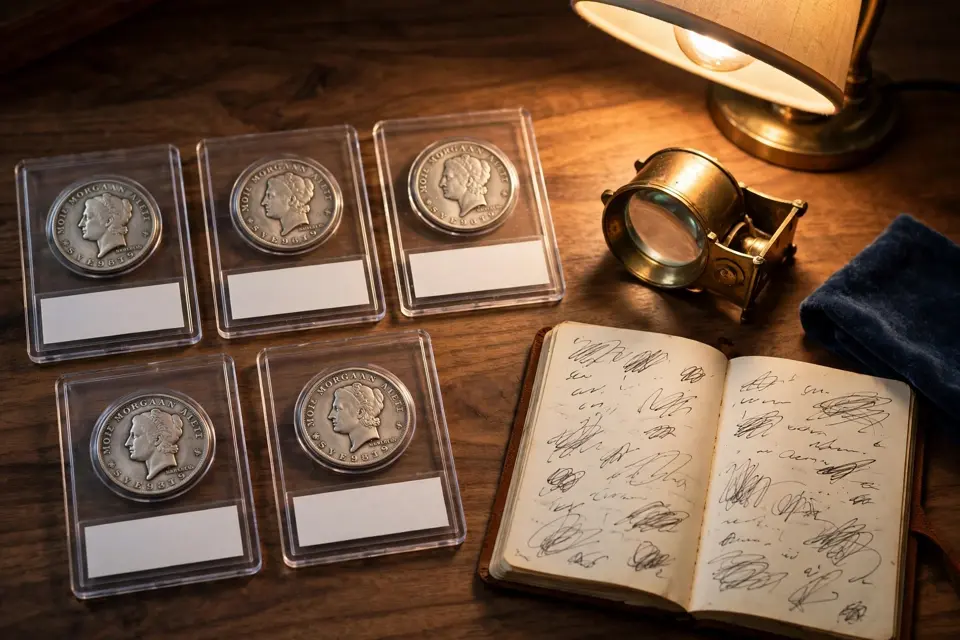
The 1987 in a Kennedy set — the gap that surprises new collectors
New Kennedy collectors are often surprised by the 1987. They build the set from circulation finds and roll searches, and the dates fill in steadily — until 1987, which never appears. That is the lesson of the coin: some dates cannot be found, only bought. The 1987 is the first mint-set-only date most collectors meet, and it teaches the difference between a circulation set and a complete set.
It is also an affordable lesson. Because the 1987 was struck in large numbers for sets, it is easy to find and modest in cost — the expense is the decision to seek it, not the coin itself. A clean, lustrous 1987 from an unopened set is the right example, and it closes a gap that no amount of roll searching ever will.
What a 1987 Kennedy Half Mint Set issue is worth by grade
Our guide has not yet researched grade-by-grade estimates for this date, so every cell below shows “—” rather than a guessed figure. The live system fills these cells the moment research or a newly reported result lands. Figures on this page are reviewed November 5, 2026.
| Grade | Estimated value |
|---|---|
| Good (G-4) | — |
| Fine (F-12) | — |
| Extremely Fine (XF-40) | — |
| About Uncirculated (AU-50) | — |
| Mint State 60 (MS-60) | — |
| Mint State 65 (MS-65) | — |
No researched grade figures exist for the 1987 yet. Like the 1970-D, it never circulated: every example began in a mint set, so the grade table is really a question of how cleanly the coin survived its packaging.
Specs — clad, and no silver floor at all
The 1987 is a copper-nickel clad coin weighing 11.34 grams. It holds no silver at all, so there is no silver floor underneath it — its collector interest comes entirely from its mint-set-only status. The live metal floor for this coin is —: our live system publishes no floor for this issue, so the grade table above and the reported results below are the guide to follow.
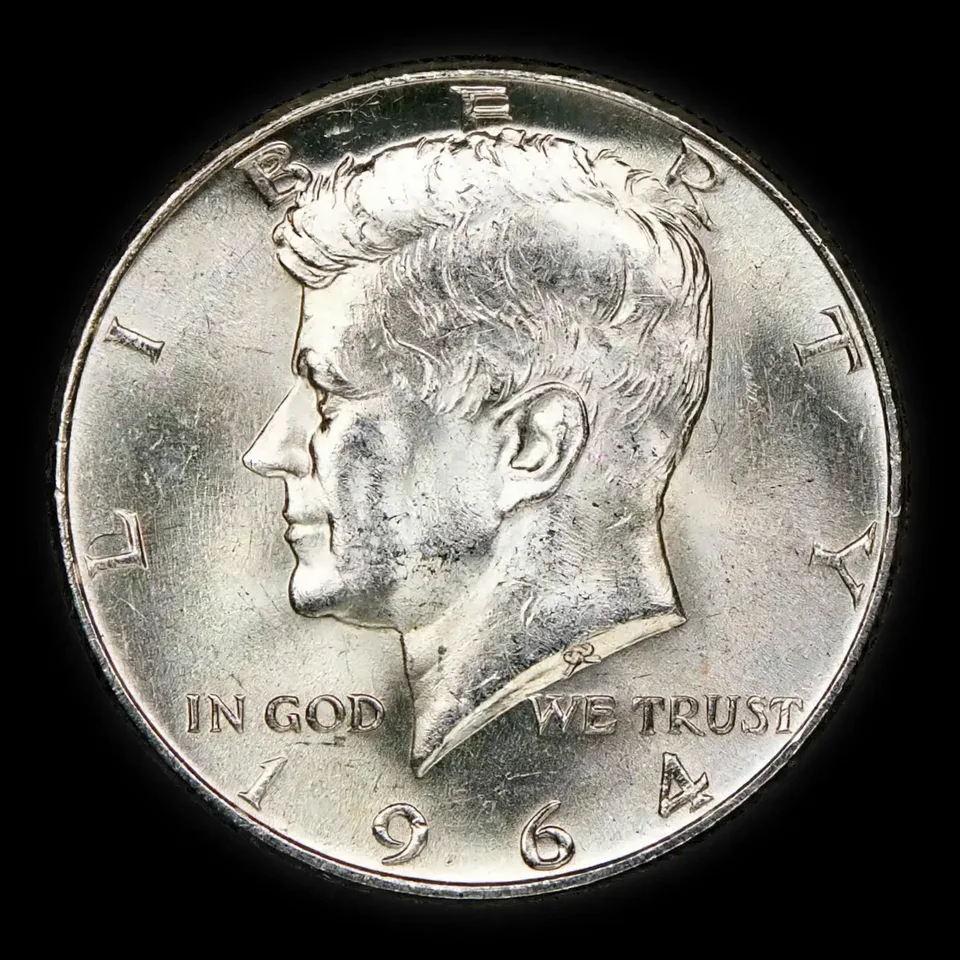
Gilroy Roberts' portrait of John F. Kennedy fills the obverse, adapted from the medal he made for the 1961 inauguration, while Frank Gasparro's reverse is based on the presidential seal. Diameter 30.6 millimetres, reeded edge, and the mint mark on the reverse below the eagle's left talon. The 1987 was never struck for circulation, so every example began life in a mint set.
Verified auction records
Our auction data holds no verified historic record for this date yet — no figure here is guessed. The box below checks for newly reported results on every load, so the first verified result for this coin will appear there.
Latest reported results for this coin
Checking for newly reported results…
Your 1987 Kennedy Half Mint Set issue questions, answered
How much is a 1987 Kennedy half dollar worth?
Our guide has not yet researched grade-by-grade estimates for the 1987, so the table shows dashes. It is a mint-set-only clad issue — common in sets, unavailable in circulation — and clean, lustrous examples from unopened sets are the ones collectors keep.
Is the 1987 Kennedy half silver?
No — it is copper-nickel clad, weighing 11.34 grams with no silver at all. There is no silver floor under the 1987, so its interest comes entirely from its mint-set-only status.
Why was the 1987 Kennedy half only struck for mint sets?
By 1987 the half dollar had been out of everyday circulation for years and banks were not ordering them, so the Mint struck halves only for collectors' mint sets. No 1987 halves were ever released for commerce.
Can I find a 1987 Kennedy half in circulation?
No — no 1987 half ever circulated, so it cannot turn up in change or in a roll from a bank. Every genuine 1987 began life in a mint set, and the only way to get one is to pick up a set or a coin removed from one.
How do I tell a 1987 from other clad Kennedy halves?
The date must read 1987, and the coin must weigh 11.34 grams with a copper stripe visible on the edge. The mint mark, if any, is on the reverse below the eagle's left talon — no mint mark for Philadelphia, D for Denver.
Check your 1987
Run the date and mint mark through the free Coin Value Checker for an instant estimate, or get a Grade-or-Not verdict on whether your coin is worth certifying. The full series guide is here: 1964 Kennedy Half Dollar Silver Value Today.
Written for collectors who searched every roll and never found a 1987 — now you know why. This guide is for education — learn the coin first, and get a professional opinion before buying or selling.