Capped Die Error Values: Cup-Shaped Coins Explained
Coin errors · 10 min read · Published November 4, 2026 · Updated November 4, 2026
To learn how to identify a capped die coin, start here: a capped die coin is a struck coin that failed to leave the coining press, stuck to a die, and was hammered around that die by repeated strikes until it curled into a cup, thimble, or stovepipe shape. To identify one, look from the side: a genuine cap has a raised, curled wall wrapping the die, a stretched original design outside, and a smooth or faintly mirrored surface inside. If the coin is flat with a sunken, reversed image instead, you are looking at a brockage — the coin struck against the cap — not the cap itself.
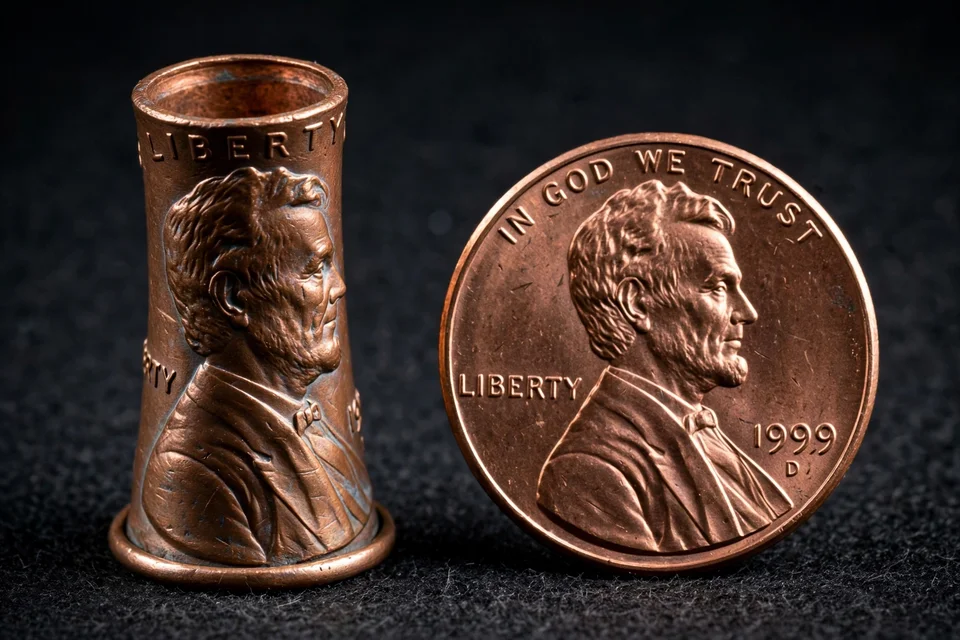
That side profile is the single most reliable test: flat from above, a die cap can look like ordinary damage; turned on its side, the story is obvious.
How a die cap forms
A normal coin leaves the press the instant it is struck: the hammer die rises, the anvil die stays put, and the finished coin is ejected. A die cap begins when that ejection fails and the struck coin clings to a die — from excess lubricant, a weak ejection mechanism, or a slight vacuum — and the press cycles again with the old coin still in place.
From that moment the stuck coin becomes part of the press. Each new planchet is struck against it, and each blow drives its metal further around the die: the rim curls up, the walls grow taller, and the design stretches, thins, and fades. Obverse caps, on the moving hammer die, are more common; reverse caps, on the stationary anvil die, are rarer and draw stronger interest.
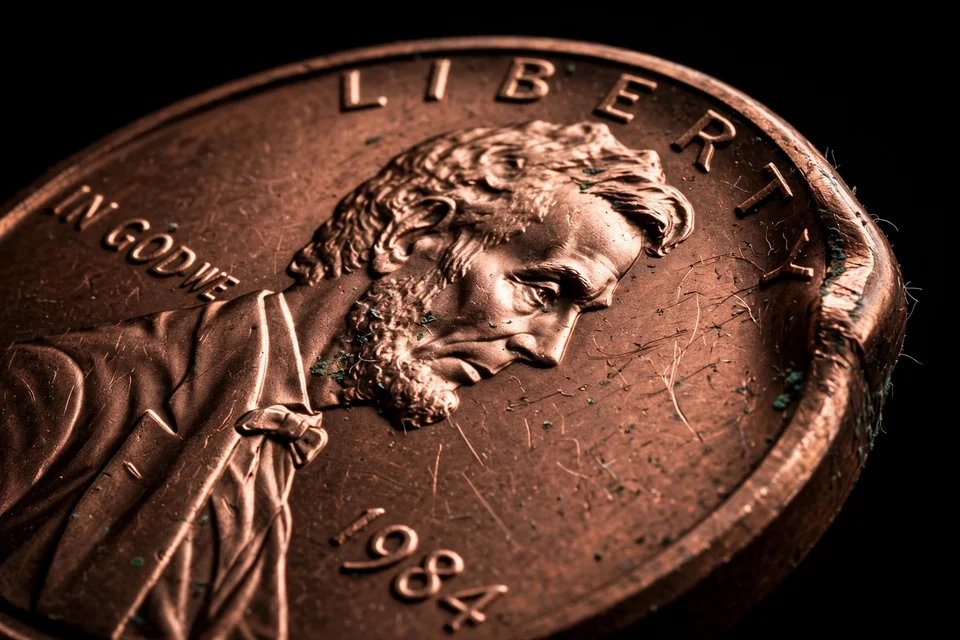
The three stages of a die cap
An early-stage cap survived only a few more strikes after sticking: slightly domed or shallowly cupped, with most of its design still visible but stretched toward the rim. Early caps are the easiest to confuse with a coin bent after leaving the Mint — the giveaway is that the design is stretched in the direction of the curl.
A mid-stage cap has clearly left coin shape behind: walls noticeably taller, design heavily distorted and partly obliterated, interior smooth or faintly ghosted — the classic "bottle cap" look.
A late-stage cap is the dramatic end of the process: a thin-walled thimble or stovepipe, with little or no design remaining and walls that may split where the metal gave out. Late-stage caps are fragile, which is why well-preserved examples command the strongest prices.
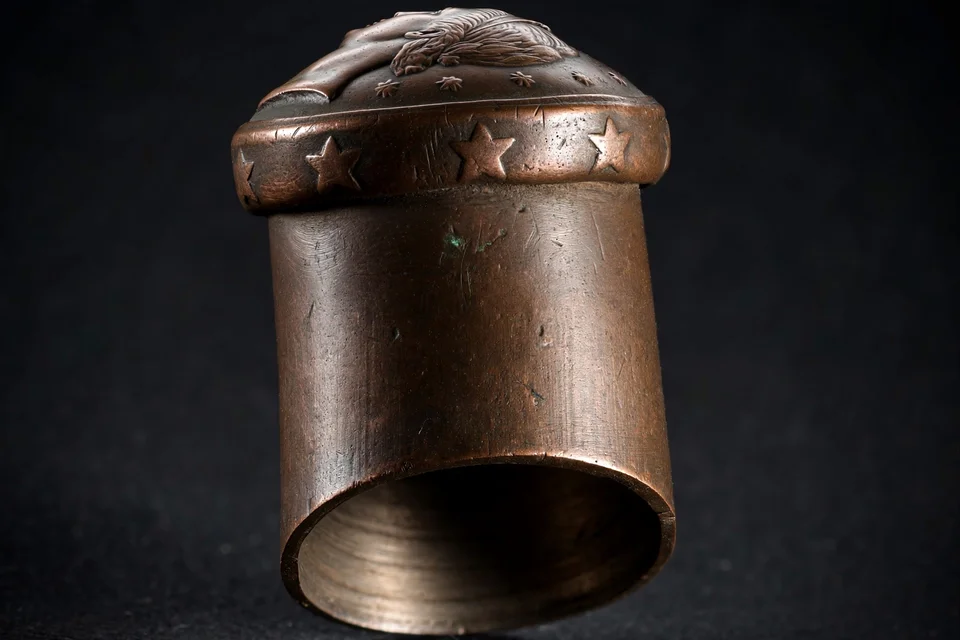
How to identify a capped die coin in 5 steps
First, study the side profile, looking from the side, not from above: a genuine cap has a continuous curled wall rising around most or all of its circumference, plainly taller than a normal rim. A coin flat but bent in one spot, or cupped on one side only, is likely damage.
Second, read the stretched design. On a real cap, the design survives in some form — stretched and pulled toward the rim, center flattened where it took the most strikes. If the design is crisp while only the rim is bent, the coin was bent after striking.
Third, weigh the coin. A die cap began life as a normal struck coin, so its weight should sit close to its denomination's standard: a quarter cap near 5.67 grams, a cent cap near 2.5 grams, a nickel cap near 5.0 grams. A coin far too light has likely been ground, filed, or acid-thinned.
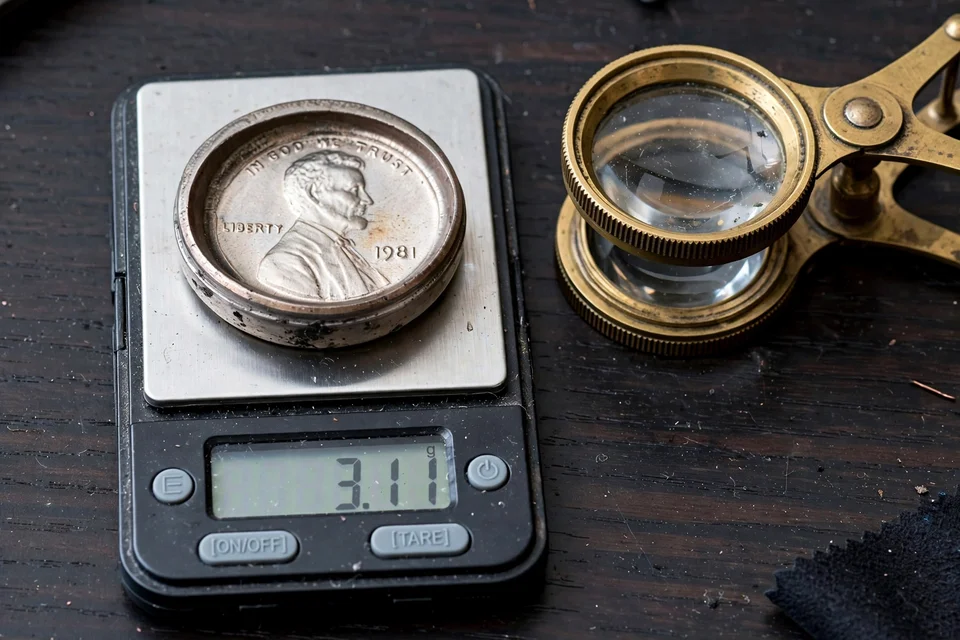
Fourth, inspect the interior. The inside of a genuine cap — the face that pressed against the die — is smooth, or carries a faint echo of the design. Tool marks, seams, solder, or a rough cast texture point to a handmade imitation.
Fifth, check the rim for Mint-made flow. On a real cap, the wall thins gradually toward its top edge, with no sharp cut, saw mark, or filed flat. A coin cut, spooned, or squeezed in a vise shows tool marks, uneven thickness, or a crease where metal was folded rather than flowed.
Capped die vs brockage, broadstrike, and damage
The most common misidentification here is calling a brockage a capped die, or vice versa. Both are born in the same press failure, but they are different coins, and the price difference is real.
| Coin | What you see | The key test |
|---|---|---|
| Capped die (the cap itself) | Cup, thimble, or stovepipe shape with tall curled walls | Side profile: the coin itself became the cap |
| Brockage | Flat coin with a sunken, mirror-image impression of the opposite design | Flat profile with an incuse, reversed image |
| Cupped broadstrike | Coin struck out of the collar, wider than normal, sometimes cupped | Wider diameter, full design, no tall walls |
| Post-Mint damage | Bent, spooned, squeezed, or heat-cupped coin | Crisp undistorted design, tool marks, or a crease |
A brockage is the direct companion of a die cap: the next few planchets struck against a stuck coin receive an incuse, mirror-image impression — those are brockages. Once the stuck coin has been hammered thin and featureless, later planchets show only a blurred "ghost image" — capped-die strikes. One press failure can therefore produce three collectible things: the cap, the early brockages, and the late ghost-image strikes. A broadstrike, by contrast, keeps a full design and a wider diameter, while a true cap sacrifices its design to stretching and gains height.
What a capped die coin is worth
Capped die values are driven by stage first, denomination second, and condition third. The bands below are realistic ranges for genuine examples in decent condition; certified or dramatic pieces can exceed them, and damaged examples fall below them. A well-preserved 1974-D copper cent cap has reached four figures because it combined a dramatic stage with pristine surfaces.
| Stage and denomination | Typical collector range |
|---|---|
| Early-stage cent cap | $50+ |
| Mid-stage cent or nickel cap | $100+ |
| Late-stage cent or nickel cap, full thimble profile | $200+ to $500+ |
| Quarter or half dollar cap, mid to late stage | $300+ to $1,000+ |
| Dollar cap, mid to late stage | $500+ to $2,000+ |
| Dramatic late-stage cap, any larger denomination, certified | $1,000+ to $5,000+ |
Certification matters more for die caps than for many other errors, because the line between a real cap and a convincing fake is a judgment call about metal flow. A cap attributed by a major grading service removes that doubt and usually lifts the price. For a common early-stage cent cap, grading may cost more than the value it adds, so many collectors keep those raw.
Fakes and damage that mimic a die cap
Watch for spooned coins, whose rims are tapped inward until the coin cups; heat-cupped coins, softened and pressed into a dome; vise-squeezed coins, forced into a cup; and novelty "cap" coins pressed from a genuine coin in a mold. All four share the same tell: the design stays crisp while the shape changes, because the metal was forced after striking, not flowed during it.
A second trap is the souvenir or magician's coin, sometimes sold as a "folded" or "cupped" novelty. These are usually made from genuine coins, so the weight test passes, but they fail the interior test — tool marks or a seam inside — and the flow test, because the rim shows a crease rather than gradual thinning. Finally, beware of single-photo listings: ask for a side-profile photo, an interior photo, and a weight.
Your Next Steps With a Suspect Coin
Handle a suspected die cap by its edges and as little as possible: late-stage walls dent easily, and every dent costs value. Do not clean it, polish it, or flatten it "to see the design better" — cleaning strips the surfaces collectors pay for, and flattening destroys the profile that makes it a cap.
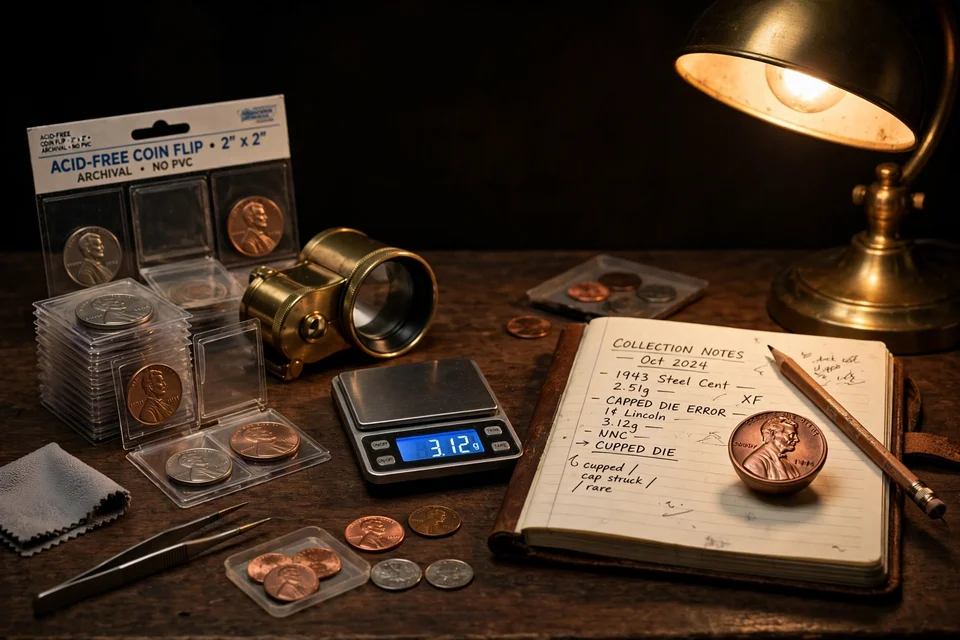
Photograph both faces, the side profile, and the interior, and record the weight and diameter. Store the coin upright in a holder that does not press on the walls; a flat flip can crush a tall cap if forced shut, so a larger holder or capsule is safer. If the coin passes all five checklist steps and the stage is mid or late, consider certification before selling; for a common early-stage piece, a careful flip, clear photos, and an honest description are enough.
Common Questions About the Capped Die
What is a capped die coin?
A capped die coin is a struck coin that stuck to a die and was hammered around it by repeated strikes, curling into a cup, thimble, or stovepipe shape. The stuck coin became a temporary striking surface, which is why later planchets struck against it show brockages.
How can you tell a real capped die coin from a damaged coin?
Look at the side profile first: a real cap has tall, continuously curled walls and a stretched design following the curl. A damaged coin keeps a crisp design, shows tool marks or a crease, and is usually cupped on one side only.
What is the difference between a capped die and a brockage?
The capped die is the coin stuck to the die — the cup-shaped coin itself. A brockage is a different, flat coin struck against that stuck coin, carrying a sunken, mirror-image impression of the opposite design.
Are capped die coins valuable?
Yes. Early-stage cent caps start around $50+, mid-stage examples run $100+, and dramatic late-stage or larger-denomination caps reach $1,000+ to $5,000+.
What is a late-stage die cap worth?
A late-stage cap is the thin-walled thimble or stovepipe form a cap takes after many strikes, with little design left. Intact late-stage cent and nickel caps bring $200+ to $500+, while larger-denomination and certified examples reach $1,000+ to $5,000+.
Should I get a capped die coin graded?
For a mid-stage or late-stage cap, or any larger-denomination example, certification is usually worth it because it settles the real-vs-fake question for the next buyer. For a common early-stage cent cap, grading may cost more than the value it adds.
A capped die coin costs nothing to check, and the difference between a $50+ early cap and a $5,000+ dramatic late-stage example is one careful look at the side profile and the scale. Before you spend or sell any coin you are unsure about, run it through The Diggin Dave's free Error Identifier to confirm the error type, use the Coin Value Checker to confirm its value range, and try Grade-or-Not for a grade verdict on your best examples. A 10x loupe, a pocket digital scale, and coin capsules are the only tools the five-step checklist needs.
As an Amazon Associate, this site may earn from qualifying purchases.
Keep Reading About the Capped Die
- How to Identify a Brockage Error Coin: Mirror Images, Die Caps & Real Values — the mirror-image test that separates a brockage from the capped die that caused it
- How to Identify an Off-Center Coin: Blank Crescents, Percentages & Real Values — the blank-crescent test that separates an off-center strike from a cupped cap
- How to Identify a Broadstrike Coin: Oversized, Full Design & Real Values — the width test that separates a broadstrike from a tall-walled die cap