Proof Coin or Business Strike? How to Identify a Proof Coin
Coin identification · 10 min read · Published November 5, 2026 · Updated November 5, 2026
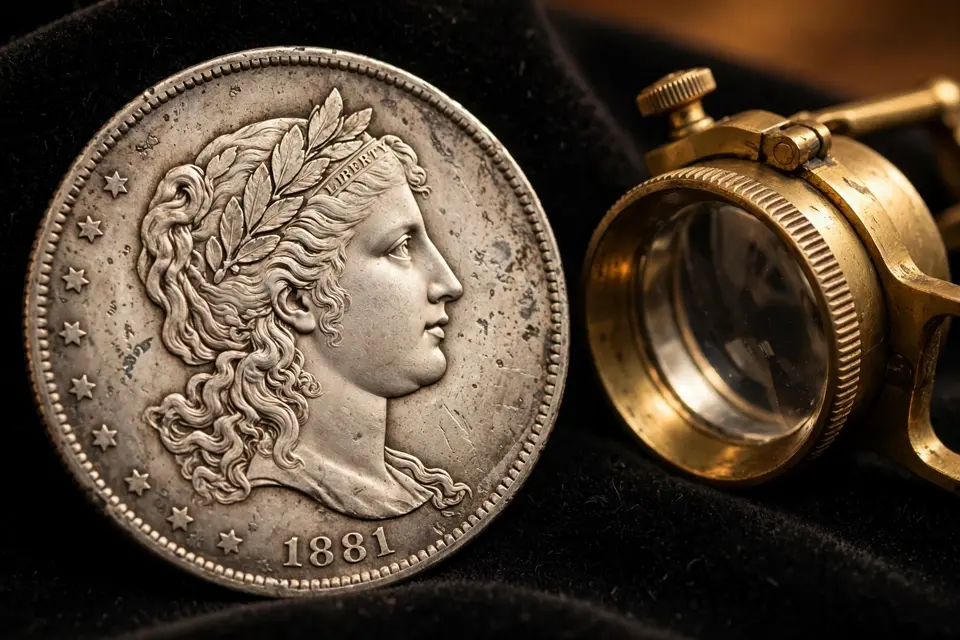
How to identify a proof coin comes down to four things: a mirror-like field, frosted raised designs, a razor-sharp strike with squared-off rims, and the right mint mark and date. A proof coin is struck twice or more on a specially polished planchet with specially prepared dies. Proof is a method of manufacture, not a grade.
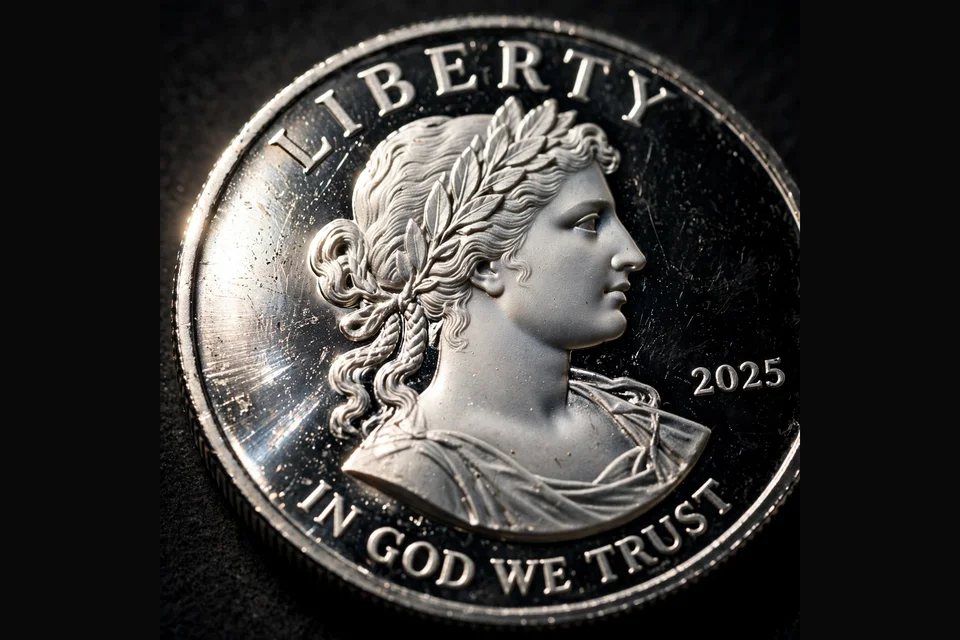
Collectors often assume "proof" means "perfect condition." It does not. A proof can be scratched or handled badly and still be a proof, because proof describes how the Mint made it. Once you know the four signs, you can spot a proof in seconds.
What a proof coin really is
A proof coin starts life differently. The planchet is polished to a high shine, and the dies are specially prepared: the flat fields are polished to a mirror finish, while the raised designs are sandblasted or acid-treated so they come out frosted and matte. Then the coin is struck at least twice, at higher pressure and slower speed, so the metal fills every fine detail.
That leaves three fingerprints: mirror-like fields, frosted designs creating the two-tone contrast collectors call the cameo effect, and a razor-sharp strike with squared-off rims. A business strike has none of these: satiny fields with fine radial flow lines, designs the same texture as the fields, and softly rounded rims. Proofs are graded PR or PF 60 to 70, with Cameo or Deep Cameo designations for the frost. A proof removed from its packaging and handled carelessly is an impaired proof: still genuine, but hairlines and fingerprints cut its value sharply.
A short history of United States proof coins
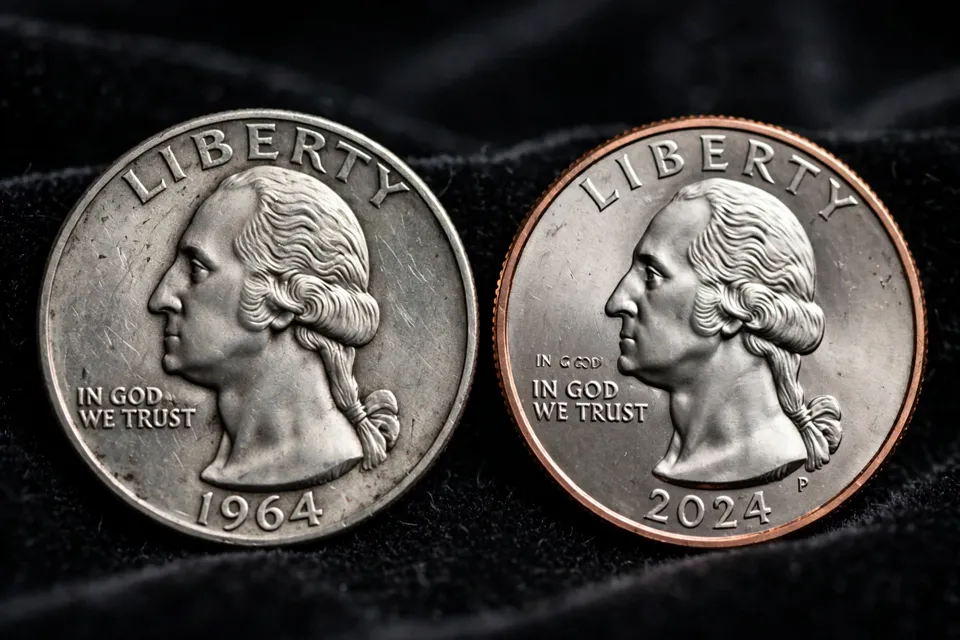
The Mint began selling proof sets in 1858. Those early proofs were struck in tiny numbers at Philadelphia, and many great rarities — the 1879 Flowing Hair Stella, the 1913 Liberty Head nickel — exist only as proofs. Production paused from 1917 to 1935, resumed in 1936, and proof sets were struck at Philadelphia without a mint mark through 1942 and again from 1950 to 1964.
The years 1965 to 1967 are the trap: the Mint made no proof sets at all, striking Special Mint Sets, or SMS coins, with a satin finish between a business strike and a proof. An SMS coin is not a proof. From 1968 onward, proofs moved to the San Francisco Mint and carry the S mint mark — the fastest check on any modern coin. In 1992 the Mint resumed 90% silver proof sets, and since 2006 it has struck reverse proofs, where the mirror and the frost swap places.
How to identify a proof coin in 7 tests
No single test proves a coin is a proof, but a coin that passes all seven is one.
First, the mirror test. Hold the coin about six inches from a printed page and look at the reflection in the flat field. On a genuine proof you can read the headline in it; on a business strike the reflection is cloudy and broken.
Second, the cameo test. Tilt the coin under a lamp. On a proof the portrait, lettering, and main design stand out frosted and matte against the mirrored field: light frost is Cameo, heavy white frost is Deep Cameo.
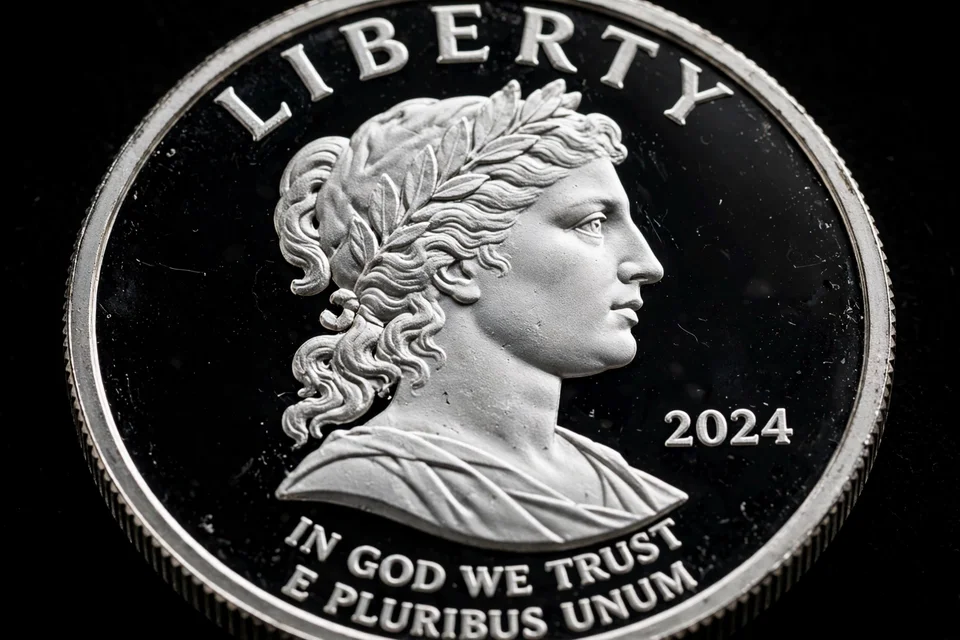
Third, the rim test. A proof has a sharp, squared-off rim, almost a wire edge, because the double strike forced the metal to fill the collar completely. A business strike has a softly rounded rim.
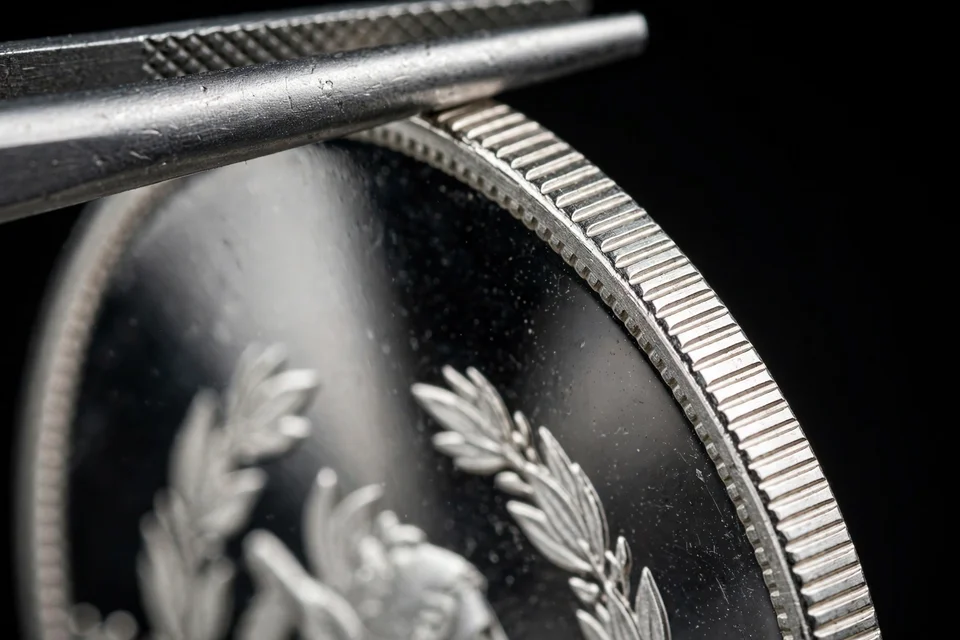
Fourth, the loupe test. Under a 10x loupe, a genuine proof has fields as smooth as glass, with no radial flow lines. A business strike shows fine lines radiating from the centre, and on a proof every detail is crisp.
Fifth, the mint mark and date test. A proof dated 1968 or later should carry an S mint mark. A proof dated 1950 to 1964 should carry none, because those sets came from Philadelphia. A coin dated 1965, 1966, or 1967 with a proof look is an SMS coin, not a proof. A pre-1917 coin with mirror fields may be a genuine early proof — or a polished business strike.
Sixth, the weight and edge test. A proof weighs exactly what its denomination should weigh, with sharp, even reeding. A polished fake often weighs light, with soft, uneven reeding.
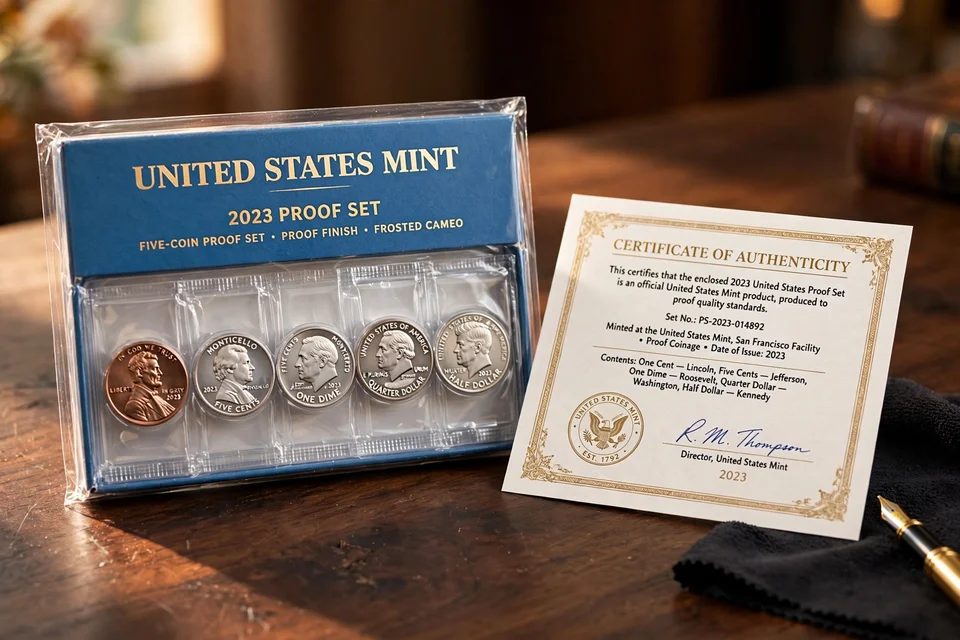
Seventh, the packaging and certification test. Most modern proofs left the Mint sealed in a proof set, with a certificate of authenticity. A coin still in its original packaging is almost certainly genuine, and a certified proof carries a PR or PF slab label. If it is raw and uncertain, certification settles the question.
Proof vs business strike vs proof-like vs SMS
The four finishes collectors confuse most sit side by side here.
| Finish | How it is made | Fields | Rims | Mint mark |
|---|---|---|---|---|
| Proof | Polished planchet, treated dies, 2+ strikes | Mirror, frosted designs | Sharp, squared-off | S from 1968, none 1950-64 |
| Business strike | Single fast strike, unpolished planchet | Satiny, flow lines | Softly rounded | P, D, S, or none |
| Proof-like | Early strikes from fresh dies | Reflective but patchy | Normal business strike | Any |
| Special Mint Set (SMS) | Satin finish, 1965-67 only | Satin, semi-reflective | Normal | None |
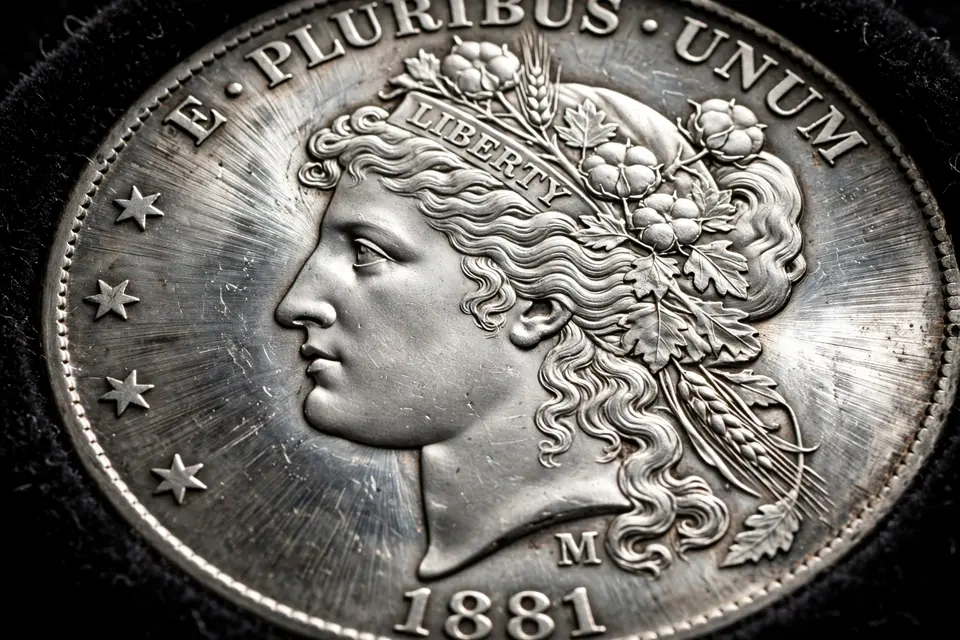
A proof-like coin is the most common false alarm: the first coins struck from a fresh pair of dies can have reflective fields, especially Morgan dollars, which is why the grading services mark them PL. But it was struck once, on an ordinary planchet, so its fields are patchy, its designs are not frosted, and its rims are rounded.
What is a proof coin worth
Proof values run from a few dollars to hundreds of thousands, depending on date, metal, cameo strength, and grade. Common modern proof sets are inexpensive.
| Proof coin or set | Typical value |
|---|---|
| Modern clad proof set (1968 to present) | $5+ to $15+ |
| 1950 proof set | $500+ to $700+ |
| 1992 silver proof set (90% silver) | $30+ to $60+ |
Cameo and Deep Cameo move the numbers: a common-date proof in PR69 might trade for $10+, the same coin in PR69 Deep Cameo for $50+ or more. A 1950 proof set in original packaging is a $500+ item; the same coins removed, handled, and hairlined — impaired proofs — trade for far less. Silver is the quiet driver: a 1992 or later silver proof set holds 90% silver dimes, quarters, and half dollars, so its floor tracks the silver price, near $52.71 an ounce in November 2026.
The famous No-S proof errors
The most valuable proof coins of all are the mistakes: proofs struck without the S mint mark that should have been there. The Mint caught most, but a few escaped.
The 1975 No-S Roosevelt dime is the king: only two are known, and one sold for $456,000 in 2019. The 1971 No-S Jefferson nickel is the most famous, at $500+ to $20,000+ depending on grade. The 1968 No-S Roosevelt dime trades for $20,000+, the 1990 No-S Lincoln cent for $5,000+, and the 1983 No-S Roosevelt dime for $500+.
Check every proof set you own: a proof dated 1968 or later with no mint mark is either a famous error or not a proof at all. Weight, strike, and certification separate the two.
Fakes: polished coins and altered mint marks
The most common proof fake is a polished business strike, polished to a shine and sold as a proof. The polish leaves hairlines, the details look soft and rounded instead of sharp, the rims stay rounded, and the coin usually weighs light; under a loupe the fields show swirl marks, not the clean glass of a genuine proof. A second fake is the altered mint mark — an S added or removed to create a No-S error — whose letter sits on top of the surface rather than in it. The third is the whizzed coin, buffed with a wire brush to fake lustre, leaving tiny parallel scratches no genuine proof ever shows. If a deal looks too good, walk away and get a second opinion.
What to do with a proof coin you found
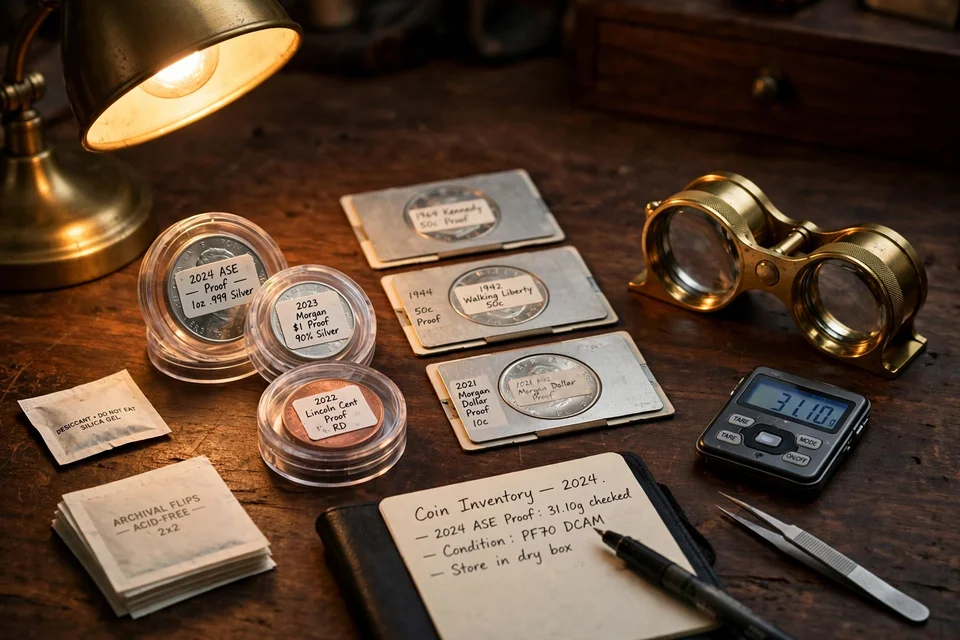
If your coin passes the seven tests, handle it by the edges only, and never clean it: cleaning destroys the mirror fields and the frost in a single wipe. Slip it into a capsule or an acid-free flip, and note the date, the mint mark, and the fields while the details are fresh. For a common modern proof set, enjoy it as it is — the set is best kept intact. For an early proof, a Deep Cameo example, or any suspected No-S error, certification is worth the cost, because the slab is where most of the value lives. Run the coin through the Coin Value Checker first, and use Grade-or-Not for a grade verdict before you pay for certification.
Frequently Asked Questions
What is a proof coin?
A coin struck twice or more on a polished planchet with specially prepared dies, giving mirror-like fields, frosted designs, and a razor-sharp strike. Proof is a method of manufacture, not a grade.
Are proof coins worth more than regular coins?
Usually, but not always by much. A common modern proof set trades for $5+ to $15+, a 1950 proof set is $500+ to $700+, and a 1975 No-S proof dime sold for $456,000.
How can you tell a proof coin from a business strike?
Mirror fields, frosted designs against that mirror, a sharp strike with squared-off rims, and the right mint mark and date. A business strike has satiny fields with flow lines and softly rounded rims.
Do all proof coins have an S mint mark?
No. Proofs from 1968 onward carry the S mint mark, but 1950-64 proof sets were struck at Philadelphia and carry none. A proof dated 1968 or later with no mint mark is either a famous No-S error or not a proof.
What is a cameo proof coin?
A cameo proof is one whose frosted designs stand out strongly against its mirrored fields. Light frost earns Cameo, heavy white frost earns Deep Cameo, and the stronger the contrast, the higher the value.
A proof coin costs nothing to check, and the difference between a $5+ modern proof set and a $456,000 No-S dime is one careful look at the mirror, the frost, and the mint mark. Before you spend or sell any coin you are unsure about, run it through The Diggin Dave's free Coin Value Checker to confirm its value range, and try Grade-or-Not for a grade verdict on your best examples. A 10x loupe, coin capsules, and cotton gloves are the only tools the seven tests in this guide need.
As an Amazon Associate, this site may earn from qualifying purchases.
Further Reading on Proof Coins
- Is Your Coin Real? 7 Tests That Catch Most Fakes — the weight, magnet, ping, and loupe tests that separate a real coin from a fake before you trust its proof surfaces
- Is Your Quarter Silver? 6 Quick Tests That Work — the silver test for the coin most often confused with a proof, from $10+ silver quarters to 25-cent clad
- Grading Morgan Dollars: Cheek, Hair & Eagle Breast — grade-by-grade diagnostics for the series most often called proof-like, with PL and DMPL explained