1870-CC Seated Liberty Half: First Carson City Issue
Coin Encyclopedia · 7 min read · Published November 7, 2026
The 1870-CC Seated Liberty half is the first half dollar the Carson City Mint ever struck — a coin from the year the mint opened its doors in the Nevada desert, built to turn Comstock silver into coin without shipping it east. Carson City struck 54,617 halves in 1870, and almost all of them went into circulation in the mining West, where they wore down fast and were rarely saved. Today the 1870-CC is scarce in every grade, and the first coin of one of the most collected mints in American numismatics.
The CC mint mark is the whole coin. It marks a mint that operated for only twenty-three years, struck small numbers of everything, and closed in 1893 — and its coins are collected for the mint as much as for the date. This guide explains the CC check, the Carson City story, and what to look for in an 1870-CC worth keeping.
Carson City in 1870 — a mint built for the Comstock
The Carson City Mint was built because the Comstock Lode was producing more silver than the country could ship east. The mines around Virginia City poured out silver, and the government built a mint at their doorstep — a grand stone building in the Nevada desert, opened in 1870, that struck coins from the silver mined a few miles away. The 1870-CC halves were among its first products.
The mint's first year was a learning year: the equipment was new, the staff was new, and the coins show it — strikes vary, surfaces vary, and the quality is uneven. A sharply struck 1870-CC is the exception, not the rule, and collectors judge the coin on its surfaces and its originality rather than on sharpness alone. That first-year character is part of what makes the coin collectible.
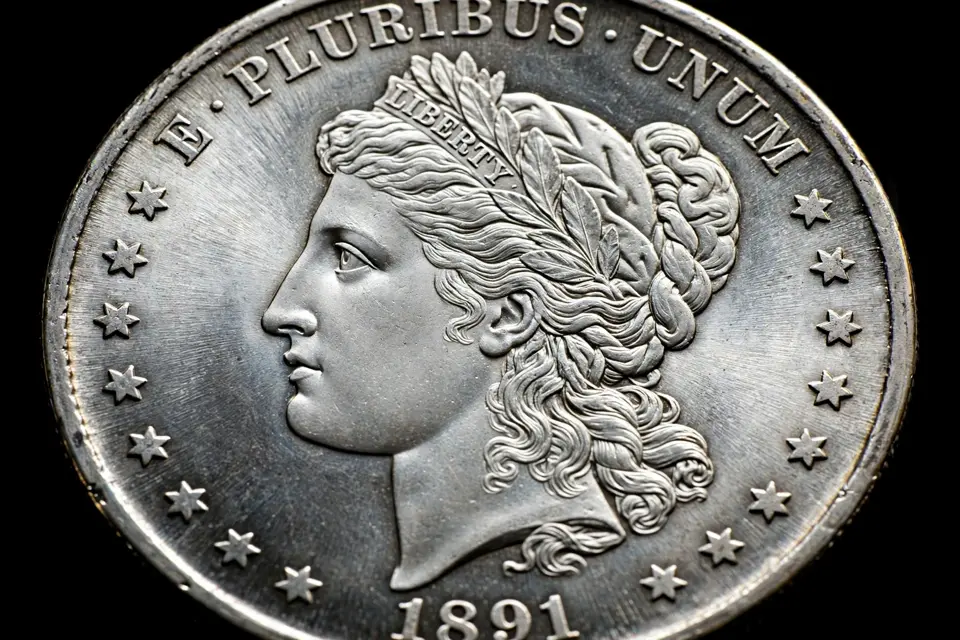
The CC check — below the eagle, on the reverse
The mint mark on the 1870-CC is a CC on the reverse, below the eagle — two letters, clearly spaced, that mark the coin as Carson City. It is the only difference between the 1870-CC and the Philadelphia 1870, which carries no mint mark, and it is the detail that carries the whole premium. A Seated half with no mint mark is a common date; one with a CC is a Carson City coin, and Carson City coins are collected for the mint.
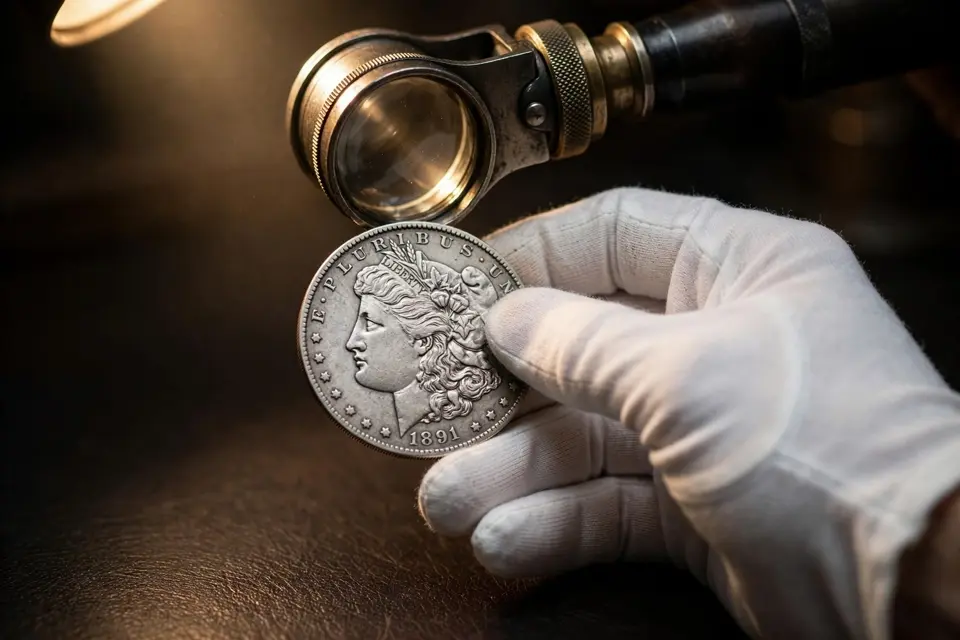
The check is worth doing with a loupe, because the CC is the most faked mint mark in American coinage. An added CC sits too high, too shallow, or at the wrong angle, and the metal around it shows tool marks. A genuine CC is crisp, correctly placed, and part of the original strike — and on the 1870-CC, it is also the first CC ever struck on a half dollar.
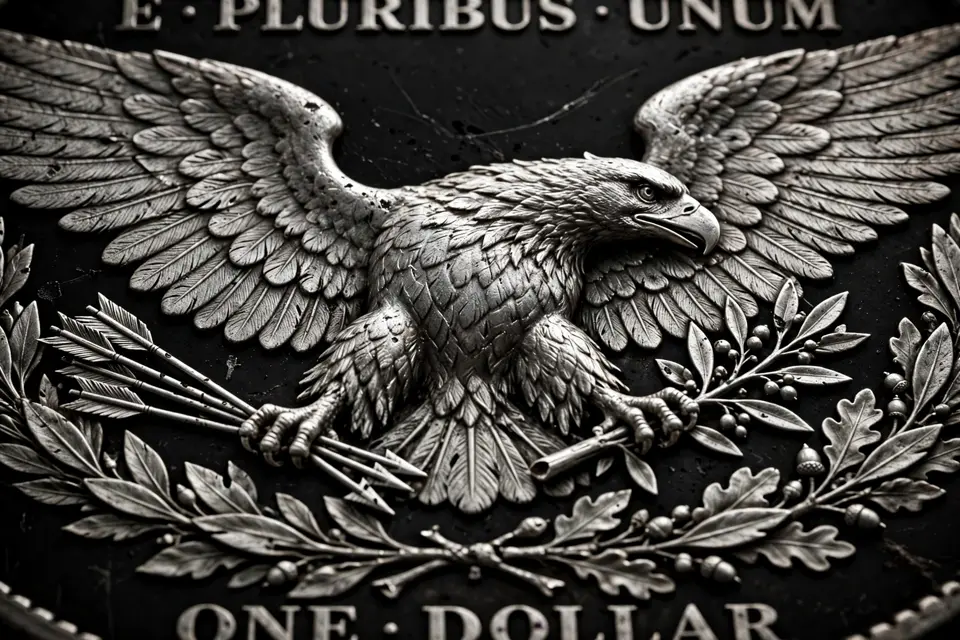
Why the 1870-CC is scarce in every grade
A mintage of 54,617 is small for a half dollar, and the survival rate was worse: the coins circulated in the mining West, where a half dollar was working money, and few were set aside. By the time collectors began chasing Carson City coins in earnest, the 1870-CC was already scarce — and it has only become scarcer as the surviving examples were absorbed into collections.
That scarcity shows in every grade. A worn 1870-CC is a collector's coin; a Mint State one is a rarity, and a gem is a coin that changes hands rarely. The grade table below is honest about what our guide has researched so far — the dashes are gaps, not guesses — but the shape of the market follows the mintage: small run, hard use, few survivors.
The 1870-CC in a Carson City set — the first coin of the mint
A Carson City collection begins with 1870, the year the mint opened, and the half dollar is one of its first coins. Collectors who build Carson City sets by date and denomination need the 1870-CC half, and it is the date that teaches the lesson of the mint: small mintages, hard use, and a premium for the CC itself.
For a collector buying one, certification is the purchase. A certified 1870-CC settles the mint mark, the authenticity, and the grade, and it is where the premium is paid. A raw 1870-CC in high grade is a claim; a certified one is a fact — and for the first half dollar of Carson City, the fact is worth the fee.
What a 1870-CC Seated Liberty Half Carson City is worth by grade
Our guide has not yet researched grade-by-grade estimates for this date, so every cell below shows “—” rather than a guessed figure. The live system fills these cells the moment research or a newly reported result lands. Figures on this page are reviewed November 5, 2026.
| Grade | Estimated value |
|---|---|
| Good (G-4) | — |
| Fine (F-12) | — |
| Extremely Fine (XF-40) | — |
| About Uncirculated (AU-50) | — |
| Mint State 60 (MS-60) | — |
| Mint State 65 (MS-65) | — |
No researched grade figures exist for the 1870-CC yet. With a mintage of 54,617 — the first year of the Carson City Mint — it is scarce in every grade, and uncirculated examples are genuinely rare.
Silver, specs, and the first Carson City half
The 1870-CC is 90% silver, weighing 12.44 grams and carrying about 0.36 troy ounces of pure silver — the standard of the era, struck the year the Carson City Mint opened its doors. The live metal floor for this coin is —: our live system publishes no floor for this issue, so the grade table above and the reported results below are the guide to follow.
Christian Gobrecht's Seated Liberty fills the obverse — Liberty seated on a rock, holding a shield and a pole topped with a liberty cap — with a small eagle on the reverse. Diameter 30.6 millimetres, reeded edge, and the CC mint mark on the reverse below the eagle.
Verified auction records
Our auction data holds no verified historic record for this date yet — no figure here is guessed. The box below checks for newly reported results on every load, so the first verified result for this coin will appear there.
Latest reported results for this coin
Checking for newly reported results…
Your 1870-CC Seated Liberty Half Carson City questions, answered
How much is an 1870-CC Seated Liberty half dollar worth?
Our guide has not yet researched grade-by-grade estimates for the 1870-CC, so the table shows dashes. With a mintage of 54,617 — the first year of the Carson City Mint — it is scarce in every grade, and uncirculated examples are genuinely rare.
Is the 1870-CC Seated Liberty half silver?
Yes — it is 90% silver, weighing 12.44 grams and carrying about 0.36 troy ounces of pure silver. Our live system publishes no metal floor for this issue, so the grade table and reported results are the guide.
Where is the mint mark on an 1870-CC Seated Liberty half?
The mint mark is a CC on the reverse, below the eagle. It is the first CC ever struck on a half dollar, and it marks the coin as a product of the Carson City Mint, opened in 1870.
How many 1870-CC Seated Liberty halves were struck?
Carson City struck 54,617 Seated Liberty halves in 1870, its first year of operation. Almost all went into circulation in the mining West and wore down there.
Why are Carson City coins so collectible?
The mint operated for only twenty-three years, struck small numbers of everything, and closed in 1893. Its coins are collected for the mint itself — the CC mark, the Comstock silver, and the frontier history behind them.
Check your 1870-CC
Run the date and mint mark through the free Coin Value Checker for an instant estimate, or get a Grade-or-Not verdict on whether your coin is worth certifying. The full series guide is here: Walking Liberty Halves Worth $25 to $188,000+.
Written for collectors meeting Carson City — the 1870-CC is the mint's first half dollar, and the CC is the whole coin. This guide is for education — learn the coin first, and get a professional opinion before buying or selling.