1878-CC Seated Liberty Half: The Mint's Last Half Dollar
Coin Encyclopedia · 8 min read · Published November 7, 2026
The 1878-CC Seated Liberty half is the last half dollar the Carson City Mint ever struck — the final coin of a run that began in 1870 and ended eight years later, when the Mint stopped making halves and never resumed. It is a closing coin: the last CC half, from a mint that would strike its final coins in 1893 and close for good. Collectors want it for the same reason they want any final-year coin — it closes the set, and a set without its final coin feels unfinished.
Our catalog has not recorded a mintage figure for the 1878-CC, so none is given here — the gap is honest, not a guess. What is certain is the status: the last Carson City half dollar, struck in the final year of the mint's half dollar production. This guide explains the CC check, the final-year story, and what to look for in an 1878-CC worth keeping.
The last Carson City half — why 1878 was the end
Carson City struck Seated Liberty halves from 1870 to 1878, and then it stopped — not because the design ended, but because the Mint's priorities changed. The Bland-Allison Act of 1878 required the Mint to strike silver dollars from newly mined silver, and Carson City's presses were turned to the Morgan dollar, which became the mint's signature coin. The half dollar, a working denomination, was simply not struck again at Carson City.
That makes the 1878-CC a final-year coin in the truest sense: not the last year of a design, but the last year a mint ever made a denomination. The Morgan dollars that followed are famous; the half dollars that stopped are the quieter story, and the 1878-CC is its final chapter.
The CC check — below the eagle, on the reverse
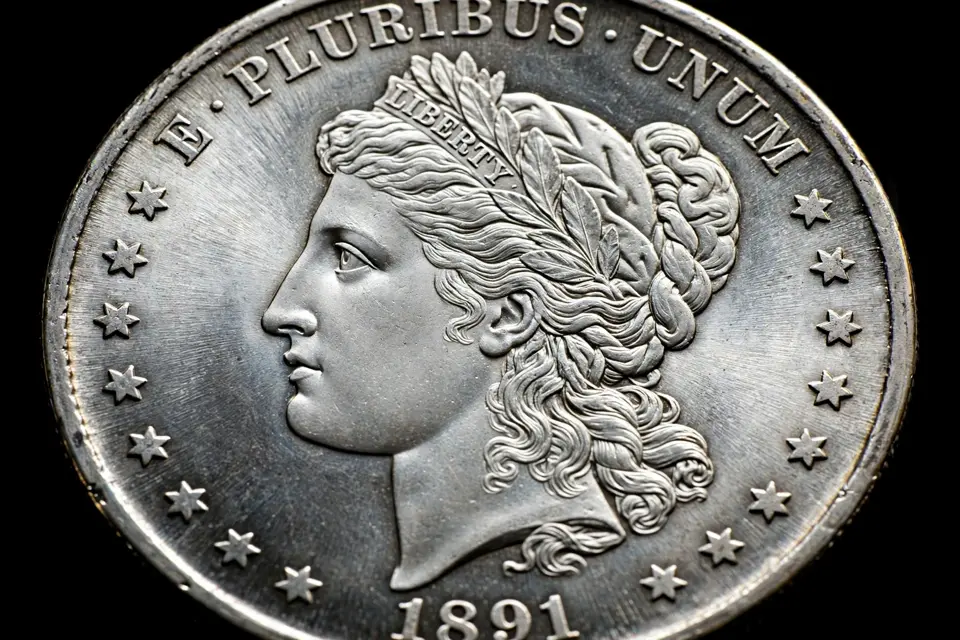
The mint mark on the 1878-CC is a CC on the reverse, below the eagle — the same position it held since the mint opened in 1870. It is the only difference between the 1878-CC and the Philadelphia 1878, which carries no mint mark, and it is the detail that carries the whole premium. A Seated half with no mint mark is a common late-date coin; one with a CC is the final Carson City half.
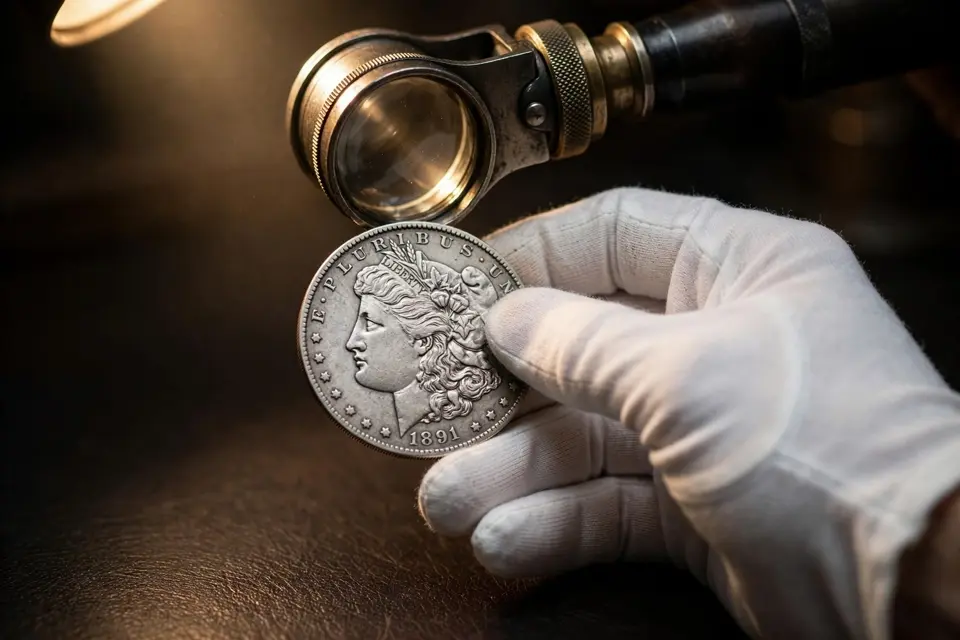
The check is worth doing with a loupe, because the CC is the most faked mint mark in American coinage, and the 1878-CC is a tempting target: a final-year coin with a premium, struck in a year when the mint's output was small. An added CC sits too high, too shallow, or at the wrong angle, and the metal around it shows tool marks. A genuine CC is crisp, correctly placed, and part of the original strike.
Reading a worn 1878-CC
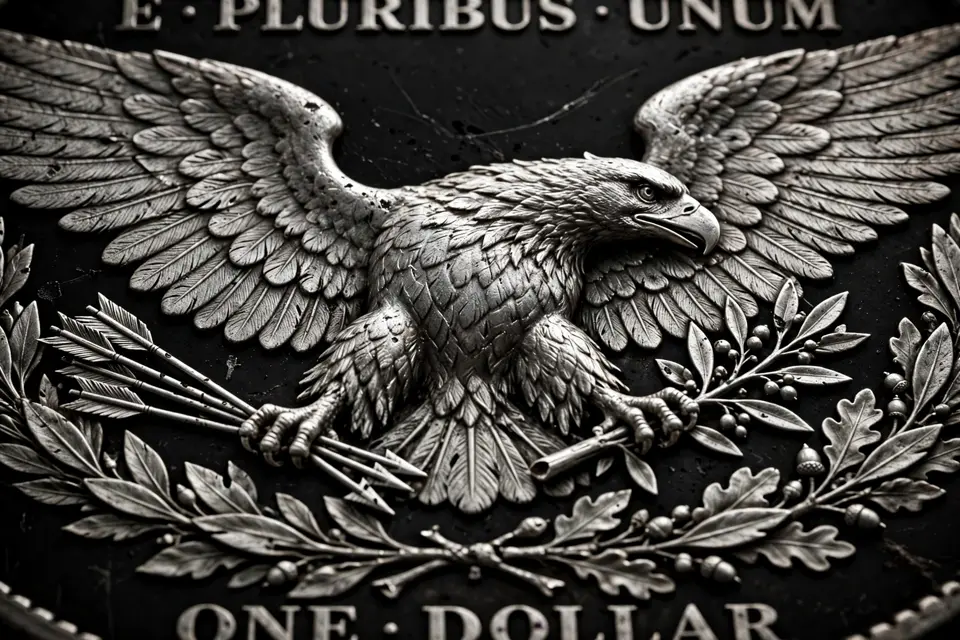
A worn 1878-CC tells its story in what is left. Liberty's seated figure softens first — the head, the shield, the drapery — and then the date, though the digits usually survive longer than the fine detail, because they sit in a protected part of the design. On the reverse, the eagle's wing feathers blur and the shield's stripes merge. What matters for identification is simpler: the date must read 1878, the mint mark must be a CC below the eagle, and the coin must weigh 12.5 grams.
The weight is the second check: 12.5 grams, the slightly heavier standard adopted in 1873, with a solid silver edge. A cast copy feels light and shows tiny bubbles under magnification; a genuine 1878-CC has a sharp, even reeded edge. If the coin is valuable enough to argue about, certification settles it — and for the final Carson City half, the premium for a real one is worth the fee.
The 1878-CC in a set — the coin that closes Carson City
A Carson City half dollar set runs from 1870 to 1878 — nine years, nine dates — and the 1878-CC is the one that closes it. Collectors who build the set find the early dates first, because the 1870-CC is famous, and the 1878-CC last, because it is the final year and the coin that makes the set complete. A set without it is a set with an empty last page.
For a collector buying one, the advice is the same as for every Carson City coin: seek it certified when the grade matters, seek it original always, and never pay a premium for a coin that has been cleaned. The 1878-CC is the last half dollar of a mint that closed in 1893, and the coins that survive in original condition are the ones that will still be collectible in another century.
What a 1878-CC Seated Liberty Half Final CC half is worth by grade
Our guide has not yet researched grade-by-grade estimates for this date, so every cell below shows “—” rather than a guessed figure. The live system fills these cells the moment research or a newly reported result lands. Figures on this page are reviewed November 5, 2026.
| Grade | Estimated value |
|---|---|
| Good (G-4) | — |
| Fine (F-12) | — |
| Extremely Fine (XF-40) | — |
| About Uncirculated (AU-50) | — |
| Mint State 60 (MS-60) | — |
| Mint State 65 (MS-65) | — |
No researched grade figures exist for the 1878-CC yet. As the final Carson City half, it carries a premium over other late-date Seated halves, and most survivors show the wear of a coin that actually circulated.
Silver, specs, and the last Carson City half
The 1878-CC is 90% silver, weighing 12.5 grams and carrying 0.36169 troy ounces of pure silver — the slightly heavier standard adopted in 1873, struck in the final year Carson City made half dollars. The live metal floor for this coin is —: our live system publishes no floor for this issue, so the grade table above and the reported results below are the guide to follow.
Christian Gobrecht's Seated Liberty fills the obverse — Liberty seated on a rock, holding a shield and a pole topped with a liberty cap — with a small eagle on the reverse. Diameter 30.6 millimetres, reeded edge, and the CC mint mark on the reverse below the eagle.
Verified auction records
Our auction data holds no verified historic record for this date yet — no figure here is guessed. The box below checks for newly reported results on every load, so the first verified result for this coin will appear there.
Latest reported results for this coin
Checking for newly reported results…
Your 1878-CC Seated Liberty Half Final CC half questions, answered
How much is an 1878-CC Seated Liberty half dollar worth?
Our guide has not yet researched grade-by-grade estimates for the 1878-CC, so the table shows dashes. As the final Carson City half, it carries a premium over other late-date Seated halves, and most survivors show the wear of a coin that actually circulated.
Is the 1878-CC Seated Liberty half silver?
Yes — it is 90% silver, weighing 12.5 grams and carrying 0.36169 troy ounces of pure silver. Our live system publishes no metal floor for this issue, so the grade table and reported results are the guide.
How many 1878-CC Seated Liberty halves were struck?
Our catalog has not recorded a mintage figure for the 1878-CC, so none is given here. What is certain is its status: the last half dollar Carson City ever struck, in the final year of the mint's half dollar production.
Where is the mint mark on an 1878-CC Seated Liberty half?
The mint mark is a CC on the reverse, below the eagle. Philadelphia Seated halves carry no mint mark; the CC marks the coin as a Carson City issue.
Why did Carson City stop striking half dollars after 1878?
The Bland-Allison Act of 1878 required the Mint to strike silver dollars from newly mined silver, and Carson City's presses were turned to the Morgan dollar. The half dollar was not struck again at Carson City, making the 1878-CC the final CC half.
Check your 1878-CC
Run the date and mint mark through the free Coin Value Checker for an instant estimate, or get a Grade-or-Not verdict on whether your coin is worth certifying. The full series guide is here: Walking Liberty Halves Worth $25 to $188,000+.
Written for collectors closing the Carson City set — the 1878-CC is the last half dollar the mint ever struck. This guide is for education — learn the coin first, and get a professional opinion before buying or selling.