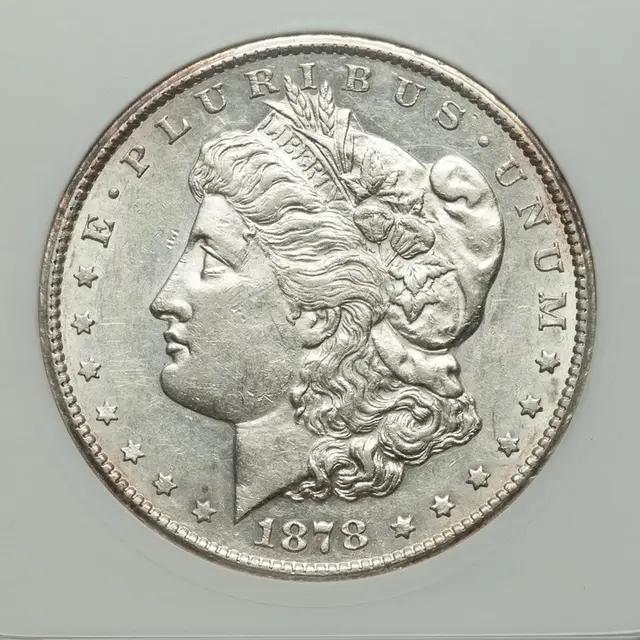
First From San Francisco: The 1878-S Morgan
Coin Encyclopedia · 9 min read · Published November 7, 2026
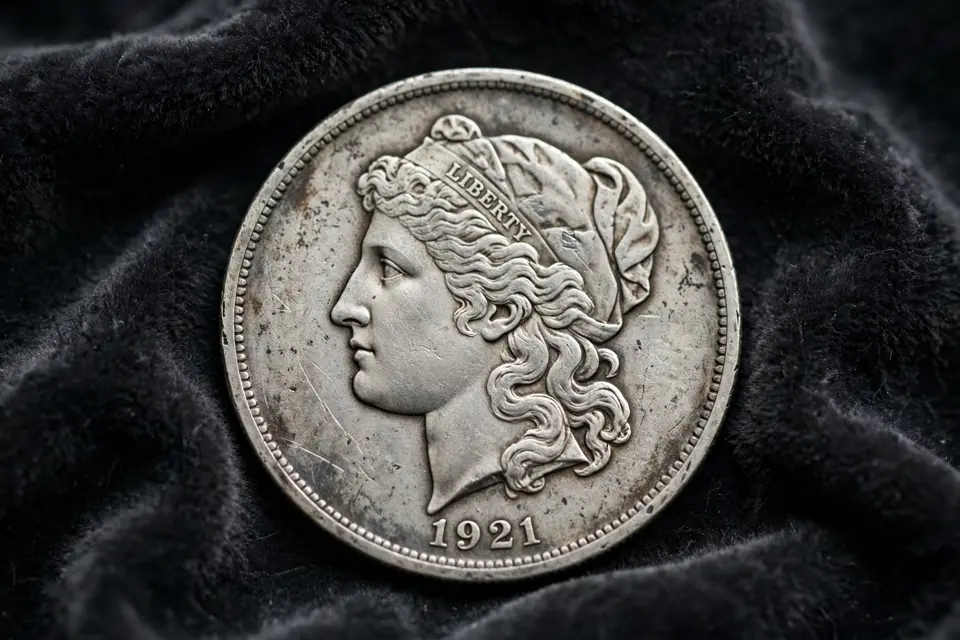
San Francisco struck 9,774,000 Morgan dollars in 1878 — more than four times Carson City's output the same year, and the largest first-year mintage of any Morgan mint. That number tells you the most important thing about this coin before you ever look at a grade table: the 1878-S is not rare. It is available, it is affordable in worn grades, and it is the easiest way to own a first-year Morgan dollar. What makes it interesting is what happens at the top of the grade scale, where a coin struck in the millions suddenly becomes a four-figure coin.
The reason is strike and survival. San Francisco's 1878 dollars were well made, with sharp details and deep, frosty lustre, and a good number of them sat in Treasury bags for decades instead of circulating. When those bags were released, collectors found coins that looked as fresh as the day they were struck — and the market has paid a premium for that freshness ever since.
What an 1878-S is worth by grade
The grade curve for this date is a textbook example of how condition transforms a common coin. At G-4, an 1878-S runs $38 to $60 — barely above its silver. At AU-50 it is $83 to $89, and at MS-60 it is $79 to $134. Then the curve bends: MS-65 examples run $400 to $671, roughly ten times the worn figure. That gap is the whole game with this date, and it is decided by lustre, marks, and strike.
| Grade | Estimated collector value |
|---|---|
| G-4 | $38–$60 |
| F-12 | — |
| XF-40 | — |
| AU-50 | $83–$89 |
| MS-60 | $79–$134 |
| MS-65 | $400–$671 |
A dash (—) means our November 2026 review holds no researched figure for that grade yet — it is a gap in our data, not a zero. Figures are collector estimates, reviewed November 5, 2026.
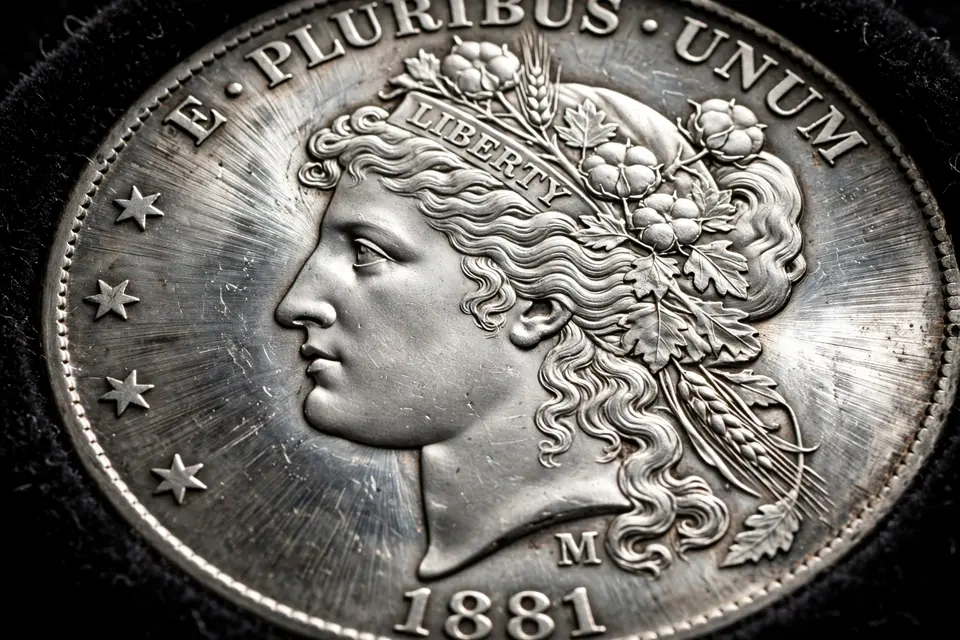
The curve is the story here. Worn examples cluster near the silver floor, and the figures only start to separate once the coin keeps its lustre and its strike. This date has researched figures at 4 of six grades. At G-4 the range runs $38 to $60, and at the top end, MS-65 runs $400 to $671. The F-12, XF-40 rows are still a dash in our guide — no researched figure yet, and none invented to fill the space. The two missing rows, F-12 and XF-40, are dashes in our guide — no researched figure yet, and none invented.
San Francisco's first Morgan year
The San Francisco Mint struck Morgans for the whole life of the series, and its coins are known for strong strikes and clean, frosty surfaces — the mint's presses and the quality of its dies gave its dollars a look collectors still recognise at a glance. San Francisco dollars circulated heavily in the West, so worn examples are common, but the mint also stored large quantities in Treasury vaults, and the great Treasury releases of the 1960s put many uncirculated S-mint dollars into circulation among collectors for the first time.
For the 1878-S specifically, the mint's quality shows in the strike: the hair detail over Liberty's ear is usually crisp, the eagle's breast feathers are well defined, and the fields carry the deep, frosty lustre that S-mint collectors value. A weakly struck 1878-S is the exception, not the rule, which makes a soft one worth a second look — it may be wear rather than strike.
Grading an 1878-S: lustre is the tell
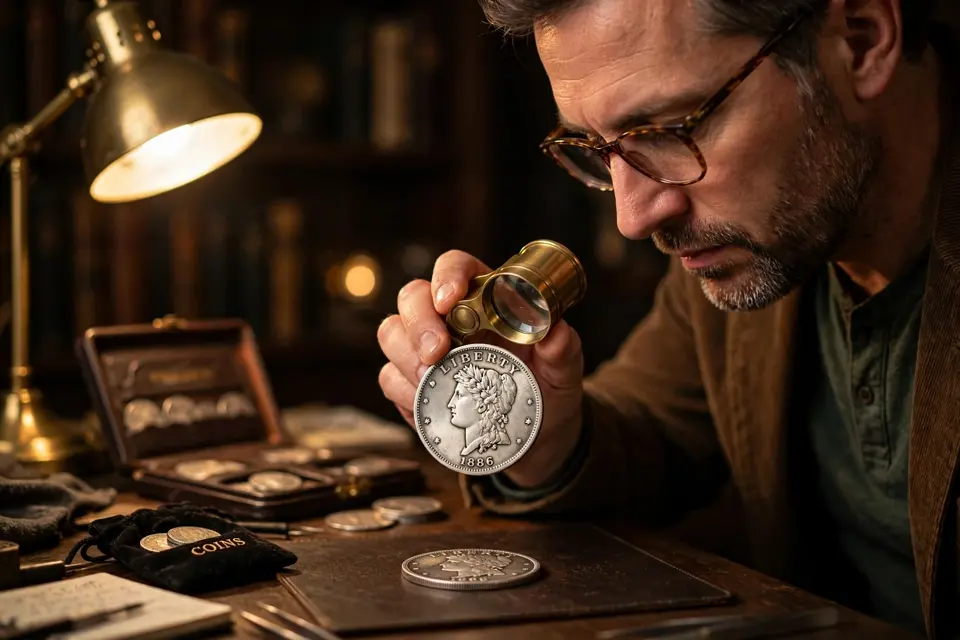
To grade a Morgan, look at Liberty's cheek first, then the curls of hair above the ear, then the eagle's breast on the reverse. Those are the high points, so they are where wear lands first: a mint-state coin keeps them sharp and lustrous, while a circulated coin shows them flattened and grey. Bag marks — the small nicks and ticks coins pick up knocking against each other in mint bags — decide most of the difference between MS60 and MS65. Strong strikes with clean fields are the coins that climb.
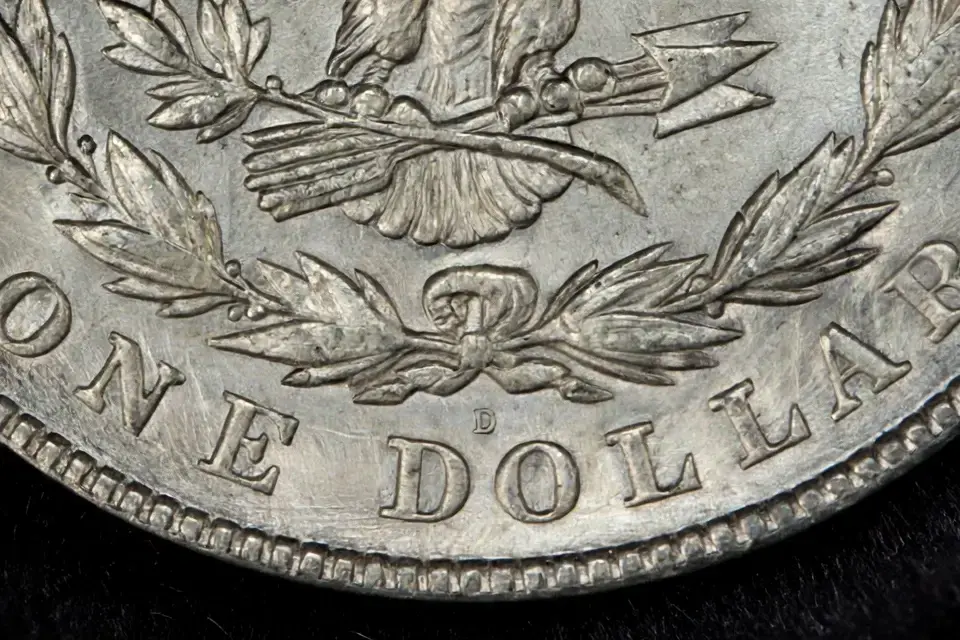
On this date, lustre separates the grades more than wear does. An AU-50 coin has a trace of wear on the cheek but keeps most of its shine; an MS-60 coin has no wear at all but may be heavily marked or dull; an MS-65 coin has full, rolling lustre and only the lightest ticks. Hold the coin under a single light and tilt it slowly — the cartwheel should sweep across the fields without stopping.
Specs, silver, and the floor
The specifications never change across the Morgan series, which is part of why the series is so easy to learn and so hard to master. A genuine Morgan weighs 26.73 grams, measures 38.1 millimetres, and carries 0.7734 troy ounces of pure silver at 90% fineness, with a reeded edge. The metal alone puts a floor of $40.27 under every genuine example. George T. Morgan's Liberty faces left in a Phrygian cap; the reverse eagle spreads its wings inside a wreath, with the mint mark below the wreath when the coin was not struck at Philadelphia.
Metal floor updates live from our Worker — last updated November 7, 2026.
With nearly ten million struck, the 1878-S will never be scarce in worn condition, and that is exactly why it belongs in a beginner's collection: it teaches the series at a fair figure, and it rewards the collector who learns to grade before spending more.
Is your 1878-S genuine?
Counterfeits are a real hazard with every coin in this guide, and the checks are the same ones collectors have used for decades. Weigh it first — 26.73 grams, no excuses — and measure the diameter at 38.1 millimetres. Hold a magnet to it: silver does not stick, and a coin that does is not what it claims to be. Under a loupe, genuine striking leaves crisp, even lettering and clean fields; a cast copy betrays itself with soft details, tiny pits, and a slightly greasy surface. When the stakes are high, certification settles it.
First-year S-mint dollars are faked less often than CC dates, but the gem examples are worth faking, so a coin offered as MS-65 deserves the full check — weight, diameter, magnet, and loupe — and certification before any serious money changes hands.
Latest reported results for this coin
Checking for newly reported results…
1878-S Morgan dollar: the questions collectors ask
How much is an 1878-S Morgan dollar worth?
Researched figures run $38 to $60 at G-4, $83 to $89 at AU-50, $79 to $134 at MS-60, and $400 to $671 at MS-65. The F-12 and XF-40 rows are dashes in our guide — no researched figure yet. Worn examples sit near the live metal floor shown in the specs section.
How can I tell an 1878-S from an 1878-CC Morgan?
Look at the mint mark below the wreath on the reverse. An S means San Francisco, a CC means Carson City, and no mark means Philadelphia. The S is a single letter; the CC is two letters side by side. The mintage also differs sharply: 9,774,000 for San Francisco against 2,212,000 for Carson City.
Why is the 1878-S worth so much more in MS-65?
Because condition is scarce even when the coin is not. Millions were struck, but very few survived with full lustre, a sharp strike, and clean fields. At MS-65, collectors are paying for that survival, not for the mintage — which is why the figure jumps from $79 to $134 at MS-60 to $400 to $671 at MS-65.
What is the mintage of the 1878-S Morgan dollar?
San Francisco struck 9,774,000 Morgan dollars in 1878, the largest first-year output of any mint. It is the most available first-year Morgan, and the most affordable way to own an 1878 dollar in worn grades.
Does the 1878-S come in eight and seven tail feather varieties?
Yes — like all 1878 Morgans, the San Francisco issue exists with both the eight-tail-feather and seven-tail-feather reverse. The variety is a specialist detail, visible with a loupe, and it does not change the mintage or the grade figures in our guide.
Should I get my 1878-S Morgan graded?
For a worn example, usually not — the figure is close to the silver floor. Consider certification when the coin looks uncirculated with full lustre, because the jump to MS-65 is large enough that an independent grade protects both the coin's identity and its figure.
Check your 1878-S Morgan
Run the date and mint mark through the free Coin Value Checker for an instant estimate, or get a Grade-or-Not verdict on whether your coin is worth certifying. The full guide is here: 1921 Morgan Dollar Value: $40 to $240,000+. Compare it with the 1878-CC Morgan dollar, struck the same year at Carson City.
A first-year coin rewards the collector who looks twice — once at the date, once at the mint mark. Keep learning, keep checking, and enjoy the hunt. Shared for education only.