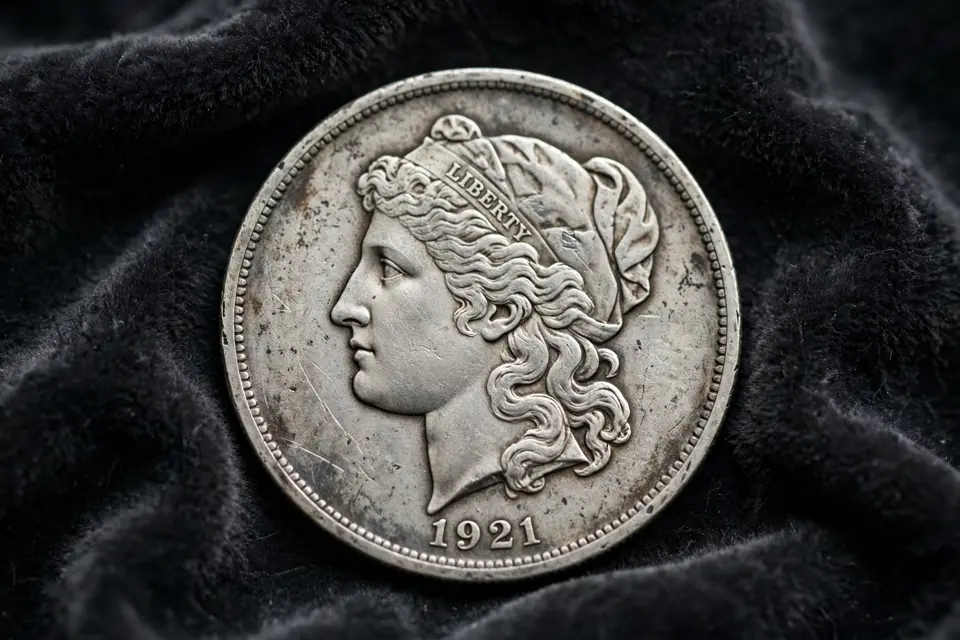
What Is an 1878-CC Morgan Dollar Worth?
Coin Encyclopedia · 9 min read · Published November 7, 2026
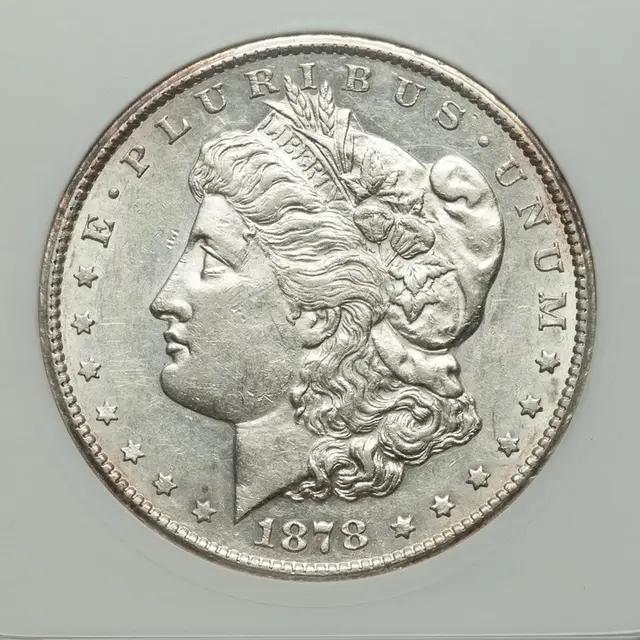
The 1878-CC was the first Morgan dollar Carson City ever struck, and it shows. The mint had been striking silver dollars for eight years already, but 1878 was the year George T. Morgan's new design arrived in Nevada, and the first CC Morgans rolled off presses that had spent the previous decade striking Seated Liberty dollars. A total of 2,212,000 were struck — a generous mintage by Carson City standards, and the largest of any CC Morgan until the mid-1880s. Yet a first-year coin from a frontier mint is never just a mintage number, and this date has spent nearly a century and a half teaching collectors that lesson.
Most 1878-CC dollars went straight into Western circulation, and circulation in 1878 Nevada was hard on a coin. They rode in saddlebags and strongboxes, changed hands in mining camps, and came back to the mint worn smooth. The survivors that collectors value today are largely the ones that never circulated at all — coins the Treasury held in bags for decades before releasing them. That split, between the worn majority and the bag-stored minority, is the whole value story of this date.
Carson City in 1878: a mint on the Comstock
The CC mint mark is the reason this coin carries a premium beyond its grade. The Carson City Mint opened in 1870 to strike the silver coming out of Nevada's Comstock Lode, and it struck Morgan dollars from 1878 until it closed in 1893. Its coins travelled hard in the West, so most survivors are worn; the uncirculated ones largely survived because the Treasury held them in bags for decades and released them in the government offerings of the 1970s, many in their original holders. That history is why a CC dollar feels different in the hand from a Philadelphia coin of the same date.
For the 1878-CC, the practical consequence is simple: a worn example is a Western workhorse with a modest premium over its silver, while an uncirculated one is a survivor of a storage story that lasted almost a century. Collectors pay for that survival, and for the CC mint mark itself, which has been the most romantic two letters in American numismatics for generations.
What an 1878-CC is worth by grade
Our November 2026 review holds a researched figure for this date at one grade only, and that honesty matters more than a filled-in table. At XF-40, an 1878-CC Morgan dollar carries an estimated collector value of $258 to $345. The other five grades — G-4, F-12, AU-50, MS-60, and MS-65 — are shown as dashes, because no researched figure exists for them in our guide yet. A dash is a gap in our data, not a verdict on the coin: uncirculated 1878-CC dollars certainly exist and certainly command strong figures, but this guide will not invent numbers it has not researched.
| Grade | Estimated collector value |
|---|---|
| G-4 | — |
| F-12 | — |
| XF-40 | $258–$345 |
| AU-50 | — |
| MS-60 | — |
| MS-65 | — |
A dash (—) means our November 2026 review holds no researched figure for that grade yet — it is a gap in our data, not a zero. Figures are collector estimates, reviewed November 5, 2026.
What the single figure does tell you is where the middle of this coin's market sits. An XF-40 example — lightly worn, with most of its detail intact and just a whisper of flattening on the high points — is a solid, honest collector coin at $258 to $345. Below that, worn examples trade closer to the silver floor; above it, the figures climb steeply with condition, and a mint-state example with full lustre is a different coin altogether in the market's eyes.
How to grade your 1878-CC
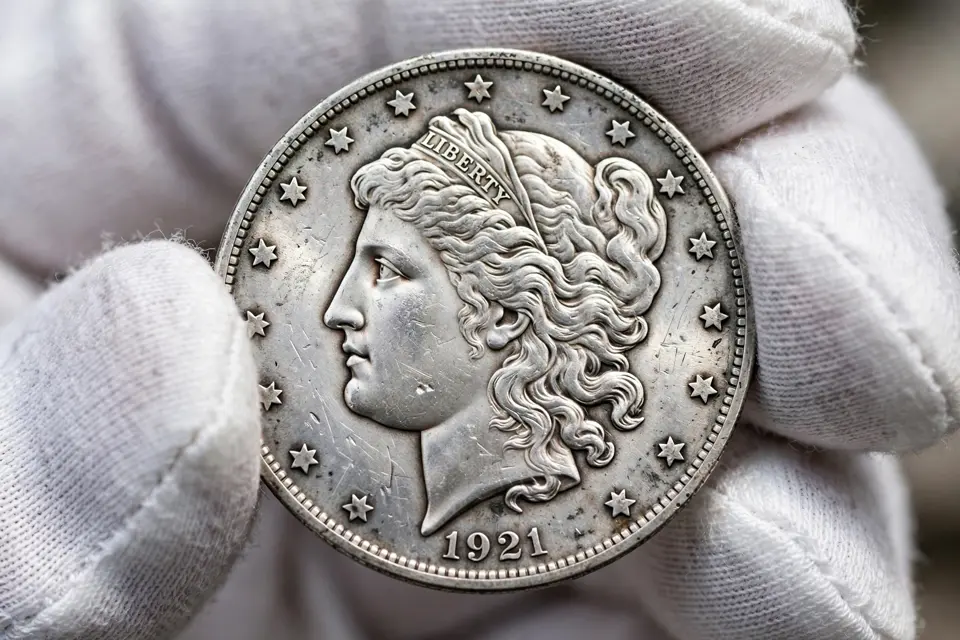
Grading a Morgan starts in three places: Liberty's cheek, the hair above her ear, and the eagle's breast feathers on the reverse. On a mint-state coin those areas are fully struck and covered in cartwheel lustre that rolls across the surface when you tilt the coin under a light. The first wear shows as a flat, dull patch on the cheek and on the high points of the hair curls; the breast feathers go soft next. A coin with full lustre and no wear is mint state, and from there the grade is a question of marks, strike, and eye appeal.
First-year Morgans carry one extra thing to check: the 1878 reverse comes in two main varieties, with either eight or seven tail feathers on the eagle, and the seven-feather version is the scarcer of the two. The variety is visible with a loupe on the reverse, and it matters to specialists even though it changes nothing about the mintage figure. Check your coin's tail feathers before you settle on what you have.
Specs and the silver floor
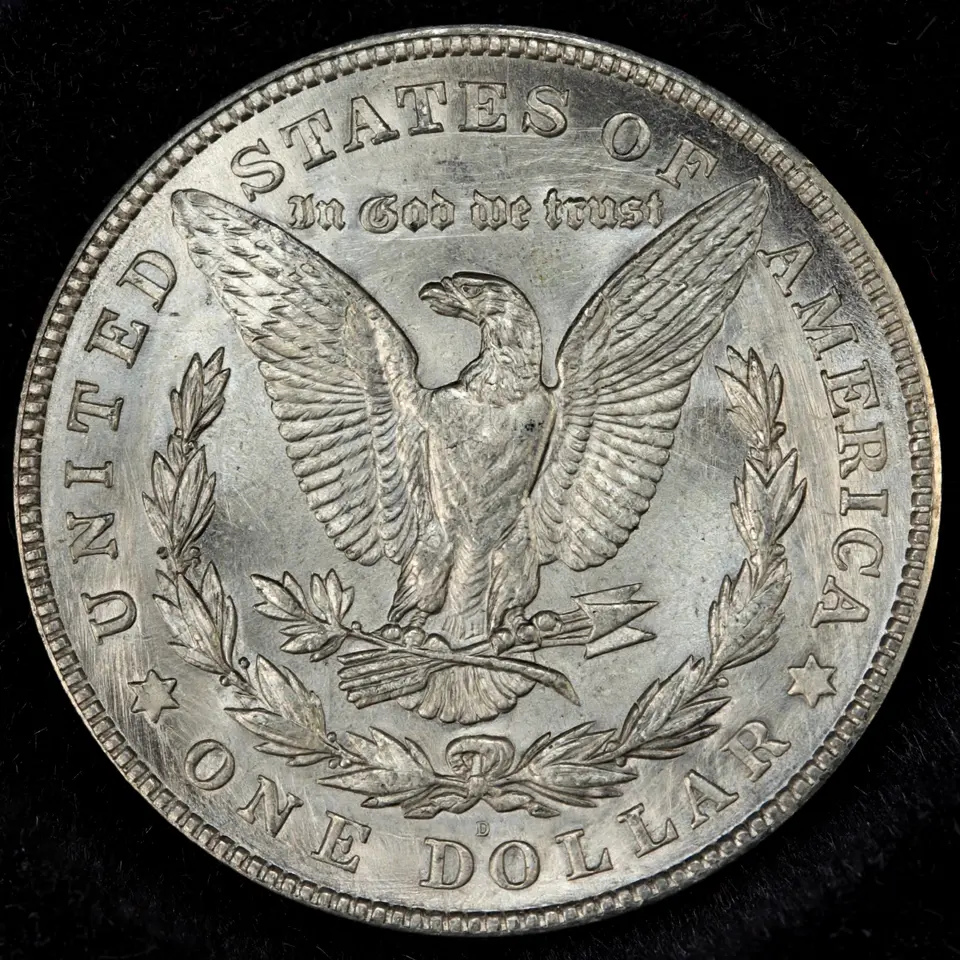
Every Morgan dollar shares the same bones: 26.73 grams, 38.1 millimetres across, a reeded edge, and 90% silver with 10% copper, which works out to 0.7734 troy ounces of pure silver in each coin. That metal is the floor under every genuine Morgan, however worn: $40.27. George T. Morgan designed both sides: Liberty in a Phrygian cap on the obverse, a heraldic eagle in a wreath on the reverse, and the mint mark, when there is one, tucked below the wreath on the reverse.
Metal floor updates live from our Worker — last updated November 7, 2026.
That silver floor is the reason no genuine 1878-CC will ever be a face-value coin. Even the most worn example carries 0.7734 troy ounces of silver, and the CC mint mark adds a collector premium on top of the metal at every grade.
Spotting a fake 1878-CC
The first test costs nothing: weigh the coin. A genuine silver dollar weighs 26.73 grams and measures 38.1 millimetres, and fakes are usually light, or the wrong diameter, or both. Silver is not magnetic, so a coin that sticks to a magnet is not silver. Then look at the lettering with a loupe — genuine letters are sharp and even, while cast copies show mushy edges, pitted fields, and soft stars. A scale, a calliper, and a magnet settle most questions in a minute; anything still in doubt goes to a professional grading service.
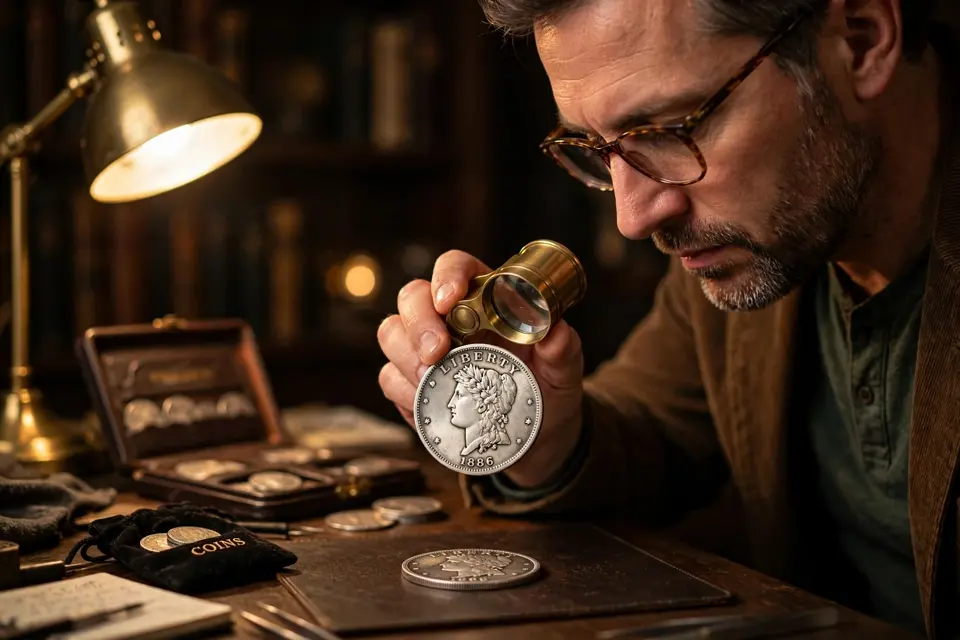
First-year CC dollars are faked more than most dates, because the mint mark alone adds value. Be especially wary of a coin with a CC mint mark that looks added or altered — a genuine CC sits cleanly below the wreath, struck at the same depth as the rest of the design, never punched in afterwards.
Latest reported results for this coin
Checking for newly reported results…
Your 1878-CC Morgan dollar questions, answered
How much is an 1878-CC Morgan dollar worth?
Our researched figure for the 1878-CC is $258 to $345 at XF-40. Worn examples sit closer to the live metal floor in the specs section, while uncirculated examples command much higher figures — our guide holds no researched figure for the mint-state grades yet, so those rows are shown as dashes rather than guesses.
How do I know my 1878 Morgan is from Carson City?
Turn the coin over and look below the wreath on the reverse, just above the word DOLLAR. A small CC there means Carson City. No mint mark means Philadelphia, and an S means San Francisco. The CC is struck cleanly into the coin, at the same depth as the surrounding design.
What is the mintage of the 1878-CC Morgan dollar?
Carson City struck 2,212,000 Morgan dollars in 1878, the first year of the design. It was the largest CC Morgan mintage of the early years, but most of those coins circulated hard in the West, so uncirculated survivors are far scarcer than the mintage suggests.
Are 1878-CC Morgan dollars rare?
Not in worn condition — more than two million were struck, and circulated examples are regularly available. The rarity sits at the top: sharply struck, lustrous, uncirculated examples with the CC mint mark are genuinely scarce, and the seven-tail-feather reverse variety is scarcer than the eight-feather version.
Should I get my 1878-CC Morgan graded?
Consider it when the coin looks uncirculated with full lustre, shows a sharp strike, or might be the scarcer seven-tail-feather variety. Certification also settles the question of whether the CC mint mark is genuine, which matters more for this date than for most.
What is the silver content of an 1878-CC Morgan dollar?
Every Morgan dollar contains 0.7734 troy ounces of pure silver at 90% fineness, weighing 26.73 grams. That metal is the floor under every genuine example — the live figure is in the specs section, and it moves with the silver market.
Check your 1878-CC Morgan
Run the date and mint mark through the free Coin Value Checker for an instant estimate, or get a Grade-or-Not verdict on whether your coin is worth certifying. The full guide is here: 1921 Morgan Dollar Value: $40 to $240,000+. Also see the 1879-CC Morgan dollar, the next Carson City date in this guide.
Every coin in this guide is here to teach, not to tempt — learn the mint mark, learn the grade, and let the history do the talking. Shared for education only.