1892-O Barber Half Micro O: $199,750 Rarity Explained
Coin Encyclopedia · 9 min read · Published November 7, 2026
The 1892-O Barber half dollar is the coin that makes collectors stop and reach for a loupe. It was struck in the first year of the Barber half series at the New Orleans Mint, and one variety of it — the Micro O, with a mint mark so small it looks like a printing slip — reached $199,750 at Heritage in May 2022. Most 1892-O halves are ordinary 90% silver coins worth a modest collector premium over melt. The Micro O is something else entirely, and telling the two apart comes down to a single letter the size of a pinhead.
This guide walks through that check first, then the grade table, the mintage story, and the silver floor underneath it all. Our catalog has not yet researched grade-by-grade estimates for this date, so the table below shows dashes where research is still pending — those gaps are honest, not guesses. What is certain is the mintage of 390,000 for the 1892-O issue as a whole, the first-year status, and the verified auction result that anchors the top of the market.
The Micro O check — a mint mark the size of a pinhead
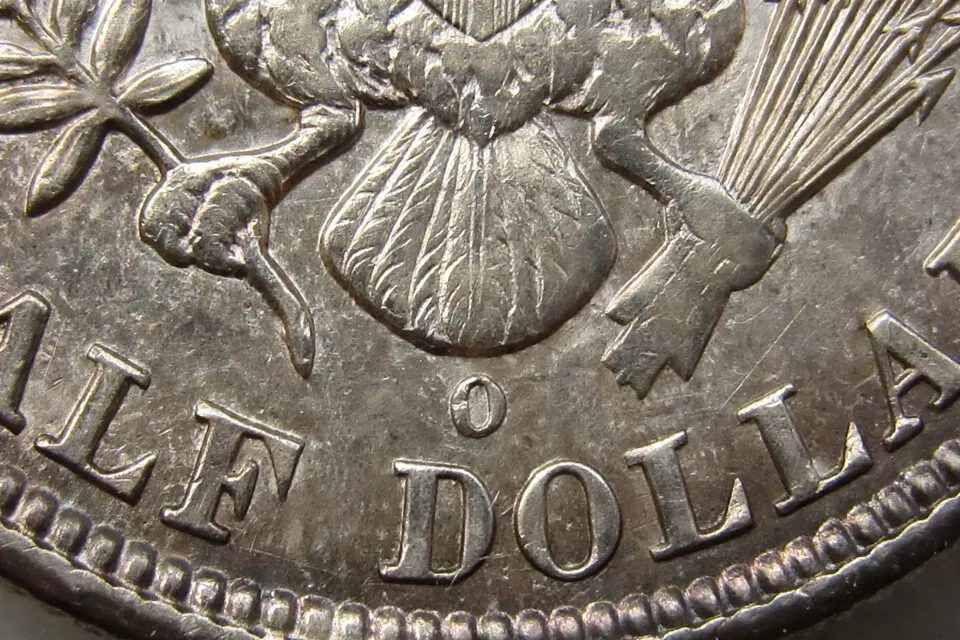
Flip the coin over and look below the eagle, under the tail feathers, where the mint mark sits. On a normal 1892-O half the O is a full-sized letter, easy to spot at arm's length. On the Micro O variety the O is dramatically smaller — roughly half the normal height — and it sits in the same spot, as if the engraver used a punch meant for a dime. That tiny O is the whole difference between a common first-year half and one of the great rarities of the Barber series.
The variety was struck from a single reverse die, which is why so few exist, and most of the survivors are worn. Collectors spent decades arguing about whether the Micro O was real before the market settled the question for good. If your 1892-O half shows a small O, do not clean it, do not rub it, and do not guess at its grade — put it in a holder and get a professional opinion, because the gap between the two varieties is measured in thousands of dollars even in low grade.
Why New Orleans struck only 390,000
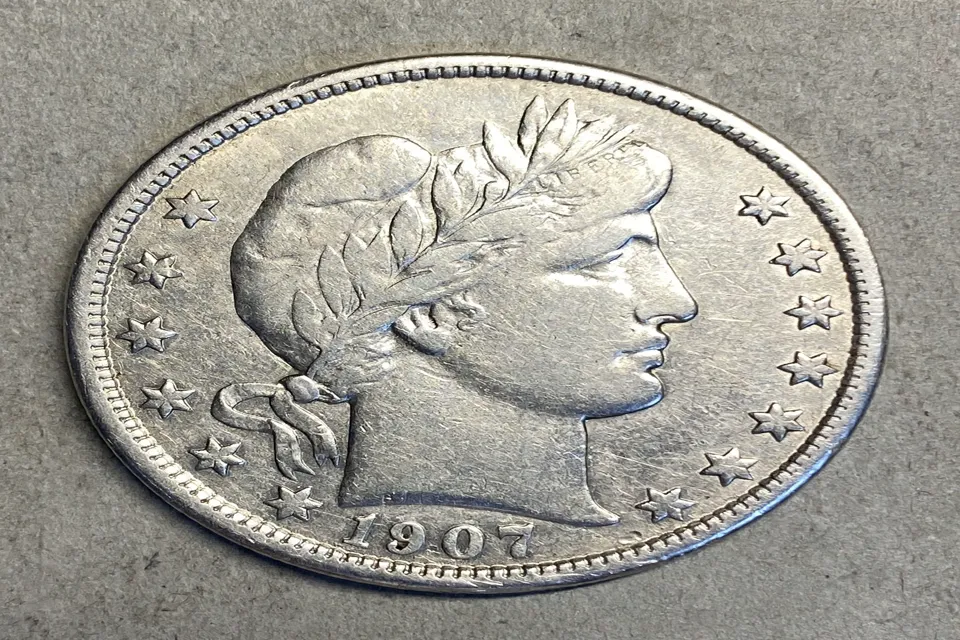
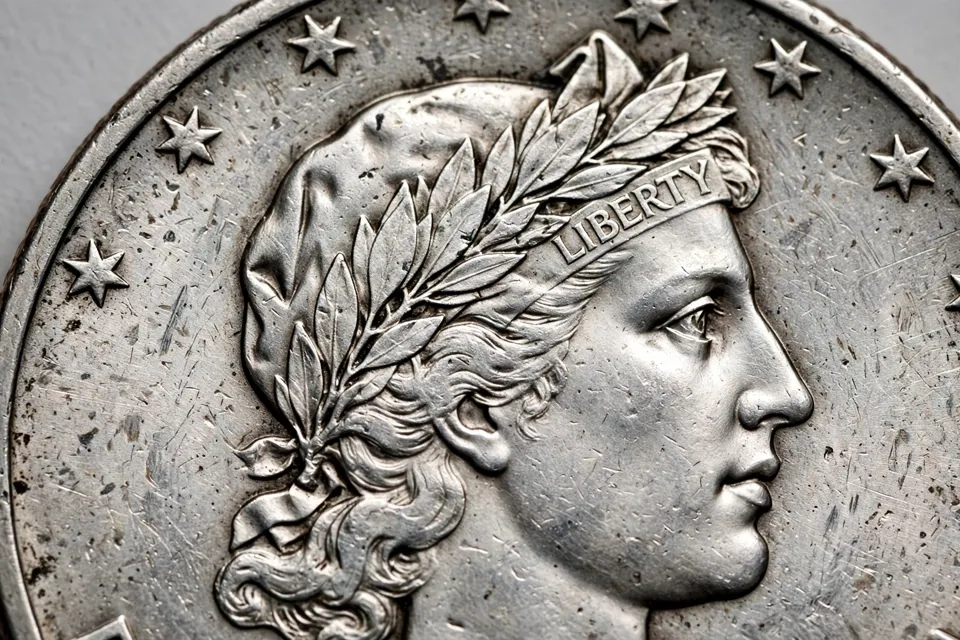
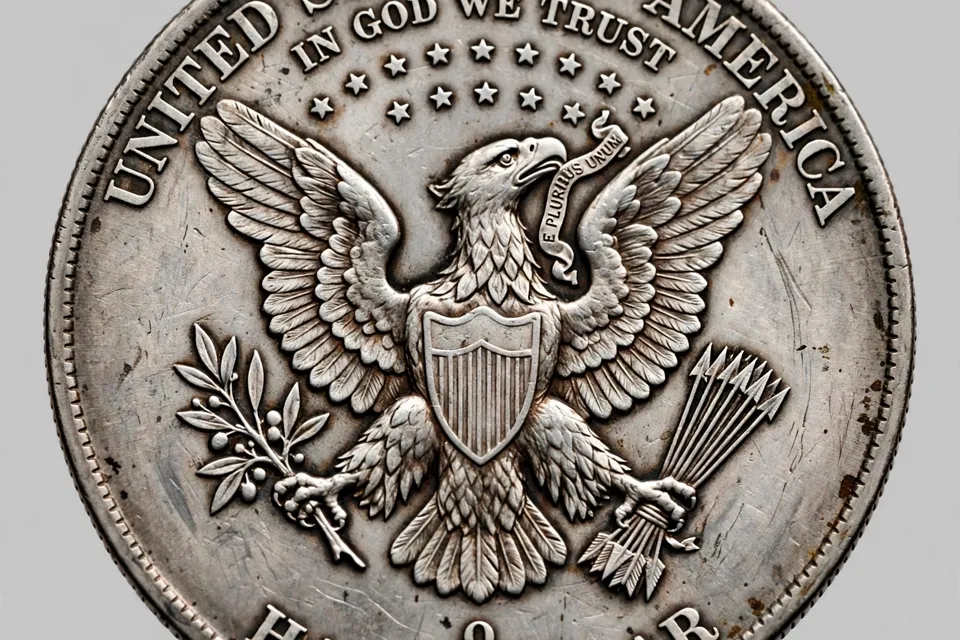
The Barber half arrived in 1892, replacing the Seated Liberty design that had served since 1839. Charles E. Barber, the Mint's chief engraver, put a Liberty head in a Phrygian cap on the obverse and a heraldic eagle on the reverse, a design his critics called workmanlike and his defenders called honest. New Orleans received its dies in the first year and struck 390,000 halves — a small run beside Philadelphia's output — and most of them went straight into Southern commerce, where they circulated hard for decades.
That circulation is why nice 1892-O halves are scarce today. A coin that spent forty years in pocket change comes back worn smooth, its Liberty head flattened and its eagle's feathers soft. The Micro O die was one of the first-year reverses, and its coins wore just as fast. When a high-grade Micro O surfaced and reached $199,750, it was not a surprise to specialists — it was the market finally paying for a coin that almost never survived in collectible condition.
New Orleans in 1892 — a mint finding its feet again
The New Orleans Mint had been back in business for thirteen years when it struck the 1892-O. It closed during the Civil War, sat silent for almost two decades, and reopened in 1879 to strike silver for a South that was rebuilding. By 1892 it was a working mint again, but it was not Philadelphia: its dies arrived late, its presses ran hard, and its coins often show the soft strikes and rough surfaces that come from a branch mint working at full stretch.
That branch-mint character is part of what makes the 1892-O interesting beyond the Micro O. First-year Barber halves from New Orleans are often weakly struck on Liberty's hair and the eagle's feathers, and many survivors carry the dull grey tone of coins that circulated in the humid South. A sharply struck, bright 1892-O stands out immediately — and when the mint mark is also tiny, it stops being a curiosity and becomes one of the great rarities of the series.
How the Micro O was finally accepted
For decades, collectors argued about the Micro O. Some said the small mint mark was a damaged punch, others that it was a trick of wear, and a few that it was never a real variety at all. The argument ended the way most numismatic arguments end: with coins, not opinions. Enough clearly genuine Micro O examples surfaced, all from the same reverse die, all showing the same small O in the same position, that the variety became undeniable.
The single-die origin is what makes the Micro O so scarce. A normal variety might come from several dies and number in the thousands; the Micro O comes from one die, struck for a short run before the die was retired or broke. Most of the survivors are worn, because nobody in 1892 knew to set one aside. The finest examples are the ones that change hands at the top of the market, and the verified result in the records section below is the figure that settled the argument for good.
What a 1892-O Barber Half Micro O variety is worth by grade
Our guide has not yet researched grade-by-grade estimates for this date, so every cell below shows “—” rather than a guessed figure. The live system fills these cells the moment research or a newly reported result lands. Figures on this page are reviewed November 5, 2026.
| Grade | Estimated value |
|---|---|
| Good (G-4) | — |
| Fine (F-12) | — |
| Extremely Fine (XF-40) | — |
| About Uncirculated (AU-50) | — |
| Mint State 60 (MS-60) | — |
| Mint State 65 (MS-65) | — |
The table is honest about what it does not know yet: the Micro O is the only 1892-O variety with a verified market figure, and it lives in the records section below rather than in a grade cell. An ordinary 1892-O in any grade trades near the silver floor, and the gap between the two is the widest in the Barber half series.
Silver, specs, and the floor under every Barber half
Every Barber half from 1892 through 1915 is 90% silver. The coin weighs 12.5 grams and carries 0.36169 troy ounces of pure silver. The live metal floor for this coin is $18.83 — it moves with the live silver market, so the figure updates on every load rather than standing still.
Metal floor updates live from our Worker — last updated November 7, 2026.
Charles E. Barber's Liberty head fills the obverse — a Phrygian cap, a laurel wreath, and the date — while the reverse carries the heraldic eagle with outstretched wings and a shield. Diameter 30.6 millimetres, reeded edge, and the mint mark on the reverse below the eagle, under the tail feathers.
Verified auction records
One verified record anchors the top of this coin’s market in our auction data. It is the figure every other example of this date is measured against.
| Coin | Grade | Sale | Price |
|---|---|---|---|
| 1892-O Micro O Barber half | — | Heritage Auctions, May 2022 | $199,750 |
Latest reported results for this coin
Checking for newly reported results…
Your 1892-O Barber Half Micro O variety questions, answered
How much is an 1892-O Barber half dollar worth?
An ordinary worn 1892-O Barber half trades near its silver floor, while the Micro O variety reached $199,750 at Heritage in May 2022. Our guide has not yet researched grade-by-grade estimates for this date, so those cells are shown as dashes.
What is the Micro O variety on the 1892-O Barber half?
The Micro O is a variety struck from a single reverse die with a mint mark roughly half the normal size, sitting below the eagle on the reverse. It is one of the great rarities of the Barber half series, while a normal-sized O marks the common 1892-O issue.
How many 1892-O Barber halves were struck?
The New Orleans Mint struck 390,000 Barber halves in 1892, the first year of the series. The Micro O variety is a small fraction of that total, struck from one reverse die, and most survivors are heavily worn.
Is the 1892-O Barber half silver?
Yes. Every Barber half from 1892 through 1915 is 90% silver, weighing 12.5 grams with 0.36169 troy ounces of pure silver — worth the live metal floor shown in the specs section below, which moves with the live silver market.
Where is the mint mark on a Barber half dollar?
The mint mark sits on the reverse, below the eagle under the tail feathers: O for New Orleans, S for San Francisco, D for Denver, and no mint mark for Philadelphia. On the 1892-O, the size of that O is what separates the common coin from the Micro O rarity.
Check your 1892-O
Run the date and mint mark through the free Coin Value Checker for an instant estimate, or get a Grade-or-Not verdict on whether your coin is worth certifying. The full series guide is here: Barber Half Dollars Worth $20 to $199,750+.
Written for collectors learning to read a coin before they judge it — because on the 1892-O, one tiny letter is the whole story. This guide is for education — learn the coin first, and get a professional opinion before buying or selling.