1893-S Barber Half: Low-Mintage San Francisco Find
Coin Encyclopedia · 8 min read · Published November 7, 2026
San Francisco struck 740,000 Barber halves in 1893, and almost all of them went to work. The West in the 1890s ran on silver coinage, and a half dollar was a working coin — it paid wages, bought supplies, and crossed saloon counters until its high points were smooth. That is the story of the 1893-S: not a famous variety or a record-setter, but a low-mintage branch-mint date that is genuinely scarce in the grades collectors want.
This guide starts with the mintage and what it means, then moves through the wear pattern, the grade table as it stands today, and the silver floor. Our catalog has not yet researched grade-by-grade estimates for the 1893-S, so the table shows dashes rather than invented figures. The mintage of 740,000 is solid, the silver content is fixed, and everything else here follows from those two facts.
740,000 struck — and most of them worn smooth
Philadelphia struck Barber halves by the millions in the 1890s, which is why common dates are common. San Francisco did not. The 1893-S mintage of 740,000 is small beside the Philadelphia runs of the same decade, and the coins it produced circulated in a region where silver halves were everyday money, not savings. A century of that treatment leaves very few survivors with sharp detail, and fewer still with original surfaces.
That scarcity shows up in the market as a premium for condition rather than a headline figure. A worn 1893-S trades near the series floor like any Barber half, but each step up in grade costs more than it does on a Philadelphia date, because the supply of nice coins is thin. Collectors building a Barber half set by date and mint mark treat the 1893-S as one of the dates that slows the set down — not the hardest, but far from the easiest.
Reading wear on a Barber half
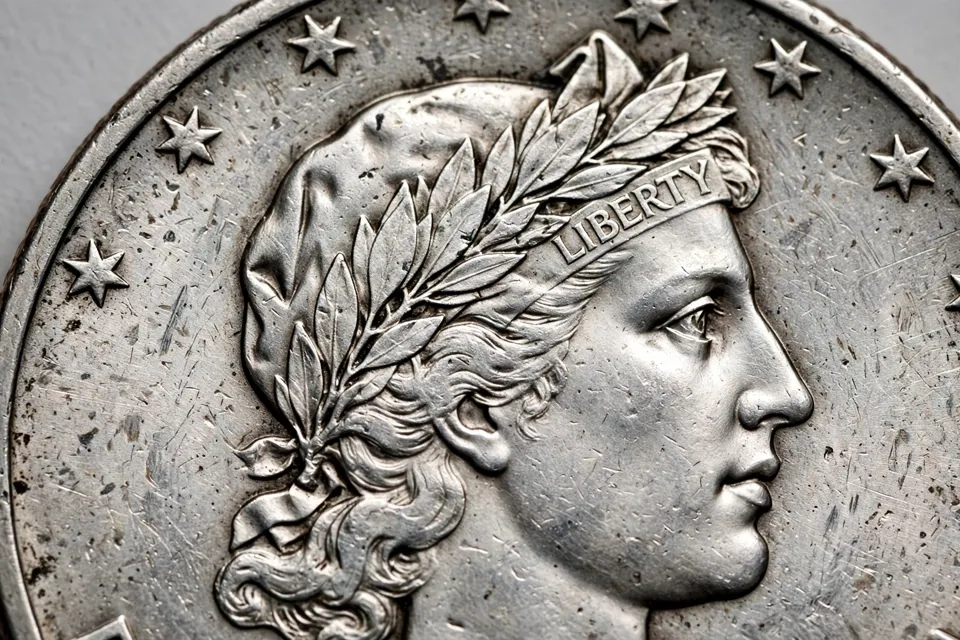
Barber halves wear in a predictable order, and learning it lets you grade your own coin roughly before anyone else touches it. The first detail to go is the hair above Liberty's ear on the obverse and the top of the eagle's wing on the reverse. Next the letters of LIBERTY in the headband soften, then the shield lines on the eagle's breast blur, and finally the whole design sinks toward a smooth grey disc with a date.
On the 1893-S, check the S mint mark early in your inspection — it sits below the eagle, under the tail feathers, and on a worn coin it can fade to a ghost. A coin with a clear date, a readable S, and honest wear is a better coin than one with a sharper obverse and a polished, lifeless surface. Originality matters more than shine: a dipped or polished Barber half loses the soft grey skin that collectors pay for, and no amount of rubbing brings it back.
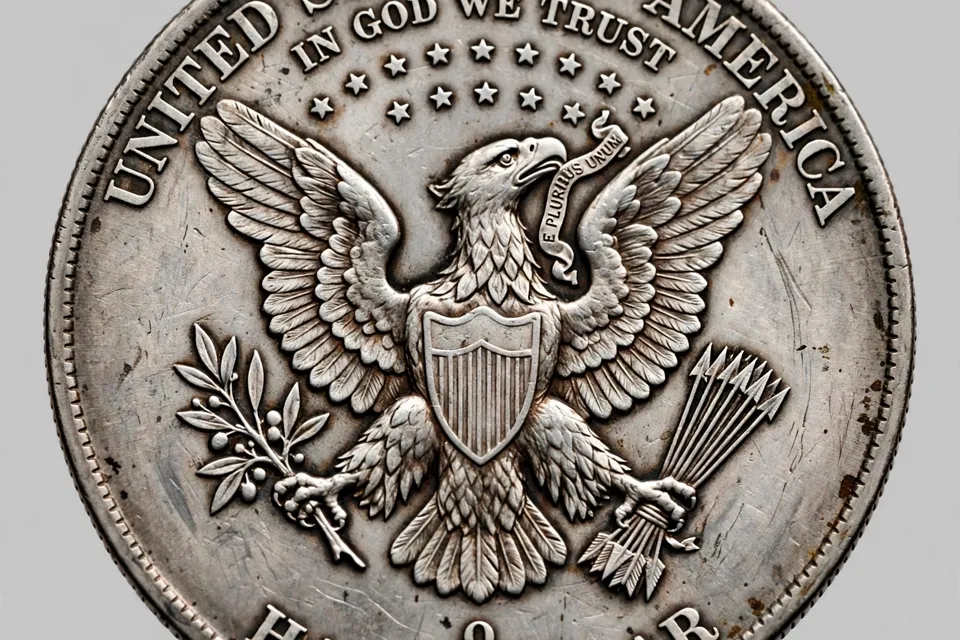
San Francisco in 1893 — silver on the far edge of the country
The San Francisco Mint struck the 1893-S in a year when silver was the argument of the age. The Panic of 1893 was beginning, silver was falling in value, and the Sherman Silver Purchase Act — the law that had kept the mints buying silver — was about to be repealed. In that climate, 740,000 half dollars was a small run, and almost all of them went straight into circulation on the West Coast, where they stayed.
West Coast circulation is hard on a coin. San Francisco halves travelled in pockets and tills across California and the mining West, and few were ever set aside by collectors — the hobby was still small, and a new half dollar was spending money, not a keepsake. That is why the 1893-S is scarce in every grade and genuinely rare in Mint State: the coins existed, but they were used, and used coins wear down.
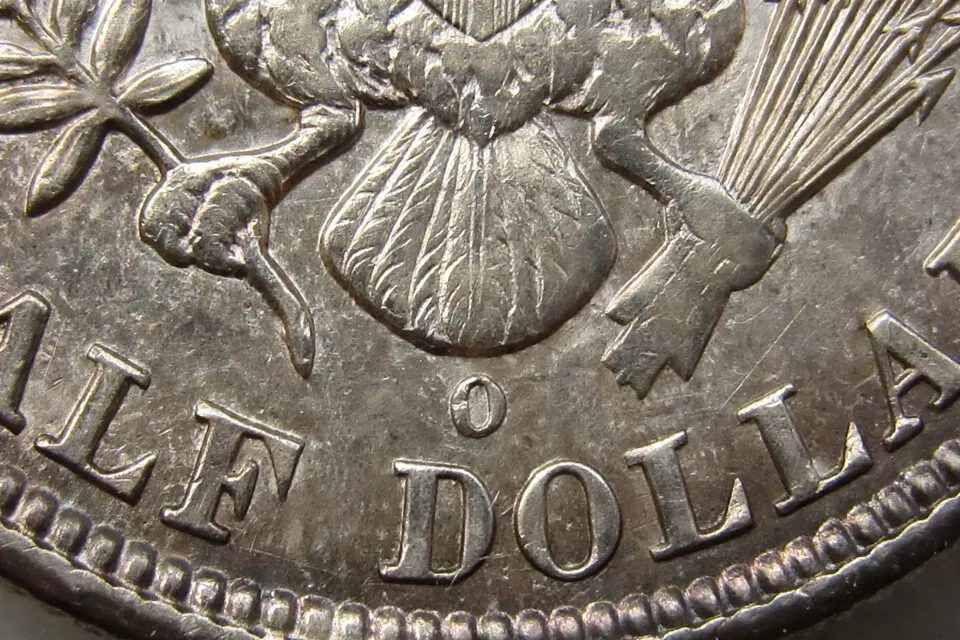
Reading a worn 1893-S
A worn 1893-S tells its story in what is left rather than what is gone. Liberty's cap and wreath soften first, then the hair detail, then the date itself. On the reverse, the eagle's wing feathers blur and the shield's stripes merge. What matters for identification is simpler: the date must read 1893, the mint mark must be an S below the eagle, and the coin must weigh 12.5 grams.
Counterfeits of branch-mint Barber halves exist, and the defence is the same as for any key date: weight, edge, and surfaces. A genuine 1893-S weighs 12.5 grams and has a sharp, even reeded edge. A cast copy feels light and shows tiny bubbles under magnification. If the coin is valuable enough to argue about, it is valuable enough to send to PCGS or NGC — certification settles the question permanently, and it is where the premium for a real 1893-S is paid.
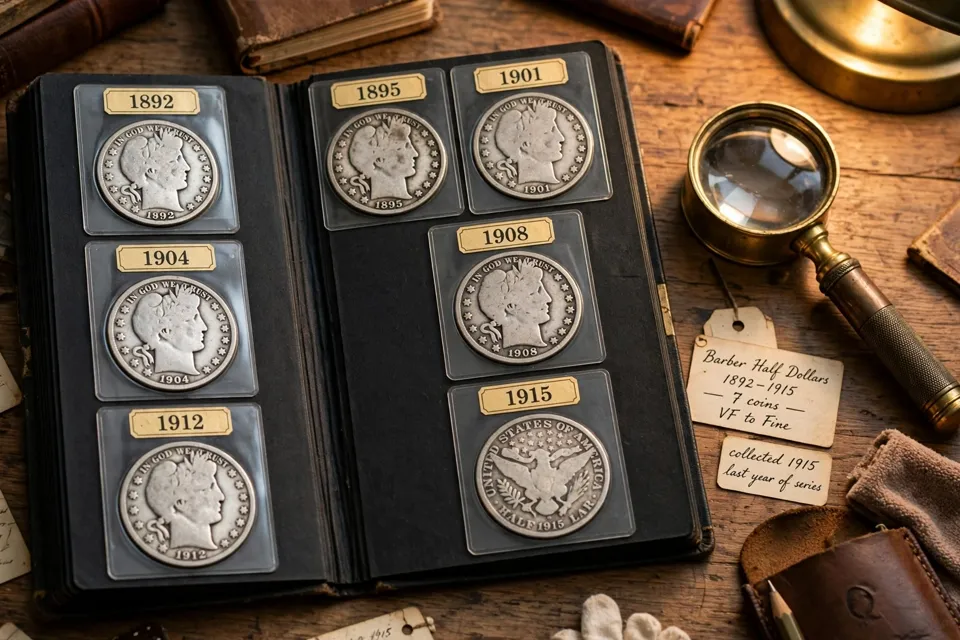
What a 1893-S Barber Half San Francisco is worth by grade
Our guide has not yet researched grade-by-grade estimates for this date, so every cell below shows “—” rather than a guessed figure. The live system fills these cells the moment research or a newly reported result lands. Figures on this page are reviewed November 5, 2026.
| Grade | Estimated value |
|---|---|
| Good (G-4) | — |
| Fine (F-12) | — |
| Extremely Fine (XF-40) | — |
| About Uncirculated (AU-50) | — |
| Mint State 60 (MS-60) | — |
| Mint State 65 (MS-65) | — |
With no researched grade figures yet, the shape of this coin's market is simple: a low mintage of 740,000, a branch mint, and a series in which uncirculated examples are scarce. The premium over a common Barber half grows with grade, and it grows fastest at the top.
Silver, specs, and the floor under a branch-mint Barber
Every Barber half from 1892 through 1915 is 90% silver. The coin weighs 12.5 grams and carries 0.36169 troy ounces of pure silver. The live metal floor for this coin is $18.83 — it moves with the live silver market, so the figure updates on every load rather than standing still.
Metal floor updates live from our Worker — last updated November 7, 2026.
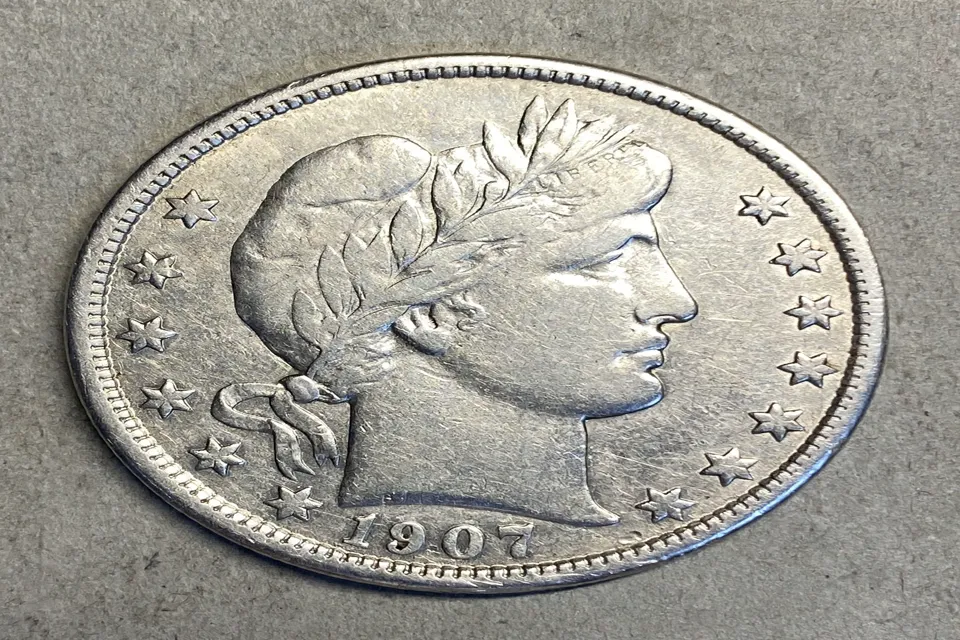
Charles E. Barber's Liberty head fills the obverse — a Phrygian cap, a laurel wreath, and the date — while the reverse carries the heraldic eagle with outstretched wings and a shield. Diameter 30.6 millimetres, reeded edge, and the mint mark on the reverse below the eagle, under the tail feathers.
Verified auction records
Our auction data holds no verified historic record for this date yet — no figure here is guessed. The box below checks for newly reported results on every load, so the first verified result for this coin will appear there.
Latest reported results for this coin
Checking for newly reported results…
Your 1893-S Barber Half San Francisco questions, answered
How much is an 1893-S Barber half dollar worth?
Our guide has not yet researched grade-by-grade estimates for the 1893-S, so the table shows dashes rather than invented figures. Worn Barber halves generally trade near their silver floor, with branch-mint dates like the 1893-S carrying a premium that grows with grade.
How many 1893-S Barber halves were struck?
The San Francisco Mint struck 740,000 Barber halves in 1893. That is a small mintage beside the Philadelphia runs of the same decade, and most of the coins circulated hard in the West, so sharp survivors are scarce.
Where is the mint mark on an 1893-S Barber half?
The S sits on the reverse, below the eagle under the tail feathers. Philadelphia coins carry no mint mark, so a clear S is what marks your coin as the San Francisco issue — check it before anything else.
Is the 1893-S Barber half silver?
Yes. Every Barber half from 1892 through 1915 is 90% silver, weighing 12.5 grams with 0.36169 troy ounces of pure silver — worth the live metal floor shown in the specs section below, which moves with the live silver market.
Why is the 1893-S harder to find in high grade?
The mintage was only 740,000, and the coins circulated as working money in the West for decades. Very few were set aside, so most survivors are worn, and sharply struck, lustrous examples are genuinely scarce.
Check your 1893-S
Run the date and mint mark through the free Coin Value Checker for an instant estimate, or get a Grade-or-Not verdict on whether your coin is worth certifying. The full series guide is here: Barber Half Dollars Worth $20 to $199,750+.
Written to help collectors see a branch-mint date clearly — mintage first, wear second, and no invented numbers anywhere in between. This guide is for education — learn the coin first, and get a professional opinion before buying or selling.