1908-S Indian Head Cent: The First San Francisco Cent
Coin Encyclopedia · 8 min read · Published November 7, 2026
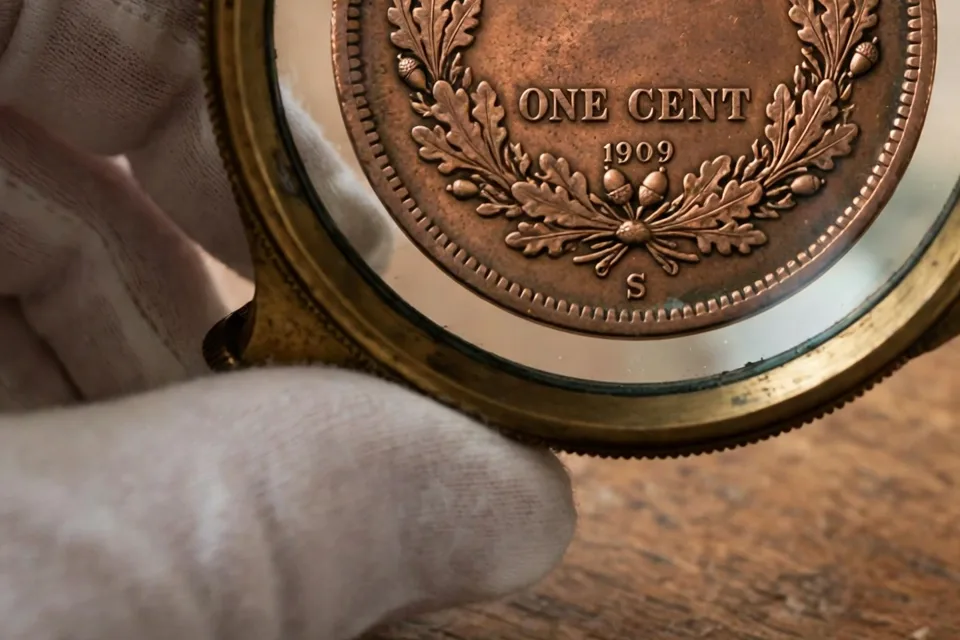
The 1908-S Indian Head cent is a first. For forty-nine years, every Indian cent had come from Philadelphia. In 1908, San Francisco struck cents for the first time — 1,115,000 of them — and the little S below the wreath on the reverse made the 1908-S the first cent ever struck at a branch mint. It is a coin that marks a turning point in the series, and it is a key date for the simplest reason: a tiny mintage by the standards of a series that routinely struck tens of millions.
Our series guide puts the 1908-S at $175 in Very Fine, $325 in About Uncirculated, and $550 in Choice Uncirculated. Those figures are modest beside the 1877, but they are the figures of a genuine key — and they come with two quirks that belong only to the San Francisco pair: a streaky wood-grain toning, and a counterfeit problem built on adding an S to a Philadelphia coin. This page covers both, and how to read the mint mark properly.
The first cent San Francisco ever struck
San Francisco had been striking gold and silver since the 1850s, but cents were a Philadelphia matter — small, low-value, and not worth shipping across the country. That changed in 1908, when the Mint extended cent production to the branch mints for the first time. The 1908-S was the result: the first branch-mint cent of any kind, struck in the final full year of the Indian Head design, one year before the Lincoln cent replaced it.
The mintage of 1,115,000 is small by the standards of the series. The 1900s routinely ran to tens of millions at Philadelphia, so a million-odd San Francisco cents was a scarce issue from the start — and collectors knew it. The 1908-S and the 1909-S that followed it are the only branch-mint Indian cents ever struck, which makes them a pair: two dates, one mint, and the end of a fifty-year design.
That pairing is also why the 1908-S is collected the way it is. On its own it is a scarce date. Beside the 1909-S, with its 309,000 mintage, it is the affordable half of the San Francisco pair — the one collectors seek first, and the one that teaches them the mint mark, the wood grain, and the fake problem before they spend serious money on the 1909-S.
The wood-grain quirk
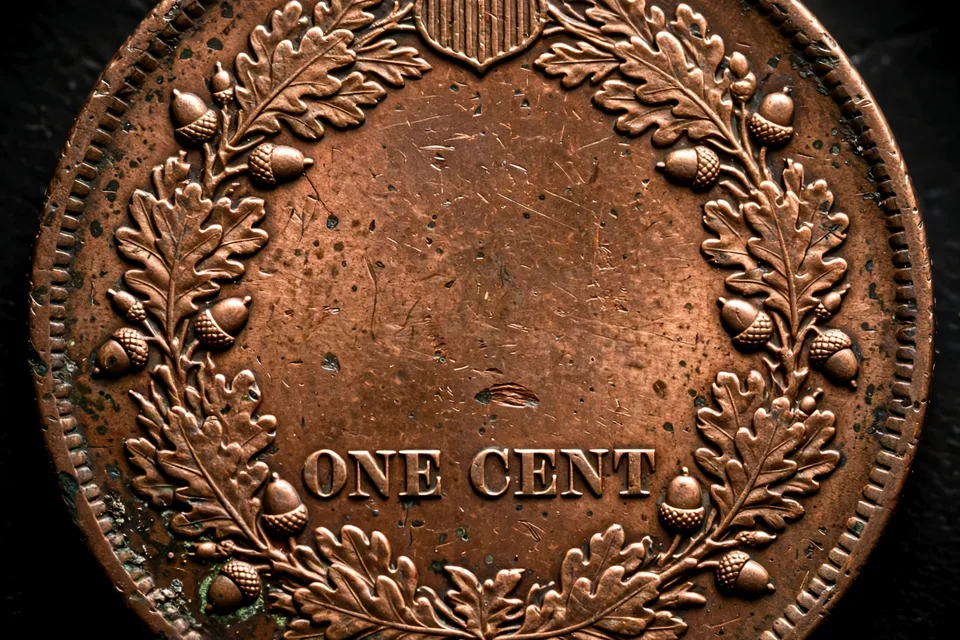
San Francisco Indian cents carry one more quirk, and it is visible at a glance: a streaky, wood-grain toning caused by an improper metal mix in the bronze strip. The alloy was not blended evenly, so the finished coins show streaks and grain across the surface, like wood. It is not damage, it is not cleaning, and it is not a flaw in the coin — on a certified 1908-S it is a badge of origin, a sign the coin really came from San Francisco's planchets.
Learn to recognise the grain before you judge any 1908-S. A coin with even, uniform toning and no streak at all is not necessarily wrong — the mix varied — but a coin with strong, natural wood grain is exactly what a San Francisco cent should look like. The grain is also a quiet authentication help: a counterfeit made by adding an S to a Philadelphia cent will not show it, because the Philadelphia planchets were mixed properly.
The mint mark below the wreath — and the added-S fake
The mint mark sits on the reverse, below the oak wreath — a small S, the only mint mark the Indian Head series ever carried. It is the whole coin: a 1908 without the S is a Philadelphia cent worth a few dollars, and a 1908 with the S is a $175+ key. That gap is exactly why the added-S fake exists. Take a common 1908 Philadelphia cent, add an S below the wreath, and a few-dollar coin becomes a key date.
Check the mint mark's style and position under a loupe. A genuine S sits in the right place below the wreath, with the right shape and the right depth, struck at the same time as the rest of the coin. An added S sits on the surface — too high, too sharp, or at a slightly wrong angle — and often shows tool marks or a different lustre around it. The check is not hard, but it has to be done: the fake is common, and it is good enough to fool a casual look.
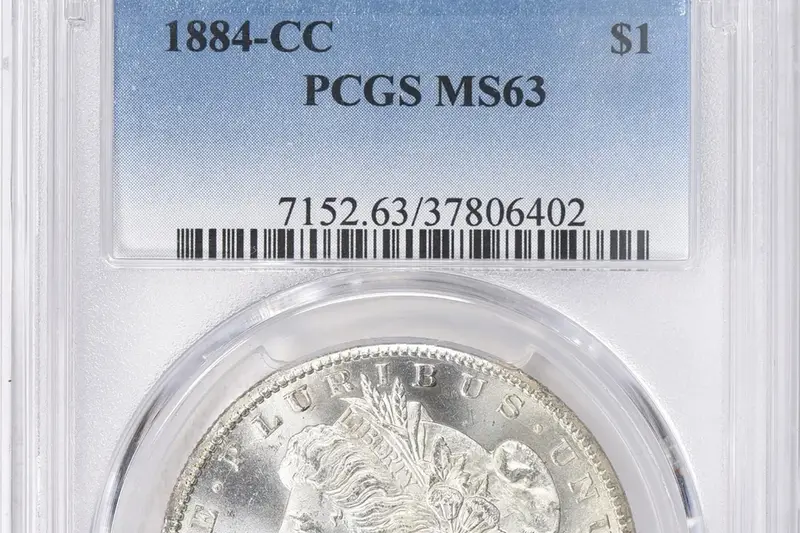
Weigh the coin as well. A genuine 1908-S is bronze at 3.11 grams and 19 millimetres across, with a plain edge. And at serious value, seek certification — the grading services authenticate the mint mark, and the holder is what makes a 1908-S tradable at its real figure. Our series guide is direct on this point: because both San Francisco dates are heavily counterfeited, check the mint mark's style and position below the wreath, and seek a certified example if the figure is serious money.
The coin at a glance
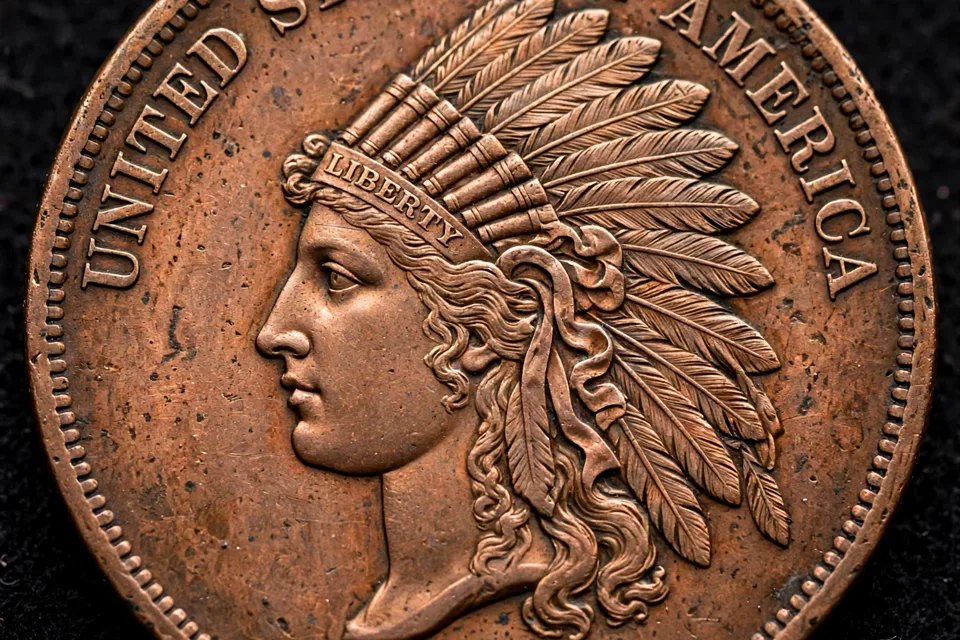
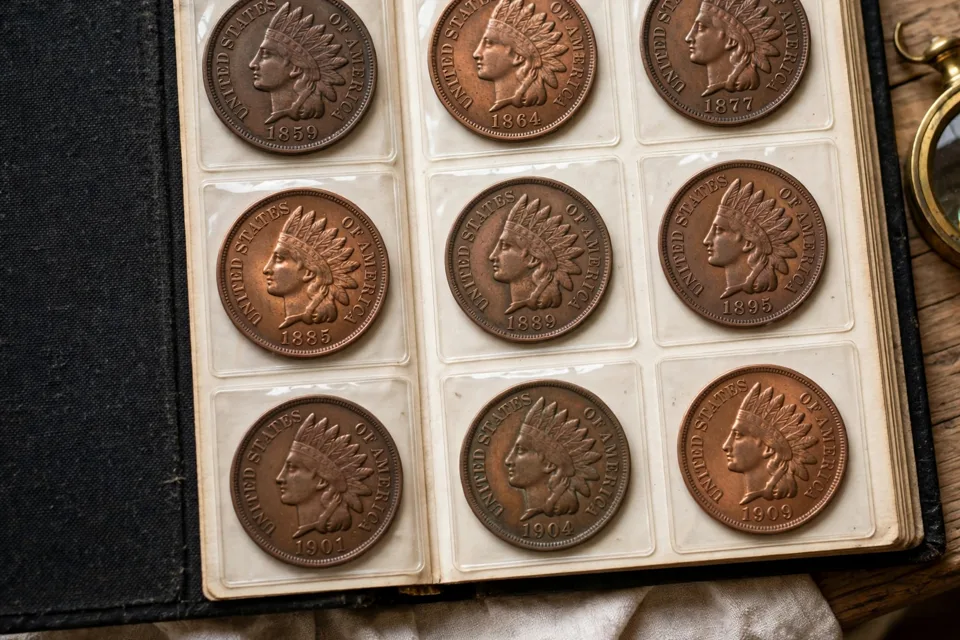
Designer James B. Longacre. Struck 1908 at San Francisco only. Composition bronze, 95 percent copper with 5 percent tin and zinc. Weight 3.11 grams, diameter 19 millimetres, plain edge. Obverse: Liberty in a Native American headdress, date below, Longacre's L on the ribbon behind her neck. Reverse: oak wreath with a shield at the top, ONE CENT at the centre, S mint mark below the wreath. Mintage 1,115,000. Metal floor: —. A copper cent carries no precious-metal floor, so the live system shows no melt figure for this coin — its worth is collector value alone.
The 1908-S is the start of the San Francisco story in cents — a story that would run through the Lincoln cent for the next century. It is also the gentler half of the pair: scarcer than any Philadelphia date of its decade, but affordable beside its 1909-S sibling. Learn the mint mark here, and the 1909-S will make sense when you meet it.
What it is worth by grade
Our guide has not yet researched grade-by-grade estimates for the 1908-S — the table below shows “—” for every grade rather than a guess. The series guide puts the 1908-S at $175 in Very Fine, $325 in About Uncirculated, and $550 in Choice Uncirculated.
| Grade | Estimated value |
|---|---|
| Good (G-4) | — |
| Fine (F-12) | — |
| Extremely Fine (XF-40) | — |
| About Uncirculated (AU-50) | — |
| Mint State 60 (MS-60) | — |
| Mint State 65 (MS-65) | — |
Guide values reviewed November 5, 2026 — figures update live from our Worker.
Latest reported results for this coin
Checking for newly reported results…
Your 1908-S Indian Head questions, answered
How much is a 1908-S Indian Head cent worth?
Our guide has not yet researched grade-by-grade estimates for the 1908-S, so this page carries no estimated value by grade. The series guide puts the 1908-S at $175 in Very Fine, $325 in About Uncirculated, and $550 in Choice Uncirculated. Sharp, original examples run above those figures.
Why is the 1908-S Indian Head cent important?
It was the first cent ever struck at a branch mint. For forty-nine years every Indian cent had come from Philadelphia; in 1908 San Francisco struck cents for the first time. The 1908-S and 1909-S are the only branch-mint Indian cents ever struck, which makes them a pair.
Where is the mint mark on a 1908-S Indian Head cent?
On the reverse, below the oak wreath — a small S for San Francisco. Only the 1908-S and 1909-S carry a mint mark; every Indian cent from 1859 to 1907 was struck at Philadelphia and carries none.
What is the wood-grain toning on San Francisco Indian cents?
A streaky, wood-grain toning caused by an improper metal mix in the bronze strip. It is not damage and not cleaning — on a certified 1908-S it is a badge of origin, a sign the coin really came from San Francisco's planchets. A counterfeit made by adding an S to a Philadelphia cent will not show it.
How can I tell a real 1908-S from an added-S fake?
Check the mint mark's style and position under a loupe: a genuine S sits in the right place below the wreath, with the right shape and depth, struck with the rest of the coin. An added S sits on the surface and often shows tool marks or a different lustre around it. Weigh the coin too — a genuine 1908-S is bronze at 3.11 grams — and seek certification at serious value.
Check your 1908-S Indian Head cent
Run the date through the free Coin Value Checker for an instant estimate, or test it against the Key Date Checker to see where it sits in the series. The full series guide is here: Indian Head Penny Values by Date: $2 to $340,875+. Meet its pair — the 1909-S Indian Head cent — and the king of the series, the 1877 Indian Head cent.
This guide is written so collectors can recognise the first San Francisco cent for themselves — its mint mark, its wood grain, and its fakes — and use that knowledge before any individual coin is judged.