1914 Barber Half: 124,230 Struck, the Rarest Date
Coin Encyclopedia · 8 min read · Published November 7, 2026
The 1914 Barber half is the key date of the whole Barber half series, and the reason is a single number: 124,230. That is the lowest mintage of any regular-issue Barber half ever struck, and it happened in Philadelphia, the mint that normally struck the most. In 1914 the Mint was winding the Barber design down, demand for halves was low, and the presses barely ran. The coins that did get struck went into circulation and stayed there.
Every Barber half set needs this date, and every set builder learns the same lesson: the 1914 is the coin that decides whether the set gets finished. This guide covers the mintage story, the wear to expect, the grade table as it stands, and the silver floor. Our catalog has not yet researched grade-by-grade estimates for the 1914, so the table shows dashes — but the key-date status needs no estimate to be true.
Why Philadelphia struck only 124,230 halves in 1914
By 1914 the Barber half was twenty-two years old and the Mint knew a replacement was coming — the Walking Liberty design would arrive in 1916. Demand for new halves had fallen, and the Mint struck only what commerce asked for. Philadelphia made 124,230 halves that year, fewer than any other regular issue in the series, while Denver and San Francisco struck their own small runs. It was not a deliberate rarity; it was a quiet year at the end of a long design's life.
Quiet years make key dates. Nobody in 1914 set 1914 halves aside, because nobody knew the design was ending or that this mintage would be the lowest of the series. The coins circulated, wore down, and were eventually melted or spent, and by the time collectors started building date sets in earnest, the 1914 was already the hardest Philadelphia date to find. A mintage figure that looked unremarkable at the time became the number every Barber collector memorizes.
Spotting a genuine 1914 — date, surfaces, and common traps
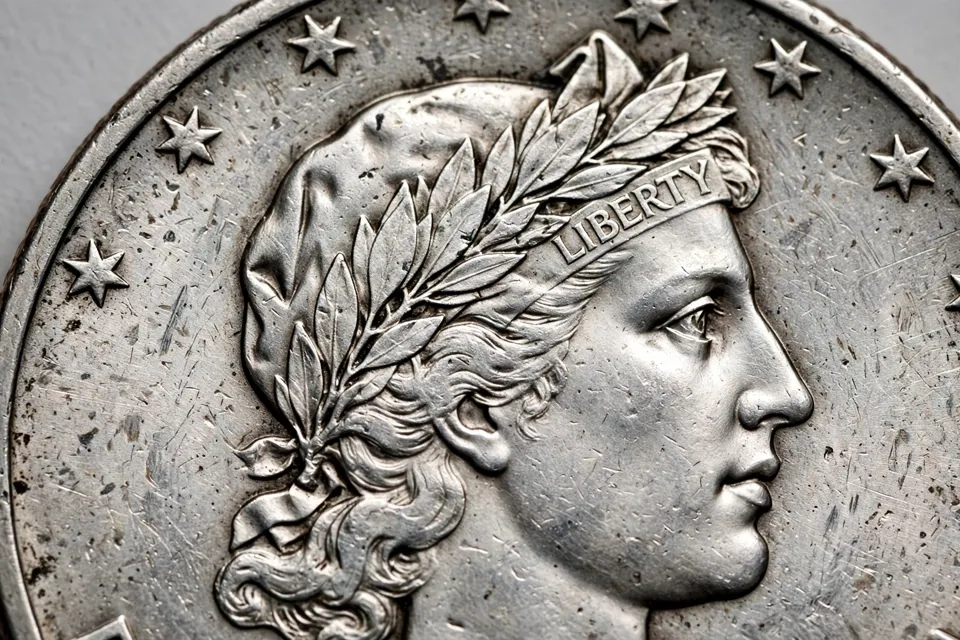
Start with the date itself: all four digits must be sharp and correctly spaced, with the 4 in its period style. The most common problem on a 1914 is not a fake but a coin whose date has worn nearly smooth — a Barber half that spent decades in circulation can lose the top of its digits, and a weak 1914 is easy to misread as a 1911 or a 1910. A loupe and good light settle it; if the date cannot be read with confidence, the coin is a filler, not a key date.
Next, look at the surfaces. Original 1914 halves have a soft grey skin built up over a century; a coin that has been polished to a shine or dipped to brightness has lost the very thing collectors pay for. Check the edge for even reeding and the weight — 12.5 grams — against a scale. A genuine key date with honest wear is worth more than a shiny coin with a story, and a grading service opinion is the cheapest insurance on a date this important.
Why 124,230 is the number that matters
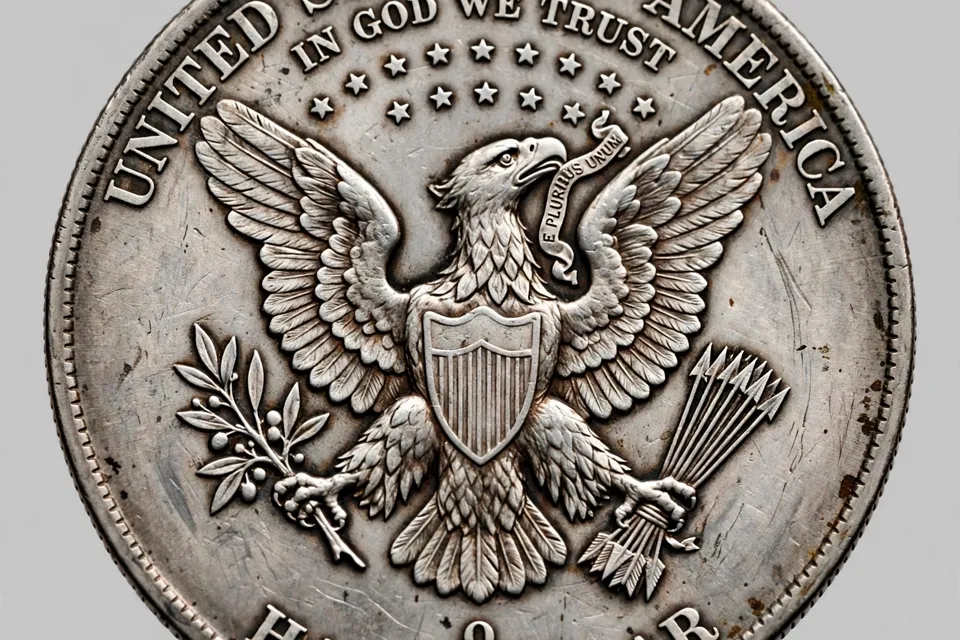
The 1914 mintage of 124,230 is the lowest of any regular-issue Barber half dollar, and it was not an accident. By 1914 the Barber design was twenty-two years old and visibly tired, and the Mint was already thinking about what would replace it — the Walking Liberty half arrived two years later. Demand for new half dollars was low, the economy was sliding toward war, and Philadelphia struck only what was needed.
Low mintage alone does not make a key date — it is low mintage plus survival. The 1914 was struck in small numbers and then spent, like every other half dollar of its day. Nobody set 1914 halves aside in rolls, because nobody in 1914 knew the design was about to end or that this date would be the rarest of the series. The survivors are the coins that happened to be kept, or that wore slowly in a drawer, and there are not many of them.
The 1914 in a Barber set — the last coin most collectors find
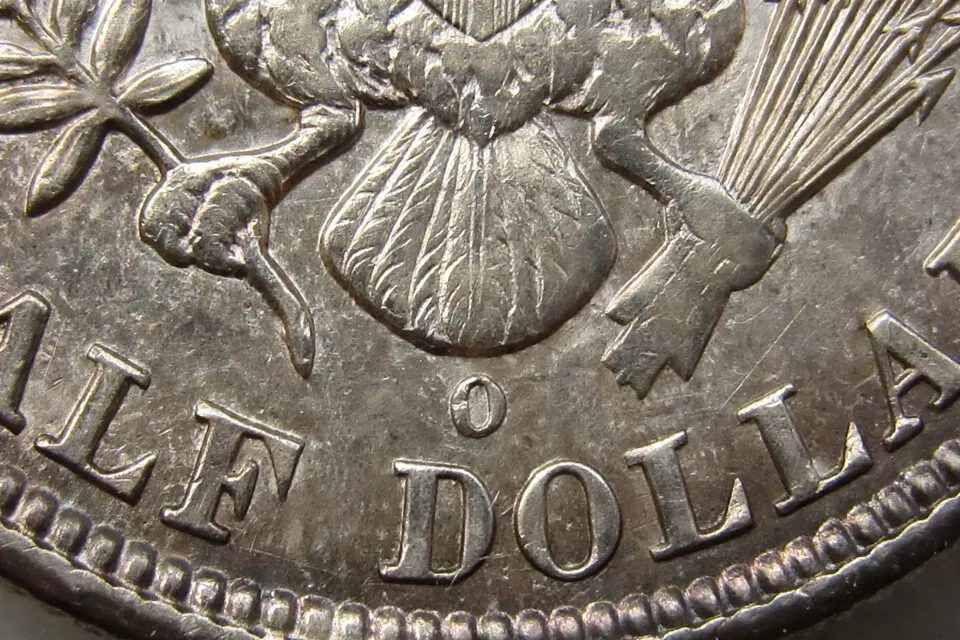
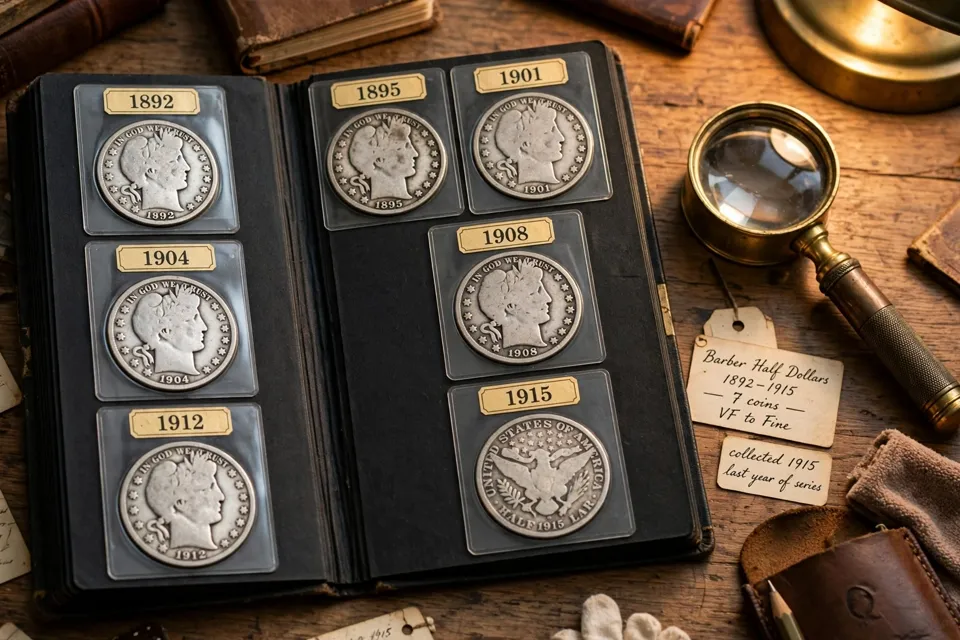
Ask a Barber half collector which date took longest to find, and the answer is usually the 1914. It is the coin that sits empty in the album while the rest of the set fills in around it, because it is scarce in every grade and the figure climbs steeply with condition. A worn 1914 is already a serious purchase; a Mint State one is a coin that changes hands rarely and quietly.
That is also why the 1914 is the most faked date in the series after the 1892-O Micro O. The usual trick is altering the date on a common 1914-D or 1914-S — or on a 1911 or 1915 — and the defence is the same: weigh it, check the mint mark position, and look at the surfaces under a loupe. A genuine 1914 has no mint mark at all, which makes an added mint mark easy to spot, but a changed date is harder. Certification is the only sure answer, and for the 1914 it is money well spent.
What a 1914 Barber Half Philadelphia key is worth by grade
Our guide has not yet researched grade-by-grade estimates for this date, so every cell below shows “—” rather than a guessed figure. The live system fills these cells the moment research or a newly reported result lands. Figures on this page are reviewed November 5, 2026.
| Grade | Estimated value |
|---|---|
| Good (G-4) | — |
| Fine (F-12) | — |
| Extremely Fine (XF-40) | — |
| About Uncirculated (AU-50) | — |
| Mint State 60 (MS-60) | — |
| Mint State 65 (MS-65) | — |
No researched grade figures exist for the 1914 yet, which is the honest position for a coin whose market is thin at the top. What is certain is its standing: the lowest mintage of the regular Barber half series at 124,230, and the key date every Barber set needs.
Silver, specs, and the floor under the key date
Every Barber half from 1892 through 1915 is 90% silver. The coin weighs 12.5 grams and carries 0.36169 troy ounces of pure silver. The live metal floor for this coin is $18.83 — it moves with the live silver market, so the figure updates on every load rather than standing still.
Metal floor updates live from our Worker — last updated November 7, 2026.
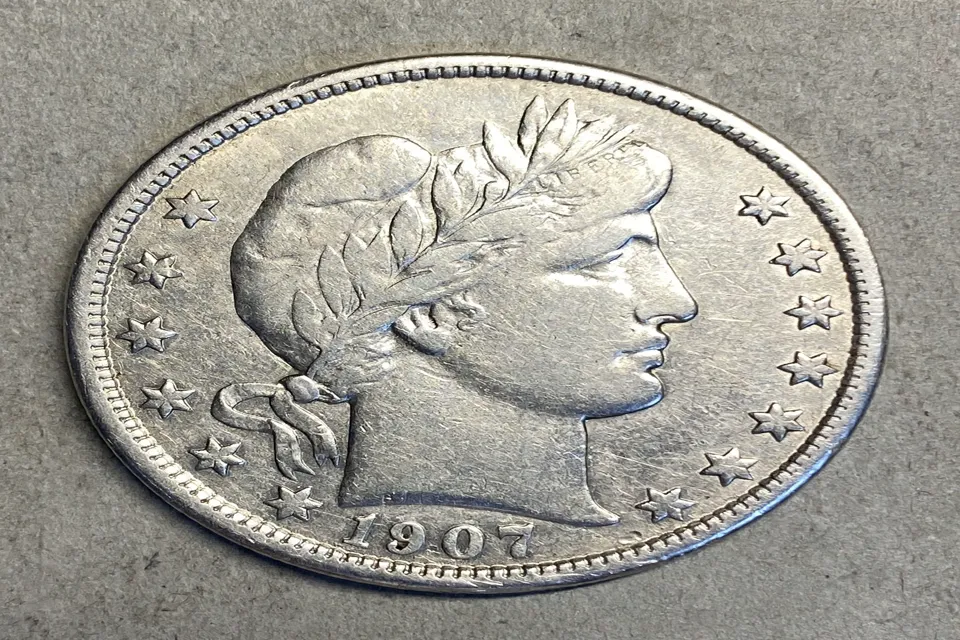
Charles E. Barber's Liberty head fills the obverse — a Phrygian cap, a laurel wreath, and the date — while the reverse carries the heraldic eagle with outstretched wings and a shield. Diameter 30.6 millimetres, reeded edge, and the mint mark on the reverse below the eagle, under the tail feathers.
Verified auction records
Our auction data holds no verified historic record for this date yet — no figure here is guessed. The box below checks for newly reported results on every load, so the first verified result for this coin will appear there.
Latest reported results for this coin
Checking for newly reported results…
Your 1914 Barber Half Philadelphia key questions, answered
How much is a 1914 Barber half dollar worth?
Our guide has not yet researched grade-by-grade estimates for the 1914, so the table shows dashes. Key dates in the series rise far above common dates at every grade, and the 1914 is the key date — there is no cheap example in any grade.
Why is the 1914 Barber half the key date?
Philadelphia struck only 124,230 halves in 1914, the lowest mintage of any regular-issue Barber half. Demand was low near the end of the design's life, few coins were set aside, and most survivors circulated hard for decades.
How many 1914 Barber halves were struck?
The Philadelphia Mint struck 124,230 Barber halves in 1914. That figure is the series low for a regular issue, and it is why the 1914 anchors every Barber half date set.
Is the 1914 Barber half silver?
Yes. Every Barber half from 1892 through 1915 is 90% silver, weighing 12.5 grams with 0.36169 troy ounces of pure silver — worth the live metal floor shown in the specs section below, which moves with the live silver market.
How do I tell a real 1914 Barber half from a worn common date?
Read all four digits under a loupe in good light — a worn 1914 can be misread as a 1911 or 1910. Check the weight at 12.5 grams, the even reeding, and the original grey surfaces, and get a professional opinion before any decision on a coin this important.
Check your 1914
Run the date and mint mark through the free Coin Value Checker for an instant estimate, or get a Grade-or-Not verdict on whether your coin is worth certifying. The full series guide is here: Barber Half Dollars Worth $20 to $199,750+.
Written for the collector staring at a date set with one empty hole — the 1914 is the hole, and the mintage is the reason. This guide is for education — learn the coin first, and get a professional opinion before buying or selling.