1915 Barber Half: Final-Year Issue Worth a Look
Coin Encyclopedia · 8 min read · Published November 7, 2026
The 1915 Barber half is the last of its kind. Philadelphia struck 138,450 of them, and then the Barber half was finished — replaced in 1916 by Adolph Weinman's Walking Liberty, one of the most admired designs in American coinage. Final-year coins always draw collectors, and the 1915 earns that attention honestly: a low mintage, the closing date of a twenty-four-year series, and a coin that most people spent without a second thought.
This guide treats the 1915 as a closing chapter, not just a date. It covers the final-year mintage, the transition to the Walking Liberty design, the grade table as it stands, and the silver floor. Our catalog has not yet researched grade-by-grade estimates for the 1915, so the table shows dashes — but the final-year story needs no estimate to matter.
The last year of a twenty-four-year design
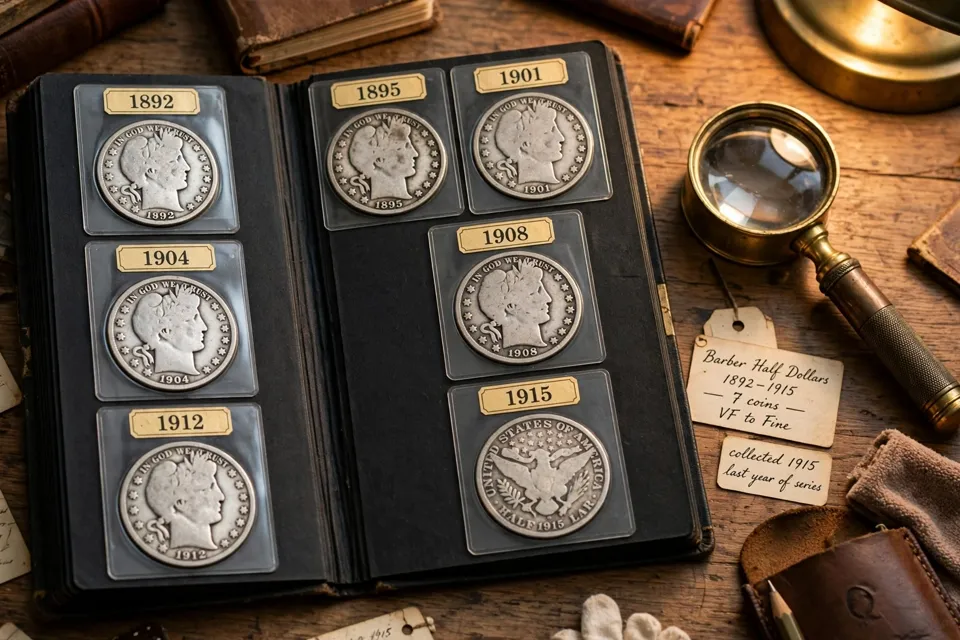
Charles Barber's half dollar ran from 1892 to 1915, and by its final year the design was already an antique in the eyes of its critics. The Mint had spent the early 1910s debating new coinage, and the artistic renaissance that produced the Mercury dime, the Standing Liberty quarter, and the Walking Liberty half was already under way. Philadelphia struck 138,450 Barber halves in 1915 — a small run, second only to the 1914 key date — and the presses moved on.
Final-year coins carry a particular appeal: they are the last chance to own a design as it was struck for circulation, and they sit at the end of every date set. The 1915 is not the key date — the 1914 holds that title — but it is the bookend, and bookends matter to collectors. A set that runs 1892 to 1915 feels complete in a way that a set stopping at 1914 does not, and the 1915 is the coin that finishes it.
From Barber to Walking Liberty — what changed in 1916
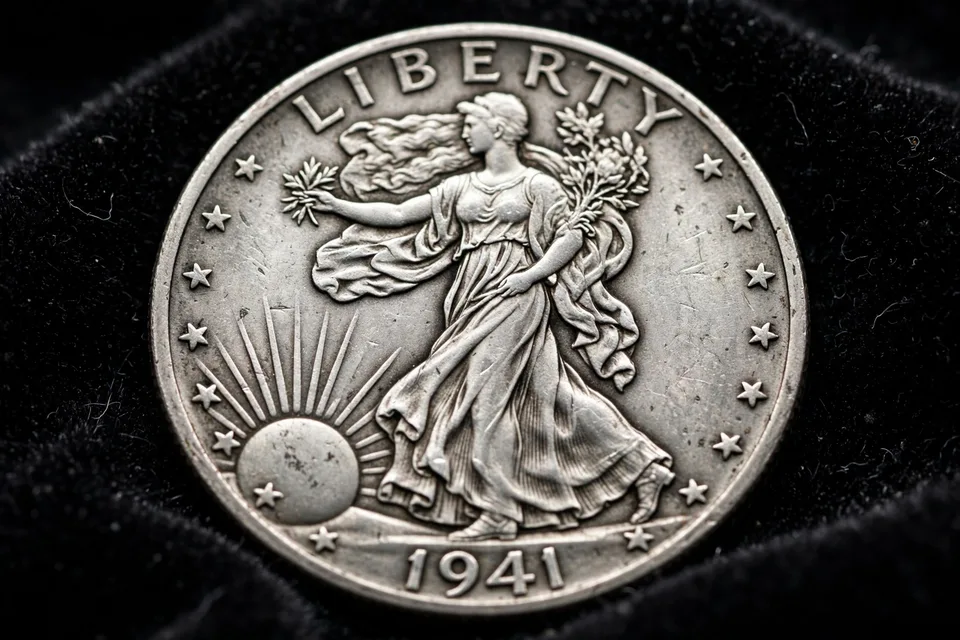
The design that replaced the Barber half could hardly have been more different. Where Barber's Liberty is a formal head in a cap, Weinman's Liberty strides toward the sun with a branch in one hand and the flag over her shoulder — a coin that looks like it is moving. The Mint made the change because the Barber designs, serviceable as they were, no longer matched the artistic ambitions of the era, and the 1915 is the last coin of the old way of thinking.
Collectors often own the 1915 and the 1916 side by side, and the pair tells the story of American coinage in a single flip of the wrist: the nineteenth-century mint's workhorse giving way to the twentieth century's showpiece. The 1915 does not need to compete with the 1916 on beauty. Its appeal is historical — it is the last Barber half, struck in a year when the Mint already knew what came next.
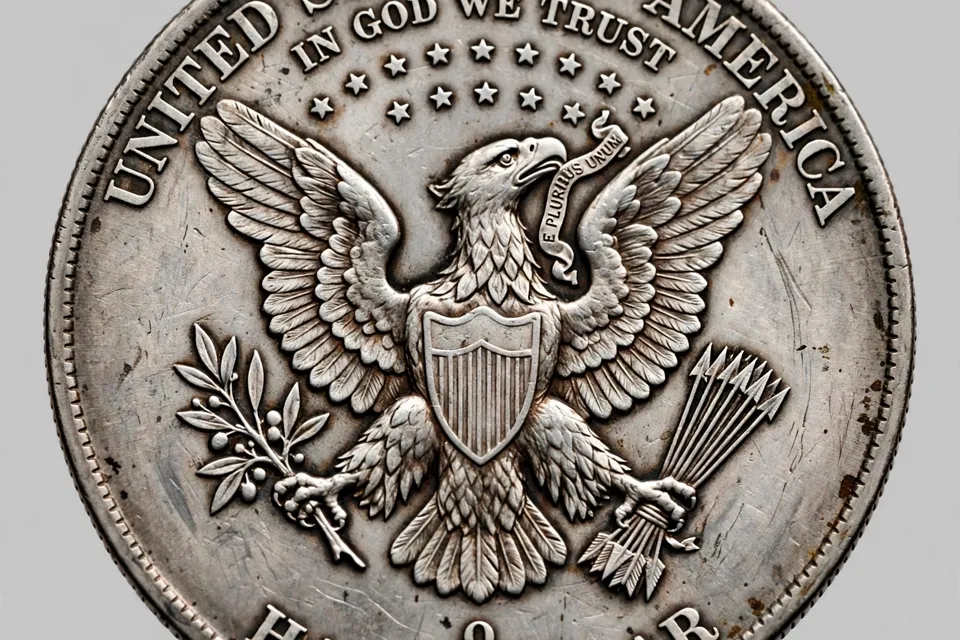
The last year of a twenty-four-year design
The 1915 is the final Barber half dollar, struck in the last full year of Charles Barber's design. The Mint had been using his Liberty head since 1892, and by 1915 it looked old-fashioned next to the new designs coming out of the sculptors' studios — Weinman's Walking Liberty was already on the drawing board and would replace it in 1916. The 1915 was struck in small numbers, 138,450 at Philadelphia, because demand for half dollars was low and the design's days were numbered.
Final-year coins carry a pull that has nothing to do with mintage. Collectors want the last of a series the way they want the first: it closes the set, and a set without its final coin feels unfinished. The 1915 benefits from that twice over — it is both the final year and a low-mintage date, the second-lowest of the regular series. A worn 1915 is a modest coin; a Mint State one is scarce, because few were saved and fewer survived the century in high grade.
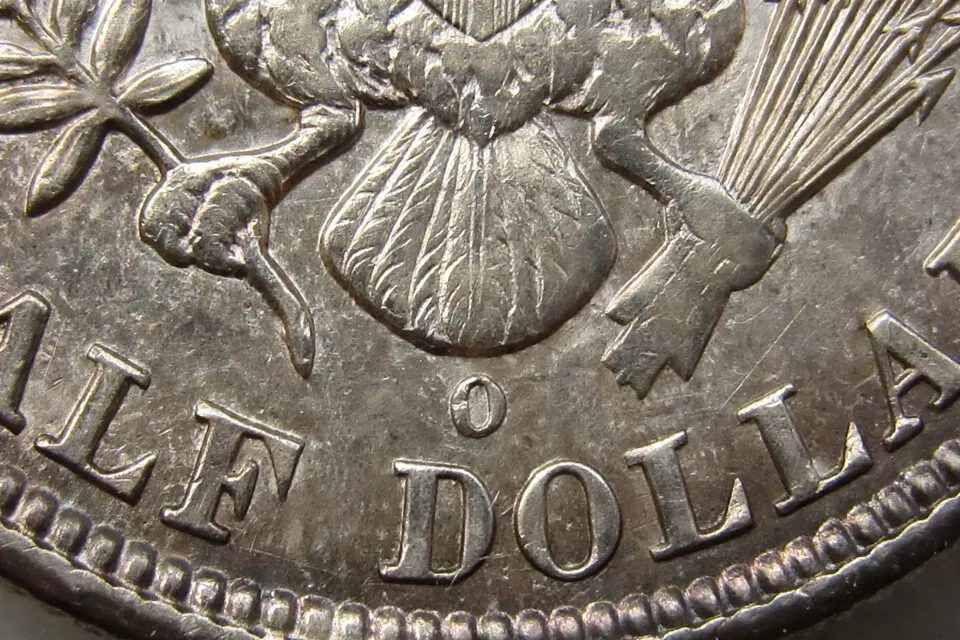
Philadelphia in 1915 — a mint in transition
The Philadelphia Mint in 1915 was a place in transition. It was striking the last Barber halves, the last Barber dimes and quarters, while new designs were being prepared across the board. The Barber coinage had been a workhorse for two decades, but the Mint's own engravers knew it was done — the designs that replaced it, Weinman's Mercury dime and Walking Liberty half and MacNeil's Standing Liberty quarter, were the product of a competition the Mint had run to find something better.
That context is what gives the 1915 its quiet appeal. It is not a dramatic rarity like the Micro O or a famous key like the 1914, but it is the end of an era in a small, honest package. Collectors who build Barber sets by date and mint mark eventually need one, and collectors who collect final-year issues want one for the same reason. It rewards the patient rather than the loud.
What a 1915 Barber Half Final year is worth by grade
Our guide has not yet researched grade-by-grade estimates for this date, so every cell below shows “—” rather than a guessed figure. The live system fills these cells the moment research or a newly reported result lands. Figures on this page are reviewed November 5, 2026.
| Grade | Estimated value |
|---|---|
| Good (G-4) | — |
| Fine (F-12) | — |
| Extremely Fine (XF-40) | — |
| About Uncirculated (AU-50) | — |
| Mint State 60 (MS-60) | — |
| Mint State 65 (MS-65) | — |
No researched grade figures exist for the 1915 yet. What is certain is the mintage — 138,450, the second-lowest of the regular series — and the final-year status, which keeps collector demand steady even while the grade table waits for research.
Silver, specs, and the floor under the final Barber half
Every Barber half from 1892 through 1915 is 90% silver. The coin weighs 12.5 grams and carries 0.36169 troy ounces of pure silver. The live metal floor for this coin is $18.83 — it moves with the live silver market, so the figure updates on every load rather than standing still.
Metal floor updates live from our Worker — last updated November 7, 2026.
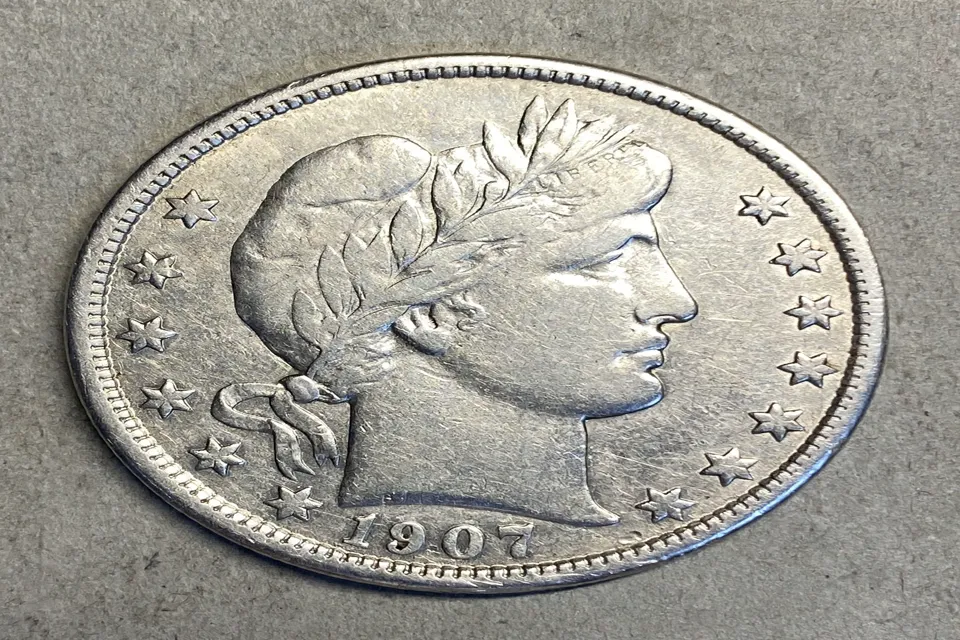
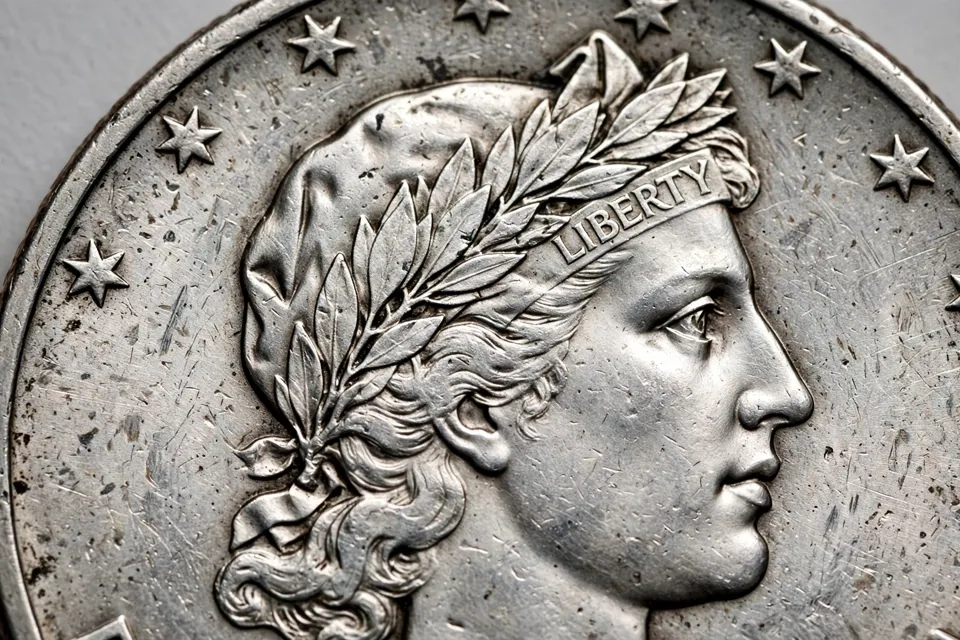
Charles E. Barber's Liberty head fills the obverse — a Phrygian cap, a laurel wreath, and the date — while the reverse carries the heraldic eagle with outstretched wings and a shield. Diameter 30.6 millimetres, reeded edge, and the mint mark on the reverse below the eagle, under the tail feathers.
Verified auction records
Our auction data holds no verified historic record for this date yet — no figure here is guessed. The box below checks for newly reported results on every load, so the first verified result for this coin will appear there.
Latest reported results for this coin
Checking for newly reported results…
Your 1915 Barber Half Final year questions, answered
How much is a 1915 Barber half dollar worth?
Our guide has not yet researched grade-by-grade estimates for the 1915, so the table shows dashes. Worn Barber halves generally trade near their silver floor, with the low-mintage final year carrying a premium that grows with grade.
How many 1915 Barber halves were struck?
The Philadelphia Mint struck 138,450 Barber halves in 1915, the final year of the series. Only the 1914 key date, at 124,230, had a lower regular-issue mintage.
Why does the final year matter for the 1915 Barber half?
The 1915 closed a twenty-four-year series, and final-year coins always draw collectors as the bookend of a date set. It was replaced in 1916 by the Walking Liberty half, one of the most admired designs in American coinage.
Is the 1915 Barber half silver?
Yes. Every Barber half from 1892 through 1915 is 90% silver, weighing 12.5 grams with 0.36169 troy ounces of pure silver — worth the live metal floor shown in the specs section below, which moves with the live silver market.
How do I tell a 1915 Barber half from other dates?
Read the date under a loupe — all four digits should be clear — and check the reverse for a mint mark below the eagle. Philadelphia coins carry no mint mark, so a 1915 with no mint mark is the Philadelphia final-year issue.
Check your 1915
Run the date and mint mark through the free Coin Value Checker for an instant estimate, or get a Grade-or-Not verdict on whether your coin is worth certifying. The full series guide is here: Barber Half Dollars Worth $20 to $199,750+.
Written for collectors who like endings — the 1915 is the last Barber half, and the date on it is the whole point. This guide is for education — learn the coin first, and get a professional opinion before buying or selling.