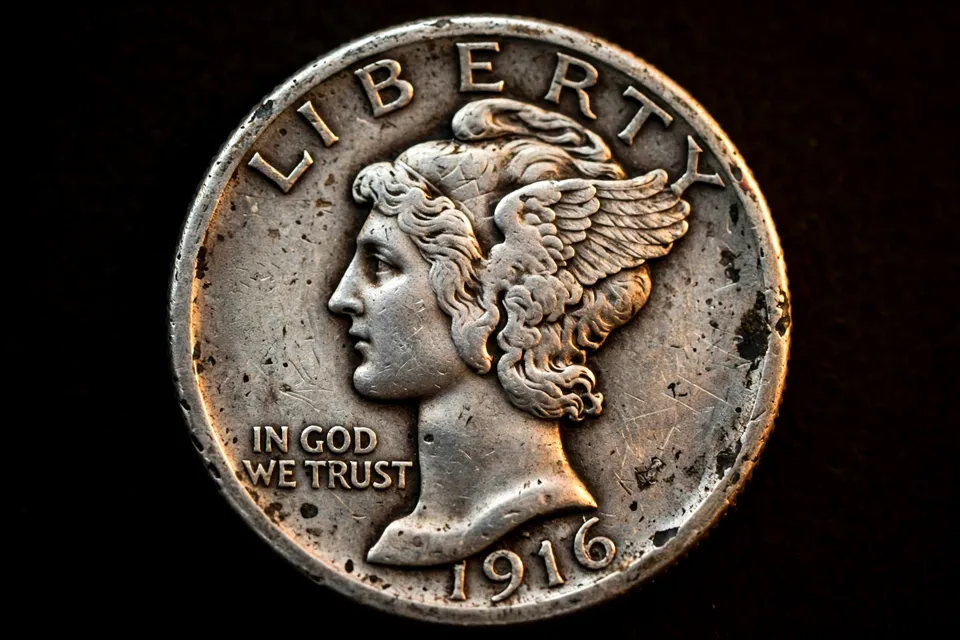
1921-D Mercury Dime Worth: Why Denver Struck So Few
Coin Encyclopedia · 7 min read · Published November 7, 2026
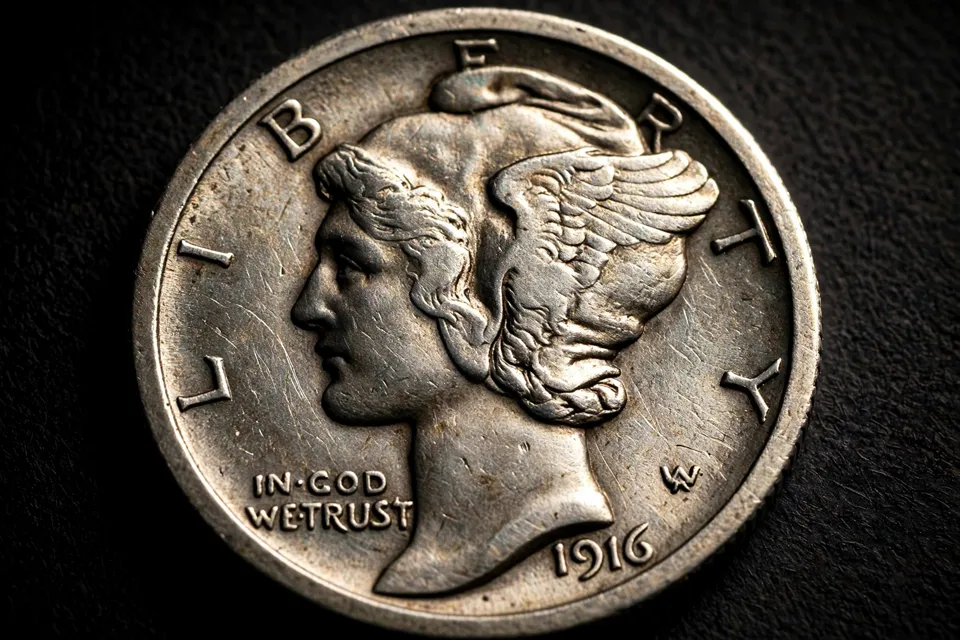
Denver struck 1,080,000 Mercury dimes in 1921, and that number makes the 1921-D the second-lowest mintage in the whole series — behind only the 1916-D, and ahead of every other date by a wide margin. Our guide holds no researched figure for it yet — the grade table below shows dashes, not guesses. It is a key date by mintage alone, and the market has treated it as one for generations.
The 1921-D is also the Mercury key most often faked, because the fake is so simple: a common 1921 Philadelphia dime with a D added to the reverse. This page works through the mintage, the grade table, the bands, and the mint-mark check that separates a genuine Denver key date from a doctored common coin.
Denver’s smallest Mercury mintage
The Denver Mint in 1921 was a small operation serving the Mountain West, and in a recession year it needed very few dimes. Its 1,080,000 coins compare with the 264,000 of the 1916-D — the only Mercury mintage lower — and with the tens of millions Philadelphia struck in ordinary years. Denver’s output went straight into circulation across Colorado, Wyoming, Utah, and Montana, where it wore down fast in daily use.
That circulation is the second half of the story. A low mintage only matters if the survivors are scarce, and the 1921-D’s survivors are scarce because almost nobody set one aside in 1921. Mercury dimes were new, unremarkable pocket change, not keepsakes. By the time collectors began saving them systematically, the crisp 1921-D examples were mostly gone — worn down, melted in the great silver melts, or simply lost.
What a 1921-D Mercury dime is worth by grade
The table below comes from our Mercury dime guide. No grade of this date is researched yet, so every row shows “—”, not a guess.
| Grade | Estimated value |
|---|---|
| Good (G-4) | — |
| Fine (F-12) | — |
| Extremely Fine (XF-40) | — |
| About Uncirculated (AU-50) | — |
| Mint State 60 (MS-60) | — |
| Mint State 65 (MS-65) | — |
Guide values reviewed November 5, 2026 — figures update live from our Worker.
The shape of this date is simple: wear is common, original lustre is not, and a fully struck example is a genuinely scarce coin.
Compare that with the 1921 Philadelphia issue, covered on its own page: the Denver coin is rarer at every grade, because its mintage is lower and its survivors are fewer. The live figures above update from our Worker as new results are reported.
The D that changes everything
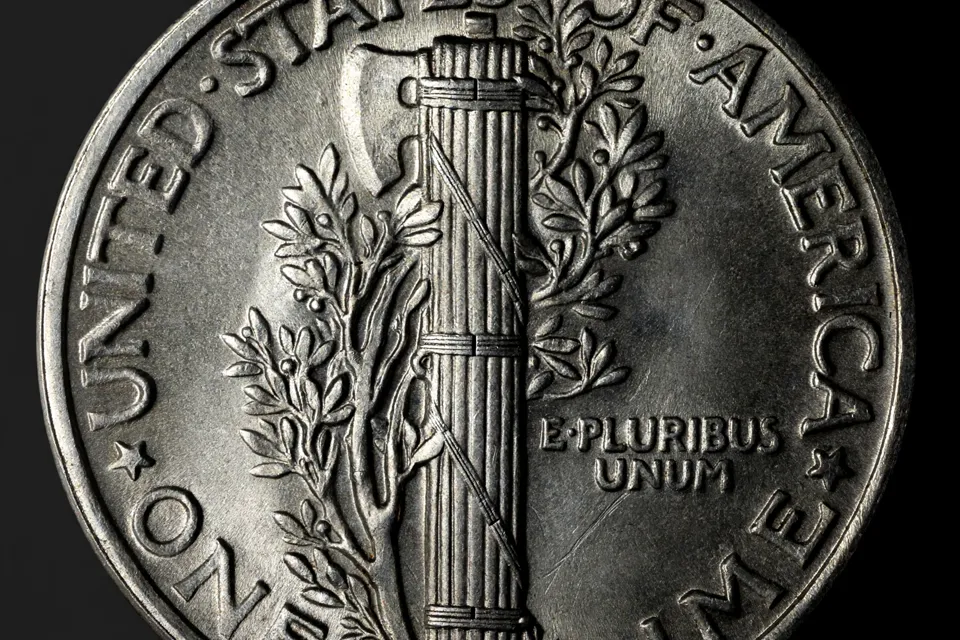
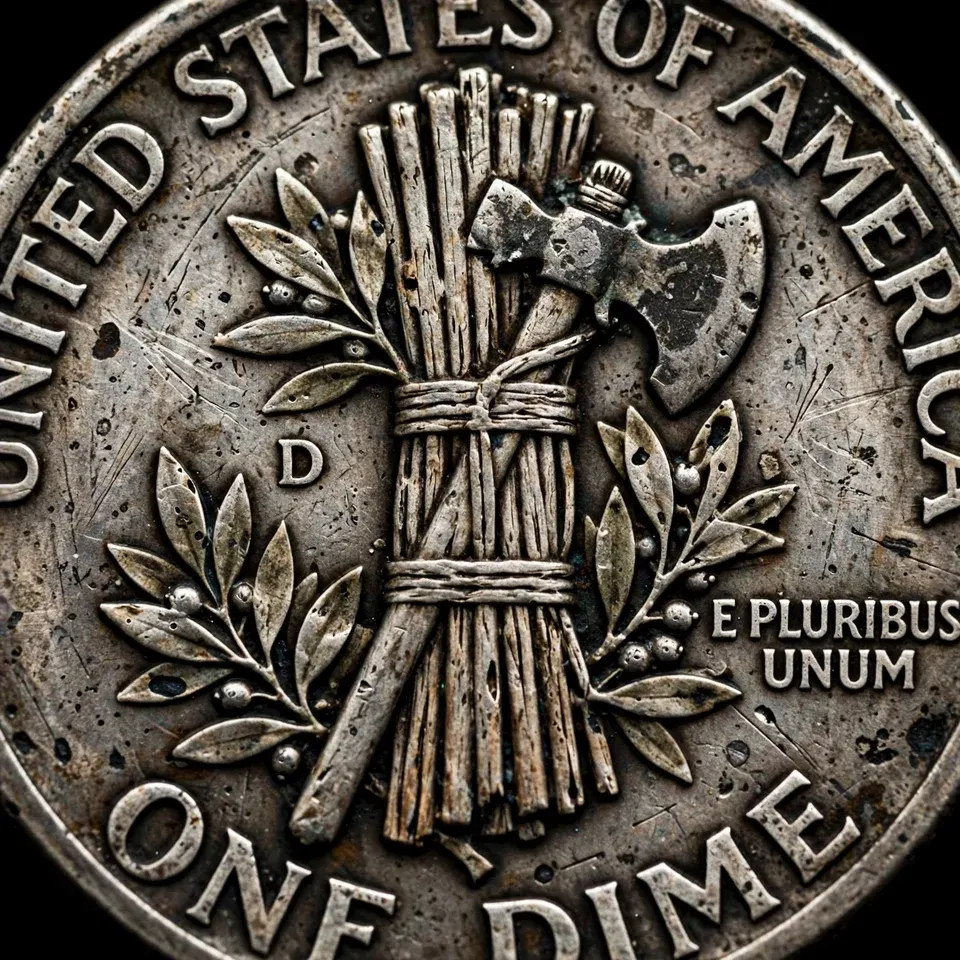
On a Mercury dime the mint mark sits on the reverse, low on the left beside the fasces near the rim. D means Denver, S means San Francisco, and no letter means Philadelphia. A 1921 Philadelphia dime is the key date covered on its own page; a 1921-D is rarer still. The letter is the entire difference, and it is small — a 5x to 10x loupe is the right tool for reading it.
That small letter is also the oldest trick in the series. An added D is usually betrayed by tool marks in the metal around the letter, by a letter that sits too high, too shallow, or at the wrong angle, or by a D whose shape does not match a genuine Denver punch. A genuine D is crisp, correctly placed, and struck at the same depth as the rest of the design. If the D looks wrong, it is wrong — and the coin is a common 1921 Philadelphia dime with a story attached.
Why Full Bands is so hard on this date
The 1921-D is known among Mercury collectors for soft strikes. The central bands of the fasces rarely come up fully split, and the detail in Liberty’s hair is often shallow even on coins that never circulated. That softness is a strike characteristic, not wear — and it is why a 1921-D with genuinely full bands is a coin apart from the rest of its date.
Judge the bands under a single light, tilting the coin slowly. Full Bands means the middle band is split into two clean lines across its whole width, with a visible gap between them. On the 1921-D, most Mint State examples fail that test, which is why a genuinely Full Bands example sits at the very top of the date. A coin with flat, lifeless bands and dull surfaces is not a Full Bands coin that merely looks tired — it is a different coin at a different value.
Specs and the silver floor
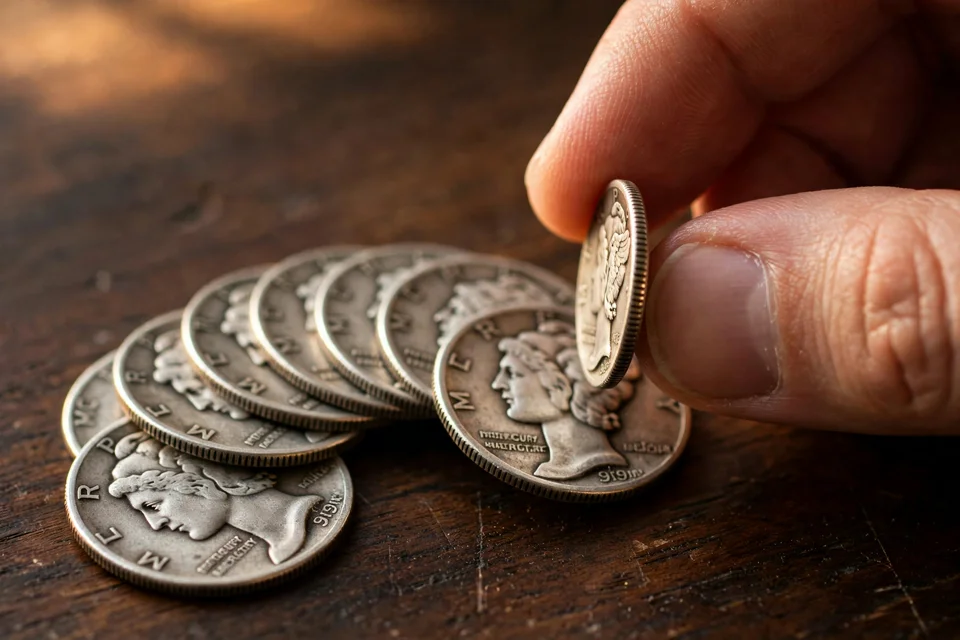
Under the key-date premium, the 1921-D is a standard Mercury dime: 90% silver and 10% copper, 2.5 grams, 17.9 millimetres across, with 0.07234 troy ounces of pure silver — about $3.77 at the November 2026 silver level near $52.07 an ounce. The series ran from 1916 to 1945 to the design of Adolph A. Weinman, before the Roosevelt dime replaced it.
Metal floor updates live from our Worker — last updated November 7, 2026.
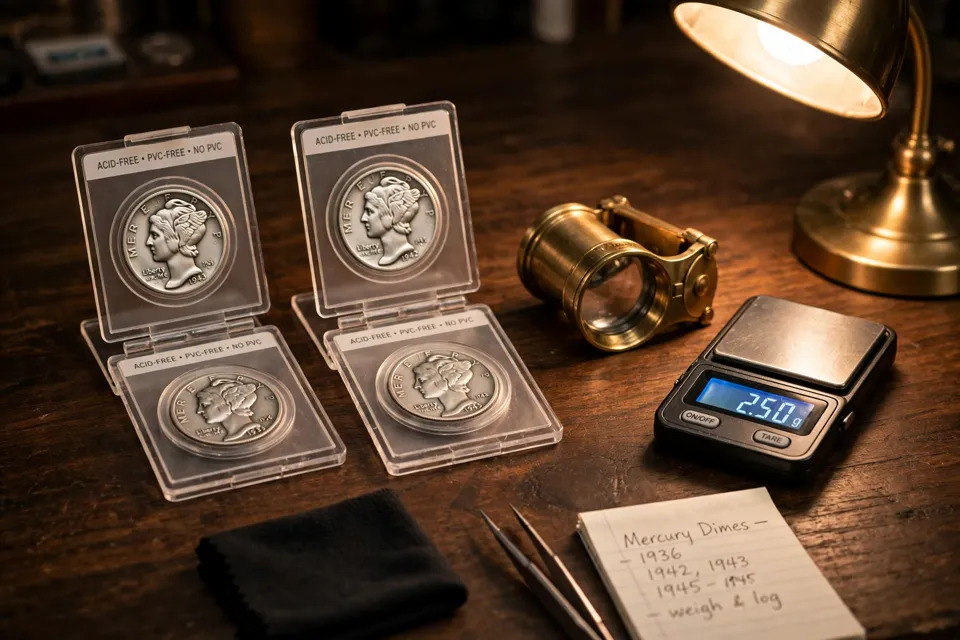
Weigh it first: a genuine Mercury dime is exactly 2.5 grams, and a cast copy feels light and often shows tiny bubbles or seams under magnification. The silver edge should be solid grey with no copper stripe, and the reeding should be sharp and even all the way around.
Verified auction records
No standalone record for the 1921-D sits in our verified records file. The series record belongs to the 1916-D: a Mint State 67 Full Bands example that reached $207,000 at Heritage in August 2010. That figure describes a single coin in the finest known grade, not this date — the grade table above, and the live results panel below it, are the honest measures for the 1921-D.
For scale, the 1921-D’s market is steadier than the 1916-D’s: worn examples trade regularly, Mint State examples trade rarely, and each appearance is valued on its own merits rather than against a record.
Latest reported results for this coin
Checking for newly reported results…
Your 1921-D Mercury dime questions, answered
How much is a 1921-D Mercury dime worth?
Our Mercury dime guide holds no researched figure for the 1921-D yet, so the grades show as — in the table above until live results fill them in.
Why is the 1921-D rarer than the 1921 Philadelphia dime?
Denver struck only 1,080,000 in 1921, against Philadelphia’s 1,230,000 — and the 1921-D is the second-lowest mintage in the whole Mercury series, behind only the 1916-D at 264,000.
How do I spot an added D on a 1921 Mercury dime?
Check the mint mark under a loupe: a genuine D sits low on the left beside the fasces, crisp and at the right depth. An added D often shows tool marks around the letter, or sits too high, too shallow, or at the wrong angle. Weigh the coin too — a genuine Mercury dime is exactly 2.5 grams.
Is the 1921-D Mercury dime silver?
Yes. Every Mercury dime dated 1916 to 1945 is 90% silver, with 0.07234 troy ounces of pure silver. The live metal floor for this coin is in the specs section above.
What does Full Bands mean on a 1921-D?
Full Bands means the middle horizontal band of the fasces is fully split into two clean lines across its whole width. It applies only to Mint State coins, and the 1921-D is famous for soft strikes, so a genuinely Full Bands example sits at the very top of the date.
Check your 1921-D
Run the date and mint mark through the free Coin Value Checker for an instant estimate, or get a Grade-or-Not verdict on whether your coin is worth certifying. The full series guide is here: Mercury Dime Values: 1916-D, Full Bands & $207,000+ Records.
Written for the hunt: the 1921-D is the Mercury key most often faked and most often missed, and this guide exists so the next one found gets its mint mark checked before any money changes hands.
This guide is for education — learn the coin first, and get a professional opinion before buying or selling.