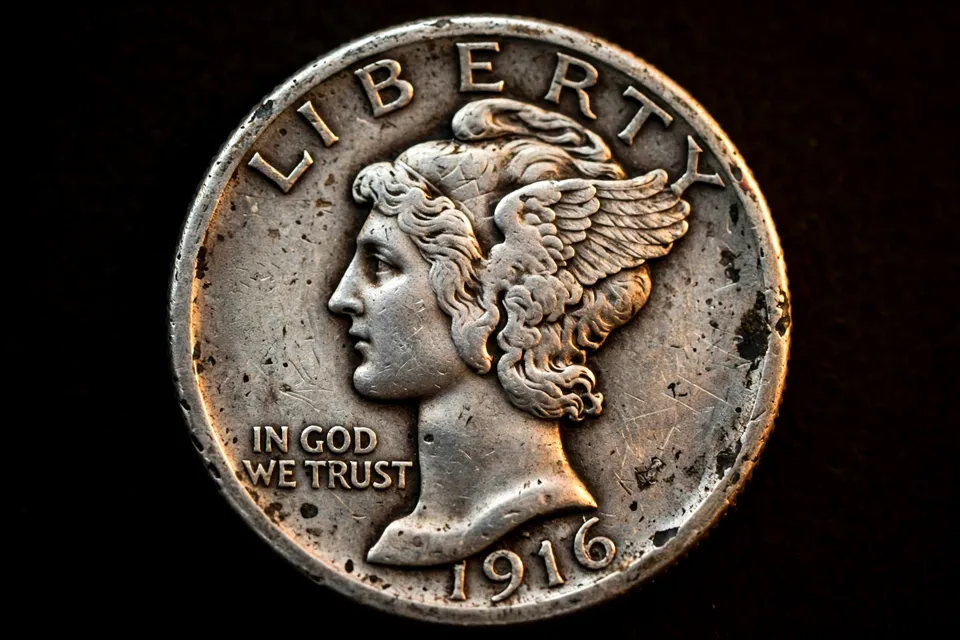
1921 Mercury Dime: The Recession That Starved the Mint
Coin Encyclopedia · 7 min read · Published November 7, 2026
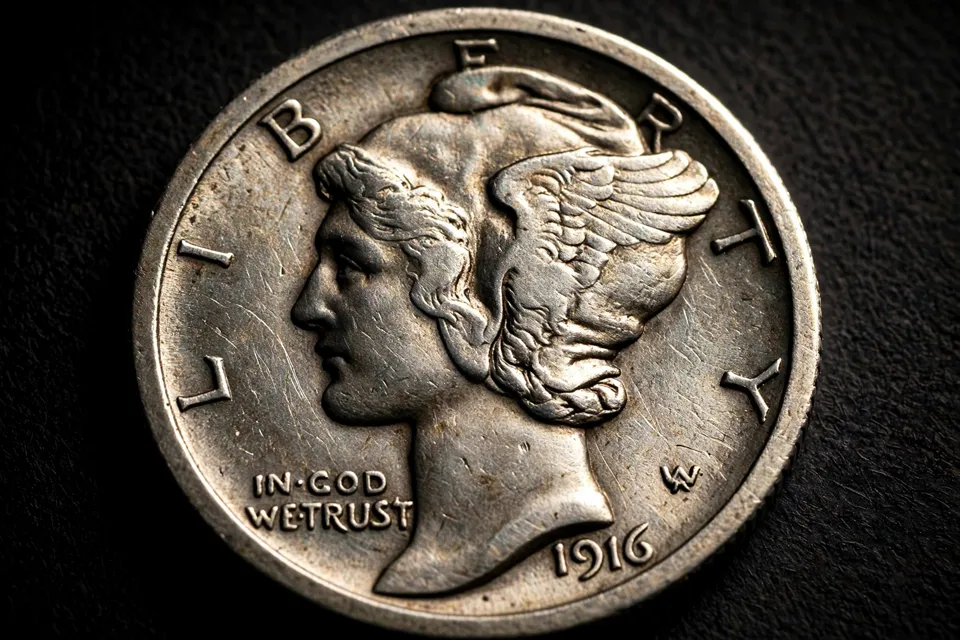
Most Mercury dimes are common silver coins worth a few dollars. The 1921 Philadelphia dime is not one of them. In the sharp recession that followed the First World War, the Philadelphia Mint struck just 1,230,000 Mercury dimes — a fraction of the tens of millions it struck in surrounding years — and the survivors have carried a premium ever since. Our guide holds no researched figure for this date yet, so the grade table below shows dashes, not guesses.
The 1921 is the quiet key date of the Mercury series. It has no dramatic story, no famous error, and no mint mark to hunt for — the Philadelphia issue carries no letter at all. What it has is a small mintage, a hard recession, and a grade curve that rewards anyone who checks the date before spending the coin. This page covers the mintage, the identification, and the Full Bands test that decides the top end.
A recession year at the Philadelphia Mint
The recession of 1920 to 1921 was short and brutal. After the wartime boom, demand collapsed, values fell, and the Mint cut coin production across the board. Dimes were struck to meet commerce, not to fill collector albums, and in a year when shops were quiet and pay packets were thin, Philadelphia needed far fewer of them. The 1,230,000 dimes it struck in 1921 stand against the tens of millions of the years on either side — and that gap is the whole reason this date carries a premium a century later.
The same squeeze hit every denomination in 1921. It is the year of the last Morgan dollars and the first Peace dollars, the year the Mint was stretched between two silver dollar designs, and the year small coinage took a back seat. Collectors remember 1921 as a year of low mintages everywhere; the Mercury dime is simply the smallest coin in that story, and the easiest to overlook in a jar of silver.
What a 1921 Mercury dime is worth by grade
The table below comes from our Mercury dime guide. No grade of this date is researched yet, so every row shows “—”, not a guess — and on this date the unresearched grades are exactly where a certified opinion earns its fee.
| Grade | Estimated value |
|---|---|
| Good (G-4) | — |
| Fine (F-12) | — |
| Extremely Fine (XF-40) | — |
| About Uncirculated (AU-50) | — |
| Mint State 60 (MS-60) | — |
| Mint State 65 (MS-65) | — |
Guide values reviewed November 5, 2026 — figures update live from our Worker.
The shape of this date is a low-mintage coin that circulated hard: worn examples survive in reasonable numbers, but crisp, lustrous ones were almost never set aside.
Read the table as a range, not a promise. A 1921 dime with soft bands, dull surfaces, or a cleaning will sit at the bottom of its grade; a sharply struck example with original lustre sits at the top. The live figures above update from our Worker as new results are reported, so the numbers you see here are the latest our system holds.
Reading the date and the mint mark
The 1921 Philadelphia dime carries no mint mark. On a Mercury dime the mint mark sits on the reverse, low on the left beside the fasces near the rim — D for Denver, S for San Francisco, and nothing at all for Philadelphia. A 1921 with no letter beside the fasces is the Philadelphia issue, the key date of this page. A 1921 with a D is the Denver issue, covered on its own page here, and it is rarer still.
Check the date first, then the mint mark, then the bands — in that order, every time. The date on a Mercury dime sits on the obverse at the lower right, and on a worn 1921 it can be soft. A 10x loupe settles it: the 1, the 9, the 2, and the final 1 should each be readable, and the last digit is the one that separates a 1921 from a common 1924 or 1927. Never guess a date on a worn dime; the difference is the whole value of the coin.
The Full Bands test
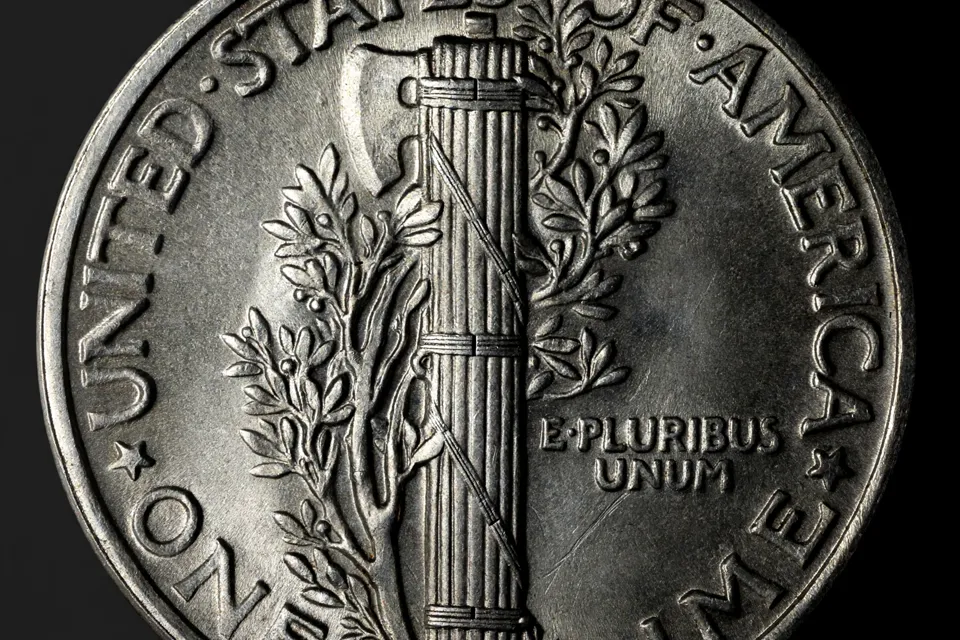
Turn the coin over and find the fasces, the bundle of rods on the reverse. Three horizontal bands wrap the bundle, and on a sharply struck example the middle band splits cleanly into two distinct lines with a visible gap between them. That is Full Bands, marked FB by the grading services, and it applies only to Mint State coins. On common dates the designation roughly doubles the value; on a low-mintage date like the 1921 it decides whether the coin sits at the top of its grade or far above it.
Many 1921 dimes show softness in the bands, because the dies of a recession year were worked hard and the strikes vary. Do not confuse a soft strike with wear: wear flattens the high points and dulls the lustre, while a soft strike leaves the lustre intact and the detail simply shallow. A 1921 with full cartwheel lustre and split bands is a genuinely scarce coin, and it is the one collectors hunt for.
Specs and the silver floor
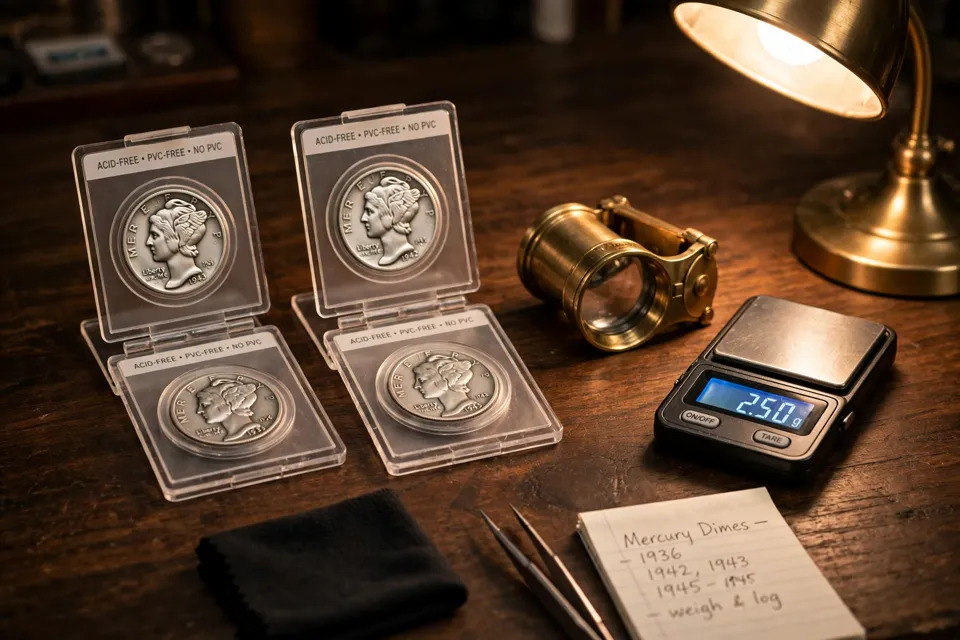
Under the key-date premium, the 1921 is a standard Mercury dime: 90% silver and 10% copper, 2.5 grams, 17.9 millimetres across, with 0.07234 troy ounces of pure silver — about $3.77 at the November 2026 silver level near $52.07 an ounce. The series ran from 1916 to 1945 to the design of Adolph A. Weinman, before the Roosevelt dime replaced it.
Metal floor updates live from our Worker — last updated November 7, 2026.
That silver floor is the safety net under every 1921. Even a heavily worn example never falls to face value, and a genuine example in any grade is worth more than the ten cents stamped on it. The rest of its worth is the mintage, the mint mark, and the grade — in that order.
Verified auction records
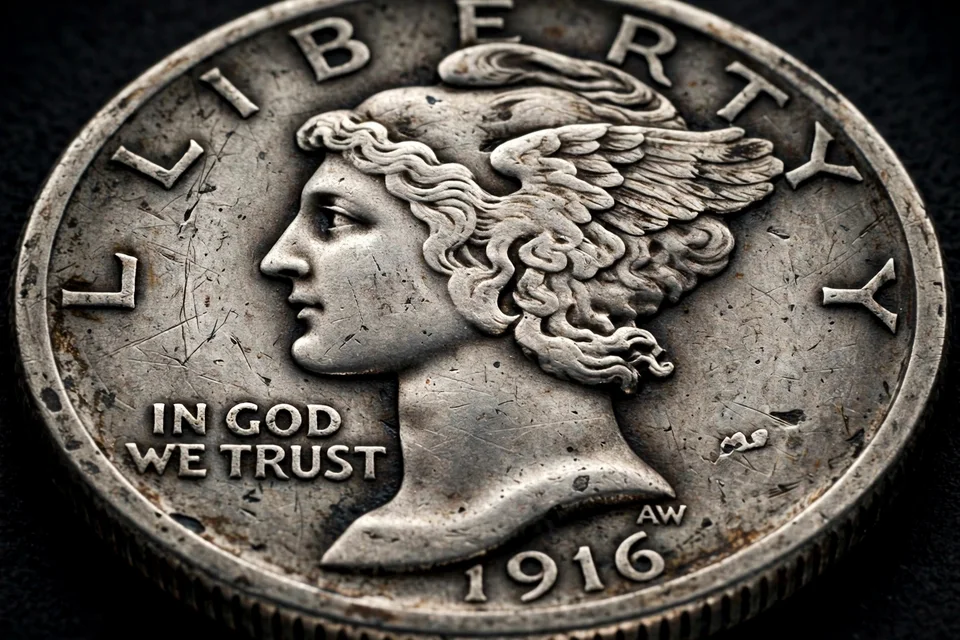
No standalone record for the 1921 Philadelphia dime sits in our verified records file. The series record belongs to the 1916-D: a Mint State 67 Full Bands example that reached $207,000 at Heritage in August 2010. That figure is a different coin in a different league, and it is not a guide to what a 1921 is worth — the grade table above, and the live results panel below it, are the honest measures for this date.
What the 1916-D record does show is the ceiling of the series when mintage, grade, and Full Bands meet in one coin. The 1921 sits well below that ceiling, and its market is steadier for it: worn examples trade regularly, Mint State examples trade rarely, and each appearance is valued on its own merits.
Latest reported results for this coin
Checking for newly reported results…
Your 1921 Mercury dime questions, answered
How much is a 1921 Mercury dime worth?
Our Mercury dime guide holds no researched figure for the 1921 Philadelphia dime yet, so the grades show as — in the table above until live results fill them in.
Why were so few 1921 Mercury dimes struck?
The recession of 1920 to 1921 cut demand for new coinage, and the Philadelphia Mint struck just 1,230,000 dimes that year — a fraction of the tens of millions struck in surrounding years.
How do I tell a 1921 Philadelphia dime from a 1921-D?
Look at the reverse, low on the left beside the fasces. No mint mark means Philadelphia; a D means Denver. The Denver issue is rarer, with a mintage of 1,080,000.
Is my 1921 Mercury dime silver?
Yes. Every Mercury dime dated 1916 to 1945 is 90% silver, with 0.07234 troy ounces of pure silver. The live metal floor for this coin is in the specs section above.
What does Full Bands mean on a 1921 Mercury dime?
Full Bands means the middle horizontal band of the fasces on the reverse is fully split into two clean lines. It applies only to Mint State coins, and on a low-mintage date like the 1921 it decides whether the coin sits at the top of its grade or above it.
Check your 1921
Run the date and mint mark through the free Coin Value Checker for an instant estimate, or get a Grade-or-Not verdict on whether your coin is worth certifying. The full series guide is here: Mercury Dime Values: 1916-D, Full Bands & $207,000+ Records.
Written for the hunt: the 1921 is the Mercury key most likely to be sitting unrecognised in a silver lot, and this guide exists so the next one found gets checked before it is spent.
This guide is for education — learn the coin first, and get a professional opinion before buying or selling.