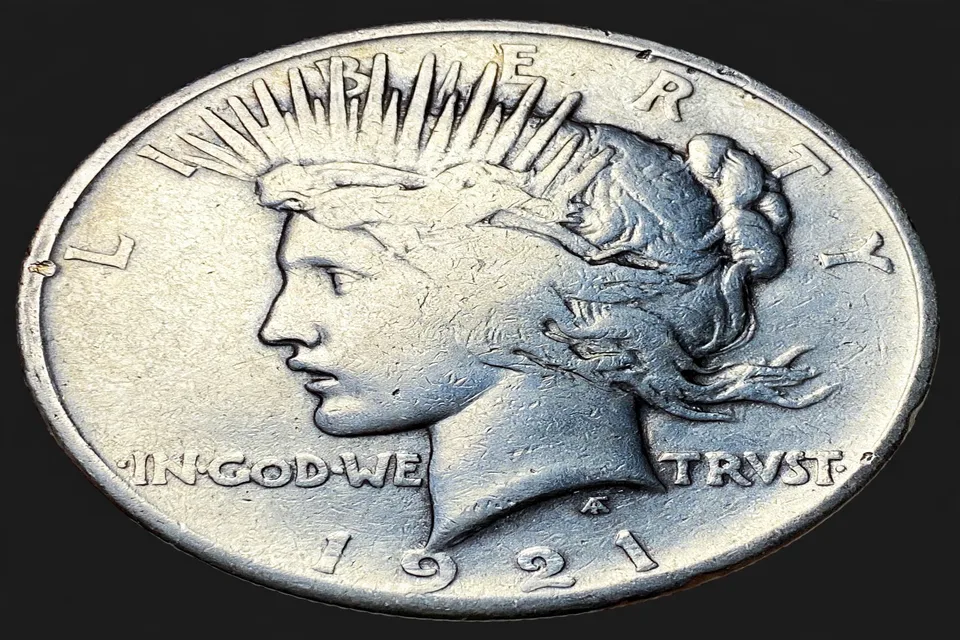
The Lowest-Mintage Peace Dollar: The 1928
Coin Encyclopedia · 9 min read · Published November 7, 2026
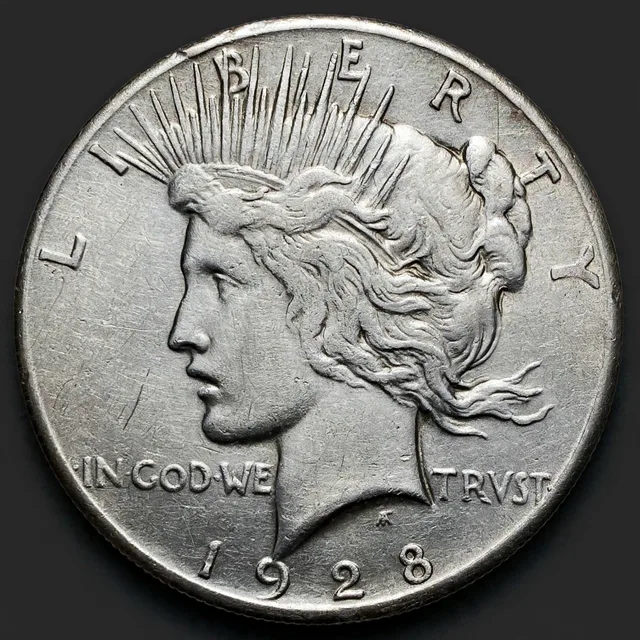
Three hundred sixty thousand six hundred forty-nine. The 1928 Peace dollar was struck in the smallest numbers of any Peace dollar, at any mint, in any year — and it is the key date of the whole series. Philadelphia struck just 360,649 Peace dollars in 1928, in a year when production was already winding down, and almost every one of them went into circulation. The figures in our guide tell the story plainly: G-4 runs $99 to $220, XF-40 runs $235 to $300, MS-60 runs $450 to $488, and MS-65 runs $2,800 to $4,000. The F-12 and AU-50 rows are dashes. Even the most worn 1928 starts near a hundred, and the top of the table reaches four figures.
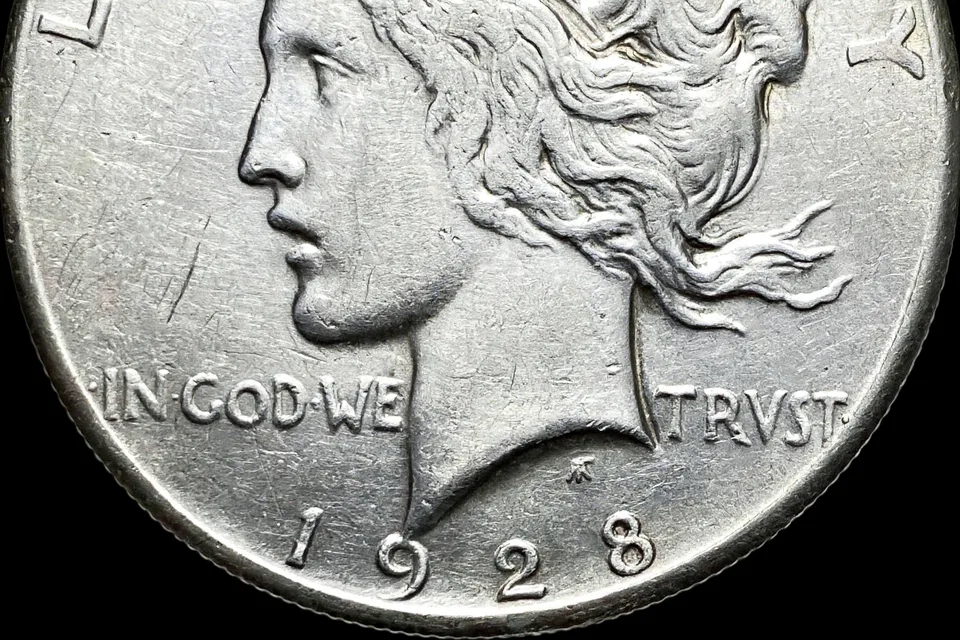
What makes the 1928 different from every other Peace key is that there is nothing to see except the date. A Philadelphia Peace dollar carries no mint mark at all, so a 1928 looks exactly like a common 1922 or 1923 until you read the numbers below Liberty's profile. That is why it is the date that rewards the collector who reads the date before anything else — and the date that gets spent, overlooked, and lost more than any other key in the series.
What a 1928 Peace is worth by grade
Four grades carry researched figures: G-4 at $99 to $220, XF-40 at $235 to $300, MS-60 at $450 to $488, and MS-65 at $2,800 to $4,000. The jump from MS-60 to MS-65 — roughly sixfold — is the whole story of this date. A coin with no wear but heavy marks is a four-hundred-dollar coin; the same coin with full lustre and clean fields is a four-figure coin.
| Grade | Estimated collector value |
|---|---|
| G-4 | $99–$220 |
| F-12 | — |
| XF-40 | $235–$300 |
| AU-50 | — |
| MS-60 | $450–$488 |
| MS-65 | $2,800–$4,000 |
A dash (—) means our November 2026 review holds no researched figure for that grade yet — it is a gap in our data, not a zero. Figures are collector estimates, reviewed November 5, 2026.
The curve is the story here. Worn examples cluster near the silver floor, and the figures only start to separate once the coin keeps its lustre and its strike. This date has researched figures at 4 of six grades. At G-4 the range runs $99 to $220, and at the top end, MS-65 runs $2,800 to $4,000. The F-12, AU-50 rows are still a dash in our guide — no researched figure yet, and none invented to fill the space. The F-12 and AU-50 rows are dashes in our guide — no researched figure yet, and none invented.
Why 1928, and why so few
Peace dollar production was winding down by 1928. The series had run since 1921, the Mint's attention had moved on, and Philadelphia struck just 360,649 Peace dollars that year — the smallest output of the whole series. The coins it did strike went into circulation in ordinary times, and few were set aside. That is the whole explanation for this date's rarity: a tiny mintage, struck in a quiet year, spent normally, and never rescued.
For the collector, the practical consequence is simple: a 1928 Peace dollar with no mint mark is the key date of the series, and it is worth checking the date on every Philadelphia Peace dollar you meet, because this one hides in plain sight.
How to grade your 1928
Peace dollars wear first on Liberty's cheek and on the high rays of the crown, and on the reverse the eagle's shoulder and wing tips go flat early. The strike matters more here than on a Morgan: many Peace dollars left the mint softly struck, with weak hair detail and a flat eagle, so a fully struck example with crisp rays and a bold eagle stands out at once. Lustre should roll across the fields in a cartwheel when you tilt the coin; dull, lifeless surfaces mean wear or cleaning, and either one holds the grade down.
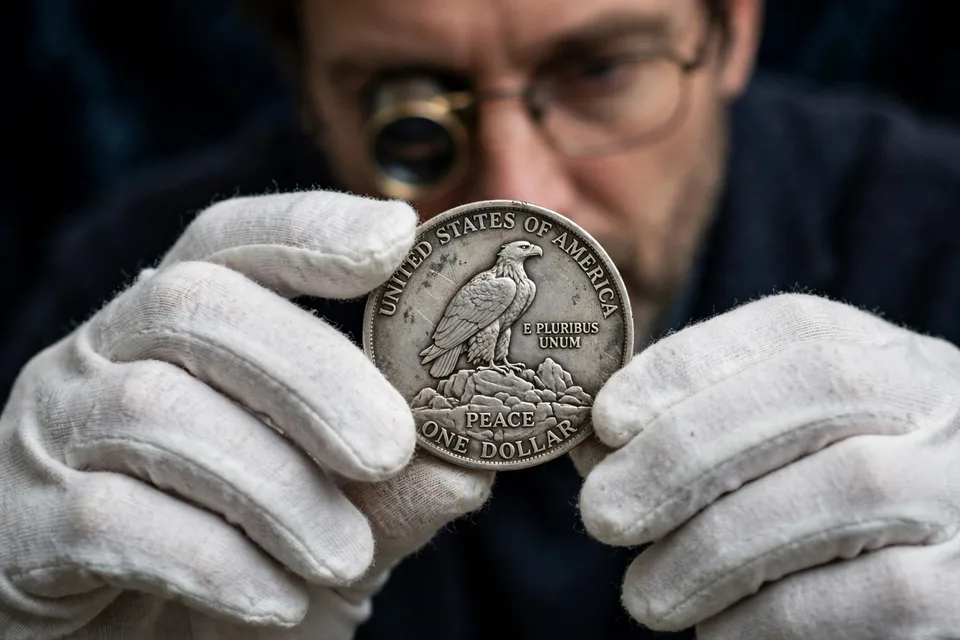
Peace dollars wear first on Liberty's cheek and on the high rays of the crown, and on the reverse the eagle's shoulder and wing tips go flat early. The strike matters more here than on a Morgan: many Peace dollars left the mint softly struck, with weak hair detail and a flat eagle, so a fully struck example with crisp rays and a bold eagle stands out at once. Lustre should roll across the fields in a cartwheel when you tilt the coin; dull, lifeless surfaces mean wear or cleaning, and either one holds the grade down.
Specs and the silver floor
A Peace dollar weighs the same as a Morgan — 26.73 grams, 38.1 millimetres, 90% silver, 0.7734 troy ounces of pure silver — so the metal floor under every genuine example is $40.27. Anthony de Francisci designed it: Liberty in a radiate crown on the obverse, an eagle standing on a rock above the word PEACE on the reverse. The mint mark, when there is one, sits below the eagle, above the word ONE.
Metal floor updates live from our Worker — last updated November 7, 2026.
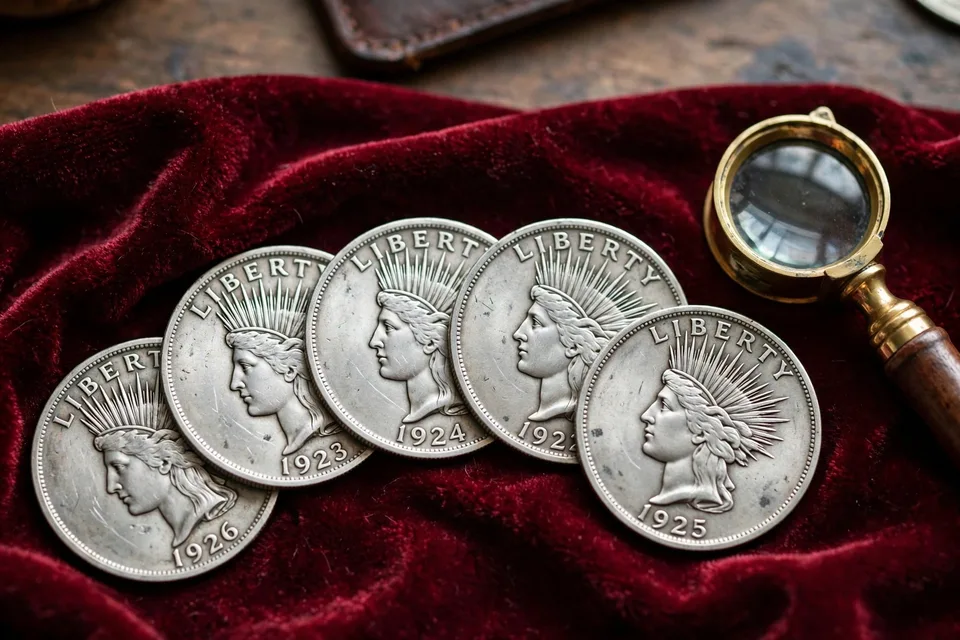
The silver floor is the least interesting number on this page. At 360,649 struck, the 1928 is worth its date and its grade far more than its metal, at every level of preservation.
Is your 1928 genuine?
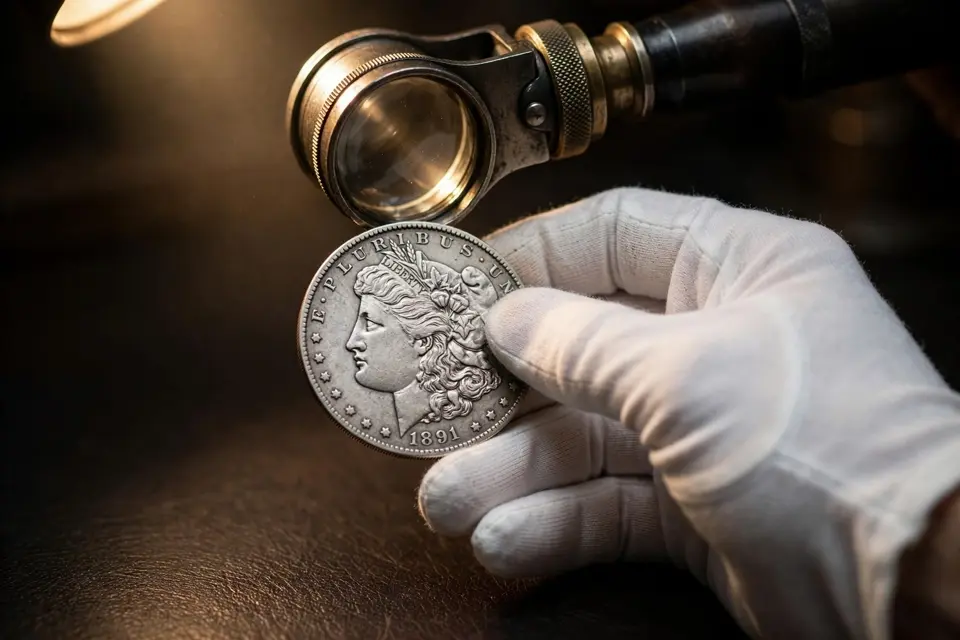
Before you celebrate a find, run the three cheap tests. A genuine dollar weighs 26.73 grams and spans 38.1 millimetres — most fakes fail on weight alone. A magnet should not grab it, because silver is not magnetic. And a loupe should show sharp, confident lettering and stars; mushy, rounded details and a pitted surface are the fingerprints of a cast copy. None of these tests replaces professional authentication for a coin worth real money, but together they catch the great majority of fakes.
The key-date status makes this coin a target, and the missing mint mark makes it a tempting one to fake by altering the date on a common Philadelphia Peace dollar. Weigh it first — 26.73 grams, no excuses — and measure the diameter at 38.1 millimetres. Under a loupe, study the date itself: genuine digits are sharp and even, struck at the same depth as the rest of the design. When the stakes are high, certification settles it.
Latest reported results for this coin
Checking for newly reported results…
Your 1928 Peace dollar questions, answered
How much is a 1928 Peace dollar worth?
Researched figures run $99 to $220 at G-4, $235 to $300 at XF-40, $450 to $488 at MS-60, and $2,800 to $4,000 at MS-65. The F-12 and AU-50 rows are dashes in our guide — no researched figure yet. Even the most worn example starts near a hundred.
What is the mintage of the 1928 Peace dollar?
Philadelphia struck 360,649 Peace dollars in 1928 — the lowest mintage of any Peace dollar ever struck, at any mint, in any year. It is the key date of the whole Peace series.
How do I know my Peace dollar is a 1928?
Read the date on the obverse, below Liberty's profile. A 1928 Peace dollar carries no mint mark — it was struck at Philadelphia, the main mint. Check the date digits with a loupe: genuine digits are sharp and even, struck at the same depth as the rest of the design.
Why is the 1928 Peace dollar so valuable?
Because almost none were struck and few were set aside. The mintage was the smallest in the series, the coins went into ordinary circulation, and the date hides in plain sight — a Philadelphia Peace dollar with no mint mark looks common until you read the date.
Is the 1928 Peace dollar the rarest Peace dollar?
Yes, by mintage it is the rarest Peace dollar of the entire series — 360,649 struck, fewer than any other date. By market figure it is also the most valuable Peace dollar in most grades, with MS-65 examples reaching four figures.
Should I get my 1928 Peace dollar graded?
Yes — for any example that looks uncirculated, without question. The gap between MS-60 and MS-65 is so large that an independent grade is the only thing that separates a four-hundred-dollar coin from a four-figure one, and certification also settles whether the date is genuine.
Check your 1928 Peace
Run the date and mint mark through the free Coin Value Checker for an instant estimate, or get a Grade-or-Not verdict on whether your coin is worth certifying. The full guide is here: Peace Dollar Values: Silver Prices and Key Dates. The same year at San Francisco is the 1928-S Peace dollar, struck in far larger numbers.
The lowest mintage in the Peace series, hiding behind a plain Philadelphia coin with no mint mark — learn the date, learn the grade, and keep looking. Shared for education only.