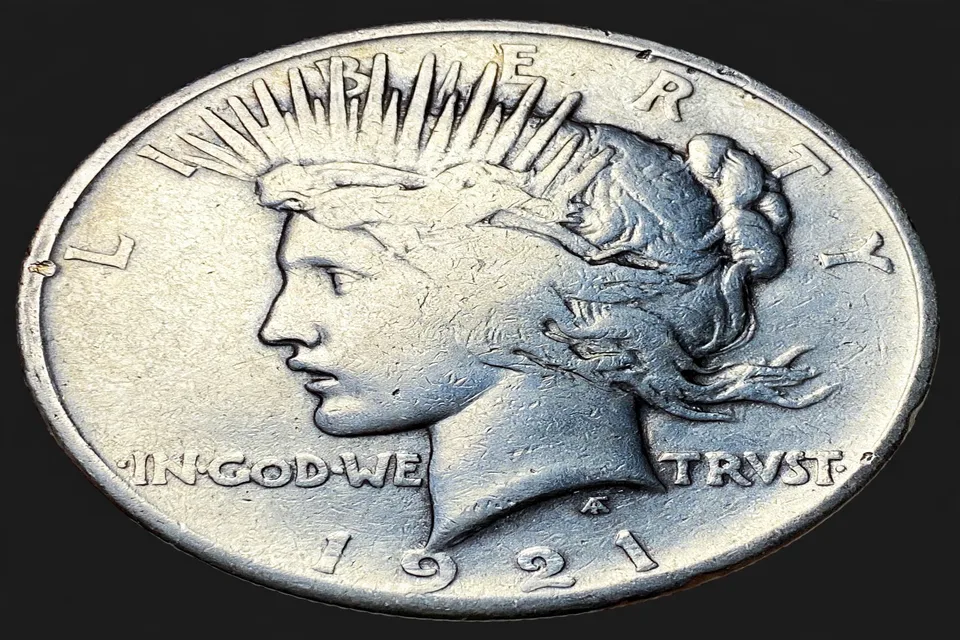
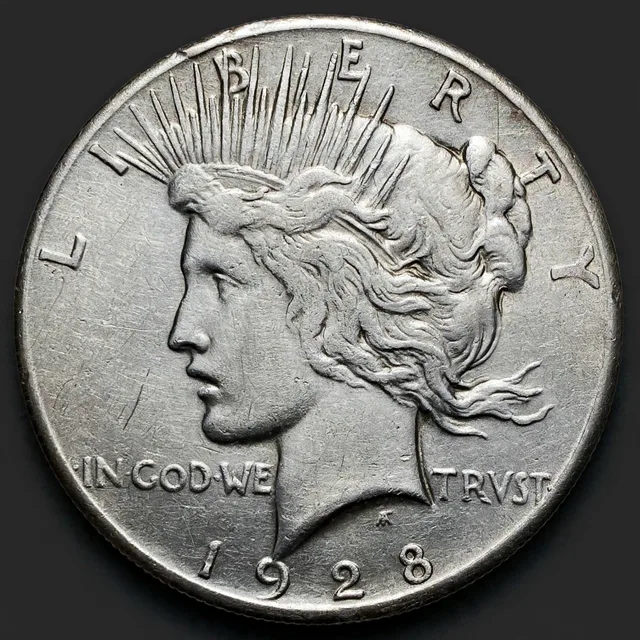
Worn Cheap, Gem Costly: The 1928-S Peace Dollar
Coin Encyclopedia · 9 min read · Published November 7, 2026
One million six hundred thirty-two thousand. The 1928-S Peace dollar was struck in ordinary numbers at San Francisco, and in worn grades it is an ordinary coin: G-4 runs $34 to $82, F-12 runs $34 to $82, XF-40 runs $60 to $98, AU-50 runs $74 to $195, and MS-60 runs $189 to $250. Then the table stops being ordinary. MS-65 runs $7,930 to $17,000 — roughly forty times the MS-60 figure. That is the 1928-S in one sentence: cheap worn, costly in gem, and the gap between the two is one of the widest in the whole Peace series.
The reason is survival, not mintage. San Francisco's 1928 dollars circulated hard across the West, and very few escaped with their lustre intact. The mint-state coins that did survive are the ones collectors fight over, and the market has valued that fight accordingly. Our guide carries a researched figure at all six grades for this date — the fullest coverage of any Peace dollar in this batch.
What a 1928-S is worth by grade
The curve is flat at the bottom and vertical at the top: G-4 at $34 to $82, F-12 at $34 to $82, XF-40 at $60 to $98, AU-50 at $74 to $195, MS-60 at $189 to $250, and MS-65 at $7,930 to $17,000. The jump from MS-60 to MS-65 — roughly fortyfold — is the whole story of this date. A coin with no wear but heavy marks is a two-hundred-dollar coin; the same coin with full lustre and clean fields is a five-figure coin.
| Grade | Estimated collector value |
|---|---|
| G-4 | $34–$82 |
| F-12 | $34–$82 |
| XF-40 | $60–$98 |
| AU-50 | $74–$195 |
| MS-60 | $189–$250 |
| MS-65 | $7,930–$17,000 |
A dash (—) means our November 2026 review holds no researched figure for that grade yet — it is a gap in our data, not a zero. Figures are collector estimates, reviewed November 5, 2026.
Read the table the way a grader would: from the bottom up. The lowest rows are the floor, and every step toward mint state lifts the figure — sometimes gently, sometimes by an order of magnitude. For this date, 6 of the six grades carry a researched figure. At G-4 the range runs $34 to $82, and at the top end, MS-65 runs $7,930 to $17,000.
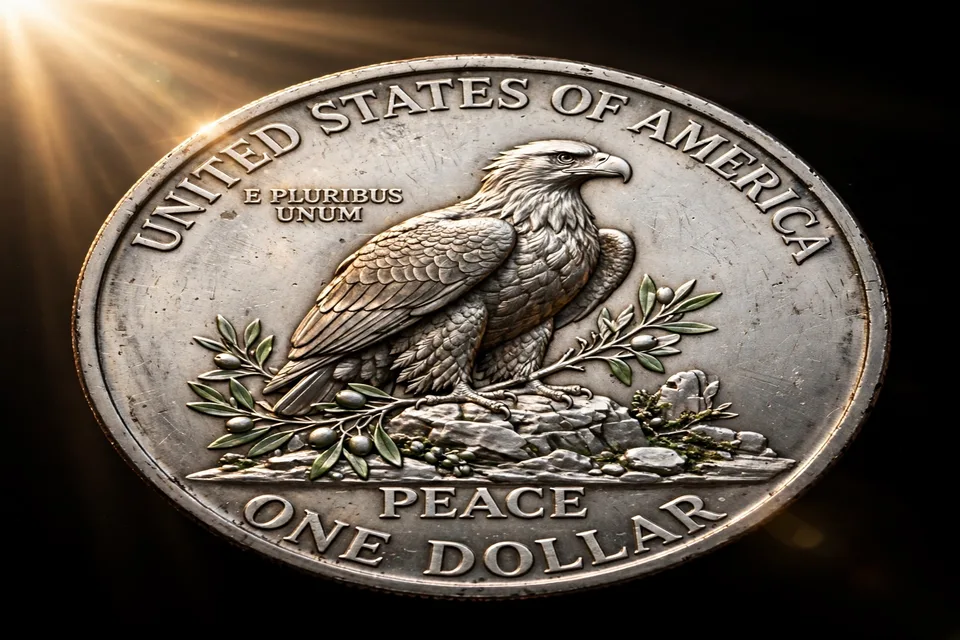
San Francisco in 1928: a common date with a rare top
San Francisco struck Peace dollars through most of the series, and its coins are known for solid, workmanlike strikes. The 1928-S is a typical San Francisco Peace dollar in that regard: most examples show a decent strike with some softness in the hair and the eagle's feathers, and the coins that stand out are the ones with genuinely crisp detail. The mint's output that year was ordinary — 1,632,000 pieces — and the coins circulated hard, so the gem population stayed tiny while demand only grew.
How to grade your 1928-S
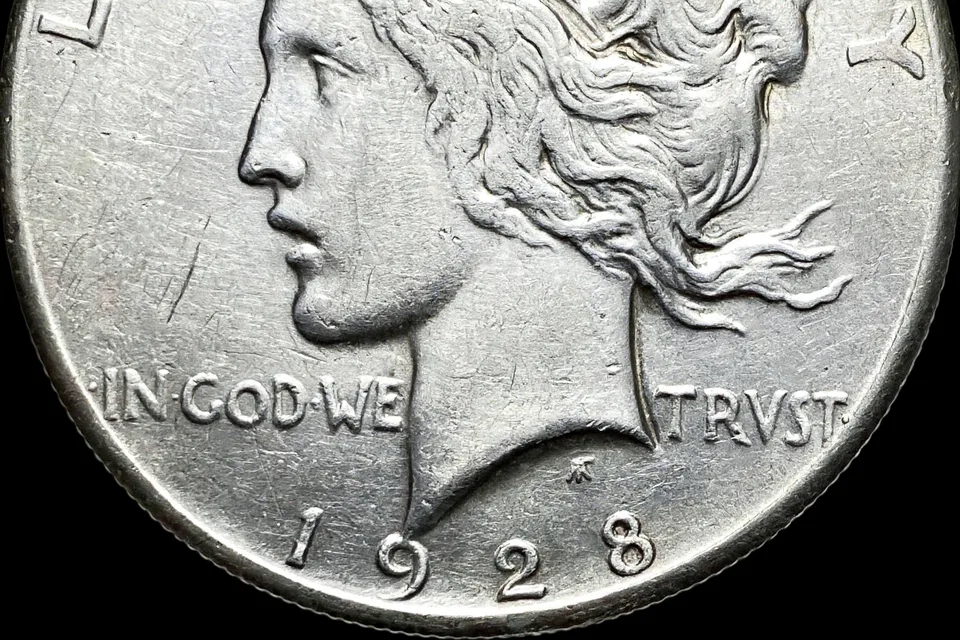
Start with the crown rays and Liberty's cheek — those are the Peace dollar's high points, and wear flattens them first. Then check the eagle's breast and wing tips on the reverse. A mint-state Peace dollar shows full, frosty lustre and sharp detail; a circulated one shows smooth, grey high points and muted fields. Because the series is famous for weak strikes, a coin with genuinely sharp hair and a fully feathered eagle is worth a closer look even before you think about the grade number.
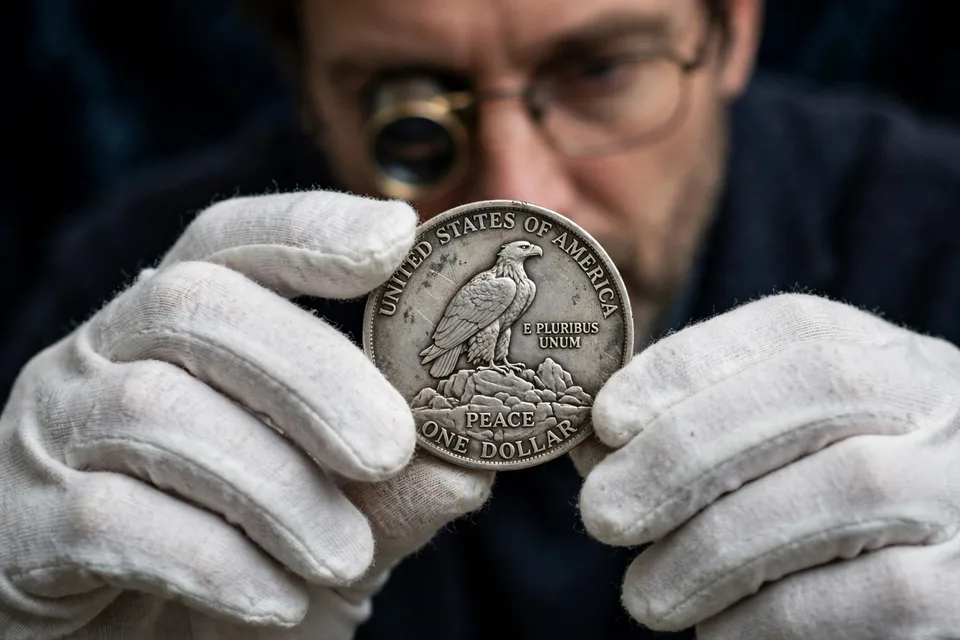
Start with the crown rays and Liberty's cheek — those are the Peace dollar's high points, and wear flattens them first. Then check the eagle's breast and wing tips on the reverse. A mint-state Peace dollar shows full, frosty lustre and sharp detail; a circulated one shows smooth, grey high points and muted fields. On this date, lustre separates the grades more than wear does: an MS-60 coin has no wear at all but may be heavily marked or dull, while an MS-65 coin has full, rolling lustre and only the lightest ticks.
Specs and the silver floor
Peace dollars share the Morgan's weight and fineness — 26.73 grams, 38.1 millimetres across, 90% silver with 10% copper, 0.7734 troy ounces of pure silver in each coin — and that metal puts a floor of $40.27 under every genuine Peace dollar. Anthony de Francisci's design is unmistakable: Liberty wearing a radiate crown, and on the reverse an eagle perched on a rock, the sun's rays behind it, with PEACE below. Find the mint mark under the eagle if you want to know where yours was struck.
Metal floor updates live from our Worker — last updated November 7, 2026.
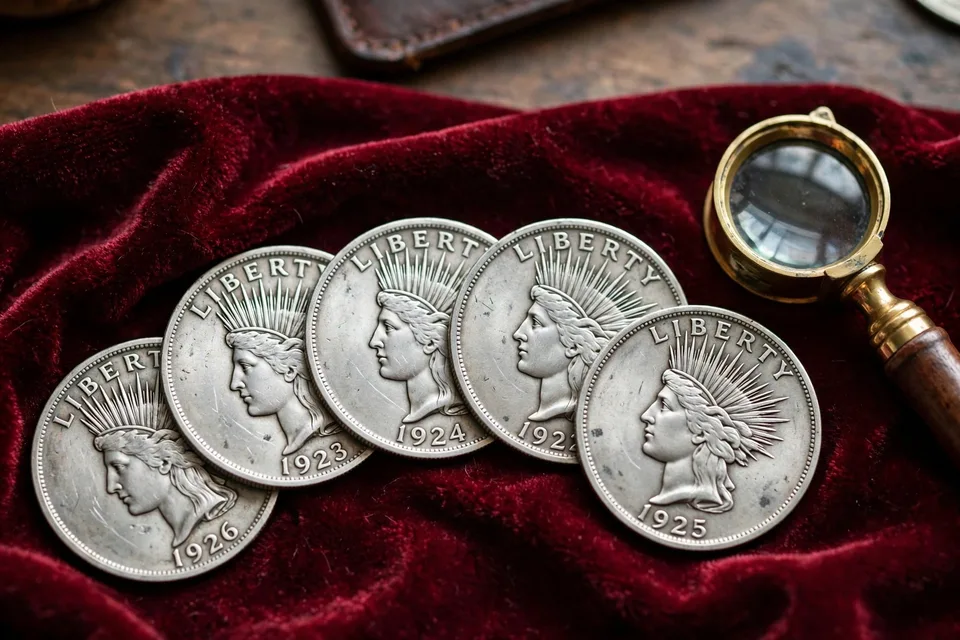
The metal floor is the least interesting number on this page. At the bottom, a 1928-S trades near its silver; at the top, it trades on condition alone, and the two have almost nothing to do with each other.
Is your 1928-S genuine?
The first test costs nothing: weigh the coin. A genuine silver dollar weighs 26.73 grams and measures 38.1 millimetres, and fakes are usually light, or the wrong diameter, or both. Silver is not magnetic, so a coin that sticks to a magnet is not silver. Then look at the lettering with a loupe — genuine letters are sharp and even, while cast copies show mushy edges, pitted fields, and soft stars. A scale, a calliper, and a magnet settle most questions in a minute; anything still in doubt goes to a professional grading service.
The gem examples are the ones worth faking, so a coin offered as MS-65 deserves the full check — weight, diameter, magnet, and loupe — and certification before any serious money changes hands. A worn 1928-S is rarely worth faking, which is one small comfort for the collector starting at the bottom of this date's curve.
Latest reported results for this coin
Checking for newly reported results…
1928-S Peace dollar: the questions collectors ask
How much is a 1928-S Peace dollar worth?
Researched figures run $34 to $82 at G-4, $34 to $82 at F-12, $60 to $98 at XF-40, $74 to $195 at AU-50, $189 to $250 at MS-60, and $7,930 to $17,000 at MS-65. Every grade carries a researched figure — the fullest coverage of any Peace dollar in this batch.
Why is the 1928-S worth so much more in MS-65?
Because condition is scarce even when the coin is not. More than 1.6 million were struck, but very few survived with full lustre, a sharp strike, and clean fields. At MS-65, collectors are paying for that survival, not for the mintage — which is why the figure jumps roughly fortyfold from MS-60.
What is the mintage of the 1928-S Peace dollar?
San Francisco struck 1,632,000 Peace dollars in 1928. It is a common date in worn grades, and a condition rarity in gem — one of the widest gaps between worn and gem in the whole Peace series.
How do I tell a 1928-S from a 1928 Philadelphia Peace dollar?
Look at the mint mark below the eagle on the reverse, above the word ONE. An S means San Francisco, and no mark means Philadelphia. The Philadelphia 1928 is the key date of the series — the mint mark is the whole difference between a common coin and the rarest Peace dollar.
Is the 1928-S Peace dollar a good first Peace dollar?
In worn grades, yes — it is affordable and easy to find, which makes it a fine coin to learn grading on. In gem grades it is a serious coin, and a beginner should not spend gem money on this date without certification.
Should I get my 1928-S Peace dollar graded?
For a worn example, usually not — the figure is close to the silver floor. Consider certification when the coin looks uncirculated with full lustre, because the jump to MS-65 is large enough that an independent grade protects both the coin's identity and its figure.
Check your 1928-S Peace
Run the date and mint mark through the free Coin Value Checker for an instant estimate, or get a Grade-or-Not verdict on whether your coin is worth certifying. The full guide is here: Peace Dollar Values: Silver Prices and Key Dates. The key date of the same year is the 1928 Peace dollar, the lowest-mintage Peace dollar of the series.
A common coin can hide a rare grade — that is the lesson of this date, and it is worth learning before you spend gem money. Shared for education only.