1938-D Walking Liberty Half: Denver Semi-Key Date
Coin Encyclopedia · 7 min read · Published November 7, 2026
The 1938-D Walking Liberty half is the Denver semi-key — the date collectors reach for after the 1921 trio, and the last Denver Walking Liberty half of the 1930s. Denver struck 491,600 of them in 1938, as the Depression eased and the Mint's output began to recover, and the coins went into circulation in the Mountain West. Today the 1938-D is scarce in Mint State and the date that separates a complete Walking Liberty set from a nearly complete one.
It is called a semi-key because it is not as rare as the 1921 issues — the mintage is larger, and the coins are easier to find worn — but it is scarce where it counts: in high grade, with a sharp strike and original surfaces. This guide explains the D check, the Depression-era context, and what to look for in a 1938-D worth keeping.
Denver in 1938 — the Depression easing, the Mint recovering
The year 1938 sat in the long shadow of the Depression: the economy had begun to recover from the worst years, but demand for coinage was still low, and the Mint struck halves in small numbers. Denver's run of 491,600 was a working run — enough for the West's needs, and no more — and it was the last Denver Walking Liberty half of the decade, because the Mint struck no Denver halves in 1939.
That gap is part of the coin's appeal. The 1938-D closes the 1930s Denver run, and a set of Denver Walking Liberty halves is not complete without it. The coins were struck in a year when the Mint's output was still restrained, and they circulated in a region where half dollars worked hard — which is why the survivors in high grade are few.
The D check — below the eagle, on the reverse
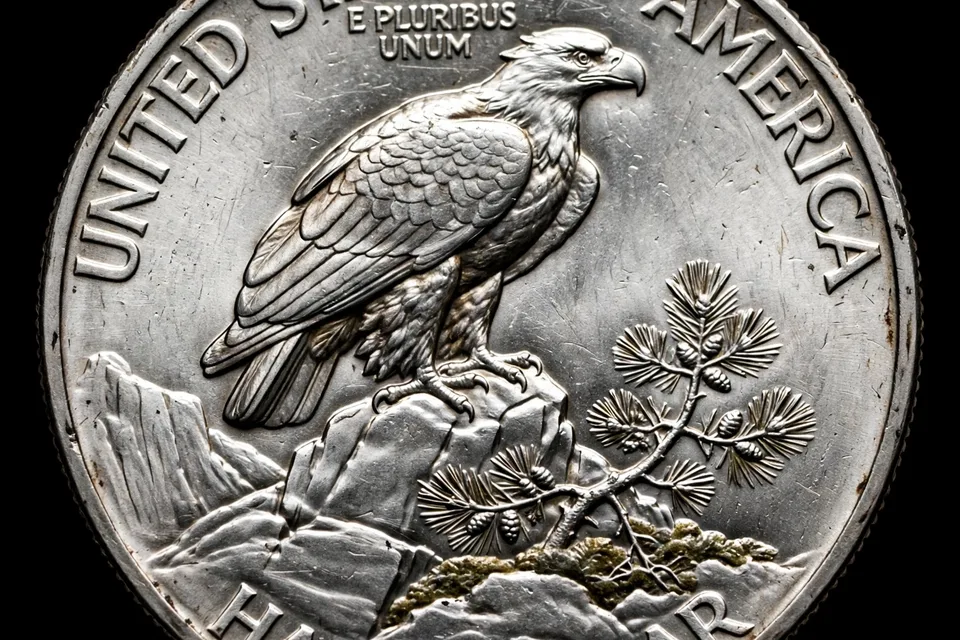
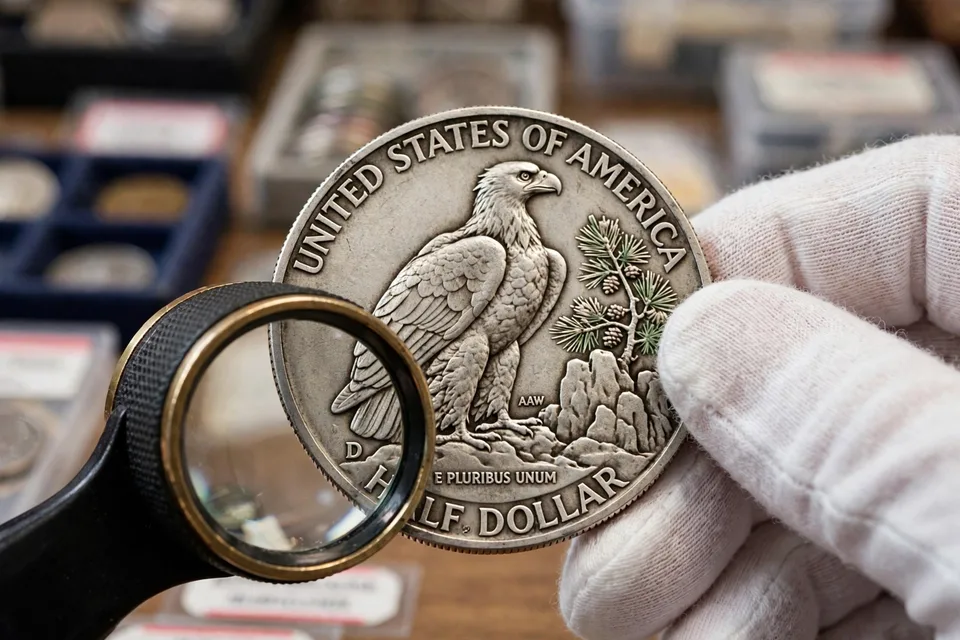
On the 1938-D the mint mark is a D on the reverse, below the eagle — the position the Mint had used since mid-1917. It is clear and easy to read, and it is the only difference between the Denver semi-key and the Philadelphia 1938, which carries no mint mark and was struck in far larger numbers.
The check matters because the premium is entirely in the D. A 1938 with no mint mark is a common date, worth little more than its silver in worn condition; a 1938-D is the semi-key, and the gap between them grows with grade. The D is small, but it is the whole difference — and it is worth a loupe to confirm, because added mint marks exist on every scarce Denver date.
Why the 1938-D is scarce in Mint State
A mintage of 491,600 is small for a half dollar of the late 1930s, and the survival rate was worse: the coins circulated in the Mountain West for years, and few were set aside. The 1938-D was not a coin anyone saved in 1938 — it was a working half dollar, spent and spent again — and by the time collectors began building Walking Liberty sets, the Mint State examples were already scarce.
Denver's strikes add to the difficulty. The 1938-D is often softly struck on Liberty's head and the eagle's feathers, so a sharply struck example stands out — and a sharply struck example in Mint State is the coin collectors pay for. Judge the surfaces and the lustre first, the sharpness second, and never pay a premium for a coin that has been cleaned to look bright.
The 1938-D in a set — the semi-key that completes the run
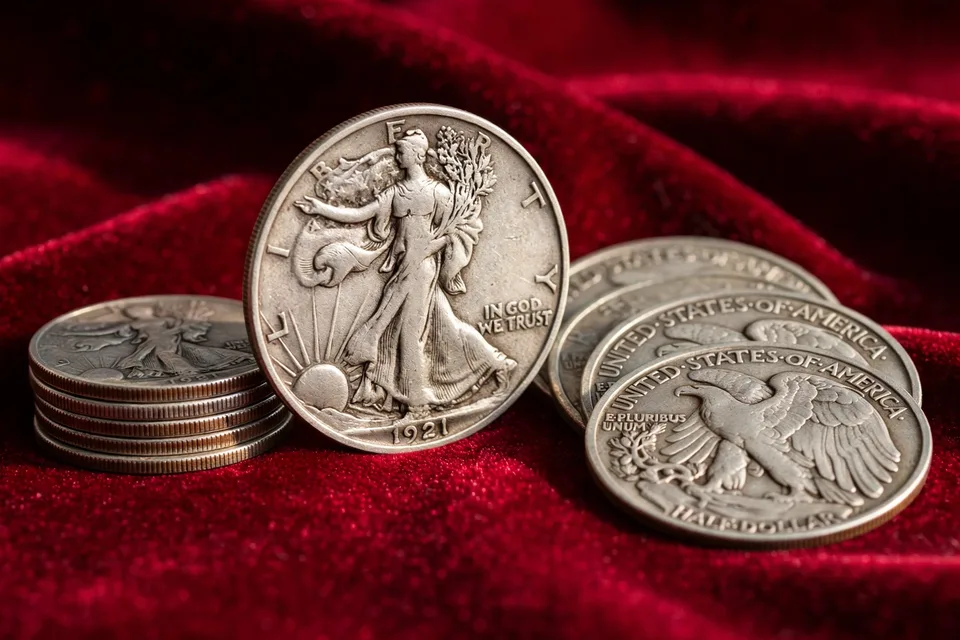
Every Walking Liberty set has a point where the easy dates end and the hard ones begin, and for most collectors that point is the 1938-D. The common dates fill in quickly; the 1921 trio takes years; and the 1938-D sits between them — the date that is affordable worn, scarce in Mint State, and the one that makes the set feel complete when it finally lands.
For a collector on a budget, the 1938-D is a fair target: a worn example is affordable, and a Mint State one is a serious but reachable purchase. Choose it original, choose it certified when the grade matters, and let it be the coin that closes the Denver run of the 1930s.
What a 1938-D Walking Liberty Half Denver semi-key is worth by grade
Our guide has not yet researched grade-by-grade estimates for this date, so every cell below shows “—” rather than a guessed figure. The live system fills these cells the moment research or a newly reported result lands. Figures on this page are reviewed November 5, 2026.
| Grade | Estimated value |
|---|---|
| Good (G-4) | — |
| Fine (F-12) | — |
| Extremely Fine (XF-40) | — |
| About Uncirculated (AU-50) | — |
| Mint State 60 (MS-60) | — |
| Mint State 65 (MS-65) | — |
No researched grade figures exist for the 1938-D yet. A semi-key with a mintage of 491,600, it is the date collectors reach for after the 1921 trio — scarce in Mint State, and the last Denver Walking Liberty half of the 1930s.
Specs and the silver floor
Every Walking Liberty half from 1916 through 1947 is 90% silver. The coin weighs 12.5 grams and carries 0.36169 troy ounces of pure silver. The live metal floor for this coin is $18.83 — it moves with the live silver market, so the figure updates on every load rather than standing still.
Metal floor updates live from our Worker — last updated November 7, 2026.
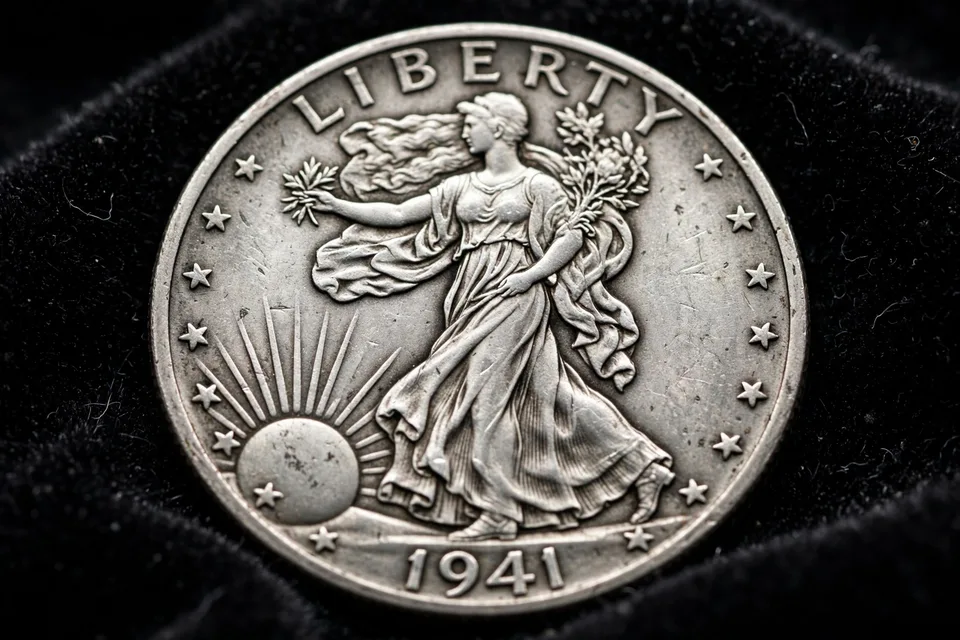
Adolph A. Weinman's Liberty strides toward the rising sun on the obverse, draped in the American flag, while the reverse carries a perched eagle on a mountain crag. Diameter 30.6 millimetres, reeded edge. In 1916 and early 1917 the mint mark sits on the obverse, below the motto; from mid-1917 it moved to the reverse, below the eagle.
Verified auction records
Our auction data holds no verified historic record for this date yet — no figure here is guessed. The box below checks for newly reported results on every load, so the first verified result for this coin will appear there.
Latest reported results for this coin
Checking for newly reported results…
Your 1938-D Walking Liberty Half Denver semi-key questions, answered
How much is a 1938-D Walking Liberty half dollar worth?
Our guide has not yet researched grade-by-grade estimates for the 1938-D, so the table shows dashes. With a mintage of 491,600, it is the Denver semi-key — affordable worn, scarce in Mint State, with the premium growing steeply with condition.
Is the 1938-D Walking Liberty half silver?
Yes — it is 90% silver, weighing 12.5 grams with 0.36169 troy ounces of pure silver. The live metal floor for this coin is in the specs section below and moves with the live silver market.
Where is the mint mark on a 1938-D Walking Liberty half?
The mint mark is a D on the reverse, below the eagle. The Philadelphia 1938 carries no mint mark and was struck in far larger numbers.
How many 1938-D Walking Liberty halves were struck?
Denver struck 491,600 Walking Liberty halves in 1938, as the Depression eased. It was the last Denver Walking Liberty half of the 1930s — the Mint struck no Denver halves in 1939.
Why is the 1938-D called a semi-key date?
It is scarcer than the common dates but not as rare as the 1921 trio: the mintage of 491,600 is small, the coins circulated hard, and Mint State examples are scarce. It is the date collectors reach for after the 1921 issues.
Check your 1938-D
Run the date and mint mark through the free Coin Value Checker for an instant estimate, or get a Grade-or-Not verdict on whether your coin is worth certifying. The full series guide is here: Walking Liberty Halves Worth $25 to $188,000+.
Written for collectors closing the Denver run — the 1938-D is the semi-key that makes the set feel complete. This guide is for education — learn the coin first, and get a professional opinion before buying or selling.