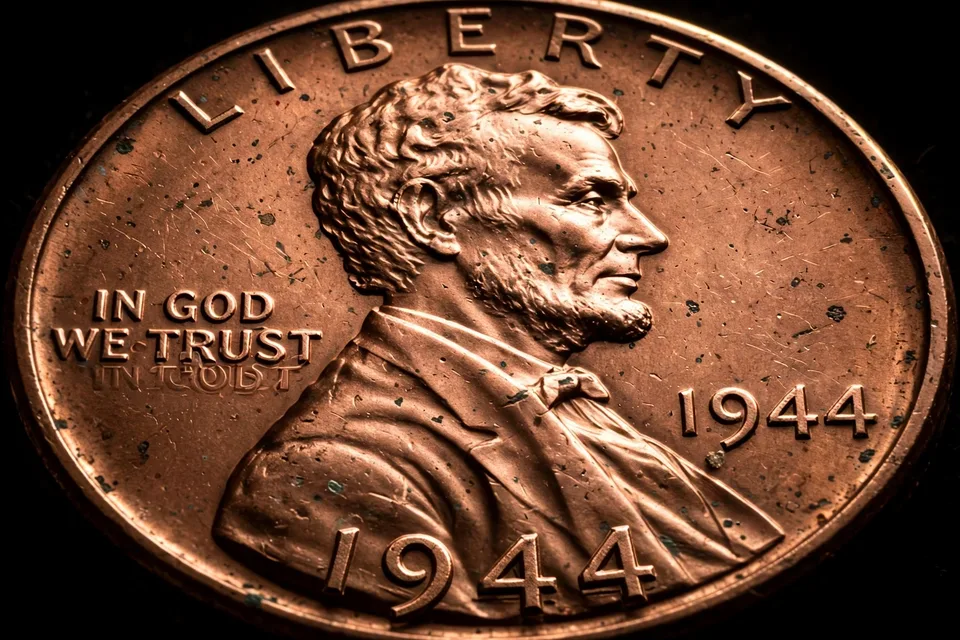
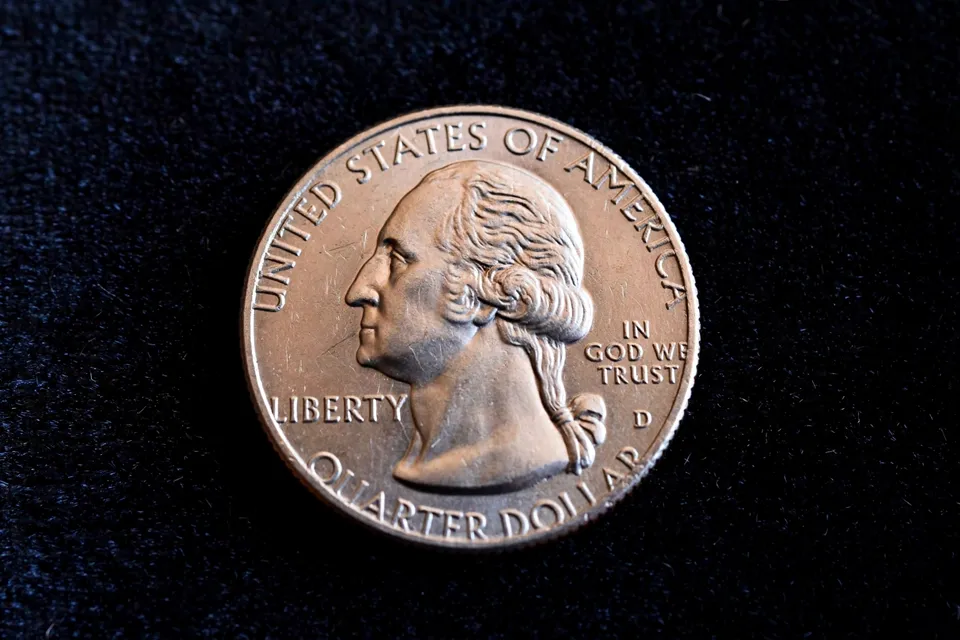
How to Identify a Repunched Mint Mark: RPM Tests & Values
Coin Error Guides · 10 min read · Published November 7, 2026 · Updated November 7, 2026
A repunched mint mark — an RPM — is a small second impression of the same mint mark letter, punched into the working die twice and slightly out of line, so every coin from that die shows the same doubling. Look for a raised second letter with its own serifs, offset in one direction, under a 10x loupe: most RPMs are worth $3+ to $20+, while famous overmintmarks like the 1938-D/S reach $2,400+ and beyond. Flat, shelf-like doubling means machine doubling — face value.
What Is a Repunched Mint Mark?
Until 1989, every mint mark on a United States coin was punched into the working die by hand. An engraver set a small steel punch bearing a raised letter on the die face and struck it with a mallet. If the first blow landed crooked or shallow, the engraver repositioned the punch and struck again. The first impression was already in the die steel, so the die carried two overlapping images, and every coin it struck showed the same doubling.
That is an RPM: a die variety, not a strike error. Collectors write it as D/D, S/S, or D/D/D when the punch landed three times. More than 1,500 attributed RPMs are catalogued among Lincoln cents alone. Philadelphia coins carry no mint mark, so a coin without one can never be an RPM.
Know where to look. On a Lincoln cent the mint mark sits below the date; on a Buffalo nickel, on the reverse beneath the mound; on a Mercury dime, beside the fasces.
Why the Hand Punch Made RPMs Inevitable
The process was entirely manual. The engraver judged the punch position by eye, and a punch could skip, tilt, or land a fraction of a millimetre off. A weak first blow often needed a second, harder strike — and that second strike is what collectors hunt.
The era ended in 1990, when the Mint began building the mint mark into the master hub. No hand-punching meant no more RPMs. Every RPM that exists, or will ever be found, is dated 1989 or earlier. A doubled-looking mint mark on a 1995 coin is machine doubling or damage, never an RPM.
RPM, Overmintmark, and Machine Doubling — Three Different Things
Three kinds of doubling crowd the mint mark, and only two of them pay. Learn the split before you spend anything.
| Type | What Happened | Where the Doubling Sits | Value |
|---|---|---|---|
| Repunched mint mark (RPM) | Same letter punched twice | Only the mint mark | $3+ to $1,500+ |
| Overmintmark (OMM) | A different letter over the first | Only the mint mark (D over S) | $15+ to $14,500+ |
| Machine doubling | Die shifted during the strike | Mint mark plus nearby date digits | Face value |
| Doubled die | Hub struck twice out of alignment | Date, motto, lettering — not the mint mark | $50+ to $2,000+ |
The rule: if only the mint mark is doubled and everything else looks normal, you are looking at an RPM or an overmintmark. If the date and the lettering are doubled in the same direction, it is machine doubling. A doubled die cannot double a hand-punched mint mark — the letter was never on the hub.
How to Identify a Repunched Mint Mark, Step by Step
Work in this order, and never clean the coin.
Step 1: Pick the Right Dates First
Start with pre-1990 Lincoln cents — wheat cents (1909–1958) and memorial cents (through 1989) carry more RPMs than any other series. Buffalo nickels, Mercury dimes, and Washington quarters come next.
Step 2: Use a 10x Loupe and Angled Light
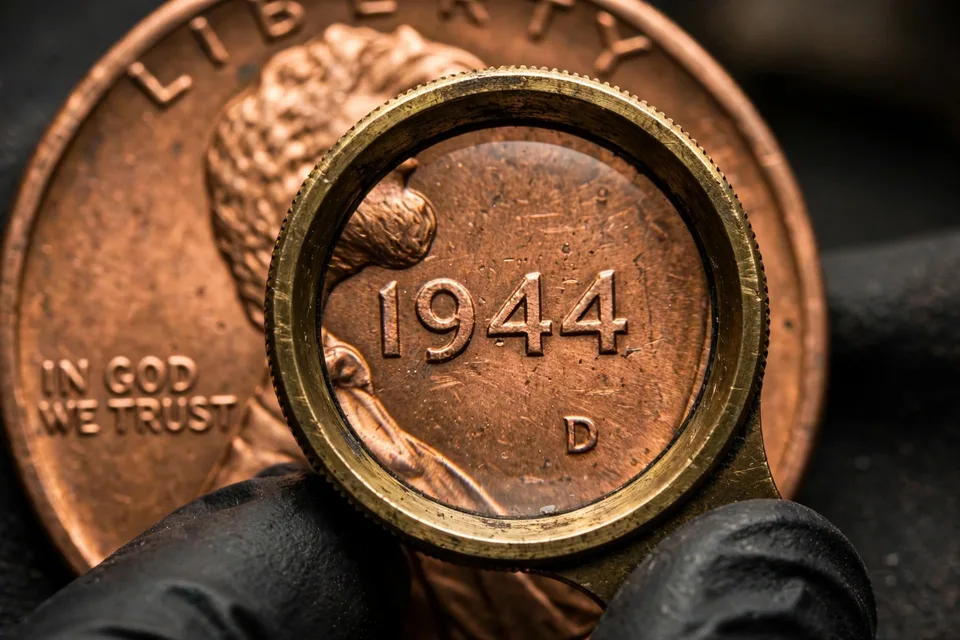
Hold the coin under a single light and tilt it slowly so the light rakes across the mint mark. A 10x loupe is enough for strong RPMs; subtle ones need 15x to 30x or a stereo microscope.
Step 3: The Raised-and-Rounded Test
Look at the edge of the second impression. A true RPM shows a second letter raised and rounded, near the same height as the primary, with its own curves and serifs. Machine doubling is a flat shelf cut into the side of the letter. Rounded and raised means real; flat and shelf-like means spend it.
Step 4: The Split-Serif Test
Zoom into the tips of the letter. A genuine repunch splits the serifs — the small feet at the ends of a D or S — into two distinct tips, one from each punch. Two fingers together show one valley: a D/D. Three fingers show two valleys: a D/D/D. Machine doubling never splits a serif; it shears one off.
Step 5: The Neighbours Test
Check the date digits beside the mint mark. Machine doubling usually affects the nearby digits in the same direction, because the whole die shifted at once. An RPM affects only the mint mark. If the date shows the same flat smear as the D, it is machine doubling.
Step 6: Match It to a Listed Variety
Every recognised RPM carries a catalogue number — FS numbers, CONECA listings, and Wexler attributions. Compare your coin against published photographs: the doubling must match in position, direction, and strength. The 1909-S carries one of the earliest catalogued RPMs, WRPM-001.
Reading the Compass: North, South, East, and West
RPMs are described by where the second impression sits, with the coin held upright: above is north, below is south, right is east, left is west, and diagonals take the corner names. The 1945-S/S West is a textbook example — the second S sits left of the primary, and the variety is listed under that direction.
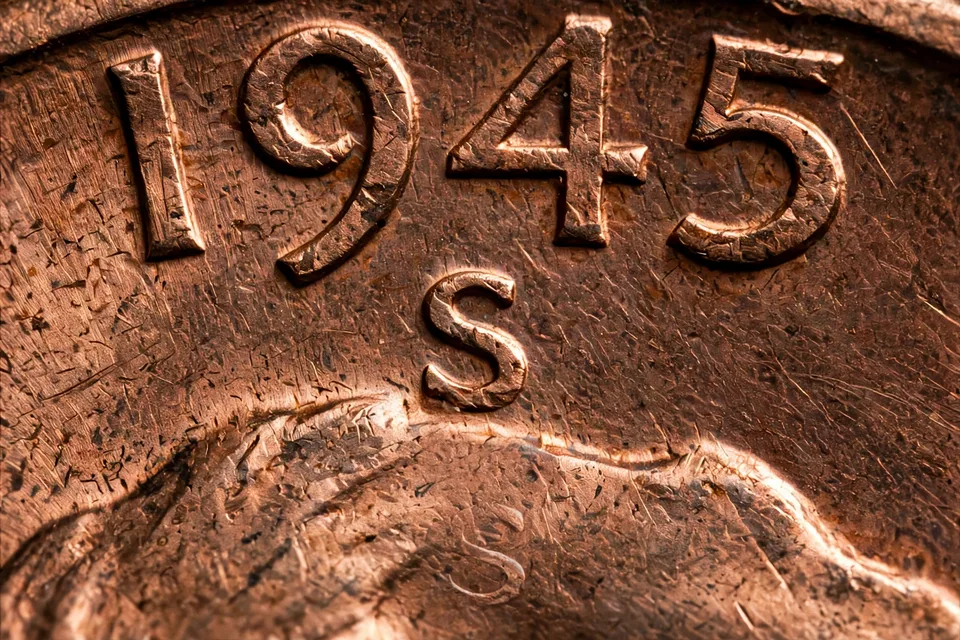
Listings are keyed to the compass: two RPMs on the same date can carry different numbers and values because one is north and the other is south. Write the direction down with the date.
The RPMs Worth Real Money
Most RPMs are modest finds. The money sits in dramatic separation and famous overmintmarks.
| Variety | What to Look For | Value |
|---|---|---|
| 1938-D/S Buffalo nickel (FS-511) | D over S; strongest form D/D/D/S | $15+ to $14,500+ |
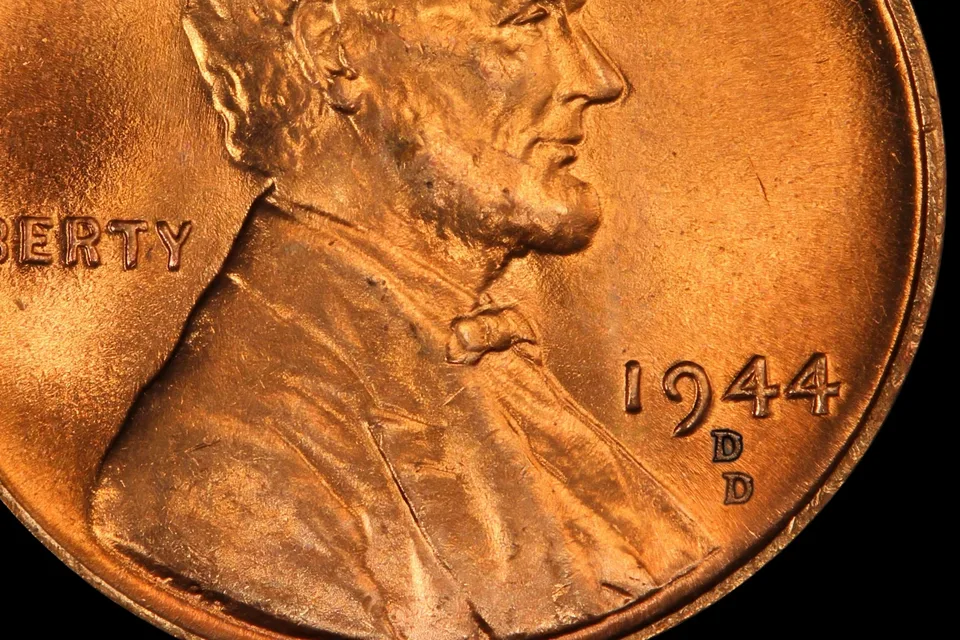
| 1944-D/S Lincoln cent (FS-512) | S peeking below the D, under the date | $50+ to $1,500+ |
| 1909-S Lincoln cent (WRPM-001) | S/S on a first-year cent | Varies by grade — check the variety guides |
The 1938-D/S is the great mystery of the series: the Mint struck no Buffalo nickels at San Francisco in 1938, yet traces of an S appear beneath the Denver D — workers likely punched D mint marks over dies that already carried an S. Langworthy and Kerr identified the variety in 1961, and about 20,000 examples survive. The PCGS Price Guide lists it at $15+ in F12, $25+ in XF40, $65+ in MS60, $200+ in MS65, $625+ in MS67, $2,400+ in MS67+, and $14,500+ in MS68.
What Is a Repunched Mint Mark Worth?
A faint RPM is a curiosity; a bold one visible to the naked eye is a collectible.
| Type | Typical Value |
|---|---|
| Minor Lincoln cent RPM | $3+ to $10+ |
| Minor Buffalo nickel RPM | $8+ to $20+ |
| Minor Jefferson nickel RPM | $5+ to $15+ |
| 1944-D/S Lincoln cent (OMM) | $50+ circulated; $275+ in MS64 |
| 1938-D/S Buffalo nickel (OMM) | $15+ in F12; $200+ in MS65; $2,400+ in MS67+ |
Grade decides the final number on the famous varieties. Get attribution from PCGS or NGC before you sell a major RPM or overmintmark: unattributed, it sells as a curiosity; in a holder labelled FS-511 or FS-512, it sells as a variety. Read our grading guide before you price it — one grade point on a 1938-D/S can be worth hundreds.
Mistakes That Cost Collectors Money
- Paying a premium for machine doubling. Sellers list flat, shelf-like mint-mark doubling as an RPM every day. Run both tests before you pay anything.
- Cleaning a find. A cleaned RPM loses its original surface and much of its value. Never polish, dip, or scrub a suspected variety.
- Hunting post-1990 coins. No RPM exists after 1989. Every hour spent checking doubled-looking mint marks on modern coins is an hour wasted.
- Buying a rare overmintmark raw. Altered mint marks circulate on valuable varieties like the 1938-D/S. For any variety worth four figures, buy certified or not at all.
- Forgetting the reverse. Collectors check the obverse mint mark and stop. Mercury dimes and early Washington quarters carry the mint mark on the reverse — their RPMs are missed by hunters who never flip the coin.
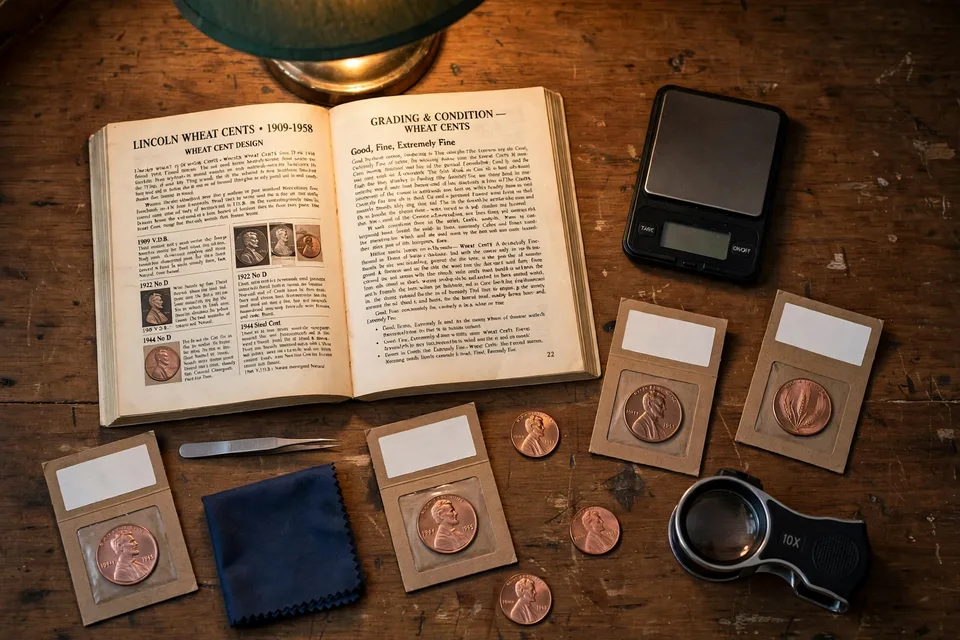
A repunched mint mark costs nothing to check, and the difference between a $3+ curiosity and a $2,400+ 1938-D/S is one careful look at the mint mark. Before you spend or sell, run your coin through The Diggin Dave's free Error Identifier tool, check its value with the Coin Value Checker, and try Grade-or-Not for a grade verdict. A 10x loupe, 2x2 coin flips, and a Cherrypickers' Guide are the only tools the checks in this guide need.
As an Amazon Associate, this site may earn from qualifying purchases.
Further Reading on Repunched Mint Marks
- Doubled Die vs Machine Doubling: How to Tell Apart — the tests that separate a $2,000+ error from machine doubling
- Real vs Fake Clipped Planchets: How to Tell & Value — the tests that separate $10+ to $1,020+ real clips from cut coins
- Wrong Planchet Errors Worth $400 to $46,000+ — weigh it, measure it, match the planchet
Frequently Asked Questions
How can you tell if a coin has a repunched mint mark?
Look for a second, raised impression of the same letter with its own serifs, offset in one direction, under a 10x loupe. A flat shelf on one side of the letter is machine doubling, not an RPM.
What is the difference between a repunched mint mark and an overmintmark?
An RPM repeats the same letter (D over D, S over S); an overmintmark punches a different letter over the first (D over S). Overmintmarks are scarcer and worth more — the 1938-D/S runs $15+ in Fine to $2,400+ in MS67+.
Are repunched mint mark coins valuable?
Most minor RPMs are worth $3+ to $20+. The money sits in dramatic RPMs and famous overmintmarks: the 1944-D/S Lincoln cent runs $50+ circulated and $275+ in MS64, while the 1938-D/S Buffalo nickel reaches $14,500+ in MS68.
Can a modern coin have a repunched mint mark?
No. Mint marks were hand-punched until 1989; from 1990 the Mint built the mint mark into the master hub. Every RPM that exists is dated 1989 or earlier.
What does D/D mean on a coin?
D/D means the Denver mint mark was punched twice into the same die. D/D/D means three punches. Collectors describe the second punch's direction with compass points: D/D North means the second D sits above the first.
How much is a 1938-D/S Buffalo nickel worth?
The 1938-D/S Buffalo nickel — a D punched over an S — is worth $15+ in F12, $65+ in MS60, $200+ in MS65, $625+ in MS67, and $2,400+ in MS67+, with the finest MS68 examples at $14,500+.