1856 Flying Eagle Cent Pattern: The $312,000 Trial Strike
Coin Encyclopedia · 8 min read · Published November 7, 2026
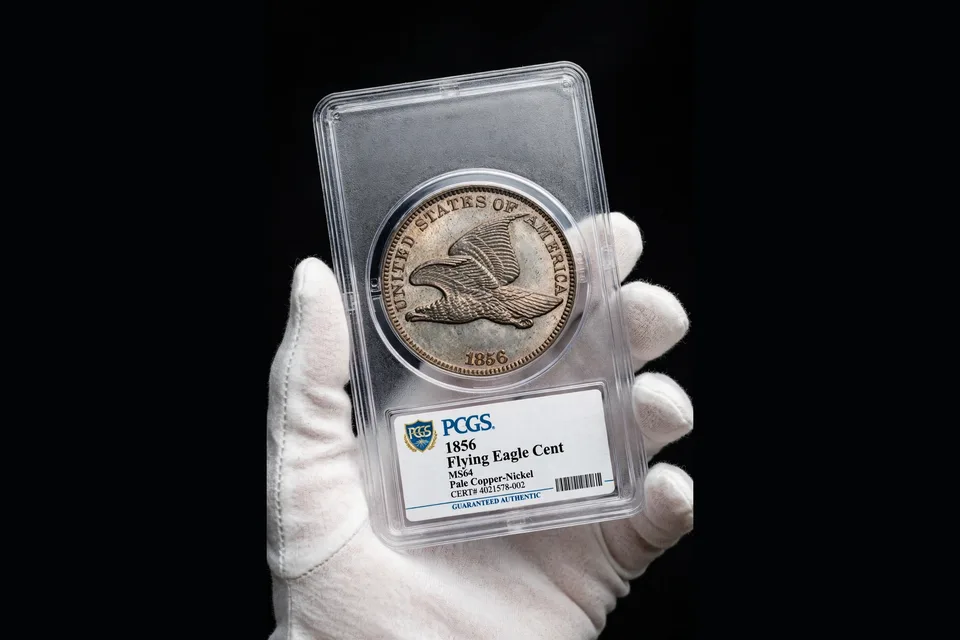
The 1856 Flying Eagle cent was never supposed to reach the public. It was a pattern — a trial strike the Mint handed to congressmen, officials, and favoured collectors to win support for a new small cent. Then the trial pieces started changing hands, collectors started chasing them, and a coin that was never meant to circulate became one of the most famous American cents ever struck. Close to a thousand were made, and the finest of them has reached $312,000.
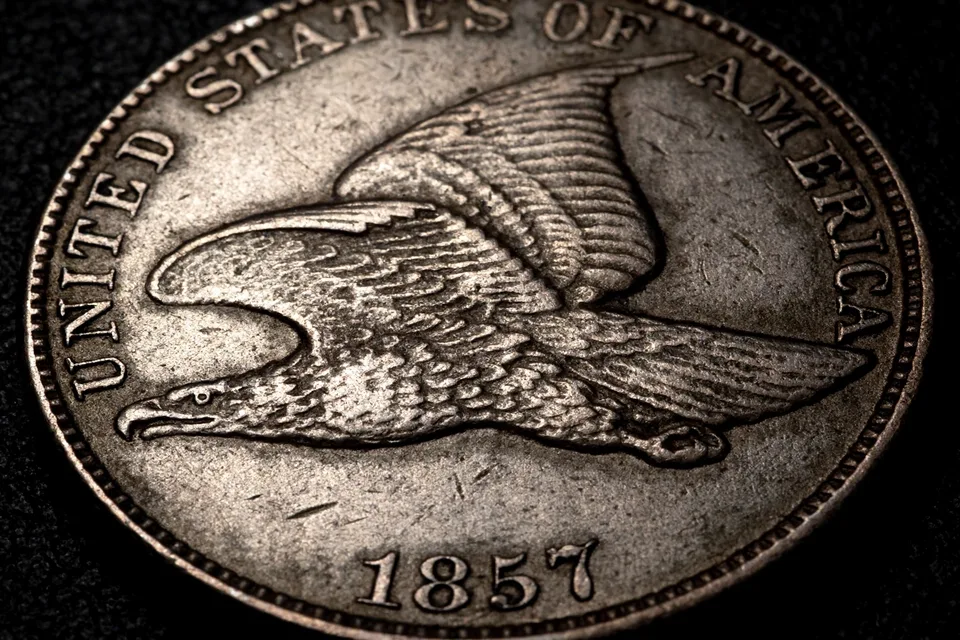
What makes the 1856 so strange is that it looks almost exactly like the regular Flying Eagle cents of 1857 and 1858 — same eagle, same wreath, same size. The difference is the date, the sharper strike, and the story. This page walks through all three: how the pattern came to exist, how to tell a genuine 1856 from the two circulation years that followed it, and what the market has actually done with the finest survivors.
A pattern that escaped the Mint
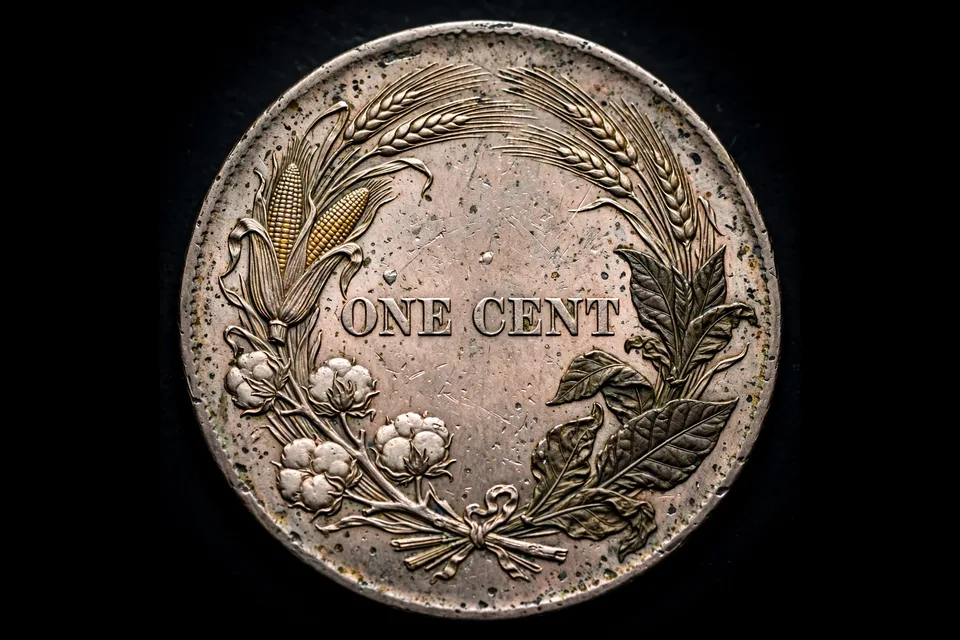
By the mid-1850s the big copper cent was finished. It cost nearly as much to make as it was worth, it was heavy in the pocket, and the Mint wanted it gone. Chief Engraver James B. Longacre's answer was a small cent in copper-nickel — lighter, cheaper, and carrying a design borrowed from an earlier age: Christian Gobrecht's eagle in flight, first drawn for the silver dollar of the 1830s, set above the date with a simple wreath on the reverse.
The Mint struck the 1856 pieces as presentation patterns, not as money. They went out to members of Congress and to people whose opinion mattered, because killing the large cent needed a vote. Heritage notes the Mint struck close to 1,000 examples for distribution, with about 550 survivors estimated across all grades today — though a few more may exist in old collections that have never been counted. Either way, the 1856 is a coin you count in the hundreds, not the millions, and that scarcity was baked in from the day it was struck.
Here is the part that trips up new collectors: the 1856 was struck in proof-like quality on purpose, to show off the design. A genuine example usually has a sharp, even strike and clean fields. A worn, softly struck 1856 is possible — some did circulate after changing hands — but a mushy, dull 1856 with weak feathers should make you pause. The pattern was a showpiece, and the real ones mostly still look like it.
How to tell a real 1856 from an 1857
Start with the date. An 1856 is an 1856: the last digit is a 6, struck cleanly, and the whole date sits level. The danger is not a misread date but a doctored one — an 1857 or 1858 with the 7 or 8 reworked into a 6. Under a loupe, an altered date shows tool marks, a wrong digit shape, or a digit that sits at a slightly different depth from its neighbours. A genuine 1856 digit matches its brothers exactly.
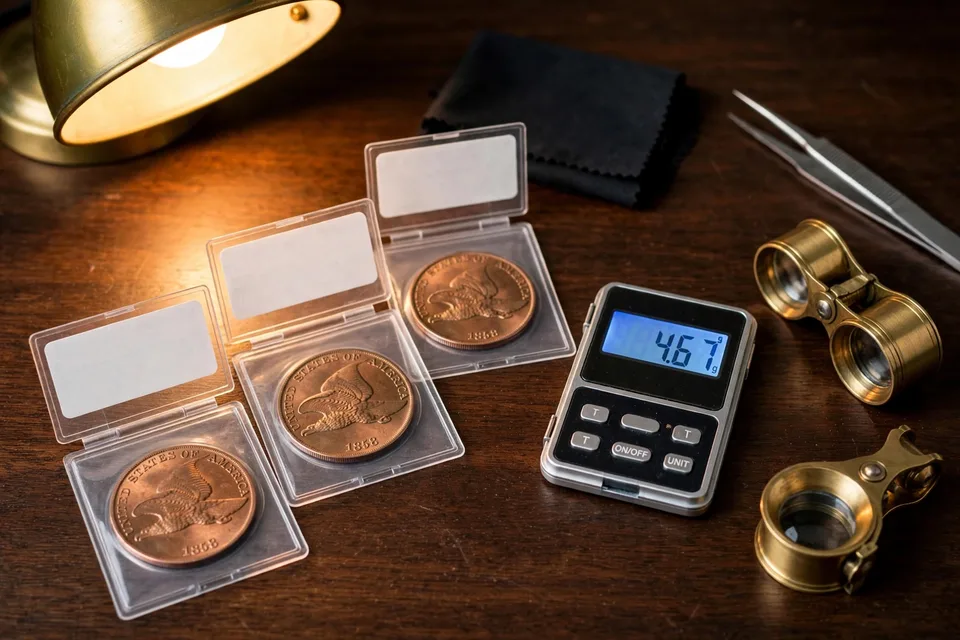
Then check the strike and the metal. The 1856 pattern is copper-nickel, 88 percent copper and 12 percent nickel, weighing about 4.67 grams, and the same composition carried into 1857 and 1858 — so weight alone will not separate the years. What separates them is quality of strike: the 1856 was made with care, and the eagle's feathers, the eye, and the wreath leaves usually show more detail than a typical 1857. A coin that claims to be an 1856 but strikes like a tired late-1858 should be treated with suspicion until a professional has seen it.
Finally, remember the stakes. A genuine 1856 is a four-figure coin even worn, and the finest examples run into six figures — which is exactly why altered-date fakes exist. No 1856 should ever be accepted on a handshake and a story. Certification by a major grading service is the standard for this coin, and any genuine example without it deserves a second look before money is involved.
The $312,000 record — and what it means for the rest
One coin owns the top of this market. The 1856 Snow-3 Flying Eagle cent graded PR67+ by PCGS, with CAC approval and ex Bob R. Simpson provenance, reached $312,000 at Heritage on November 21, 2024. The same coin had set the previous record of $240,000 at Heritage in September 2020. Two records, one coin, four years apart — and a gap of $72,000 between them.
That gap is the lesson. The 1856 market is not a smooth curve; it is a handful of great coins and then a long drop to everything else. A worn example is a four-figure coin, a Mint State example is a five-figure coin, and only the finest proof-like survivors play in six figures. If someone offers you an 1856 at a worn-coin figure and promises a record-coin return, the coin is almost certainly not what it claims to be.
What the 1856 is not
The 1856 is not a circulation coin, and it is not the first Flying Eagle cent most collectors will own. That honour belongs to the 1857, struck in the millions for actual use. It is also not a coin to clean, dip, or “improve” — the original surfaces on a pattern are most of its value, and a cleaned 1856 loses the very quality that made it a showpiece in the first place.
And it is not a coin to hunt for in pocket change. With close to a thousand struck and nearly all of them accounted for in collections, the 1856 turns up in old holdings, estates, and auctions — never in a roll. The realistic way to own one is to study the series, learn the date and strike tells above, and wait for a certified example at a reputable venue. The wait is part of the coin.
What it is worth by grade
Our guide has not yet researched grade-by-grade estimates for the 1856 pattern — the table below shows “—” for every grade rather than a guess. The verified auction records below are the only dollar figures this page carries for the coin itself.
| Grade | Estimated value |
|---|---|
| Good (G-4) | — |
| Fine (F-12) | — |
| Extremely Fine (XF-40) | — |
| About Uncirculated (AU-50) | — |
| Mint State 60 (MS-60) | — |
| Mint State 65 (MS-65) | — |
Guide values reviewed November 5, 2026 — figures update live from our Worker.
Verified auction records
Three verified results anchor the top of the 1856 market — two for the same proof coin, four years apart, and one for the finest Mint State example.
| Coin | Grade | Sale | Price |
|---|---|---|---|
| 1856 Flying Eagle cent | PR67+ PCGS CAC, Snow-3, ex Simpson | Heritage Auctions, November 21, 2024 | $312,000 |
| 1856 Flying Eagle cent | PR67+ PCGS CAC, Snow-3, ex Simpson | Heritage Auctions, September 17, 2020 | $240,000 |
| 1856 Flying Eagle cent | MS66 PCGS, Snow-3 | Heritage Auctions, November 21, 2024 | $192,000 |
The same PR67+ coin set both proof records. The MS66 at $192,000, from the same November 2024 night, shows the ceiling for a Mint State 1856 — a different market from the proof, and a long way below it.
Latest reported results for this coin
Checking for newly reported results…
Your 1856 Flying Eagle questions, answered
How much is an 1856 Flying Eagle cent worth?
Our guide has not yet researched grade-by-grade estimates for the 1856 pattern, so this page carries no estimated value by grade. What is verified is the top of the market: the record is $312,000 for a PR67+ PCGS CAC Snow-3 example that reached that figure at Heritage in November 2024, after the same coin reached $240,000 there in September 2020.
How many 1856 Flying Eagle cents were made?
Close to 1,000 pieces were struck as presentation patterns, and about 550 survivors are estimated across all grades. The 1856 was a trial piece made to win support for the small cent, not a circulation issue, which is why the mintage is counted in the hundreds, not the millions.
How can I tell a real 1856 from an altered 1857 or 1858?
Check the date under a loupe: a genuine 1856 has a clean, evenly struck 6 that matches the other digits in depth and shape. Altered dates show tool marks or a digit that sits wrong. Genuine 1856 cents also usually show a sharper, more proof-like strike than the circulation years. Certification is the standard for this coin.
Why is the 1856 worth so much more than an 1857?
Scarcity. Close to 1,000 of the 1856 were struck against 17,450,000 of the 1857. The 1856 is a pattern with a tiny mintage and a famous story; the 1857 is a common circulation coin. The gap between about a thousand and seventeen million is the whole difference.
What is the Snow-3 variety?
Snow-3 is a die variety designation for the 1856, named in the reference work on Flying Eagle cents. The record coin is a Snow-3, graded PR67+ by PCGS with CAC approval. Variety attributions like this matter most at the very top of the market, where a specific die pairing can add a large premium.
Check your 1856 Flying Eagle cent
Run the date through the free Coin Value Checker for an instant estimate, or get a Grade-or-Not verdict on whether your coin is worth certifying. The full series guide is here: Flying Eagle Cent Value: $30 to $312,000+ Guide. And if your coin might be an 1856, read the sibling pages too — the 1857 Flying Eagle cent and the 1858 Flying Eagle cent show what the circulation years look like beside the pattern.
This page is written to help collectors learn the history and identification of the 1856 Flying Eagle cent; it is educational reference, not a promise about any individual coin's worth.