Why the 1872 Indian Head Cent Is a Sleeper Key
Coin Encyclopedia · 7 min read · Published November 7, 2026
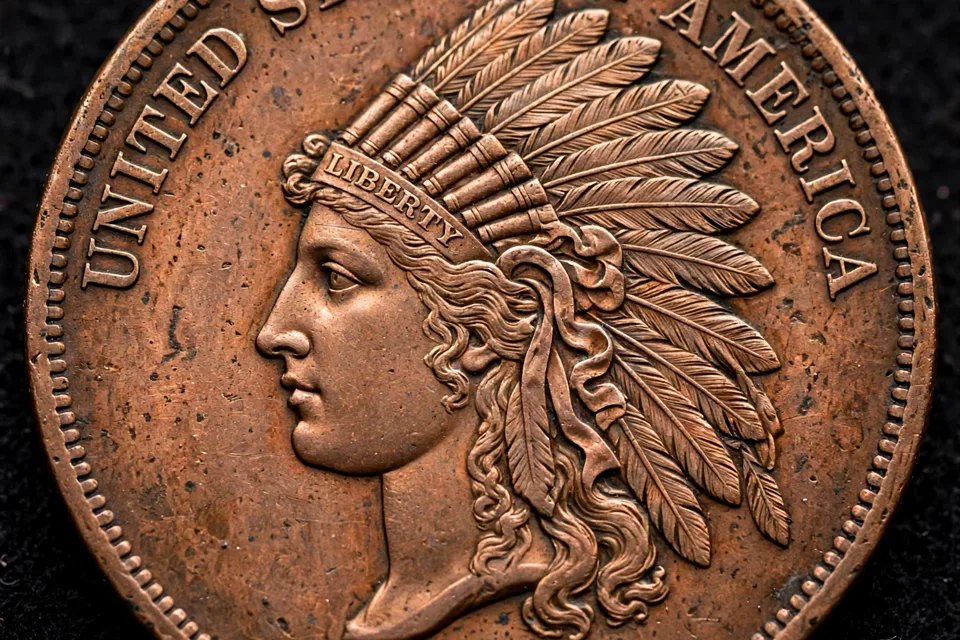
The 1872 Indian Head cent is the sleeper of the series. It looks like every other bronze Indian cent of the 1870s — same portrait, same wreath, same warm brown metal — and for a century collectors walked past it on their way to the famous 1877. Then the numbers caught up: only 4,042,000 were struck, the lowest mintage of the early bronze years, and a date that looks common turns out to be anything but.
Our series guide puts circulated examples at $100+ and the finest at $126,500. That spread — a hundred dollars worn, six figures at the top — is the whole story of a sleeper key: a coin that spent decades priced like a common date while the mintage quietly said otherwise. This page is about how to spot it, why it hides, and what to check before you call any 1872 ordinary.
Why the 1872 hides in plain sight
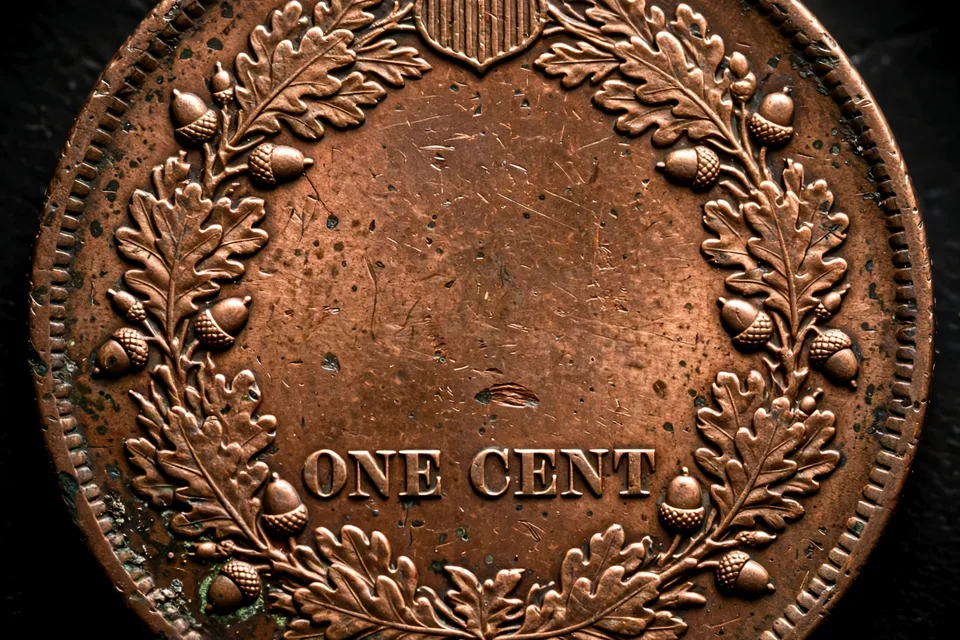
The 1872 hides because nothing about it looks rare. The portrait is the same Longacre design struck since 1859, the reverse is the same oak wreath with the shield at the top, and the bronze is the same 95-percent-copper alloy as every cent from 1864 to 1909. There is no variety to hunt, no overdate to find, no mint mark to check — Philadelphia struck them all, as it had every Indian cent so far. A sleeper key has no tell on its face. Its tell is in the mintage table.
And the mintage table is stark. The years around it struck far more: the early 1870s were not a low-output period in general, which is what makes the 1872 stand out once you look. Collectors who build the series by date learn the pattern quickly — the 1870s are mostly affordable, and then there is 1872, and then there is 1877. Two dates, one decade, and a gap between them that the rest of the decade does not share.
The other reason it hides is condition. The 1872 circulated hard, like every cent of its decade, and most survivors are worn smooth — feather tips gone, wreath leaves flat, the date soft at the edges. A worn 1872 still carries its $100+ standing, but it does not look like a hundred-dollar coin to an untrained eye. That is the sleeper's camouflage, and it is also why so many 1872 cents sat in jars and albums for decades before anyone checked the date properly.
The mintage gap, in plain numbers
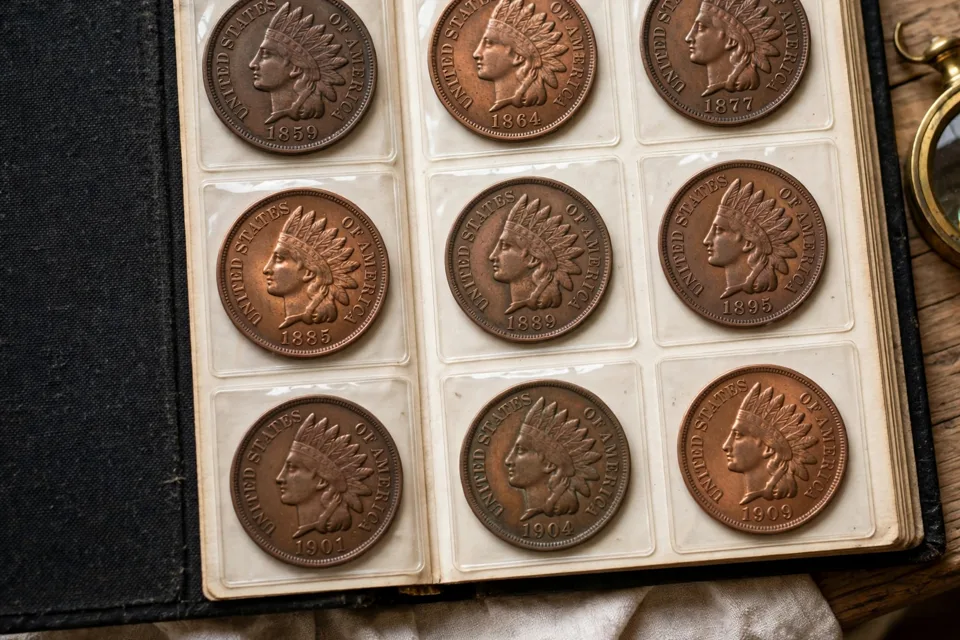
Put 4,042,000 beside its neighbours and the gap does the talking. The 1866, six years earlier, ran to 9,826,500 — more than double. The 1877, five years later, ran to only 852,500, the series key. The 1872 sits between them as the second-scarcest Philadelphia date of the bronze run's first half, and the only one of the three that collectors routinely overlook. Mintage is not value by itself — demand decides that — but a mintage less than half its neighbours, in a series collected by date, is a fact that eventually shows up in the market.
It also shows up in the top of the market. Our series guide records the finest 1872 reaching $126,500 — a figure that belongs to a key date, not a common one. The lesson is not that every 1872 is a treasure; it is that the distance between a worn 1872 and a finest-known 1872 is the distance between two different coins, and the date alone does not tell you which one you hold. Grade and originality do that, and they matter more on a sleeper than on any other date.
Spotting a real 1872
Read the date first, and read it twice. The 1872 date sits below Liberty's portrait on the obverse, and on worn examples the 2 can soften toward a shape that invites misreading. A loupe and a single light source settle it: the digits should be level, evenly struck, and the same depth as each other. A date that looks re-cut, tooled, or uneven deserves a professional opinion before it is treated as genuine.
Then weigh the coin. A genuine 1872 is bronze — 95 percent copper with 5 percent tin and zinc — at 3.11 grams and 19 millimetres across, with a plain edge. The copper-nickel years ended in 1864, so a 4.67-gram 1872 would be a wrong-metal coin, not a variety. Colour backs the scale up: warm brown, darkening with age, and original surfaces even when dark. A bright pink or orange 1872 has been cleaned, and cleaning cuts the appeal of a sleeper key faster than wear ever could.
Finally, check the reverse the same way you would on any Indian cent. The oak wreath with the shield at the top should show leaves, not a blur, and there is no mint mark — Philadelphia struck every Indian cent until 1908. An S below the wreath on an 1872 is a coin to walk away from, not a discovery.
The coin at a glance
Designer James B. Longacre. Struck 1872 at Philadelphia only. Composition bronze, 95 percent copper with 5 percent tin and zinc. Weight 3.11 grams, diameter 19 millimetres, plain edge. Obverse: Liberty in a Native American headdress, date below, Longacre's L on the ribbon behind her neck. Reverse: oak wreath with a shield at the top, ONE CENT at the centre, no mint mark. Mintage 4,042,000. Metal floor: —. A copper cent carries no precious-metal floor, so the live system shows no melt figure for this coin — its worth is collector value alone.
The 1872 rewards the collector who reads mintages instead of headlines. It will never be the 1877, and it does not need to be: a sleeper key earns its place by being the date everyone already owns and nobody has properly looked at. Check your 1870s cents. The 1872 may already be there.
What it is worth by grade
Our guide has not yet researched grade-by-grade estimates for the 1872 — the table below shows “—” for every grade rather than a guess. The series guide puts circulated examples at $100+ and records the finest reaching $126,500.
| Grade | Estimated value |
|---|---|
| Good (G-4) | — |
| Fine (F-12) | — |
| Extremely Fine (XF-40) | — |
| About Uncirculated (AU-50) | — |
| Mint State 60 (MS-60) | — |
| Mint State 65 (MS-65) | — |
Guide values reviewed November 5, 2026 — figures update live from our Worker.
Latest reported results for this coin
Checking for newly reported results…
Your 1872 Indian Head questions, answered
How much is an 1872 Indian Head cent worth?
Our guide has not yet researched grade-by-grade estimates for the 1872, so this page carries no estimated value by grade. The series guide puts circulated examples at $100+ and records the finest reaching $126,500. Grade and originality decide where any individual coin falls between those two figures.
Why is the 1872 called a sleeper key?
Because its mintage is far lower than its neighbours — 4,042,000 against 9,826,500 for the 1866 — yet the coin looks exactly like an ordinary bronze Indian cent. Collectors walked past it for decades on their way to the famous 1877, and only the mintage table gave it away.
How many 1872 Indian Head cents were made?
4,042,000 were struck at Philadelphia in 1872. That is the lowest mintage of the early bronze years and the second-scarcest Philadelphia date of the bronze run's first half, behind only the 1877 at 852,500.
How do I tell a real 1872 from a common date?
Read the date under a loupe — the digits should be level and evenly struck — then weigh the coin: a genuine 1872 is bronze at 3.11 grams and 19 millimetres across, with a plain edge and no mint mark. A 4.67-gram example would be wrong-metal, and an S below the wreath would be a fake.
Is the 1872 Indian Head cent rare in Mint State?
Yes. The 1872 circulated hard and most survivors are worn, so sharp, original Mint State examples are a small share of the 4,042,000 struck. That scarcity at the top is why the finest recorded example reached $126,500 while worn examples sit around $100+.
Check your 1872 Indian Head cent
Run the date through the free Coin Value Checker for an instant estimate, or test it against the Key Date Checker to see where it sits in the series. The full series guide is here: Indian Head Penny Values by Date: $2 to $340,875+. And compare the other scarce bronze dates — the 1866 Indian Head cent and the 1877 Indian Head cent.
This guide is written so collectors can spot a sleeper key for themselves — by mintage, by weight, and by reading the date properly — and use that knowledge before any individual coin is judged.