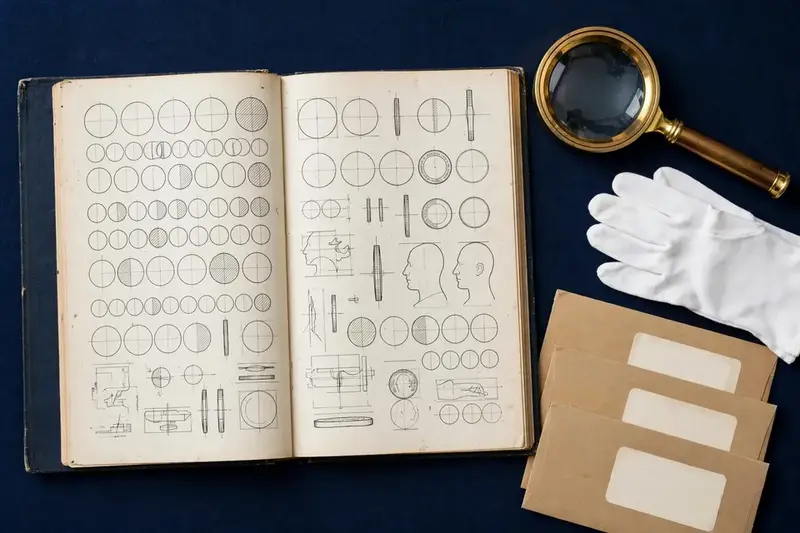
1873 Indian Head Cent: Doubled LIBERTY Under the Loupe
Coin Encyclopedia · 8 min read · Published November 7, 2026
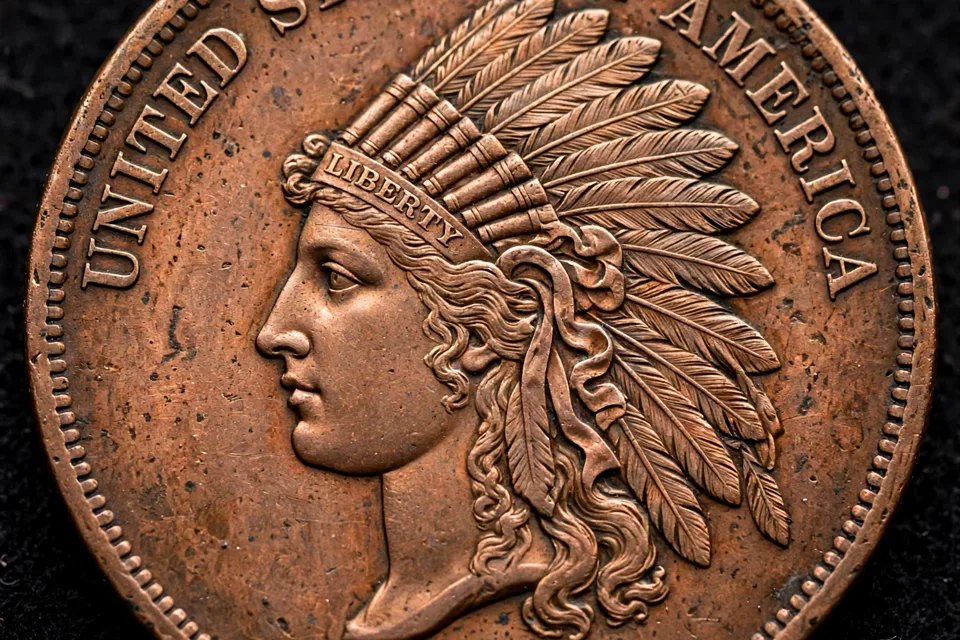
The 1873 Indian Head cent is a variety hunter's date. The regular 1873 is an ordinary bronze cent, struck in the millions and worth little worn. The Doubled LIBERTY variety is a different coin hiding inside that mintage: the word LIBERTY across the headband was doubled when the die was made, and the doubling is strong enough to see under a loupe — and, on the best examples, without one.
Our series guide puts the Doubled LIBERTY at $2,250 in Very Fine, $5,000 in About Uncirculated, and $7,750 in Choice Uncirculated. That is the premium a few doubled letters can carry, and it is why variety specialists hunt the 1873 first in this series. This page shows where the doubling sits, how to separate it from ordinary wear and machine doubling, and the two date styles — Closed 3 and Open 3 — that every 1873 collector needs to know.
The doubling in the headband
Look at Liberty's headband, where the word LIBERTY runs across her forehead. On the Doubled LIBERTY variety, the letters show a second, shifted image — most clearly on the B, E, R, and T — as if the word had been stamped twice, slightly out of register. The effect comes from the die itself: the hub that cut the die was impressed twice at a small offset, so every coin that die struck carries the same doubled letters. It is not damage, it is not wear, and it is not something that happened to one coin — it is baked into the die, which is why the variety is collectible at all.
Use a 10x loupe and a single light source, tilted slowly. True hub doubling shows letters that match the originals in height and thickness, with rounded, split serifs — the doubled image is as strong as the first. Machine doubling, the common lookalike, shows flat, shelf-like doubling with a stepped, reduced appearance, because it happens during striking when the die bounces, not during die-making. The distinction matters: hub doubling is a variety worth a premium, machine doubling is a striking quirk worth little. Learn the difference on the headband first, and you will not be fooled by it anywhere else in the series.
Check the date too. The doubling on the Doubled LIBERTY is concentrated in the headband, but a careful look at the date and the portrait can show the same shifted doubling elsewhere on strong examples. A coin that shows doubling only on the date, or only on one letter, is more likely machine doubling — the true variety doubles the headband word as a set.
Closed 3 and Open 3 — the other 1873 split
Every 1873 collector meets a second split before the variety hunt even starts: the 3 in the date comes in two styles. The Closed 3 has its two lobes close together, almost touching; the Open 3 has them spread apart. The difference comes from two different date punches used that year, and both styles exist across the 1873 mintage. Neither is rare on its own, but knowing which one you hold is the first step in attributing any 1873 — the Doubled LIBERTY is catalogued against the date styles, and a variety attribution that ignores the 3 is an attribution half done.
Read the 3 under the same loupe you used for the headband. The lobes are small and the difference is a matter of millimetres, so compare against a reference image at the same size rather than trusting memory. Once you have seen both styles, the split is easy to hold in your head — and it is the kind of small, exact knowledge that separates a variety collector from a casual one.
How to hunt the 1873 properly
Work through a tray of 1873 cents in order: date style first, headband second, everything else third. The Closed 3 and Open 3 split takes seconds once you know it. The headband check takes longer — tilt each coin under a single light, look at LIBERTY letter by letter, and set aside anything that shows a second image. Most will be normal. The ones that are not will stop you at once, because true hub doubling does not whisper; on the Doubled LIBERTY it is plain to see.
Weigh and measure anything you set aside. A genuine 1873 is bronze at 3.11 grams and 19 millimetres across, with a plain edge and no mint mark. A coin that fails the weight test is not a variety — it is a problem. And keep the coin original: never clean a suspect variety. Cleaning strips the surfaces that prove originality, and a cleaned Doubled LIBERTY is worth a fraction of a certified original one, no matter how strong the doubling looks.
Finally, remember what the variety is not. It is not the 1873 proof, it is not the 1873 with a repunched date — Rick Snow's reference catalogues many repunched dates in this series — and it is not a coin to attribute from a phone photo. A Doubled LIBERTY at serious value deserves certification: the grading services attribute the variety, and the attribution is what makes the coin tradable at its real figure.
The coin at a glance
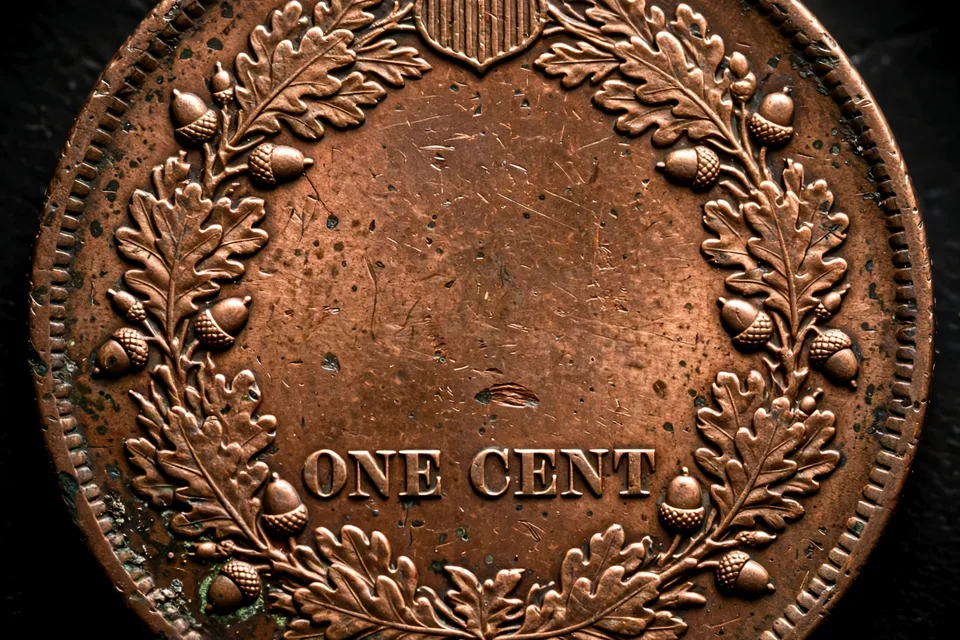
Designer James B. Longacre. Struck 1873 at Philadelphia only. Composition bronze, 95 percent copper with 5 percent tin and zinc. Weight 3.11 grams, diameter 19 millimetres, plain edge. Obverse: Liberty in a Native American headdress, date below, doubled LIBERTY across the headband on the variety, Longacre's L on the ribbon behind her neck. Reverse: oak wreath with a shield at the top, ONE CENT at the centre, no mint mark. Mintage: the Doubled LIBERTY is a variety within the 1873 mintage, not a separate mintage — the catalog carries no separate figure for it. Metal floor: —. A copper cent carries no precious-metal floor, so the live system shows no melt figure for this coin — its worth is collector value alone.
The 1873 is the variety specialist's date in this series for a simple reason: the doubling is real, it is visible, and it is findable. The regular 1873 is a common bronze cent. The Doubled LIBERTY is the coin that teaches you to look at the headband before you look at anything else — and once you have learned that, you will never look at an Indian cent the same way again.
What it is worth by grade
Our guide has not yet researched grade-by-grade estimates for the 1873 — the table below shows “—” for every grade rather than a guess. The series guide puts the Doubled LIBERTY variety at $2,250 in Very Fine, $5,000 in About Uncirculated, and $7,750 in Choice Uncirculated.
| Grade | Estimated value |
|---|---|
| Good (G-4) | — |
| Fine (F-12) | — |
| Extremely Fine (XF-40) | — |
| About Uncirculated (AU-50) | — |
| Mint State 60 (MS-60) | — |
| Mint State 65 (MS-65) | — |
Guide values reviewed November 5, 2026 — figures update live from our Worker.
Latest reported results for this coin
Checking for newly reported results…
Your 1873 Indian Head questions, answered
How much is an 1873 Doubled LIBERTY Indian Head cent worth?
Our guide has not yet researched grade-by-grade estimates for the 1873, so this page carries no estimated value by grade. The series guide puts the Doubled LIBERTY variety at $2,250 in Very Fine, $5,000 in About Uncirculated, and $7,750 in Choice Uncirculated. The regular 1873, without the doubling, is a common bronze cent worth far less.
Where is the doubling on the 1873 Doubled LIBERTY?
Across the word LIBERTY in the headband on Liberty's forehead — most clearly on the B, E, R, and T. True hub doubling shows a second image that matches the originals in height and thickness, with rounded, split serifs. Use a 10x loupe and tilt the coin under a single light.
What is the difference between Closed 3 and Open 3 on an 1873?
The two lobes of the 3 in the date sit close together on the Closed 3 and spread apart on the Open 3, because two different date punches were used that year. Neither style is rare on its own, but the split is the first step in attributing any 1873, including the Doubled LIBERTY.
How is hub doubling different from machine doubling?
Hub doubling happens when the die is made — the hub impresses the die twice at a small offset — so the doubled letters match the originals in height and thickness. Machine doubling happens during striking, when the die bounces, and shows flat, shelf-like doubling with a stepped look. Only hub doubling is a variety worth a premium.
How many 1873 Doubled LIBERTY cents were made?
The Doubled LIBERTY is a variety within the 1873 mintage, not a separate mintage, so the catalog carries no separate figure for it. It comes from one doubled die, which means the number struck is limited to what that die produced before it wore out or was retired.
Check your 1873 Indian Head cent
Run the date through the free Coin Value Checker for an instant estimate, or work the headband through the Error Coin Identifier step by step. The full series guide is here: Indian Head Penny Values by Date: $2 to $340,875+. Compare the other scarce bronze dates — the 1872 Indian Head cent and the 1877 Indian Head cent.
This page exists to teach collectors how to find a doubled die for themselves — in the headband, under a loupe, and with the weight test behind it — and it is educational reference, not a promise about any individual coin.