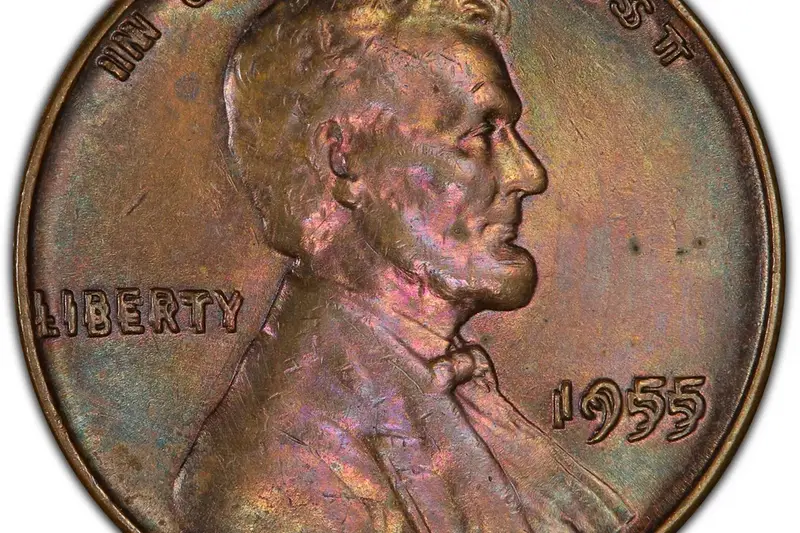
1909 Lincoln Cent VDB: The First Lincoln Cent
Coin Encyclopedia · 8 min read · Published November 7, 2026
The 1909 Lincoln cent was the first United States coin ever to carry a president's portrait, and it arrived for a reason: 1909 was the 100th anniversary of Abraham Lincoln's birth. The Mint replaced the Indian Head cent — fifty years old that year — with Victor David Brenner's portrait of Lincoln on the obverse and two stalks of durum wheat on the reverse, and struck 27,995,000 of them at Philadelphia. It is the most common first-year cent in the series, and the most historic.
The Philadelphia 1909 VDB is the coin most collectors meet first in the Lincoln series: common enough to find in modest grades, old enough to feel like real history, and the starting point of a design that would run, with changes, for more than a century. This page covers the centennial, the portrait, the initials, and what a Philadelphia 1909 VDB is actually worth — which is a few dollars worn, and the reason the San Francisco version of the same coin is worth hundreds.
The centennial cent
The Lincoln cent was issued in 1909 for the 100th anniversary of Abraham Lincoln's birth, and the choice of Lincoln was itself a break with tradition. No president had ever appeared on a United States coin while the republic stood — the convention was that living rulers went on coins, and American coins carried Liberty instead. Theodore Roosevelt had already broken the pattern with Saint-Gaudens' gold, and the Lincoln cent broke it for the smallest coin in circulation. The public took to it at once: here was a president everyone knew, on the coin everyone handled.
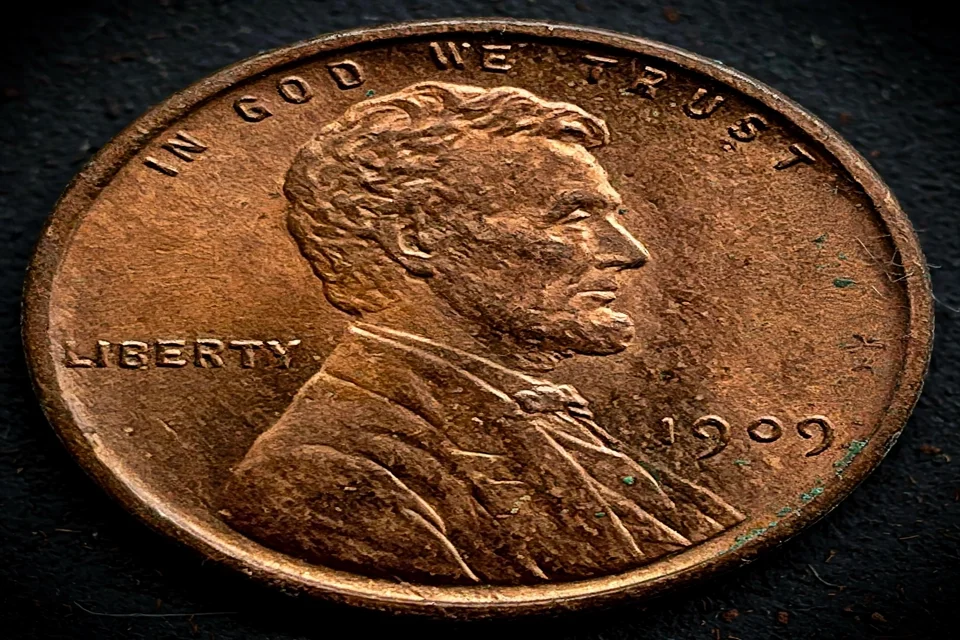
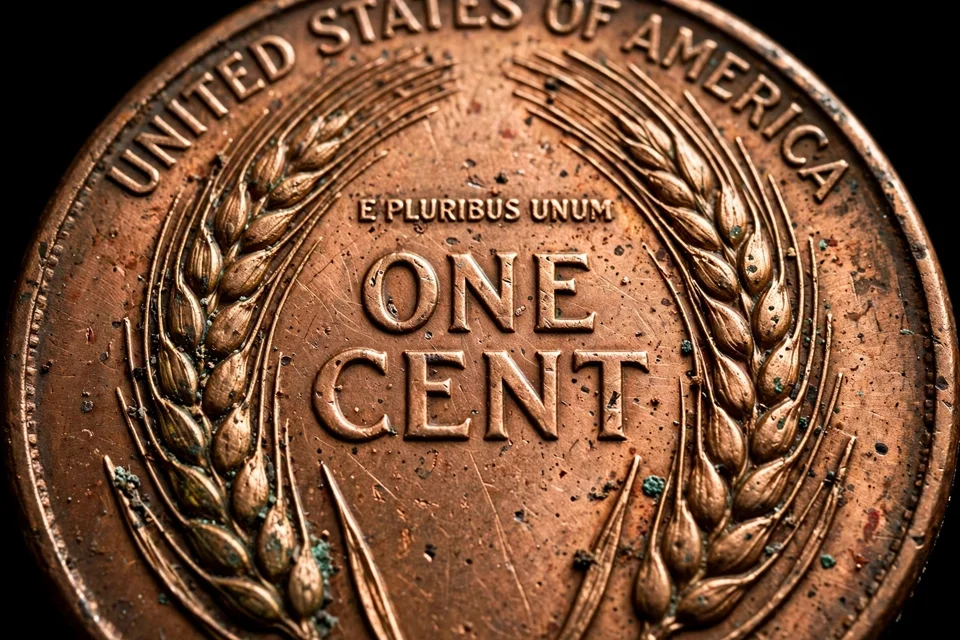
Brenner based the portrait on a plaque he had made of Lincoln in 1907, and the likeness is the reason the design has lasted. Lincoln faces right, bearded, with the date below and LIBERTY behind him and IN GOD WE TRUST above — the first time the motto appeared on a cent. The reverse shows two stalks of durum wheat flanking ONE CENT, with UNITED STATES OF AMERICA above. The wheat ran from 1909 through 1958, before the Lincoln Memorial design replaced it in 1959, and the portrait is still in use today.
Philadelphia struck 27,995,000 of the 1909 VDB — the largest first-year mintage of any cent design change, and a figure that makes the Philadelphia coin common by any measure. It is the coin to learn the series on: the portrait, the wheat, the initials, and the bronze — all of it is here, in the first year, at a figure anyone can afford.
Brenner's portrait — and the initials
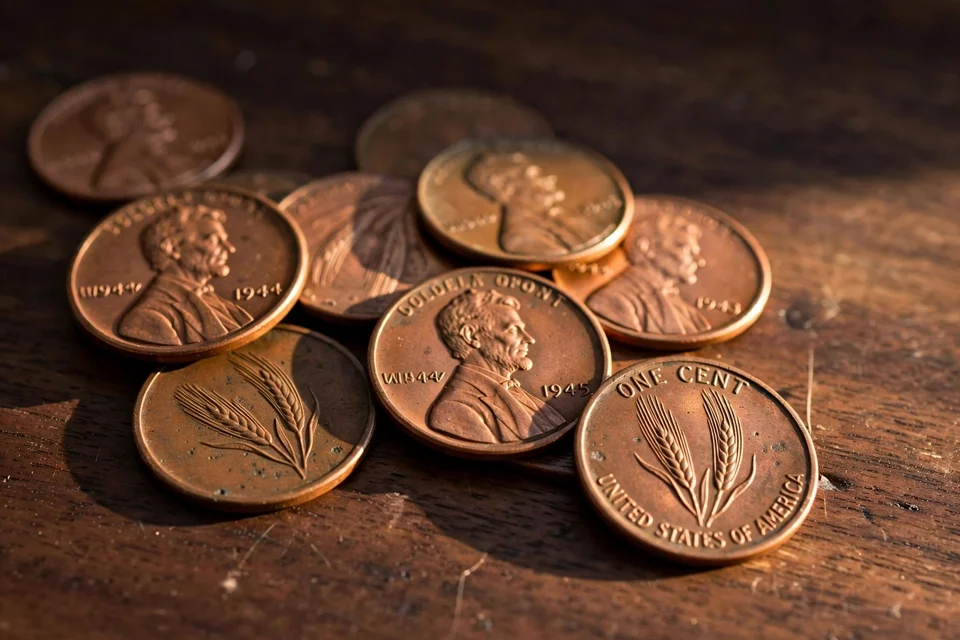
Victor David Brenner was a Lithuanian-born sculptor working in New York when the Mint chose him for the centennial coin. His Lincoln came from a plaque, not from a coin design, and it shows: the portrait has a sculptural depth the Indian Head cent never had, with Lincoln's beard, cheek, and coat reading as modelled forms rather than flat lines. It is the portrait that made the Lincoln cent a design classic, and it is the reason the obverse has never been changed.
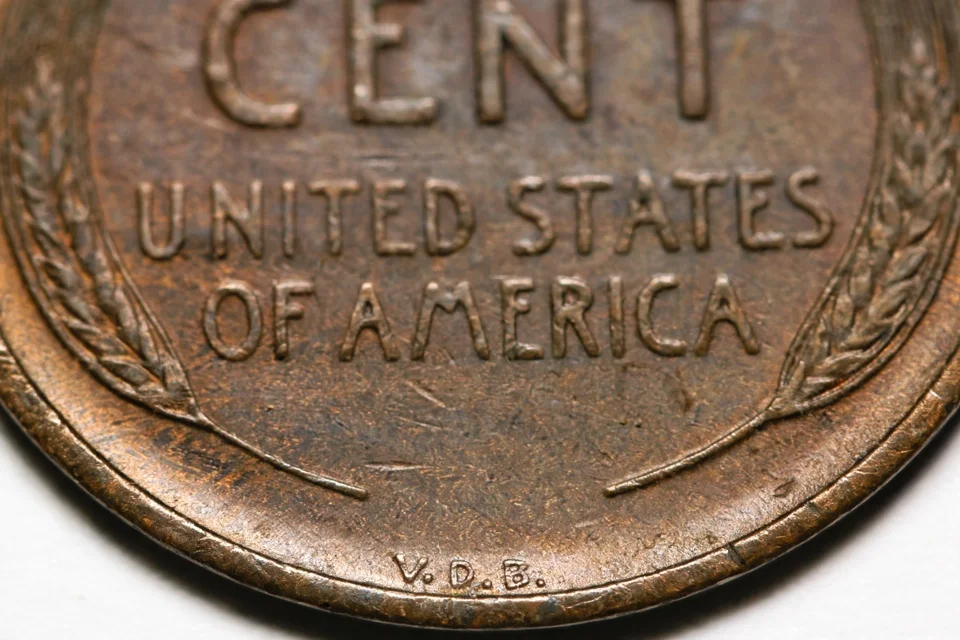
Brenner signed the work with his initials — V.D.B. — stamped boldly across the bottom of the reverse, between the two wheat stalks. The initials were large enough to read without a loupe, and the public hated them: newspapers called them advertising, the Mint got complaints, and within weeks the initials were pulled. Philadelphia went on striking cents without them, and San Francisco — which had already struck 484,000 with the initials — went back to striking cents without them too. The initials everyone wanted removed are now the very thing that makes the 1909-S VDB worth $800+.
On the Philadelphia coin, the initials are simply part of the design. A 1909 with V.D.B. but no mint mark is a Philadelphia cent, worth a few dollars worn — the same initials, the same reverse, and a mintage of nearly twenty-eight million instead of 484,000. The difference between the two coins is not the initials. It is the S below the date.
Reading a 1909 Philadelphia VDB
Check the obverse first. The date 1909 sits below Lincoln's portrait, and there is no mint mark below it — Philadelphia struck this coin, and Philadelphia cents carry no mint mark. The portrait should show Lincoln's beard and coat clearly on a sharp example; on a worn one the beard softens first, and the coat lines go before the face does. The wheat reverse should show two full stalks with grains you can count on a sharp coin.
Then check the reverse for the initials. V.D.B. sits at the very bottom of the reverse, between the wheat stalks, in small but clear letters. On a worn coin the initials soften, and on a heavily worn one they can nearly disappear — but a 1909 Philadelphia cent without visible initials is still a 1909 VDB by date and mint, not a No-VDB. The No-VDB variety is a San Francisco coin, struck after the initials were removed; Philadelphia never struck a 1909 without them.
Weigh the coin while you have it in hand. A genuine 1909 is bronze — 95 percent copper with 5 percent tin and zinc — at 3.11 grams and 19 millimetres across, with a plain edge. A coin far off that weight, or one whose portrait looks soft and hand-cut, deserves a professional opinion before it is treated as genuine.
The coin at a glance
Designer Victor David Brenner. Struck 1909 at Philadelphia only. Composition bronze, 95 percent copper with 5 percent tin and zinc. Weight 3.11 grams, diameter 19 millimetres, plain edge. Obverse: Lincoln facing right, date below, no mint mark. Reverse: two wheat stalks flanking ONE CENT, UNITED STATES OF AMERICA above, V.D.B. initials at the base. Mintage 27,995,000. Metal floor: —. A copper cent carries no precious-metal floor, so the live system shows no melt figure for this coin — its worth is collector value alone.
The 1909 Philadelphia VDB is the starting point of the Lincoln cent, and the coin to learn the design on. It is common, it is historic, and it is the reason the San Francisco version is famous: the same coin, the same initials, and a mintage nearly sixty times larger. Hold the two dates side by side and the whole first year of the Lincoln cent is in your hands.
What it is worth by grade
Our guide has not yet researched grade-by-grade estimates for the 1909 Philadelphia VDB — the table below shows “—” for every grade rather than a guess. As a common first-year date, a worn example is worth a few dollars; the series guide carries the current overview of wheat values across all dates.
| Grade | Estimated value |
|---|---|
| Good (G-4) | — |
| Fine (F-12) | — |
| Extremely Fine (XF-40) | — |
| About Uncirculated (AU-50) | — |
| Mint State 60 (MS-60) | — |
| Mint State 65 (MS-65) | — |
Guide values reviewed November 5, 2026 — figures update live from our Worker.
Latest reported results for this coin
Checking for newly reported results…
Your 1909 Lincoln cent questions, answered
How much is a 1909 Lincoln cent worth?
Our guide has not yet researched grade-by-grade estimates for the 1909 Philadelphia VDB, so this page carries no estimated value by grade. As a common first-year date with 27,995,000 struck, a worn example is worth a few dollars. The valuable 1909 is the San Francisco VDB — 484,000 struck, $800+ worn.
What does VDB stand for?
V.D.B. are the initials of Victor David Brenner, the sculptor who designed the Lincoln cent. They appear at the bottom of the reverse on the first 1909 cents, and were removed after public complaints that they were too prominent.
Is my 1909 VDB the valuable one?
Only if it carries an S mint mark below the date. A 1909 with V.D.B. but no S is a Philadelphia cent, worth a few dollars worn. The 1909-S VDB — S below the date, V.D.B. on the reverse — is the $800+ key date. Both marks must be present.
Why was the Lincoln cent issued in 1909?
1909 was the 100th anniversary of Abraham Lincoln's birth, and the Mint replaced the fifty-year-old Indian Head cent with Brenner's portrait of Lincoln. It was the first United States coin ever to carry a president's portrait.
How long did the wheat reverse run?
From 1909 through 1958 — nearly fifty years of wheat cents, struck in the billions across three mints. The Lincoln Memorial design replaced the wheat reverse in 1959, while Brenner's portrait stayed on the obverse.
Check your 1909 Lincoln cent
Run the date through the free Coin Value Checker for an instant estimate, or test it against the Key Date Checker to see where it sits in the series. The full wheat series guide is here: Wheat Pennies Worth Money, 3¢ to $1.7 Million+. And meet the coin that made the initials famous — the 1909-S VDB Lincoln cent — and its sibling, the 1909-S No VDB Lincoln cent.
This guide is written so collectors can learn the first Lincoln cent for themselves — its centennial, its portrait, and its initials — and use that knowledge before any individual coin is judged.