1909-S No VDB Lincoln Cent: The $100+ Second Key
Coin Encyclopedia · 7 min read · Published November 7, 2026
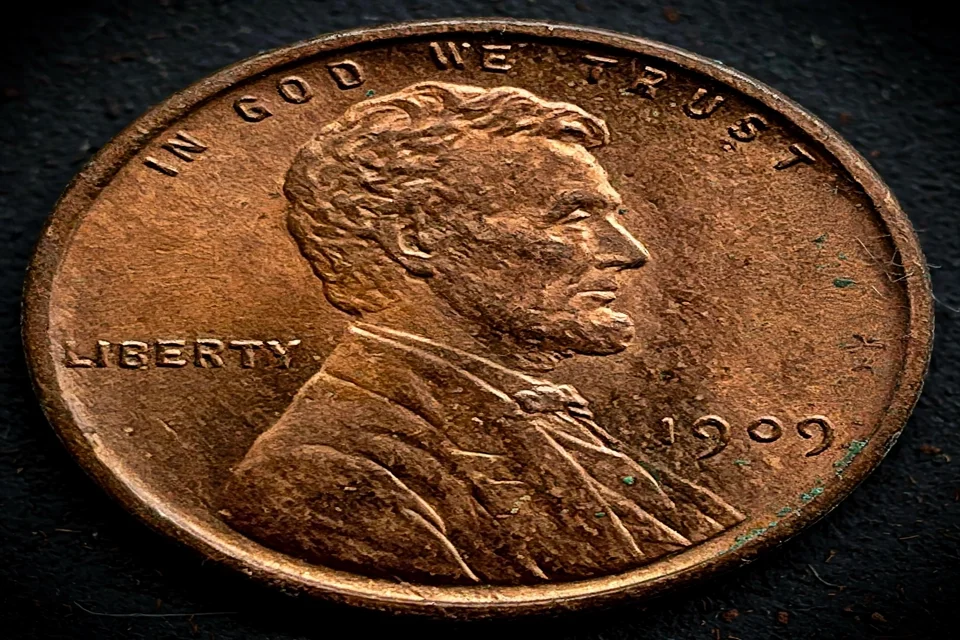
The 1909-S No VDB Lincoln cent lives in the shadow of the most famous coin in the wheat series — and it is a key date in its own right. When the public complained about Victor David Brenner's initials on the reverse, the Mint pulled them. San Francisco had already struck 484,000 cents with the initials on them. Then it struck 1,825,000 without them. Those 1,825,000 coins are the No-VDB variety: the second key of the first year, worth $100+ worn and $800+ in mint state.
The No-VDB is the coin that teaches the first year properly. It is the same San Francisco cent as the VDB, the same portrait, the same wheat, the same bronze — and the only difference is three small letters at the bottom of the reverse. That difference is worth hundreds of dollars, and it is the reason every 1909-S needs a look at both sides before it is judged.
The coin struck after the initials were pulled
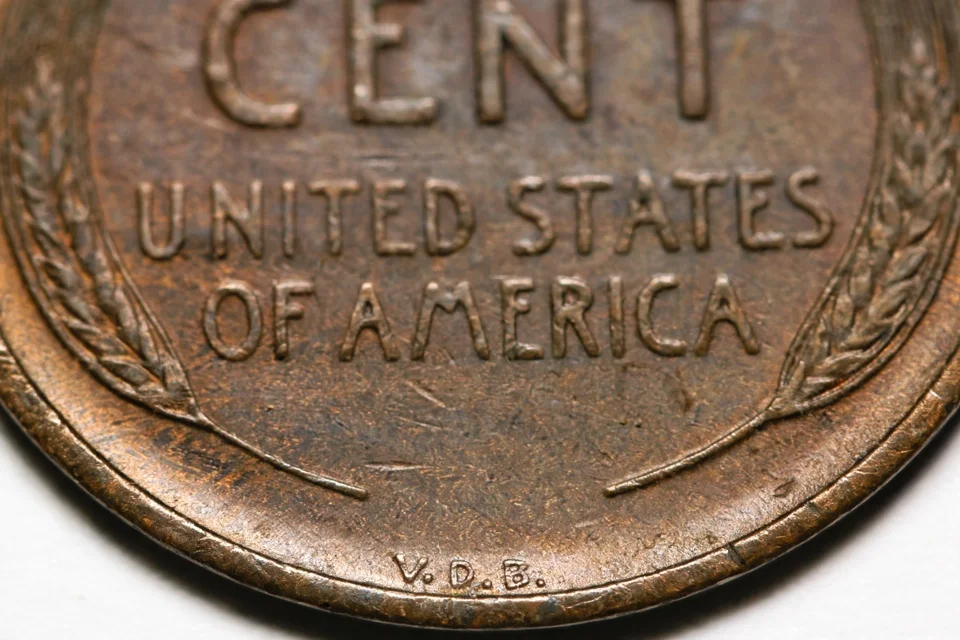
The story is the same as the VDB's, told from the other side. Brenner signed his new Lincoln cent with his initials — V.D.B. — stamped boldly across the bottom of the reverse. The public hated it, newspapers called it advertising, and the Mint agreed to remove the initials. The removal happened fast: within weeks of the first cents reaching circulation, the dies were changed and the initials were gone.
San Francisco's numbers tell the changeover plainly. The VDB run was 484,000 — the cents struck before the complaint landed. The No-VDB run was 1,825,000 — the cents struck after it. The No-VDB is nearly four times as common as the VDB, and it is still a key date: 1,825,000 is a small mintage for a first-year cent, and the No-VDB is the second-lowest mintage of the 1909 issues, behind only its VDB sibling.
The irony is complete, and it runs both ways. The initials everyone wanted removed are now the very thing that makes the VDB worth $800+. And the coin struck after the removal — the plain, uninitialled cent — is itself worth $100+ worn, because it is still a first-year San Francisco cent with a low mintage. The controversy made both coins valuable, just at different levels.
Telling No VDB from VDB
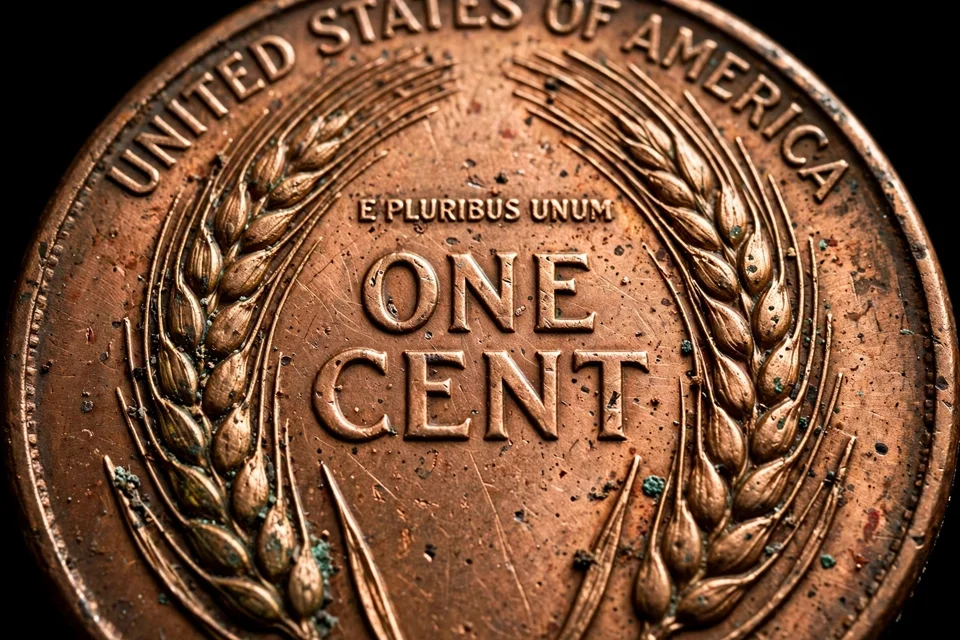
Look at the bottom of the reverse, between the two wheat stalks. On the VDB the initials sit there in small, clear letters. On the No-VDB the space is blank — the wheat stalks meet the rim with nothing between them. The check takes seconds, and it is the only difference between the two coins: same obverse, same S mint mark below the date, same bronze, same weight.
Check the S as well. The mint mark sits on the obverse, directly below the date, and it must be there — a 1909 No-VDB without an S is a Philadelphia cent, worth a few dollars, not a San Francisco key. And check it under a loupe: the 1909-S is one of the most counterfeited wheat pennies, and the fake is as simple as the VDB's — take a common 1909 Philadelphia cent, add an S below the date, and a few-dollar coin becomes a $100+ coin. A genuine S sits in the correct position with the correct shape, struck with the rest of the coin, and the weight must be 3.11 grams.
Colour matters on this coin as it does on every wheat cent. Copper oxidizes, so grading services describe wheat cents as Red, Red-Brown, or Brown, and a Red coin in the same technical grade can be worth many times what a Brown one brings. Never clean a 1909-S No VDB: cleaning strips the original surface and its colour, and a cleaned coin is worth a fraction of an original one, no matter how sharp the details look.
What $100+ worn and $800+ mint state mean
Our wheat series guide puts the No-VDB at $100+ worn and $800+ in mint state. Those two figures are the shape of the coin's market: a first-year San Francisco key that is affordable worn and serious in Mint State, and a coin whose value climbs steeply with condition and colour. A worn No-VDB is a $100+ coin because it is a low-mintage first-year San Francisco cent. A mint-state red one is an $800+ coin because it is that, and original, and red.
Put the No-VDB beside its VDB sibling and the gap does the talking. Worn, the VDB is $800+ against the No-VDB's $100+. In mint state, the VDB runs to $2,000+ and far beyond, while the No-VDB sits at $800+. The gap is the initials — three letters, and the story behind them. It is the cleanest demonstration in the wheat series of how a variety, not a mintage, decides value: the No-VDB was struck in nearly four times the numbers, and it is worth a fraction of its sibling.
The coin at a glance
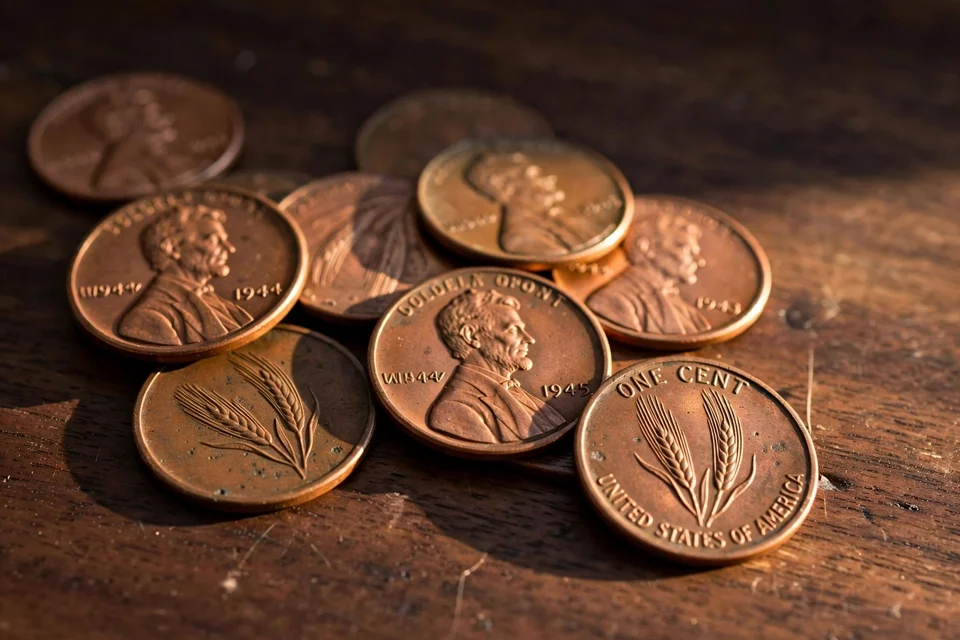
Designer Victor David Brenner. Struck 1909 at San Francisco only. Composition bronze, 95 percent copper with 5 percent tin and zinc. Weight 3.11 grams, diameter 19 millimetres, plain edge. Obverse: Lincoln facing right, date below, S mint mark below the date. Reverse: two wheat stalks flanking ONE CENT, UNITED STATES OF AMERICA above, no V.D.B. initials at the base. Mintage 1,825,000. Metal floor: —. A copper cent carries no precious-metal floor, so the live system shows no melt figure for this coin — its worth is collector value alone.
The 1909-S No VDB is the second key of the first year, and the coin that makes the first year make sense. Learn the initials check here, and the VDB will never confuse you again — and the rest of the wheat series, with its mint marks and its varieties, will read the same way.
What it is worth by grade
Our guide has not yet researched grade-by-grade estimates for the 1909-S No VDB — the table below shows “—” for every grade rather than a guess. The wheat series guide puts the No-VDB at $100+ worn and $800+ in mint state.
| Grade | Estimated value |
|---|---|
| Good (G-4) | — |
| Fine (F-12) | — |
| Extremely Fine (XF-40) | — |
| About Uncirculated (AU-50) | — |
| Mint State 60 (MS-60) | — |
| Mint State 65 (MS-65) | — |
Guide values reviewed November 5, 2026 — figures update live from our Worker.
Latest reported results for this coin
Checking for newly reported results…
Your 1909-S No VDB questions, answered
How much is a 1909-S No VDB Lincoln cent worth?
Our guide has not yet researched grade-by-grade estimates for the 1909-S No VDB, so this page carries no estimated value by grade. The wheat series guide puts the No-VDB at $100+ worn and $800+ in mint state. The VDB sibling, by comparison, starts at $800+ worn.
How is the 1909-S No VDB different from the 1909-S VDB?
The No-VDB was struck after Brenner's initials were removed — 1,825,000 were made, against 484,000 VDB cents. The V.D.B. initials at the bottom of the reverse are the only difference, and they are worth the gap: $100+ worn for the No-VDB against $800+ for the VDB.
Where is the mint mark on a 1909-S No VDB?
On the obverse, directly below the date — an S for San Francisco. The reverse carries no V.D.B. initials. A 1909 without the S is a Philadelphia cent, worth a few dollars, not a San Francisco key.
How many 1909-S No VDB cents were made?
1,825,000 were struck at San Francisco after the initials were removed. That is nearly four times the VDB mintage of 484,000, and still a small mintage for a first-year cent — the second-lowest of the 1909 issues.
Is the 1909-S No VDB counterfeited?
Yes. Like the VDB, it is one of the most counterfeited wheat pennies, and the fake is simple: add an S below the date on a common 1909 Philadelphia cent. Check the S under a loupe for the correct position and shape, weigh the coin at 3.11 grams, and seek certification at serious value.
Check your 1909-S No VDB
Run the date through the free Coin Value Checker for an instant estimate, or get a Grade-or-Not verdict on whether your coin is worth certifying. The full wheat series guide is here: Wheat Pennies Worth Money, 3¢ to $1.7 Million+. Compare the initials side — the 1909-S VDB Lincoln cent and the 1909 Philadelphia VDB Lincoln cent.
This guide is written so collectors can tell the two 1909-S cents apart for themselves — by the initials, the mint mark, and the weight — and use that knowledge before any individual coin is judged.