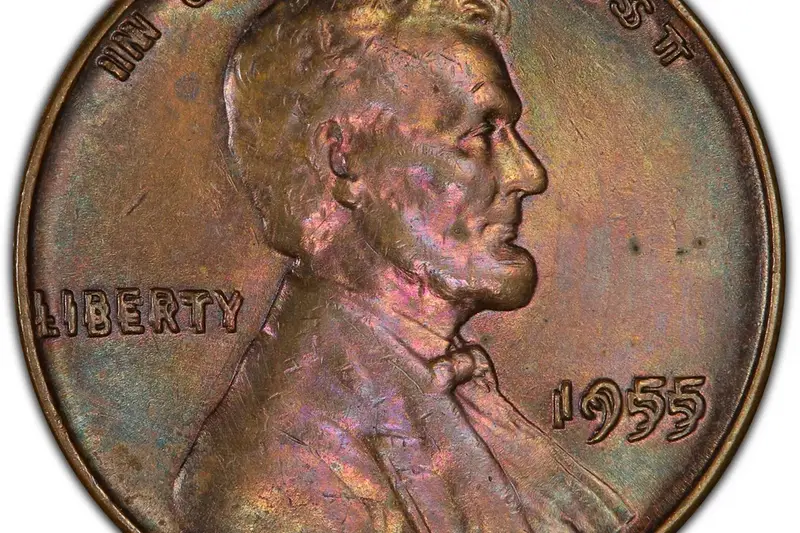
1922-D Lincoln Cent and the Mint Mark That Vanished
Coin Encyclopedia · 8 min read · Published November 7, 2026
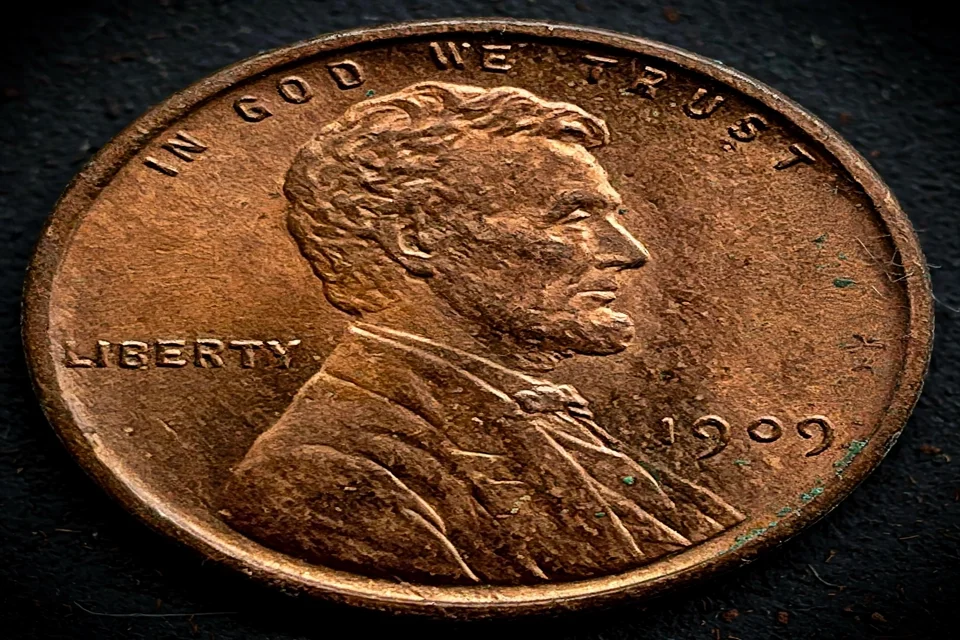
In 1922, only the Denver Mint produced cents. Philadelphia and San Francisco made none — the first time since the Lincoln cent began that a single mint carried the whole year's production. Denver struck 7,160,000 of them, and on one badly worn die pair the D mint mark vanished entirely, creating the famous 1922 “Plain” variety: a Denver cent with no mint mark at all.
Our wheat guide puts genuine Plain examples — the strong-reverse kind — at $600+ even worn and $30,000+ in mint state. That spread is the whole story of this date: an ordinary 1922-D is a common coin, a Weak D is a variety, and a genuine Plain is a famous rarity. And because countless 1922-D cents have had their D removed by hand, the date is also one of the most faked in the series. This page is about telling the three apart.
The year only Denver struck cents
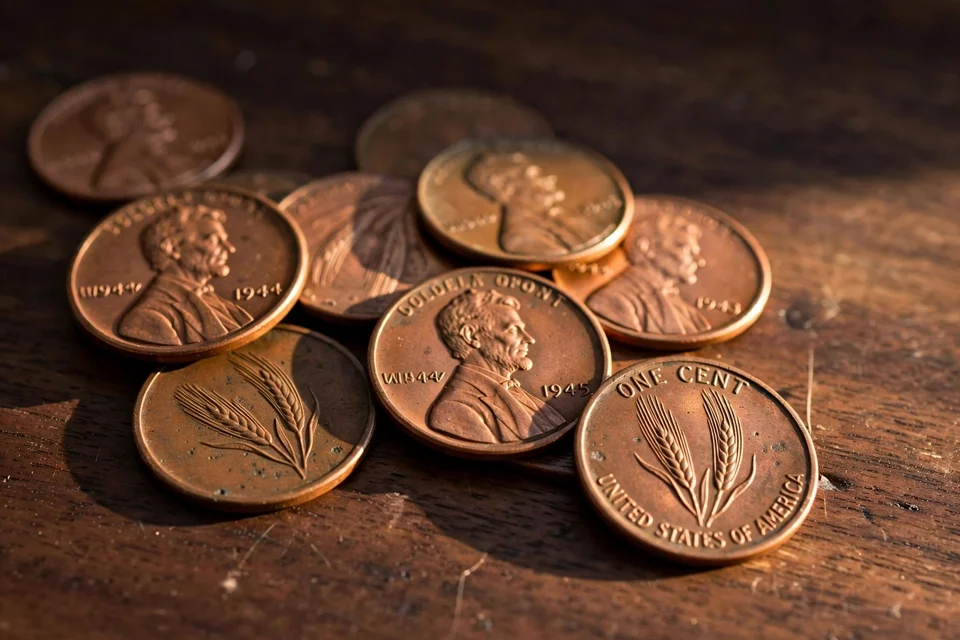
The 1922 cent exists because of a quiet year in the Mint's planning. Philadelphia and San Francisco struck no cents in 1922, leaving Denver as the only mint producing them. The 7,160,000 Denver struck were meant to be ordinary — the same Brenner portrait, the same wheat reverse, the same bronze — and for most of the mintage they were. The variety came not from a plan but from a die pair that wore out in service.
Dies wear. The mint mark is a small, shallow feature on the obverse die, and on one badly worn die pair it wore away to nothing — the D simply stopped striking up. Coins from that pair show no mint mark at all, and because Philadelphia struck no cents that year, a cent with no mint mark dated 1922 could only have come from Denver. That is the whole logic of the Plain variety: the missing D is not an error of striking, it is a die that had given everything it had.
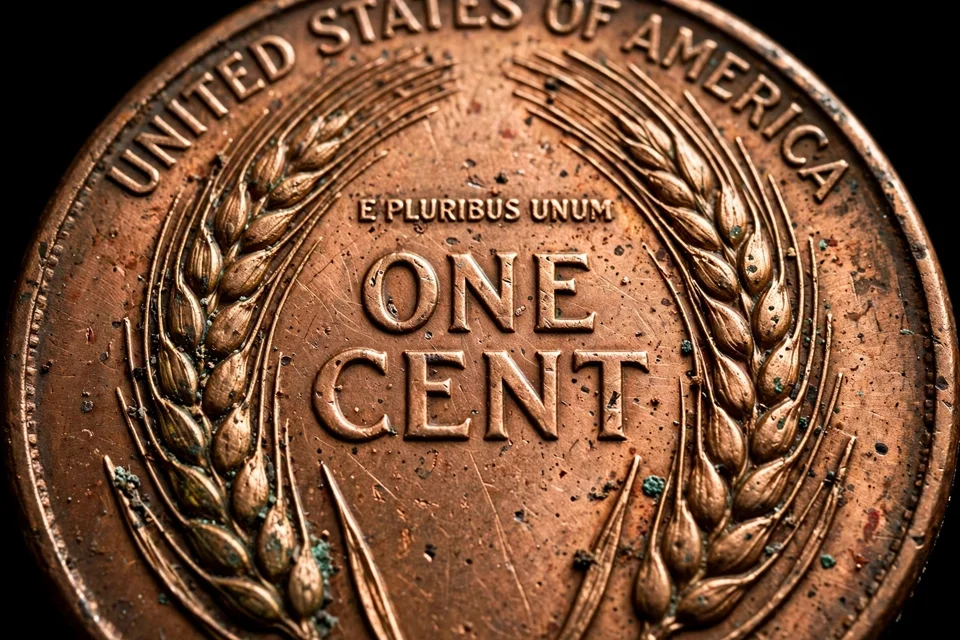
The same wear that erased the D also softened the rest of the coin, which is why the genuine Plain comes in two forms. On the strong-reverse examples, the reverse stayed sharp while the obverse die wore — the wheat stalks are full and the letters are crisp. On the weak-reverse examples, both sides wore together. The strong reverse is the one collectors chase, and the one our guide prices at $600+ worn: it is the form that proves the coin came from the worn die pair, not from a hand with a tool.
Weak D, No D, and Plain — three different coins
The 1922-D comes in three states, and they are not the same coin. The normal 1922-D shows a clear D below the date. The Weak D shows a D that is faint, partial, or mushy — the die was wearing, but the mint mark had not vanished yet. The No D, or Plain, shows no D at all. The catalog variety for this page covers the Weak D and No D together, because they are stages of the same worn die, not separate designs.
Read the D under a loupe, in raking light. A Weak D will show a ghost of the letter — a curve, a stem, a faint outline where the D used to be. A genuine Plain will show nothing at all where the D belongs, and the field there will look like the rest of the obverse field: smooth, original, and struck, not scraped. A D that looks half-removed, with a bright spot or a scratch where the letter was, is not a variety — it is damage, and it is the most common fake in this date.
Then read the reverse. On a genuine strong-reverse Plain, the wheat stalks are full and the letters ONE CENT are crisp — the reverse die was still healthy while the obverse die wore out. That contrast, a worn obverse against a sharp reverse, is the diagnostic that separates a real Plain from a coin that simply lost its D to a tool. A weak reverse with no D is a far less certain coin, and it is worth a professional opinion before it is treated as genuine.
The removed-D fakes
Countless 1922-D cents have had their D removed by hand, and the reason is the figure: a genuine Plain starts at $600+ worn, while an ordinary 1922-D is a common coin. The fake is simple — file, scrape, or polish the D away — and the result can fool a casual look. It cannot fool a loupe. A removed D leaves a bright spot, a flat patch, or tool marks in the field where the letter was, and the metal there will not match the toning of the rest of the coin.
Weigh the coin as well. A genuine 1922-D is bronze at 3.11 grams and 19 millimetres across, with a plain edge. And at serious value, seek certification — the grading services attribute the Plain variety and the strong reverse, and the attribution is what makes the coin tradable at its real figure. Our wheat guide is direct on this point: a real one needs expert authentication, because the fakes are countless and the genuine coin is famous enough to be worth faking well.
The coin at a glance
Designer Victor David Brenner. Struck 1922 at Denver only — Philadelphia and San Francisco struck no cents that year. Composition bronze, 95 percent copper with 5 percent tin and zinc. Weight 3.11 grams, diameter 19 millimetres, plain edge. Obverse: Lincoln facing right, date below, D mint mark below the date when present — Weak D shows a faint D, No D shows none. Reverse: two wheat stalks flanking ONE CENT, UNITED STATES OF AMERICA above. Mintage 7,160,000, including the Weak D and No D varieties. Metal floor: —. A copper cent carries no precious-metal floor, so the live system shows no melt figure for this coin — its worth is collector value alone.
The 1922-D is the vanishing-mint-mark date, and the coin that teaches the difference between a variety and damage. Learn the strong reverse, learn the field where the D should be, and never accept a Plain without certification.
What it is worth by grade
Our guide has not yet researched grade-by-grade estimates for the 1922-D — the table below shows “—” for every grade rather than a guess. The wheat series guide puts genuine strong-reverse Plain examples at $600+ even worn and $30,000+ in mint state.
| Grade | Estimated value |
|---|---|
| Good (G-4) | — |
| Fine (F-12) | — |
| Extremely Fine (XF-40) | — |
| About Uncirculated (AU-50) | — |
| Mint State 60 (MS-60) | — |
| Mint State 65 (MS-65) | — |
Guide values reviewed November 5, 2026 — figures update live from our Worker.
Latest reported results for this coin
Checking for newly reported results…
Your 1922-D Lincoln cent questions, answered
How much is a 1922-D Lincoln cent worth?
Our guide has not yet researched grade-by-grade estimates for the 1922-D, so this page carries no estimated value by grade. The wheat series guide puts genuine strong-reverse 1922 Plain examples at $600+ even worn and $30,000+ in mint state. An ordinary 1922-D with a clear D is a common coin, worth far less.
What is the 1922 Plain Lincoln cent?
A 1922 cent with no mint mark at all, struck at Denver on a badly worn die pair whose D had worn away to nothing. Philadelphia and San Francisco struck no cents in 1922, so a dated 1922 cent with no mint mark could only have come from Denver. Genuine examples, the strong-reverse kind, start at $600+ worn.
How can I tell a real 1922 Plain from a removed D?
Look at the field where the D belongs: on a genuine Plain it is smooth, original, and struck, with no bright spot or tool marks. A removed D leaves a bright patch or scratches where the letter was. Then read the reverse — a genuine strong-reverse Plain has full wheat stalks and crisp letters, because the reverse die was still healthy while the obverse die wore out.
What is the difference between Weak D and No D?
They are stages of the same worn die. A Weak D shows a faint, partial, or mushy D — the die was wearing but the mint mark had not vanished yet. A No D, or Plain, shows no D at all. Both are varieties of the 1922-D, but the Plain is the famous one.
Why did only Denver strike cents in 1922?
Philadelphia and San Francisco struck no cents that year, leaving Denver as the only mint producing them. The 7,160,000 Denver struck were meant to be ordinary — the variety came from a die pair that wore out in service, not from any plan.
Check your 1922-D Lincoln cent
Run the date through the free Coin Value Checker for an instant estimate, or work the mint mark through the Error Coin Identifier step by step. The full wheat series guide is here: Wheat Pennies Worth Money, 3¢ to $1.7 Million+. Compare the Denver dates — the 1914-D Lincoln cent and the 1924-D Lincoln cent.
This guide is written so collectors can tell a genuine 1922 Plain from a removed D for themselves — by the field, the reverse, and the weight — and use that knowledge before any individual coin is judged.